CE Certified Industrial Racking And Shelving Manufacturers & Exporter
High-density pallet racking, industrial shelving and warehouse storage systems engineered to EN standards, with seismic, cold-chain and export-ready documentation.
Eight Engineered Racking and Shelving Systems for Export Buyers
Compare selective pallet racking, heavy-duty industrial shelves, corrosion-protected storage racks, stacking systems and electric mobile racking. Each family can be customised for load capacity, aisle width, finish, seismic zone, cold-store temperature and OEM branding.
Procurement note: CE-related documentation should be defined in the RFQ. For industrial racking projects, confirm whether the package requires EN 1090 CE marking for steel components, EN 15512 calculations, EN 15620 tolerances, EN 15635 inspection guidance, FEM 10.2.08 / EN 16681 seismic review and local code coordination.
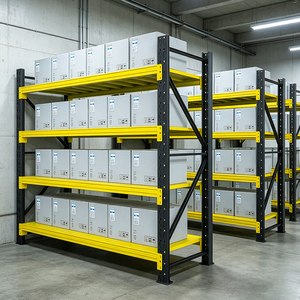 Mixed Storage
Warehouse Pallet Racking, Small Parts Shelves & Tire Stacking Racks
A flexible export range for distributors handling pallets, cartons, spare parts and wheel assemblies in one warehouse footprint.
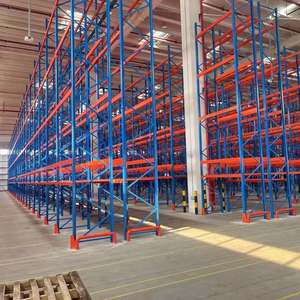 Custom Build
Custom Heavy-Duty Steel Pallet Racking System
Engineered for high-bay warehouses, export packing and OEM projects. Layouts can be calculated to project loads with load signage supplied.
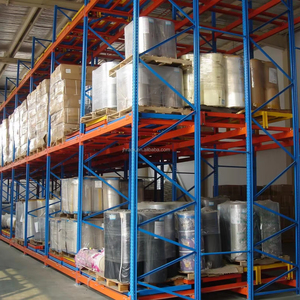 Heavy Duty
Heavy-Duty Industrial Pallet Rack & Shelving Storage System
A robust steel structure for bulky loads, warehouse shelves and high-utilisation storage where stability and long service life matter.
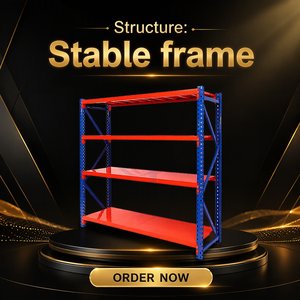 Selective Rack
Heavy-Duty Selective Pallet Rack — 5 Layers, 1000 kg Capacity
Direct access to every pallet makes selective racking practical for fast-moving SKUs, distribution centres and mixed pallet profiles.
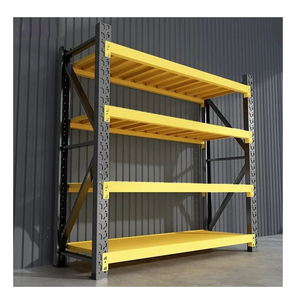 4-Tier Rack
Light-Duty 4-Tier Corrosion-Protected Steel Storage Rack
An efficient shelf-based system for garages, workshops, retail backrooms and light industrial stores that need durable, tidy storage.
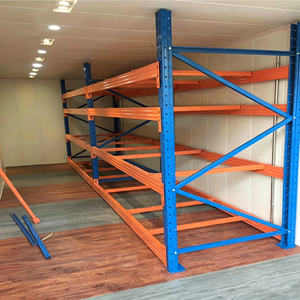 1000–3000 kg
Heavy-Duty Industrial Pallet Storage Racking — 1000 / 2000 / 3000 kg
Adjustable steel warehouse racking for dense industrial storage, with load capacities specified by project and engineered documentation.
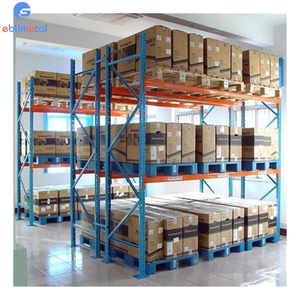 Stacking System
Heavy-Duty Steel Warehouse Stacking Pallet Racking System
Designed for warehouses requiring stable pallet stacking, high-density storage and a scalable structure that can grow with operations.
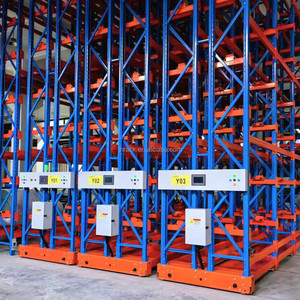 Mobile Rack
Industrial High-Efficiency Electric Mobile Pallet Racking System
Mobile racking runs on rails and opens a working aisle on demand, improving storage density and reducing refrigerated air volume in cold stores.
Why Real Nice Racks Is a Lower-Risk Racking Manufacturer and Exporter
Real Nice Racks LLC supports warehouses, distributors, cold stores and industrial projects with engineered storage systems from first site survey to installation, inspection and capacity upgrades. The focus is not simply supplying steel — it is reducing project risk through load data, code-aware design, export packing and lifecycle support.
Engineering from Real Warehouse Data
Layouts start with pallet size, SKU velocity, clear height, forklift type, floor tolerance and seismic zone. This avoids a generic template and improves safety, access and space utilisation.
Documented Compliance Package
Structural calculations, capacity tables, material information, load signage and inspection guidance help buyers answer internal engineering, procurement and insurer questions.
Seismic and Local-Code Coordination
Projects in Chile, Peru, Ecuador, Colombia and other seismic regions can be coordinated with local requirements such as NCh 433, E.030, NEC-SE-DS and NSR-10.
Cold-Chain and Energy Awareness
Chilled and freezer systems are specified for fruit, seafood, meat, dairy and pharmaceutical storage. Mobile racking reduces aisle volume and can lower refrigeration energy demand.
Lifecycle Support, Not One-Off Export
Survey, design, manufacturing, export packing, installation supervision, handover, periodic inspection, damage repair and capacity upgrades are planned as one lifecycle.
Multilingual Export Communication
Technical support in English, Spanish and Portuguese helps procurement teams, installers and local engineers align drawings, shipping documents and site requirements.
How CE Certification and Engineering Compliance Are Documented
“CE certified” should be treated as a documentation scope, not a single logo. Depending on the product, destination and project specification, the package may combine CE marking for applicable steel components with racking design and inspection standards.
Recommended Configurations by Throughput, Load and Building Footprint
Use these starting points to narrow the system type before a formal layout. Final selection should be based on pallet profiles, handling equipment, SKU velocity, fire strategy, floor slab and seismic zone.
Selective Pallet Racking
Best where operators need immediate access to most pallets and a high mix of SKUs. A five-layer, 1000 kg selective system is a practical benchmark for distribution centres.
Review selective rackStacking, Drive-In and Push-Back
Suitable for slower-moving or homogeneous pallets where storage density matters more than immediate access. Ideal for food, beverage and industrial stores with constrained space.
Review stacking systemIndustrial Shelving and Multi-Tier Storage
For spare parts, cartons, e-commerce SKUs and maintenance stores. Four-tier corrosion-protected shelving provides an efficient first step before multi-tier or semi-automation.
Review shelf systemElectric Mobile Pallet Racking
For cold stores and high-land-cost locations, mobile racking condenses multiple runs and opens one aisle on demand, reducing refrigerated volume while retaining access to every pallet.
Review mobile rackingStorage Density Planning Comparison
Illustrative comparison only. Final capacity depends on aisle width, handling equipment, load overhang, sprinkler clearance and structural design.
How Industrial Racking and Shelving Procurement Is Changing
Buyers are moving from price-per-bay comparisons to total cost of ownership, documentation quality, uptime, energy use and the ability to retrofit higher-density systems without closing the warehouse. These shifts are especially relevant in fast-growing e-commerce, cold-chain and export-driven markets.
Total Cost of Ownership Replaces Lowest Price
Procurement teams now compare installation time, damage risk, spare-part availability, inspection requirements and future reconfiguration value — not only the steel price per pallet position.
Dual Compliance: CE Plus Local Codes
International buyers increasingly require EN-based design alongside local seismic, fire and building approvals. Suppliers must provide calculation packages and coordinate with licensed local engineers when required.
Automation-Ready but Phased
Many companies cannot automate immediately. Modular platforms that support manual use today and shuttle, mobile or AMR integration later reduce rework and protect capital investment.
Cold-Chain Energy Efficiency
In chilled and freezer warehouses, fewer aisles can mean less air to refrigerate. Mobile racking and compact layouts are being evaluated as energy-saving infrastructure, not just storage equipment.
Retrofit Before New Construction
With land and construction costs rising, more buyers ask how to unlock capacity inside the existing envelope. Re-layouts, high-density racking, mezzanines and narrow aisles can avoid lengthy building projects.
Digital Documentation and Traceability
Load signs, inspection records, repair history and digital drawing files are becoming part of procurement due diligence, supporting safety audits, insurer reviews and future expansions.
Information Gain: Eight Data Points That Improve a Racking Quotation
- Pallet length, width, height and loaded weight, including overhang and unstable loads.
- Warehouse clear height, floor slab details, tolerances and condition.
- Forklift, reach truck or AGV type, aisle width and operating clearance.
- SKU velocity, pick faces, FIFO/LIFO requirements and seasonal peaks.
- Seismic zone, wind exposure, humidity and corrosive atmosphere.
- Operating temperature, washdown requirements and fire strategy.
- Destination port, target shipping date and export packing needs.
- Required documentation: CE scope, EN reports, load signage and inspection records.
What the Next Generation of Industrial Racking and Shelving Will Deliver
Racking design is evolving toward higher strength-to-weight ratios, modularity, cold-store reliability and digital serviceability. For exporters, the winning products will be those that are easy to specify, ship, install and expand.
Optimised Steel Profiles
Higher-strength steel and refined section profiles can reduce material use while maintaining capacity. Buyers should ask for calculated capacity, not visual similarity to existing beams.
Modular Platforms
A common platform that accepts selective, mobile, shuttle or push-back accessories supports phased growth and improves spare-part commonality across multiple warehouses.
Robotic and AMR Interfaces
Future racking layouts must consider robot clearance, pick-face heights, sensor visibility and interfaces between racking, conveyors and warehouse execution software.
Cold-Store Reliability
Motors, controls, coatings and moving components must tolerate condensation, ice build-up and low-temperature operation without compromising access or maintenance.
Seismic Connections and Serviceability
Replaceable connectors, clearer load signage and inspection-friendly details make it easier to maintain safety over a long service life in seismic regions.
Circularity and Surface Protection
Recyclable steel, durable powder coating, design for disassembly and reusable export packing align racking projects with environmental procurement goals.
From Site Survey to Installation Handover and Inspection
A controlled four-stage approach keeps quotations comparable, engineering decisions visible and export schedules realistic.
Survey and Data Review
Collect pallet profiles, loads, clear height, floor information, handling equipment, temperature and seismic requirements.
Layout and Structural Design
Compare system options, calculate capacities, prepare drawings and align documentation with EN and local requirements.
Manufacturing and Export Packing
Produce steel components, protect finishes, pack for sea freight and prepare shipping marks and packing lists.
Installation Support and Handover
Support supervised installation, provide load signage and inspection guidance, then plan future upgrades or repairs.
Common Questions About CE Certified Industrial Racking and Shelving
These answers help procurement, engineering and operations teams prepare a clearer RFQ before contacting a manufacturer or exporter.
What does “CE certified” mean when buying industrial racking and shelving?
CE certification depends on the product and applicable directive. For racking projects, buyers should specify the exact scope: CE marking for applicable steel components, EN 1090 factory production control, EN 15512 structural calculations, EN 15620 floor tolerances and EN 15635 inspection guidance. A credible supplier will clarify what is CE marked, what is design-verified and what is reviewed by a local licensed engineer.
Can you manufacture racking for 1000 kg, 2000 kg or 3000 kg per layer?
Yes. Load capacity is determined by beam section, upright section, frame height, bracing, connector type, pallet placement and seismic factors. A project-specific calculation is required rather than applying a generic capacity label. Load signage and capacity tables should be supplied with the installation.
Do you design for seismic zones in Chile, Peru, Ecuador and Colombia?
Seismic racking can be calculated with reference to FEM 10.2.08 and EN 16681, then coordinated with local requirements such as NCh 433 and NCh 2369 in Chile, E.030 in Peru, NEC-SE-DS in Ecuador and NSR-10 in Colombia. Base plates, anchors, bracing and beam connectors are selected for the site’s seismic zone and soil conditions.
Is your racking suitable for cold storage and freezer warehouses?
Yes. Cold storage pallet racking, mobile racking and high-density systems can be specified for chilled and frozen environments down to approximately -30°C. The steel finish, moving components, controls and installation details must be selected for condensation, ice and maintenance access. Mobile racking is particularly useful where reducing refrigerated air volume lowers energy cost.
Can you customise dimensions, colours, load capacities and OEM branding?
Custom manufacturing is available for project dimensions, beam levels, upright heights, load capacities, powder-coating colours, accessory brackets, export packing and OEM labels. Provide drawings, pallet data and destination requirements so the quotation reflects the correct materials and documentation.
What information is needed to quote an export racking project?
Send the warehouse location, floor plan, clear height, pallet dimensions, load per pallet, handling equipment, required capacity, temperature, seismic zone, destination port and target delivery date. If available, include fire strategy, floor slab details and any local code or CE documentation requirements. Our team can then recommend a layout and system family.
How are products packed, shipped and installed?
Components are protected for sea freight, marked and packed to suit container loading or break-bulk shipment. Projects ship to the nearest agreed port, with installation drawings and packing lists. Installation can be supervised by our team or completed by approved local installers, followed by handover with load signage and inspection documentation.
What after-sales support is available after delivery?
After-sales support can include periodic rack inspection, damage assessment, repair recommendations, spare-part supply, operator awareness training and capacity upgrades. Keeping inspection records and original drawings makes future modifications safer and easier to approve.
Send Your Load Data. Get a CE-Ready Racking and Shelving Proposal.
Share your warehouse location, pallet dimensions, load per pallet, clear height, temperature and destination port. Our engineering and export team will review the project and recommend a practical system, layout and documentation scope.
Inquire NowFor formal RFQs, include target capacity, handling equipment and required standards. Email: [email protected]