8 Factory-Direct Warehouse Storage Shelving & Racking Systems
Shortlist by load, selectivity, density and environment. All product URLs below are preserved; if your project needs a custom layout, use the inquiry button and the engineering team can compare configurations against your pallet profile, clear height and seismic zone.
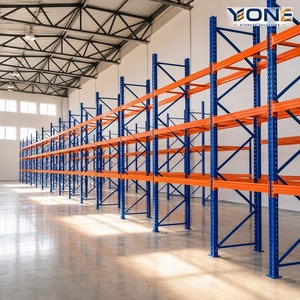
Steel Storage Rack Heavy Duty Pallet Racking Q235B Steel Selective Racking for Racks Industriales Warehouse Storage
Best for multi-SKU distribution centres that need direct access to every pallet, adjustable beam levels and simple future expansion.
View product details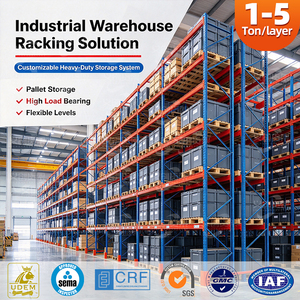
Heavy Duty Warehouse Storage Rack Selective Pallet Rack 1000-4500kg Load Capacity Q235B Steel Industrial Racking System
Suitable for heavy pallet loads where beam capacity, upright protection and forklift interface must be clearly documented.
View product details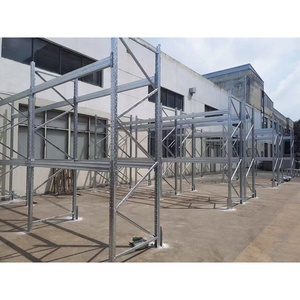
Warehouse Storage Strong Corrosion Resistance Capability Hot Dip Galvanize Pallet Rack Outdoor Storage Rack
Best for port yards, humid climates and outdoor storage where hot-dip galvanizing and drainage details matter.
View product details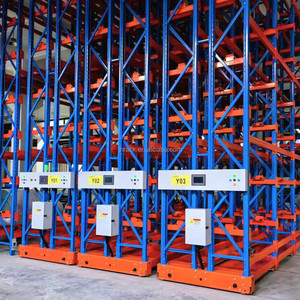
Industrial Heavy Duty High Efficiency Warehouse Electric Mobile Storage Shelf Automatic Mobile Racking System Pallet Rack
Ideal for cold stores and land-constrained buildings where one working aisle opens on demand and density rises sharply.
View product details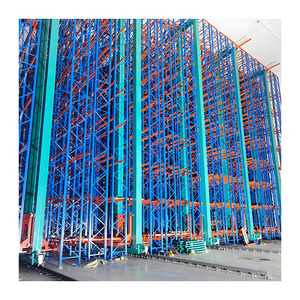
High-Density Pallet Shuttle Racking System Automatic Steel Storage Frame 3000kg Load Capacity Heavy Duty Warehouse
Best for high-volume, low-SKU storage where deep blocks, reduced aisles and semi-automated pallet movement are priorities.
View product details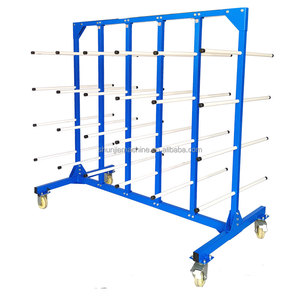
Customized 5 Tiers Cantilever Racking for Warehouse with Wheels Long Arms Metal Double Side Cantilever Rack Cart
Designed for pipes, profiles, timber and long goods that cannot be handled efficiently in conventional pallet bays.
View product details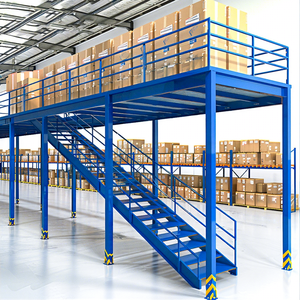
Warehouse Second Floor Terrace Floor Eu Warehouse Wood Pallet Storage Platform Schwerlastregal
Useful where vertical space is underused and the warehouse needs multi-level storage without expanding the building footprint.
View product details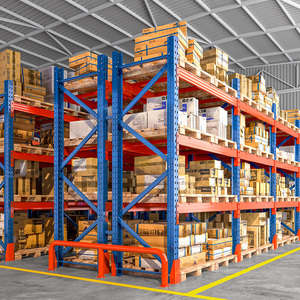
Heavy Duty Industrial Steel Storage Shelves 5 Layer Adjustable Rack System with Galvanized Surface for Warehouse Pallet Racking
Suited to industrial stores that need adjustable levels, a galvanized surface and a practical balance between cost and durability.
View product detailsCE Certification in Context: What Procurement Teams Should Verify
CE marking is not a generic label for all static racking. For international projects, the stronger question is: can the exporter provide a traceable verification file covering structural design, anchors, seismic assumptions, finish, load signage, installation and handover?
EN 15512 structural design
Upright frames, beams, connectors and bracing should be calculated for actual pallet load, beam spacing and handling impact. Ask for the calculation basis, not only a load table.
FEM 10.2.08 / EN 16681 seismic review
For Chile, Peru, Ecuador, Colombia and other seismic regions, base plates, anchors and bracing must follow site-specific demand and local code review.
EN 15620 floor tolerance
Rack performance depends on floor flatness and deflection. A credible layout confirms slab tolerance, aisle flatness and point-load limits before shipment.
EN 15635 inspection protocol
Damage management, periodic inspection and load signage protect the investment after handover. Ask for inspection templates and spare-part availability.
Material & coating traceability
Q235B steel, hot-dip galvanizing and powder-coating specifications should be documented with mill certificates, coating thickness and salt-spray reports where required.
Anchors & base plate design
Anchor type, edge distance and concrete strength are project-specific. Export files should include anchor schedules and installation method statements.
Load signs & handover file
Every bay should have clear load signage, layout drawings, as-built records and user guidance so operators do not exceed the engineered capacity.
CE documentation for powered equipment
Where mobile bases, lifts, conveyors or automation are included, request the applicable Declaration of Conformity, CE plate and electrical safety documents.
The most reliable exporters separate static racking verification from powered equipment CE conformity. That distinction protects the buyer during technical review, installation sign-off and future insurance inspection.
Match Storage Density to Operational Reality
Use this matrix as an early shortlisting tool. Final selection depends on SKU count, pallet weight, throughput, aisle width, fire strategy and the future automation roadmap.
Selective pallet racking
Best for high SKU variety and fast direct access.
Mobile pallet racking
Best for cold stores and land-constrained buildings.
Pallet shuttle racking
Best for high-volume, low-SKU deep storage.
Cantilever racking
Best for pipes, timber, profiles and long goods.
What Buyers Will Demand from Warehouse Shelving Factories by 2030
Procurement is shifting from lowest price per bay to documented safety, lifecycle cost and speed of reconfiguration. These six trends are already changing how importers compare factory offers.
1. Evidence-based procurement
Buyers increasingly issue technical questionnaires before comparing prices. They ask for EN 15512 calculations, seismic assumptions, anchor schedules, coating reports, load signs and inspection templates. In the next buying cycle, the exporter that can produce a coherent document pack quickly will outperform the supplier that repeats “CE certified” without scope clarity.
2. Total cost of ownership
Procurement is moving beyond landed cost to cost per safe, usable pallet position over ten years. Freight, installation, inspection, repair, spare beams, future bay additions and downtime all matter. Modular platforms and common connectors reduce locked-in risk and make later expansion more predictable.
3. Seismic and climate resilience
South America’s Pacific seismic belt and humid port environments force designers to specify anchors, bracing and finishes by site, not by catalogue. Local code coordination may include NCh 433 and NCh 2369 in Chile, E.030 in Peru, NEC-SE-DS in Ecuador and NSR-10 in Colombia. Outdoor yards also need hot-dip galvanizing or high-performance coatings.
4. Land and energy constraints
Industrial land around São Paulo, Santiago, Lima and Bogotá is expensive. Mobile racking, pallet shuttle systems and mezzanine platforms increase pallet positions inside the same building envelope. In cold storage, fewer aisles also reduce refrigerated air volume, directly lowering energy use and improving sustainability performance.
5. Automation-ready, but phased
Many warehouses are not ready for full automation, yet need a path to it. Modular selective racking, shuttle-ready layouts, clear AGV interfaces and power/data provisions allow phased investment. The procurement question is no longer “manual or automated?” but “which process should be automated first, and how will the racking interface with it?”
6. Sustainability and circularity
Steel intensity, coating durability and reconfigurability are becoming measurable. Modular racking can be dismantled, reconfigured and reused; hot-dip galvanizing extends outdoor life; optimized beam sections reduce material use. Buyers will increasingly request recyclable packaging, embodied-carbon estimates and take-back or reuse options.
How the Next Generation of Warehouse Shelving Is Engineered
Racking development is no longer only about steel thickness. The product is becoming a modular, inspectable and automation-ready asset with better finishes, clearer documentation and more flexible interfaces.
Modular platform architecture
Beam-and-upright platforms with common hole patterns let warehouses add levels, change beam heights, integrate wire decks or pallet support bars, and replace damaged components without scrapping an entire bay. This modularity reduces lead time and improves lifecycle value.
Cold-store and corrosion-resistant finishes
Freezer-ready steel, low-temperature lubricants for mobile bases, anti-corrosion coatings and hot-dip galvanizing for outdoor yards are becoming standard options. The design must consider brittle fracture risk, condensation, ice build-up and cleaning routines.
More efficient mobile racking
Powered mobile bases are becoming more energy-efficient and easier to retrofit. They suit cold stores and land-constrained buildings where density matters more than simultaneous forklift access. The key developments are smarter aisle control, safe opening logic and battery or busbar options.
Shuttle systems for medium volume
Shuttle systems were once reserved for very high volumes. Newer controls and standardized frames make semi-dense shuttle layouts viable for medium-size distribution. They reduce aisle count and improve use of deep blocks while retaining pallet-level tracking.
Integrated mezzanine and multi-tier picking
Racking-supported mezzanines combine pallet storage below with carton picking, packing or offices above. Newer designs consider fire sprinkler access, pallet handling interfaces and phased construction so the upper level can be added later without rebuilding the lower operation.
Digital signage and inspection-ready details
QR-coded load signs, inspection tags, anchor records and digital as-built files connect the physical rack to maintenance systems. Sensor-ready beams and mobile-base diagnostics will help operators spot damage and overload risk earlier.
Engineering Support from Inquiry to Handover
Real Nice Racks LLC designs, supplies and supports industrial storage systems for warehouses and distribution centres across South America, combining product breadth with export logistics and multilingual technical support.
Engineering-led layout review
The team starts with pallet profiles, SKU velocity, forklift type, clear height, floor condition and seismic zone, then compares selective, mobile, shuttle, cantilever, mezzanine and shelving options before quotation.
Product breadth under one scope
Pallet racking, industrial shelving, semi-automated storage, cantilever, pull-out units and mezzanine floors can be combined, reducing interface risk between multiple suppliers.
Export packing and port delivery
Projects can be prepared for shipment to ports such as Santos, Callao, San Antonio, Buenos Aires, Cartagena, Guayaquil and Montevideo, with packing lists and installation sequencing.
Multilingual technical support
Procurement, engineering and site teams can communicate in English, Spanish and Portuguese, reducing clarification time for multi-country rollouts and installation coordination.
Lifecycle service and retrofit
After handover, inspection, damage repair, capacity upgrades and re-layout support help the warehouse adapt as volumes, SKUs and automation plans change over time.
South America compliance know-how
Experience with seismic zones, cold-chain exports, mining spare parts, 3PL hubs and e-commerce distribution helps align layouts with local structural and operational realities.
From Site Survey to Long-Term Support
Analyse
Site survey, SKU and throughput data, floor and seismic assessment.
Design
Layout options, structural calculations and capacity comparison.
Manufacture
Quality-controlled steel production and export packing.
Deliver & install
Shipment to the nearest port and supervised installation.
Support
Inspection, repairs, training and capacity upgrades.
Questions International Buyers Ask Before Ordering
These answers reflect the technical and commercial questions that matter when comparing warehouse storage shelving factories and exporters.
Are your warehouse storage shelving products CE certified?
For static racking, CE marking is not automatically applicable in the same way as for machinery. The correct approach is to ask for the applicable CE documentation for powered or integrated equipment, plus a structural verification pack for the racking: EN 15512 calculations, seismic assumptions where relevant, anchor and base-plate design, coating reports, load signage and installation records. Real Nice Racks LLC can clarify which scope is CE-marked and which is engineered to EN/FEM standards before quotation.
Which design standards can the racking follow?
Static steel racking can be aligned with EN 15512; floor tolerances with EN 15620; use and inspection guidance with EN 15635; and seismic review with FEM 10.2.08 / EN 16681. In Brazil, projects can be aligned with ABNT NBR 15524 for selective pallet racking. Local code coordination may include NCh 433 and NCh 2369 in Chile, E.030 in Peru, NEC-SE-DS in Ecuador and NSR-10 in Colombia.
Can you design pallet racking for seismic zones?
Yes. Base plates, anchors, bracing and connectors can be specified for site seismic demand and coordinated with a locally licensed structural engineer where required. The key inputs are not only the city, but also soil type, floor slab, rack height, load per pallet, beam spacing and local code requirements.
Do you supply racking for cold stores and outdoor yards?
Yes. Chilled and freezer systems can be specified for low-temperature operation, with materials and coatings suited to the environment. Outdoor yards and port warehouses may use hot-dip galvanized pallet racking. Mobile racking is especially effective in cold stores because it reduces refrigerated air volume and can improve energy efficiency.
How do I choose between selective, mobile, shuttle and cantilever racking?
Selective racking is best for high SKU variety and direct access. Mobile racking is best when density and direct access are both required, especially in cold stores. Shuttle racking is best for high-volume, low-SKU deep storage. Cantilever racking is best for long goods such as pipes, timber and profiles. Mezzanine or multi-tier shelving may be better for cartons and small parts.
What affects lead time and export cost?
Configuration, steel tonnage, finish, power equipment, quantity, destination port, shipping method, packing and installation scope all affect lead time and landed cost. A fast quotation requires pallet dimensions, load per pallet, clear height, floor plan, target capacity, forklift or AGV type, location and required delivery window. Final dates should be confirmed after drawing approval.
Can you upgrade an existing warehouse instead of building new?
Yes. Retrofit projects can combine re-layout, high-density racking, mobile bases, mezzanine floors, narrow-aisle conversion and shelving. High-density pallet racking can deliver up to 20% more capacity within the same footprint in suitable projects, avoiding the cost and delay of new construction.
What information should be included in an inquiry?
Send the warehouse location, floor plan, clear height, floor condition, pallet dimensions, weight per pallet, SKU profile, operating temperature, forklift or AGV type, seismic zone and target pallet count. If you have photos, existing rack drawings or a fire strategy, include them. The more complete the data, the faster the engineering team can compare layouts and provide a credible quotation.
Send Your Warehouse Data for an Engineered Layout Review
Share your project basics and the team can compare selective, mobile, shuttle, cantilever, mezzanine and shelving options against documented safety, export logistics and lifecycle cost.
For faster technical review, include the warehouse location, clear height, pallet size, load per pallet, fork/AGV type, target pallet count and any seismic or cold-store requirement.
Inquire Now- Warehouse location and target capacity
- Floor plan and clear height
- Pallet dimensions and load per pallet
- Operating temperature and environment
- Forklift, AGV or crane interface
- Seismic zone and local code requirements