Eight Industrial Shelving and Storage Systems for Demanding Projects
Industrial shelving and storage is not a commodity purchase when loads are heavy, throughput is high, or the facility operates in a seismic zone or freezer environment. The right manufacturer and wholesaler must combine repeatable steel fabrication with project engineering, load verification, export logistics and after-sales inspection. The eight systems below cover selective pallet access, high-density storage, heavy-duty racking, boltless shelving, VNA racking and cold-chain-ready platforms.
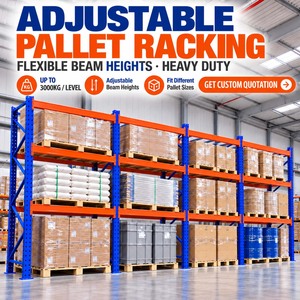
Adjustable Steel Pallet Racking System for Heavy Pallet Storage
Direct access and flexible beam levels for mixed-SKU warehouses that need selectivity without sacrificing structural discipline.
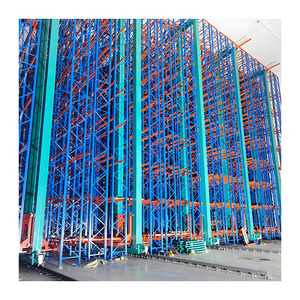
High-Density Pallet Shuttle Racking System Automatic Steel Storage Frame 3000kg Load Capacity Heavy Duty Warehouse
Deep-lane storage and reduced aisle demand for low-SKU, high-volume inventories or cold stores where energy efficiency matters.
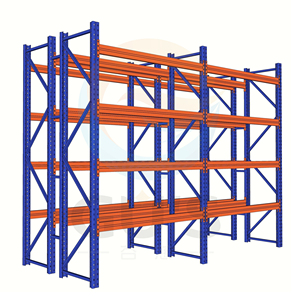
Warehouse Pallet Racking Shelves Unit Industrial Heavy Duty Metal Rack Storage Shelf Pallet Stacking Rack System
A durable pallet stacking platform for factories, distribution centres and 3PL operations that require frequent reconfiguration.
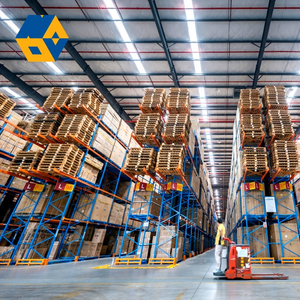
Heavy Duty 2000KG Per Layer Large Capacity Racking System Warehouse Storage High Duty Beam Stacking Pallet Rack Shelving Unit
Large-capacity pallet storage for dense loads, industrial materials and applications where beam and upright selection must be documented.
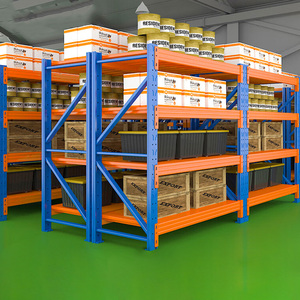
HY Heavy Duty Warehouse Rack Warehouse Rack Storage Shelf Heavy Duty Pallet Racking Warehouse Racking Industrial Pallet Shelving
Robust industrial pallet shelving for warehouses seeking a balance of load capacity, installation speed and long service life.
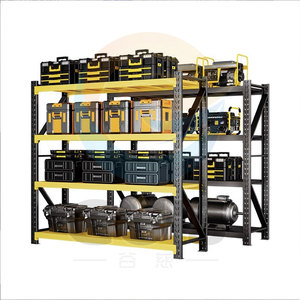
Heavy-Duty Boltless Shelving Racking System for Industrial & Home Use 5 Layer Steel Warehouse Storage Rack Shelf Original Black
Fast-assembly shelving for cartons, spare parts, e-commerce SKUs and workshop storage where adjustable levels are essential.
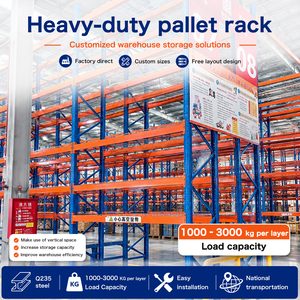
Industrial Warehouse Heavy Duty Pallet Rack System Steel Storage Racking Adjustable Beam High Capacity Storage Solution
High-capacity steel racking with adjustable beams for warehouses planning for SKU growth, seasonal stock and future retrofit.
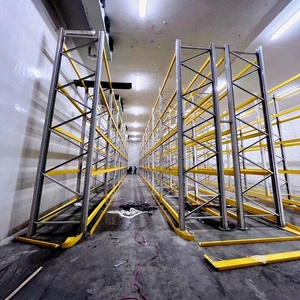
Low Price Racking Heavy Duty VNA Rack Adjustable Metal Boltless Shelf and Racks Warehouse Warehouse Storage Racks Metal Shelf
Narrow-aisle and boltless storage concepts for operations that need more pallet positions within a fixed building footprint.
For a mixed project, product selection should follow the load profile, turnover velocity, handling equipment and building constraints — not the other way around. Our engineering team can compare these eight platforms in one layout study.
A Storage System Is Only as Reliable as Its Documented Performance
The procurement decision should be based on verifiable capacity, not catalogue optimism. A credible industrial shelving and storage manufacturer must show how the rack behaves under load, how it is anchored, how it is inspected and how it can be expanded without compromising safety.
Which Industrial Shelving and Storage System Should You Specify?
A search for “China best industrial shelving and storage manufacturer & wholesaler” is usually a high-intent procurement query. The buyer is not simply looking for steel; they are looking for a system that matches load, selectivity, density, climate, installation method and future automation. Use the following recommendation matrix as a starting point.
Maximum Selectivity
Choose adjustable pallet racking when fast-moving SKUs, FIFO/FEFO control and direct forklift access matter. It is the most flexible base for mixed pallet sizes and later reconfiguration.
Maximum Density
Pallet shuttle, drive-in, push-back and VNA layouts reduce aisle demand. They are stronger candidates for low-SKU, high-volume stock, cold stores and buildings where expansion is impossible.
Hand-Loaded Storage
Boltless shelving and 5-layer steel rack units suit cartons, spare parts, workshop tooling and e-commerce picking. They install quickly, adjust without welding and scale by bay.
Heavy Layer Loads
Heavy-duty pallet racking with 2000 kg+ per-layer options requires verified beam loads, upright capacities, floor tolerance checks and anchor design before any wholesale order is confirmed.
| System Family | Best Fit | Why Buyers Choose It | Checks Before Order |
|---|---|---|---|
| Adjustable pallet racking | Mixed SKUs, frequent picking, 3PL and distribution centres | Direct access, adjustable beams, straightforward expansion | Pallet footprint, beam deflection, forklift mast height, floor level |
| Pallet shuttle racking | Cold stores, beverage, food, high-volume low-SKU inventories | Deep-lane density, fewer aisles, reduced refrigerated volume | Shuttle type, lane depth, LIFO/FIFO requirement, maintenance access |
| Heavy-duty pallet racking | Industrial materials, dense loads, manufacturing stores | Higher load classes, robust frames, long service life | Load per layer, upright capacity, seismic zone, impact protection |
| Boltless shelving | Spare parts, cartons, e-commerce, workshops and archives | Fast assembly, adjustable levels, no specialised installation team | Shelf load, bay width, accessories, colour and export packing |
| VNA racking | High-bay warehouses with specialised narrow-aisle forklifts | More pallet positions in the same building footprint | Floor tolerance, aisle geometry, forklift guidance, sprinkler clearance |
Why Real Nice Racks LLC Is Built for Serious Storage Projects
Real Nice Racks LLC designs and supplies industrial storage and shelving that helps businesses increase capacity, productivity and operational safety. We support multinational brands and fast-growing regional companies from the first site survey to installation, inspection and ongoing service. Every layout starts with real project data — pallet profiles, SKU velocity, forklift types, clear height and seismic zone — so the system fits how the warehouse actually works, not a generic template.
Data-Led Layout Engineering
Site surveys, SKU analysis, pallet dimensions, throughput data, clear height and floor conditions are translated into practical layout options before a wholesale quotation is fixed.
Documented Structural Safety
Structural calculations, load signage, capacity tables and installation records are prepared with every project. Safety is not just a claim; it is a handover package that procurement and insurers can review.
Seismic and Cold-Chain Specialisation
Base plates, anchors, bracing and beam connectors can be specified for seismic zones. Cold storage systems are configured for chilled and freezer environments down to approximately -30 °C.
One Engineering Team, Multiple Systems
Pallet racking, shelving, mezzanines, mobile racking and semi-automated storage machines can be coordinated as one layout. This avoids interface gaps between vendors and keeps future expansion simpler.
Multilingual Project Support
Technical support is available in English, Spanish and Portuguese, with delivery experience across South American markets and coordination with local construction and operational teams.
Lifecycle Service, Not One-Off Shipment
Inspection, damage repair, reconfiguration and capacity upgrades extend the useful life of the system. Retail, cold-chain, automotive, pharma and agro-export operations can be supported beyond initial installation.
Standards and Documentation That Reduce Procurement Risk
For industrial shelving and storage wholesalers, compliance is not a brochure detail. It is the basis for tendering, insurance review, installation sign-off and safe operation. Projects should reference recognised racking standards and be coordinated with local building codes by licensed engineers where required.
Static steel racking design can follow EN 15512, with floor tolerances addressed through EN 15620, operation and inspection guidance through EN 15635, and seismic design through FEM 10.2.08 / EN 16681. In South America, projects may also be aligned with ABNT NBR 15524 in Brazil, NCh 433 and NCh 2369 in Chile, E.030 in Peru and NSR-10 in Colombia.
- Load calculations, beam tables and upright capacities issued before production.
- Anchor and base-plate details for the actual floor slab and seismic zone.
- Load signage, bay identification and inspection guidance at handover.
- Export packing, spare-parts list and installation method statement for wholesale deliveries.

Future Procurement Trends in Industrial Shelving and Storage
Procurement is moving from lowest unit price to lowest total cost of ownership. Buyers increasingly compare safety documentation, installation risk, energy use, retrofit potential and long-term spare-parts availability. For manufacturers and wholesalers, the winning offer is not simply cheaper steel; it is a lower-risk storage outcome.
Total Cost of Ownership
RFQs will demand lifecycle cost comparisons covering installation, inspection, repair, energy, downtime and future reconfiguration — not just price per bay.
Automation-Ready Racking
Layouts must accept AGVs, AMRs, shuttles and future WMS integration. Floor tolerances, guide paths and interface points are becoming procurement criteria.
High-Density Cold Chain
Mobile and shuttle racking reduce aisle volume and refrigerated air, improving energy efficiency in fruit, seafood, meat and dairy export hubs.
Compliance Traceability
Steel certificates, load calculations, anchor specifications, inspection records and digital O&M manuals will be requested as standard project deliverables.
Supply-Chain Resilience
Wholesale buyers will favour partners who can coordinate multi-port logistics, export packing, spare parts and supervised installation across regions.
Retrofit and Circularity
Upgrading an existing warehouse is often faster than building new. Capacity can be unlocked through higher-density systems, mezzanine floors and narrow-aisle layouts.
Illustrative Procurement Scorecard
Many technical buyers now weight non-price factors heavily. The model below is illustrative, not universal; it shows why a low unit price can still create a high total project cost.
- Ask every supplier for load calculations, anchor details, steel grades, coating specification and warranty terms.
- Request a layout comparison that shows pallet positions, aisle width, throughput impact and future retrofit options.
- Confirm export packing, spare-parts availability, installation supervision and inspection documentation before awarding.
Product Development Trends: What the Next Generation of Racking Must Deliver
The racking system of 2030 will look familiar from a distance, but its engineering, documentation and interoperability will be different. Buyers should expect products that are safer to inspect, easier to reconfigure and more efficient per pallet stored.
Higher Strength-to-Weight Ratios
Cold-formed steel sections, finite element analysis and improved beam-to-upright connectors will reduce steel per pallet while maintaining or improving load capacity.
Variable Beam Pitch
More frequent beam adjustment increments allow warehouses to match pallet heights precisely, improving vertical utilisation without compromising beam lock integrity.
Integrated Safety Features
Beam locks, impact protection, visible load signs and damage-monitoring details will be designed into the system rather than added after an incident.
Automation Interoperability
Racking must interface cleanly with shuttles, goods-to-person systems, AGVs and warehouse management software. The storage frame becomes part of a larger data-enabled operation.
Seismic and Cold-Chain Engineering
Connector design, bracing and anchor selection will be increasingly tailored to site-specific seismic and temperature conditions, especially in the Pacific seismic belt.
Sustainable Coatings and Circular Design
Powder coating, recycled steel content, repairable components and modular bays will support sustainability targets while reducing long-term replacement cost.
Boltless shelving is also evolving. Wholesale buyers increasingly request mixed-container flexibility, export-ready packaging, product data sheets and consistent colour programmes so that industrial shelving can be sold through distributors without technical friction.
From Site Survey to Long-Term Support
A disciplined five-stage process keeps budgets predictable and timelines realistic, even for multi-country rollouts. The same process applies whether the buyer needs a single boltless shelving programme or a high-bay pallet racking project.
Analyse
Site survey, SKU and throughput data, floor condition, clear height, pallet profile and seismic assessment.
Design
Layout options, structural calculations, capacity comparison, aisle strategy and future expansion planning.
Manufacture
Quality-controlled steel production, coating, accessory supply and export packing for wholesale delivery.
Deliver & Install
Shipment to the agreed port, customs coordination where required, installation supervision and safe handover.
Support
Rack inspection, damage repair, training, spare parts and capacity upgrades as the operation grows.
Industrial Shelving and Storage FAQ for Buyers and Wholesalers
These are the questions procurement teams, system integrators and warehouse operators ask most often when comparing industrial shelving manufacturers and storage wholesalers.
Are you a manufacturer, wholesaler, or both?
Our model is engineering-led manufacturing and wholesale supply. We design, source and supply industrial shelving and pallet racking systems, coordinate production and export packing, and support installation and inspection. Wholesale buyers, system integrators and project contractors can request project-specific configurations, mixed-product programmes and documentation packages.
Can pallet racking be designed for seismic zones?
Yes. Racking for seismic zones can be calculated with reference to FEM 10.2.08 and EN 16681, and coordinated with local requirements such as NCh 433 and NCh 2369 in Chile, E.030 in Peru, NEC-SE-DS in Ecuador and NSR-10 in Colombia. Base plates, anchors, bracing and beam connectors are specified for the site’s seismic zone and soil type, and final calculations should be reviewed by a locally licensed structural engineer where required.
Which design standards should a wholesale quote reference?
Static steel racking should normally reference EN 15512, with floor tolerances per EN 15620, operation and inspection guidance per EN 15635, and seismic design per FEM 10.2.08 / EN 16681. For Brazil, projects may be aligned with ABNT NBR 15524 for selective pallet racking. Load signage, capacity tables and inspection records should be supplied with every installation.
Do you supply racking for cold storage and freezer warehouses?
Yes. Cold storage pallet racking, mobile racking and high-density systems can be specified for chilled and frozen environments down to approximately -30 °C. This is relevant for fruit, seafood, meat and dairy export hubs. Mobile racking is especially effective in cold stores because fewer aisles mean less refrigerated air volume and lower energy consumption.
How are projects delivered and installed across South America?
A typical project follows a defined lifecycle: site survey and data analysis, layout and structural design, manufacturing, export packing and shipment to the nearest port, supervised installation, and handover with load signage and inspection documentation. After-sales services can include periodic rack inspection, damage repair and capacity upgrades.
Can you upgrade an existing warehouse instead of building a new one?
Yes. Retrofit projects often combine re-layouts, higher-density systems such as drive-in, push-back, shuttle or mobile racking, mezzanine floors and narrow-aisle configurations. High-density pallet racking can deliver up to 20% more storage capacity within the same building footprint, avoiding the cost and delay of new construction.
What information is needed to request a technical proposal?
Procurement and engineering teams should provide the warehouse location, floor plan, clear height, pallet dimensions, load per pallet, handling equipment, target capacity and any seismic or cold-storage requirements. Product catalogues and technical documentation can also be requested during the enquiry process.
Can you support OEM/ODM and wholesale programmes?
For wholesale and OEM buyers, the key is to freeze load data, dimensions, coating and colour, packaging, labelling and documentation before production. System integrators and distributors can discuss mixed-product programmes, project-specific export packing and repeat-order specifications to keep quality consistent across shipments.
Send Your Load Data and Let Our Engineers Recommend the Right System
Share your warehouse location, floor plan, clear height, pallet dimensions, load per pallet, handling equipment and target capacity. We will return layout options, load calculations and a specification package suitable for procurement review.