Eight Longspan Racking & Warehouse Storage Products for Wholesale Buyers
This product suite covers light-duty boltless storage, selective pallet racking, high-bay heavy-duty racking and cantilever arms for long goods. Every link below opens the original product page, so procurement teams can compare bay dimensions, loading profiles, accessories and project fit without losing technical context.
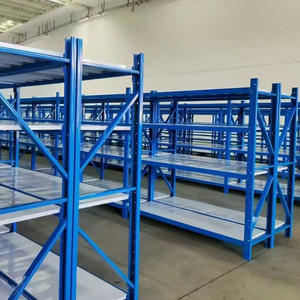
Manufacture Factory 4 Layers Metal Materials Light Duty Racks Warehouse Storage Racks
Four-layer light-duty racking for cartons, spare parts and e-commerce picking. Boltless adjustment and export-packed components make it a practical wholesale SKU.
View product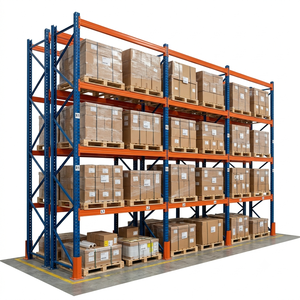
Heavy Duty Pallet Rack Industrial Warehouse Shelving Adjustable Steel Storage Rack System for Logistics Center
Heavy-duty pallet racking for logistics centers, with adjustable beams, pallet support accessories and clear load-capacity planning for export projects.
View product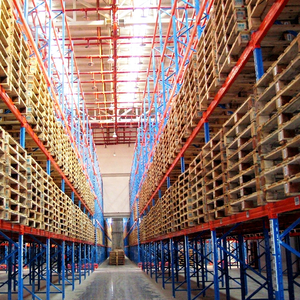
Manufacturer Heavy Duty Warehouse Shelving/storage Pallet Rack /selective Heavy Duty Racking System
Selective pallet racking for high-turnover warehouses. Engineered uprights and beam connectors support safe forklift access and future reconfiguration.
View product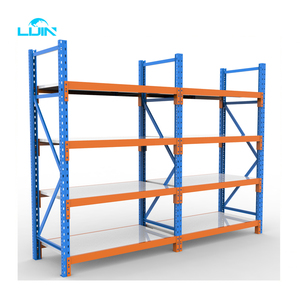
Boltless Adjustable Industrial Heavy Duty Pallet Racking System Warehouse Steel Metal Storage Racks Shelving Units
Boltless heavy-duty pallet racking for distributors and 3PLs that need faster assembly, lower installation labour and a scalable bay structure.
View product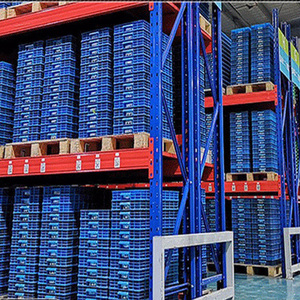
Industrial Heavy Duty Steel Selective Pallet Racking Corrosion Protection 2-Ton Capacity Powder Coated Flow Racks Warehouse
Powder-coated selective racking with corrosion protection and reinforced pallet support; a strong fit for industrial storage and cooler corridors.
View product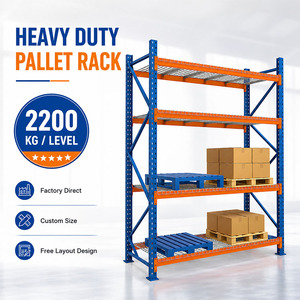
Selective Pallet Racking Heavy Duty Steel Warehouse Rack System for Industrial Storage and Logistics Use
Selective pallet racking for industrial storage and logistics. Modular bays can be quoted as standalone projects or wholesale container programmes.
View product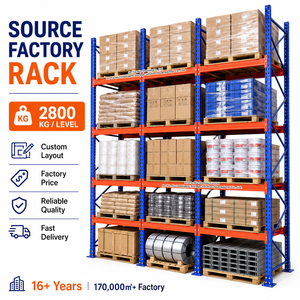
2800KG 5 Levels High Bay Industrial Pallet Racking Heavy Duty Warehouse Rack System
Heavy-duty high-bay pallet racking with five levels and a 2,800 kg-class load profile for dense warehouse utilisation and export projects.
View product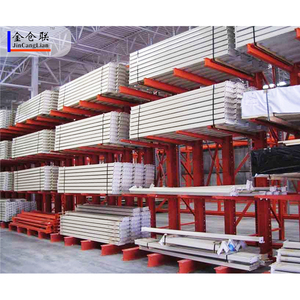
Industrial Heavy Duty Racking System Place Aluminum Profiles and Wood Panels Cantilever Arm Rack
Cantilever arm racking for aluminium profiles, timber panels and long goods, with open-front access for crane or forklift handling.
View productWhat “China Best Longspan Racking Exporters & Wholesaler” Really Means for Buyers
Semantic search intent behind this phrase is rarely a single request for a price. It usually combines exporter due diligence, wholesale cost planning, technical specification, project delivery and lifecycle risk. The most useful answer is therefore not a catalogue wall — it is a decision framework that helps buyers compare systems, documents and suppliers before an RFQ is issued.
Exporter due diligence
Buyers want to know whether the supplier can provide shop drawings, load tables, packing lists, container-loading plans and responsive technical support — not only a low unit price.
Wholesale price & MOQ
Wholesalers compare bay sizes, steel thickness, surface finish, accessory packs and mixed-container options. A strong quotation separates product cost from packing, freight and installation scope.
Technical specification
Experienced buyers look for clear load per level, bay width, upright height, beam adjustment, floor fixing and accessory compatibility so the system can pass internal safety review.
Project delivery
Procurement teams want a realistic route from drawing approval to production, export packing, port handling, customs documents and supervised installation or remote assembly support.
Parts & upgrades
Wholesale buyers often need repeat orders for beams, uprights, safety pins, footplates, shelf panels and replacement components. Spare-part discipline protects resale reputation.
Safety documentation
Quality-focused buyers request load signage, installation notes, inspection guidance and design references. This is where an exporter becomes a long-term engineering partner.
Longspan Racking Procurement Trends Reshaping Wholesale Orders
Price-per-bay remains important, but the purchasing decision is moving toward total project risk. Buyers are consolidating suppliers, asking for richer technical data and planning racking around automation, cold-chain efficiency and faster warehouse retrofits.
One engineering partner
Wholesalers and project buyers increasingly prefer a single source for longspan shelving, pallet racking, cantilever arms, mezzanines and accessories. This reduces drawing mismatches, spare-part fragmentation and split delivery risk.
Container-optimised sourcing
Export buyers now ask for mixed-container loading, knock-down packing, protected powder-coated surfaces and clear carton labelling. The best wholesale price is the one that also lowers damage and freight waste.
Data-ready RFQs
PDF catalogues are no longer enough. RFQs increasingly include pallet profiles, bay grids, CAD layouts, load per level, clear height, forklift type and inspection requirements that should feed directly into engineering.
Automation-ready layouts
Even manual racking is being planned for future AMRs, shuttles or high-bay automation. Modular upright frames, upgradeable beams and clear aisle logic protect the investment when volumes grow.
How Longspan Racking Products Are Evolving for Global Wholesale
The strongest product roadmap is not simply “more steel.” It is a tighter balance between rapid assembly, safer load control, corrosion resistance, modular accessories and future integration with automated handling.
Boltless modularity
Tool-light assembly, reversible beams and standard bay increments help wholesalers stock fewer unique parts while still supporting local project variations.
High-strength steel profiles
Optimised upright and beam sections can improve load-to-weight ratios, reduce container volume and support longer spans without compromising beam lock safety.
Powder coating & corrosion control
Improved pre-treatment, edge coverage and colour consistency are vital for humid ports, cold stores, coastal warehouses and retail-facing wholesale programmes.
Multi-tier integration
Longspan shelving is increasingly combined with mezzanine floors, pick towers and walkways, turning vertical space into productive picking area without new construction.
Automation readiness
Sensor brackets, guard protection, clear aisle widths and precise upright tolerances are being designed in from the start so future AMR or shuttle upgrades are less disruptive.
Safety-first documentation
Load signage, accessory compatibility notes, installation checklists and repair guidance are becoming standard expectations — especially where insurers and auditors review the racking.
Specifying Longspan Racking: A Practical Framework for Export Buyers
Use this framework to compare quotations. It helps separate a genuine engineering-led longspan racking exporter from a catalogue reseller and gives procurement teams a repeatable basis for technical review.
Load & bay mathematics
Confirm load per shelf, load per bay, beam span, shelf panel type and point-load risk. Do not rely on “light, medium or heavy” labels alone. The quotation should state the assumed load and the bay grid.
Handling equipment
Match aisle width, turning radius, mast height and pallet overhang to the actual forklift, stacker or picking trolley. Good layouts are built around the handling method, not only the product photo.
Floor & seismic conditions
Check floor flatness, slab strength, anchor suitability and seismic zone. For Chile, Peru, Ecuador, Colombia and other seismic regions, base plates, bracing and anchors should be project-specific.
Documentation & inspection
Request load signage, installation guidance, packing lists, accessory schedules and records for handover. This protects safety, resale value and future inspection outcomes.
Engineering references for review may include EN 15512, FEM 10.2.08 / EN 16681, EN 15620 and EN 15635, with local code coordination where required. Always match documentation to the actual project and site conditions.
Why Work With an Engineering-Led China Longspan Racking Exporter & Wholesaler
The operating model combines export responsiveness with warehouse engineering discipline: site survey and data analysis, layout and structural design, manufacturing, export packing, port shipment, supervised installation and after-sales inspection. That is the practical difference between buying steel and buying a storage system that remains safe as the business grows.
Engineering-led export
Layout options, load calculations and accessory schedules are prepared around pallet profiles, SKU velocity, clear height and handling equipment, with load signage supplied for handover.
Seismic & cold-chain capability
Systems can be configured for the Pacific seismic belt with reference to FEM 10.2.08 / EN 16681 and local requirements, and for chilled or freezer environments down to approximately -30 °C.
Documented standards
Projects can be aligned with EN 15512, EN 15620, EN 15635 and FEM 10.2.08 / EN 16681, plus ABNT NBR 15524, NCh 433, E.030 and NSR-10 coordination where relevant.
Multilingual lifecycle support
Technical support in English, Spanish and Portuguese helps project teams from first enquiry through installation, rack inspection, damage repair and future capacity upgrades.
Stock-friendly system architecture
Standard bay increments and compatible accessories help distributors and online wholesalers hold sensible stock while answering project-specific requests. Product families can be mixed in container programmes, and repeat orders can focus on beams, upright frames, panels, footplates and safety components.
Scalable from manual picking to automation
Storage layouts can begin as manual longspan racking or selective pallet racking and later move toward higher-density or automated configurations. This staged approach supports realistic capital planning, especially where land and construction costs are rising.
Common Questions About Longspan Racking Export & Wholesale
These answers address the questions most often raised by distributors, project contractors, warehouse owners and procurement teams comparing China-based suppliers.
What is longspan racking best used for?
Longspan racking is commonly used for hand-loaded cartons, spare parts, small components, archives, e-commerce picks and light industrial stock. It is ideal where shelf access, visual control and adjustable levels matter more than forklift pallet throughput.
Should I buy from an exporter or a wholesaler?
An exporter is usually stronger for project coordination, drawings and mixed container loading. A wholesaler can be better for repeat standard SKUs. Many serious suppliers operate as both, so evaluate the quotation, documentation and after-sales process rather than the label alone.
What information is needed for an accurate quote?
Provide warehouse location, floor plan, clear height, pallet or carton dimensions, load per level, handling equipment, required bay count, floor condition, seismic zone, target finish and delivery port. Photos and CAD layouts reduce back-and-forth significantly.
What are typical MOQ and lead-time considerations?
MOQ depends on the product family, colour, steel specification and packing plan. For wholesale programmes, mixed containers with several core systems are often more efficient. Lead time should be checked after drawing approval, material preparation, production scheduling and export packing.
Can sizes, colours and OEM/ODM details be customized?
Yes, subject to structural review. Bay width, upright height, shelf levels, finish colour, branding and packaging can often be customized. Load-bearing changes must be verified by engineering because beam span, steel section and accessory choice affect the safe working load.
How can installation and quality be supported?
Support can include assembly drawings, packing lists, installation guidance, load signage and remote review. For larger projects, supervised installation should be planned with a locally licensed team where required. Inspection, damage repair and capacity upgrades should also be discussed before purchase.
Request a Specification Review and Wholesale Catalog
Send your warehouse location, floor plan, clear height, pallet or carton dimensions, load per level and target port. The export team can respond with a product catalogue, practical bay options and a technical clarification list for your longspan racking or pallet racking project.