Eight Pallet Rack Systems for Wholesale and Project Supply
Compare heavy-duty selective racking, corrosion-protected systems, detachable stacking racks, cantilever storage and boltless shelving. Each product below links to its live product page and preserves the original URL for easy specification, comparison and quotation.
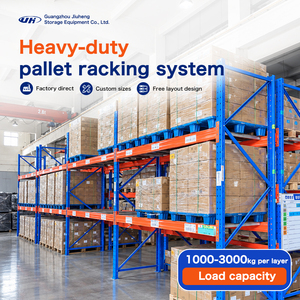
Industrial Steel Heavy Duty Pallet Racking Warehouse Storage System Adjustable Beam High Load Capacity Rack Manufacturer
A selective pallet racking workhorse for distributors and 3PLs that need direct access to every pallet. Adjustable beams and heavy-gauge uprights support mixed SKU profiles and future reconfiguration.
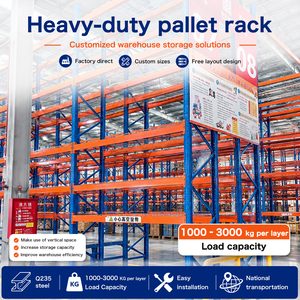
Industrial Warehouse Heavy Duty Pallet Rack System Steel Storage Racking Adjustable Beam High Capacity Storage Solution
Built for warehouses that need a high-capacity, flexible pallet storage solution without overspecifying the building. The system suits rack-supported pick faces, reserve storage and future aisle changes.
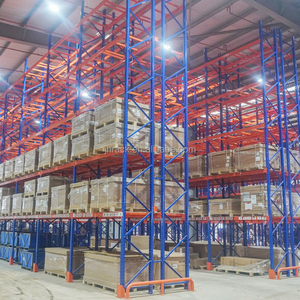
Heavy-Duty Corrosion Protected Pallet Racking Systems for Warehouse and Factory Storage by Jinhui Warehousing Suppliers
Specified for humid, coastal, cold-chain and food-processing environments where standard paint systems may deteriorate. Surface preparation, coating selection and touch-up planning are reviewed with the project team.
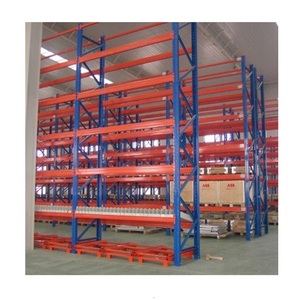
Industrial Heavy Duty Rack Factory Price Steel Pallet Racking Storage Systems From Warehouse Pallet Rack Manufacturer
A factory-price route for wholesalers and project contractors that need predictable steel quality, consistent beam pitch and export-ready packing. Suitable for warehouses, workshops and distribution centres.
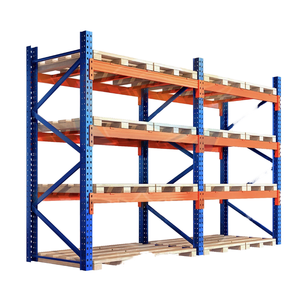
1-5 Layer Heavy Duty US Type Detachable Pallet Rack Storage Steel Stacking Rack Supplier for Bulk Storage Plant Large Warehouse
Detachable stacking racks create high-density bulk storage without fixed aisle racking. They are useful for factories, temporary storage, export packing yards and large warehouses where goods must be stacked, moved or stored outdoors.
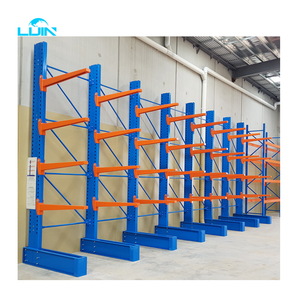
Factory Price Cantilever Rack Heavy Duty Industrial Cantilever Racking Steel Storage
Cantilever racking stores pipes, profiles, timber, panels and other long or uneven loads without obstruction at the front. Single-sided and double-sided configurations can be adapted to indoor or outdoor yards.
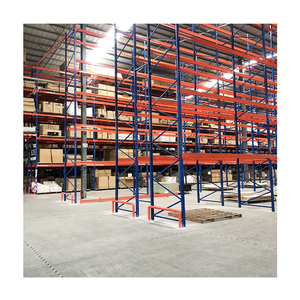
Heavy Duty Warehouse Pallet Rack Industrial Storage Shelf Metal Racking Systems Boltless Steel Shelving
Boltless steel shelving gives hand-loaded storage for spare parts, tools, cartons, e-commerce SKUs and archive boxes. The modular design can be combined with multi-tier walkways and picking faces.
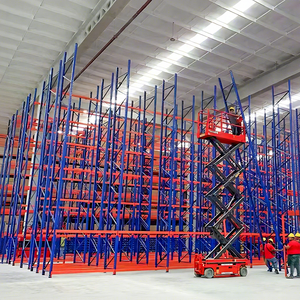
Pallet Rack Heavy Duty Industrial Warehouse High Quality Warehouse Heavy Duty Rack Industrial Racks for Storage
A high-quality warehouse rack option for project buyers that need a balance of load capacity, installation speed and long-term availability of spare parts. Ideal for distribution centres and manufacturing stores.
A Pallet Rack System Is a Load-Bearing Asset — Not a Commodity
Warehouse capacity is no longer a simple real-estate decision. Rising land and rent costs, labour availability, stricter safety audits and faster order cycles mean every cubic metre of racking must work harder.
Engineering Begins With the Real Load Case
A pallet rack system interacts with the floor, forklift fleet, sprinkler design, fire strategy, seismic zone and building height. Serious buyers source from a China pallet rack systems supplier and wholesaler that can combine manufacturing control with engineering review, documentation and export experience — not from a trading company that only quotes a price per beam.
Our approach starts with pallet dimensions, weight, load overhang, SKU velocity, clear height, floor tolerance, forklift type, aisle width and local seismic requirements. This is the same methodology used on complex storage projects across South America, where seismic design, cold-chain performance and port logistics are part of the brief rather than an afterthought.
Information Gain for Procurement Teams
Prices alone do not explain total cost. A lower-cost rack that cannot be inspected, repaired or extended becomes expensive when operations change. A well-specified system should include load signage, capacity tables, installation records and a clear path to add bays, levels or higher-density modules later.
For wholesalers, this level of documentation is also a commercial advantage. It helps your sales team answer technical questions, support tender submissions and protect the project margin when buyers compare offers from multiple countries. The result is a practical balance between factory-direct cost control and engineered safety.
Why Buyers Choose This China Pallet Rack Supplier & Wholesaler
Wholesale buyers and project owners need more than access to steel. They need repeatable quality, technical answers, export packing and after-sales support that holds up when the racking reaches site.
Factory-Direct Cost Control
Profiles, punching, welding, powder coating and export packing are coordinated under one supply plan. Wholesalers gain transparent specification and a better path to repeatable project pricing.
Engineering Calculations
Structural calculations, load signage, capacity tables and installation records can be prepared for the project. This supports insurers, auditors and internal safety teams.
Seismic & Local Code Awareness
For Chile, Peru, Ecuador and Colombia, layouts can be reviewed against FEM 10.2.08 / EN 16681 principles and coordinated with local requirements such as NCh 433, E.030 and NSR-10.
Cold Storage & Corrosion Protection
Chilled and freezer environments down to approximately -30°C require attention to coating, condensation, base plates and material handling. Coastal and food-processing sites can use enhanced protection.
Automation-Ready Modularity
Racking can be planned from manual picking to semi-automated storage and future shuttle or AMR integration. Modular beam levels make it easier to adapt without replacing the whole installation.
Export Packing & Lifecycle Support
Shipment can be prepared for ports such as Santos, Callao, San Antonio, Buenos Aires, Cartagena and Guayaquil. Spare parts, inspection guidance and upgrade planning are available after handover.
Pallet Rack Purchasing Trends for 2025 and Beyond
Buyers are moving away from isolated price comparisons toward vendor partners who can support compliance, expansion and operational change. These trends are especially visible in fast-growing logistics markets across South America and Southeast Asia.
Nearshoring and Regional Distribution
More companies are holding inventory closer to customers. That increases demand for flexible selective racking and high-density systems that can be installed quickly in leased warehouses instead of waiting for new construction.
Automation-Ready Specification
Even if a warehouse starts manual, procurement teams want a rack design that can accept shuttle systems, AMRs or semi-automated storage later. Rack tolerance, floor flatness and interface planning are now discussed earlier.
Seismic Documentation as a Tender Requirement
In Chile, Peru, Ecuador and Colombia, buyers increasingly request seismic calculations, anchor details and bracing information before an order is placed. A supplier that understands these expectations reduces project risk.
Cold-Chain and Energy Efficiency
Fruit, seafood, meat and dairy exporters need freezer-ready racking that uses refrigerated volume efficiently. Mobile racking and high-density layouts can reduce the air volume that must be cooled.
E-commerce SKU Fragmentation
More SKUs, smaller order quantities and faster replenishment put pressure on pick faces. Buyers are combining pallet racking with boltless shelving, mezzanines and semi-automated storage to separate reserve and forward-pick inventory.
Total Cost of Ownership Over Unit Price
Procurement teams now compare installation time, damage repair, spare-part availability, inspection frequency and future reconfiguration cost. These factors often matter more than a small difference in the initial quote.
How Pallet Rack Systems Are Evolving
Racking technology is moving toward higher density, faster installation, better documentation and easier integration with digital warehouse operations.
High Density Without Losing Access
Mobile racking, shuttle systems, push-back and drive-in designs continue to improve. The goal is to reduce aisle space while keeping a practical level of pallet selectivity for the operation.
Leaner Steel and Higher Strength
Optimised profiles and better manufacturing control help reduce material use per pallet position. Buyers should still compare load capacities, deflection limits and safety factors rather than steel weight alone.
Boltless and Faster-Build Frames
Boltless shelving and simplified frame connections reduce installation time and site labour. For export projects, fewer loose components can also make packing and site handling more predictable.
Digital Load Signage and QR Documentation
Capacity labels, inspection records and spare-part schedules can be linked to QR codes. This gives maintenance teams fast access to the correct information during audits, repairs and layout changes.
Freezer and Corrosion Innovations
Cold-store projects require coating systems, base details and anchors that perform under condensation and low temperatures. Coastal and food-processing sites are also driving demand for enhanced corrosion protection.
Integration With Shuttle, AMR and Semi-Automation
Racking is increasingly part of a wider material handling system. Early coordination between rack design, floor tolerance, battery charging, safety fencing and software prevents costly retrofit work later.
Which Pallet Rack System Should You Buy?
Use the operational profile of the warehouse to narrow the shortlist before requesting a layout and quotation.
Selective Pallet Racking
Best when every pallet must be accessible and SKU profiles change frequently. Strong fit for 3PLs, e-commerce reserve storage and spare-parts distribution.
Detachable Stacking Racks
Best for large batches, export packing yards and factories where goods can be stacked in layers. The racks can be moved, nested or reused as storage demand changes.
Cantilever Racking
Best for pipes, steel profiles, timber, panels and other long loads. The open front allows forklift or crane handling without cross beams obstructing the load.
Boltless Steel Shelving
Best for hand-loaded SKUs, tools, spare parts and archive boxes. The system can be expanded with dividers, drawers and multi-tier walkways.
Illustrative density vs. selectivity guide
Illustrative comparison only. Final selection depends on SKU velocity, handling equipment, fire strategy, floor condition and local code requirements.
Engineering Experience, Factory Efficiency and Export Discipline
Real Nice Racks LLC supports multinational brands and fast-growing regional companies from first site survey to installation, inspection and ongoing service. Our China supply team translates that project experience into clear specifications, controlled manufacturing and export-ready packing.
Every layout starts with real data — pallet profiles, SKU velocity, forklift types, clear height and seismic zone — so the system fits how the warehouse actually works, not a generic template. This is how a supplier earns trust across Brazil, Chile, Peru, Colombia, Argentina, Ecuador, Uruguay and Paraguay.
- Structural calculations and load signage delivered with every project
- Technical support in English, Spanish and Portuguese
- Scalable systems that grow from manual picking to automation
- Export packing and documentation prepared for major South American ports
- Lifecycle support: inspection, repair and capacity upgrades

Engineered racking layouts combine safe access, clear documentation and future scalability.
Safety You Can Document — Not Just Promise
Procurement teams and insurers increasingly ask for proof. Every project should come with structural calculations, load signage and installation records, prepared against recognised racking standards and coordinated with local building codes by licensed engineers where required.
Design Review Before Manufacture
Beam capacity, upright capacity, bracing, anchor design, floor tolerance and aisle clearance should be checked before steel is ordered. This reduces site rework and protects the installation schedule.
Handover That Supports Daily Operations
Load signs, capacity tables and inspection guidance help warehouse teams use the system correctly from day one. Spare parts and repair planning extend the working life of the racking.
From Enquiry to Installation in Four Controlled Stages
A clear project path keeps budgets predictable and timelines realistic, even for multi-country wholesale orders.
Analyse
Site survey, pallet data, SKU velocity, floor condition, handling equipment and local seismic requirements are reviewed.
Design
Layout options, structural calculations and capacity comparison help the buyer select the right density and selectivity.
Manufacture
Steel production, quality checks and export packing are scheduled against the approved specification and delivery plan.
Deliver & Support
Shipment, supervised installation, load signage, handover records and long-term inspection or upgrade support.
Pallet Rack Procurement Questions from Wholesale Buyers
These are the questions our project team receives most often from distributors, warehouse owners, contractors and system integrators.
What makes this a China pallet rack systems supplier and wholesaler for project buyers?
We support both wholesale stock orders and project-specific pallet racking. That means you can request standard bay sizes for resale or send pallet dimensions, floor plans and load requirements for a tailored layout. Our team coordinates specification, manufacturing, export packing and documentation, which reduces the gap between a factory quotation and a usable site solution.
Can you customise rack dimensions and load capacity?
Yes. Upright height, frame depth, beam length, load capacity, beam pitch, shelf levels and accessories can be configured to the application. For heavy-duty or seismic projects, we review the load case and local requirements before finalising the design. Please provide pallet size, weight, load overhang and forklift type.
How do you prove quality and safety?
Depending on the project, we can provide structural calculation packages, load signage, material specifications, inspection records and installation guidance. Racking can be designed with reference to EN 15512, FEM 10.2.08 / EN 16681, EN 15620 and EN 15635, and coordinated with local codes such as NBR 15524, NCh 433, E.030 and NSR-10 where applicable.
Do you supply racking for cold storage and seismic zones?
Yes. Cold-store and freezer systems can be specified for chilled and frozen environments down to approximately -30°C, with attention to coating, condensation and material handling. For seismic zones in Chile, Peru, Ecuador and Colombia, base plates, anchors, bracing and beam connectors can be reviewed against the site seismic zone and soil conditions.
What information is needed for a quotation?
Send the warehouse location, floor plan, clear height, pallet dimensions, load per pallet, handling equipment, aisle requirements and any local code information. Photos and existing rack details are helpful for retrofit projects. Our team will propose layout options and identify the information needed to finalise pricing.
How are shipping, installation and after-sales handled?
Export packing can be prepared for shipment to major ports such as Santos, Callao, San Antonio, Buenos Aires, Cartagena, Guayaquil and Montevideo. Installation can be supported with drawings, supervision or site guidance depending on the project. After handover, inspection, repair, spare parts and capacity upgrade support can be planned for the life of the system.
Request the Latest Pallet Rack Catalog and Plan Your Next Warehouse Project
Whether you are building a new distribution centre, expanding a cold store or sourcing standard bays for wholesale resale, our team can help you compare layouts, load capacities and export options. Include your warehouse location, pallet profile and clear height for a faster response.