China Best Warehouse Storage Racks Supplier & Exporters
Engineered pallet racking, narrow aisle systems, push-back racking, roller shelves and cantilever racks — supported by project design, export packing, load documentation and lifecycle service for global warehouses.
8 Warehouse Storage Rack Products for Distributors, Contractors and Warehouse Owners
The strongest procurement decision is not simply the lowest price per upright or beam. It is the system that preserves selectivity, meets floor and seismic conditions, fits your forklift fleet and arrives with documentation that satisfies safety teams. The eight products below cover the most requested export categories — selective pallet racking, narrow aisle racking, push-back racking, steel shelving, 3000 kg heavy-duty racking, roller shelves and cantilever storage for long materials.
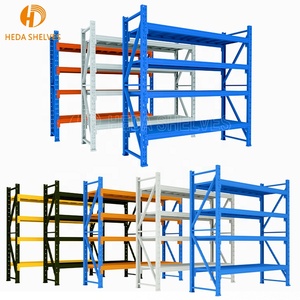
Heavy Duty Warehouse Pallet System Warehouse Racking Pallet Rack Shelving Pallet Racking for Industrial Shelves System
A versatile selective pallet racking platform for industrial warehouses, distribution centres and mixed pallet and carton storage.
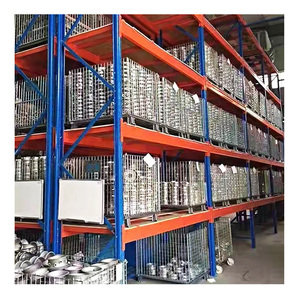
Pallet Racking Warehouse Storage Heavy Duty Industrial Pallet Shelf Narrow Aisle Selective Warehouse Racking System
High-bay narrow aisle racking for warehouses that need more pallet positions without losing direct access to every SKU.
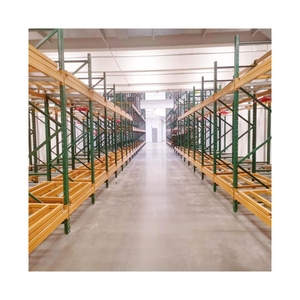
Custom Storage System Stacking Racks Shelves Warehouse Rack Push Back Pallet Racking with Guide Rail
Dense LIFO push-back storage for medium-throughput warehouses balancing capacity, selectivity and forklift efficiency.
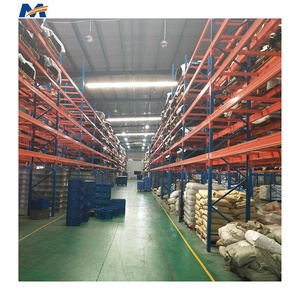
China Estantes Metalicos Heavy Duty Pallet Rack Beams Store Steel Shelving for Warehouse
Steel pallet rack beams and shelving combinations for buyers who need export-ready strength, simple assembly and flexible layouts.
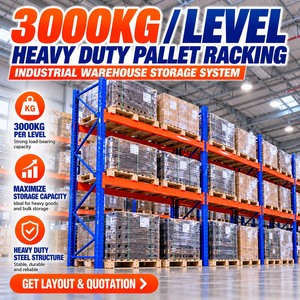
3000kg Per Level Heavy Duty Warehouse Pallet Racking System
Heavy load racking for dense pallets, industrial materials and export projects that require verified load signage and capacity tables.
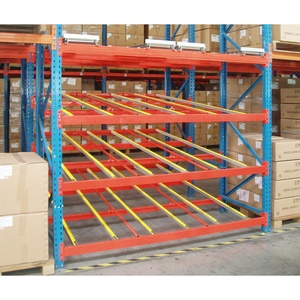
Warehouse Equipment Roller Shelves
Roller shelf storage for faster order picking, smoother carton flow and better ergonomics in spare parts and e-commerce operations.
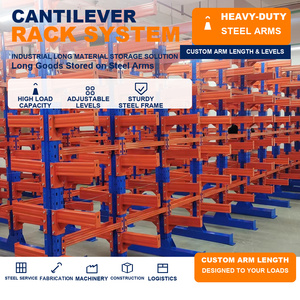
Cantilever Rack Heavy Duty Multi Level Storage Racking System Adjustable Arm Shelving Unit for Long Material Warehouse Use
Open-front cantilever storage for pipes, steel profiles, timber, profiles and long goods that cannot be handled efficiently in pallet racks.
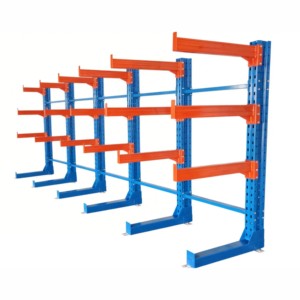
CE Certified Heavy Duty Steel Cantilever Rack Adjustable Foldable Arm Racking/Shelves Anti-Rust Corrosion Protection for
CE-oriented heavy-duty cantilever racking with adjustable arms and anti-rust finishes for export warehouses, yards and building-material stores.
Why the “China Best Warehouse Storage Racks Supplier & Exporters” Decision Is Really an Engineering Decision
Warehouse racking is not generic steel furniture. It is a structural system that interacts with your floor slab, pallet loads, forklift impact, building height, fire strategy, seismic zone and future growth plan.
When procurement teams compare China best warehouse storage racks supplier & exporters, the lowest quote per tonne can hide the highest total landed cost. A racking system that uses less steel but cannot be safely loaded, that arrives without capacity signage, or that locks the warehouse into an inflexible aisle layout will create cost long after the container has been unloaded. The stronger benchmark is total installed value: accurate loads per level, correct beam and upright sections, export-ready packing, documented inspection criteria and a supplier who can support reconfiguration as the business changes.
Real Nice Racks LLC designs and supplies industrial storage and shelving that helps businesses increase capacity, productivity and operational safety. Every layout starts with real data — pallet profiles, SKU velocity, forklift types, clear height and seismic zone — so the system fits how the warehouse actually works, not a generic template. That experience matters especially for importers and contractors sourcing from China: the supplier must convert price competitiveness into project-specific engineering, not simply ship catalogue components.
- Layouts based on pallet dimensions, load per level, aisle width and forklift type
- Load signage, capacity tables and inspection records supplied with the project
- Technical support in English, Spanish and Portuguese for international buyers

Engineered storage systems start with load data, aisle planning and documented capacity — not simply a steel price list.
What Buyers Should Measure Before Placing an Export Order
Use these benchmarks to compare suppliers on engineering output, not only quotation price.
Warehouse Storage Rack Procurement Trends Shaping 2026 and Beyond
Buyers are no longer treating racking as a one-time commodity purchase. They are evaluating suppliers against total landed cost, safety documentation, climate performance, future automation and speed of retrofit.
Total Landed Cost Replaces Unit Price
Importers are comparing freight volume, packing density, installation hours, rework risk and after-sales support. A supplier that reduces container waste and supplies clear capacity tables can be cheaper than a lower steel quote.
Seismic and Safety Compliance Become Mandatory
Projects in seismic regions require bracing, base plates and anchors calculated for the site. Buyers increasingly ask for design references such as FEM 10.2.08 and EN 16681, coordinated with local codes.
Cold-Chain and Energy Efficiency
Fruit, seafood, meat and dairy exporters need racking for chilled and freezer environments. Mobile racking is especially valuable because fewer aisles mean less refrigerated air volume and lower energy use.
Automation-Ready Modularity
Buyers want racking that can begin as manual selective storage and later evolve into shuttle, mobile or semi-automated goods-to-person systems. A modular platform reduces the risk of premature replacement.
Retrofit Before New Construction
High-density layouts, mezzanine floors and narrow aisle configurations can unlock capacity inside existing buildings. That avoids the cost and delay of new construction when land or permits are constrained.
Sustainability and Steel Optimisation
Warehouse operators are asking for less steel, less wasted space and less energy per pallet stored. Careful structural optimisation and mobile high-density systems contribute to both cost and environmental goals.
What the Next Generation of Warehouse Storage Racking Must Deliver
Product development is moving toward higher density, better safety evidence, faster installation and more climate resilience — while keeping the racking flexible enough to reconfigure.
High-Density P90 Platforms
Selective, drive-in, push-back, shuttle and mobile systems benefit from a shared platform. The P90 approach allows buyers to reconfigure as volumes change, rather than replacing the entire system when picking profiles shift.
MOVO Mobile Pallet Racking
MOVO puts pallet racking on rail-guided mobile bases. Forklifts open one aisle exactly where needed while every pallet remains directly accessible, making it suitable for cold stores and high-value warehouses.
Narrow Aisle and Semi-Automation
As land and labour costs rise, narrow aisle racking, vertical lift modules and storage machines become more attractive. The best systems preserve a migration path from manual picking to assisted automation.
Cold-Store Materials and Coatings
Freezer environments demand attention to steel behaviour, protective finishes and installation tolerances. Cold storage racking must remain safe and serviceable at temperatures down to approximately -30 °C.
Cantilever and Long-Goods Handling
Steel service centres, timber merchants and building-material distributors need open-front cantilever storage. Adjustable arms and anti-rust finishes make the system adaptable to indoor and outdoor conditions.
Digital Documentation and Inspection
Load signs, capacity tables, anchor details and inspection records are becoming part of the product. Buyers need documents they can hand to safety teams, insurers and local engineers without rework.
Match the Racking System to Selectivity, Density and Handling Equipment
Use this comparison to narrow product discussions before requesting a layout and quotation.
Selective and Narrow Aisle Racking
Best where every SKU must remain directly accessible and forklift travel should stay predictable. Narrow aisle designs increase pallet positions when building height and truck type allow.
Recommended products: heavy-duty warehouse pallet system, narrow aisle pallet racking, 3000 kg per level heavy-duty racking.
Push-Back, Drive-In and Mobile Racking
Best for homogeneous pallets, seasonal inventory and cold-chain warehouses where maximising positions per cubic metre is more important than immediate access to every pallet.
Recommended products: push-back pallet racking with guide rail, MOVO mobile racking concepts, custom high-density layouts.
Cantilever, Roller and Steel Shelving
Best for pipes, profiles, timber, spare parts and mixed cartons. Cantilever keeps the front open for crane or forklift access; roller shelves improve picking ergonomics and carton flow.
Recommended products: adjustable multi-level cantilever rack, CE certified cantilever rack, roller shelves, steel pallet rack shelving.
Why Real Nice Racks LLC Supports Export Buyers Beyond the Quotation
Real Nice Racks LLC is an export-oriented storage engineering partner for industrial racking, shelving, mezzanines and semi-automated storage. The company supports multinational brands and fast-growing regional companies from the first site survey to installation, inspection and ongoing service.
For buyers sourcing warehouse storage racks from China or through international export channels, the advantage is not only access to manufactured steel. It is the ability to translate project data into a buildable, safe and expandable storage system. That is where engineering experience, standards knowledge and lifecycle support become commercial advantages.
Engineering-Led Customisation
Layouts are based on pallet profile, load per level, SKU velocity, clear height, forklift type and seismic zone — not a single catalogue layout.
Export Packing and Logistics
Projects follow a defined lifecycle: analysis, design, manufacturing, export packing, shipment to the nearest port, supervised installation and handover. Typical delivery ports include Santos, Callao, San Antonio, Buenos Aires, Cartagena, Guayaquil and Montevideo.
Standards and Documentation
Static steel racking is designed in line with EN 15512, floor tolerances per EN 15620, use and inspection guidance per EN 15635, and seismic design references such as FEM 10.2.08 / EN 16681.
Multi-Language Technical Support
Technical support is available in English, Spanish and Portuguese, helping South American and international buyers align drawings, load data and installation requirements.
Cold-Chain and Seismic Experience
Cold storage systems down to approximately -30 °C, plus seismic-aware design coordinated with local requirements such as NCh 433, E.030, NEC-SE-DS and NSR-10.
Lifecycle Service
After-sales services include periodic rack inspection, damage repair, capacity upgrades and support for warehouse retrofits and re-layouts.

Engineering support, installation supervision and inspection records help turn an export shipment into a reliable storage system.
Safety You Can Document — Not Just Promise
Procurement teams, insurers and local engineers increasingly ask for evidence. A credible racking supplier should provide structural calculations, load signage, installation records and inspection guidance prepared against recognised racking standards.
Designed for the Realities of International Warehousing
South American and global warehouses face seismic activity, humid tropical climates, cold-chain export requirements and fast e-commerce growth. Each condition changes the specification. A layout that works in a dry temperate warehouse may fail in a freezer store, a coastal yard or a seismic zone if bracing, anchors, finishes or aisle widths are not adjusted.
For high-density systems, capacity gain must be balanced against forklift access and safety. In a documented retail distribution project, high-density P90 racking unlocked significant extra capacity inside an existing warehouse while maintaining safe, efficient forklift operations. That same principle applies wherever industrial land prices are rising and new construction is slow.

From Site Survey to Long-Term Support
A clear five-stage approach keeps budgets predictable and timelines realistic, even for multi-country rollouts.
Analyse
Site survey, SKU and throughput data, floor condition and seismic assessment.
Design
Layout options, structural calculations, capacity comparison and load signage planning.
Manufacture
Quality-controlled steel production, finishing, export packing and documentation.
Deliver & Install
Shipment to the nearest port, supervised installation and handover with inspection records.
Support
Rack inspection, damage repair, training and capacity upgrades as the warehouse grows.
Common Questions About Warehouse Storage Racks Supply and Export
These are the questions procurement teams, contractors and warehouse owners ask most often when comparing China best warehouse storage racks supplier & exporters.
Can your pallet racking be designed for seismic zones?
Yes. Racking for seismic regions can be calculated with reference to FEM 10.2.08 seismic methodology and EN 16681, and coordinated with local requirements such as NCh 433 and NCh 2369 in Chile, E.030 in Peru, NEC-SE-DS in Ecuador and NSR-10 in Colombia. Base plates, anchors, bracing and beam connectors are specified for the site’s seismic zone and soil type, and final calculations can be reviewed with a locally licensed structural engineer when required.
Which design standards do your storage systems follow?
Static steel racking is designed in line with EN 15512, with floor tolerances per EN 15620, operation and inspection guidance per EN 15635, and seismic design per FEM 10.2.08 / EN 16681. In Brazil, projects are aligned with ABNT NBR 15524 for selective pallet racking. Load signage, capacity tables and inspection records are supplied with every installation.
Do you supply racking for cold storage and freezer warehouses?
Yes. Cold storage pallet racking, mobile racking and high-density systems are specified for chilled and frozen environments down to approximately -30 °C, which suits fruit, seafood, meat and dairy export hubs. Mobile racking is especially effective because it reduces the volume of air that must be refrigerated and can increase pallet positions inside the same insulated envelope.
How are projects delivered and installed across South America?
Each project follows a defined lifecycle: site survey and data analysis, layout and structural design, manufacturing, export packing and shipment to the nearest port, supervised installation, and handover with load signage and inspection documentation. After-sales services include periodic rack inspection, damage repair and capacity upgrades. Typical delivery ports include Santos, Callao, San Antonio, Buenos Aires, Cartagena, Guayaquil and Montevideo.
Can you upgrade an existing warehouse instead of building a new one?
Yes. Retrofit projects typically combine re-layouts, higher-density systems such as drive-in, push-back, shuttle or mobile racking, mezzanine floors and narrow aisle configurations. High-density pallet racking can deliver up to 20% more storage capacity within the same building footprint, avoiding the cost and delay of new construction.
What information should buyers provide for an accurate quotation?
Provide the warehouse location, floor plan, clear height, floor condition, pallet dimensions, load per pallet and per level, forklift type and aisle constraints. If the building is in a seismic zone, include the site location and any local design requirements. Product catalogues and technical documentation can be requested through the catalogue button.
Can the racking be scaled toward automation later?
Yes, if the initial layout is planned correctly. A modular platform can begin as manual selective or narrow aisle storage and later incorporate mobile bases, shuttle systems or semi-automated storage machines. The key is to preserve compatible beam levels, aisle strategy, floor capacity and power or control provisions during the first phase.
How can buyers request technical information or a catalogue?
Procurement and engineering teams can email [email protected] with the warehouse location, floor plan, clear height, pallet dimensions, load per pallet and handling equipment. Product catalogues and technical documentation are also available through the enquiry button below.
Request the Engineering Catalogue for Your Warehouse Project
Whether you are building a new logistics facility, modernising a cold store or adding cantilever storage for long materials, a structured brief helps the engineering team recommend the right racking, shelving or high-density system. Share your location, floor plan, clear height, pallet size, load per pallet and forklift type to move from product browsing to a project-specific layout.
Technical support available in English, Spanish and Portuguese. Email: [email protected]
