8 Pallet Shelf Rack Systems Shortlisted from China Factories & Supplier
These product families cover the practical buying intents behind most warehouse racking searches: selective pallet racking, high-density push-back, light-duty steel shelving, cantilever storage, small-parts shelving and raw-material racking. Each item preserves its original product URL and product image.
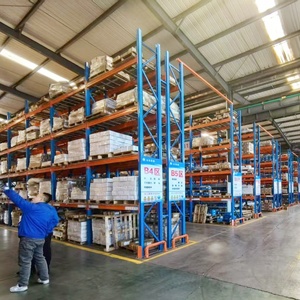
Industrial Warehouse Storage Rack Adjustable Custom 800-3000kg/Level Load Capacity Heavy Duty Selective Pallet Racking System
Direct access to every pallet, adjustable beam levels and 800–3000 kg/level capacity. A strong default choice for mixed-SKU distribution centres that need flexibility before maximum density.
View product details →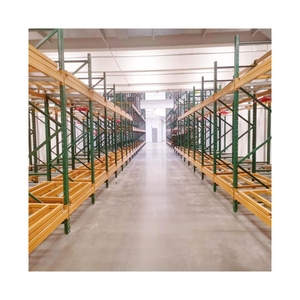
Custom Storage System Stacking Racks Shelves Warehouse Rack Push Back Pallet Racking with Guide Rail
Guide-rail cart technology increases storage density while keeping faster access than drive-in racking. Suitable for food, beverage, 3PL and manufacturing buffer stock.
View product details →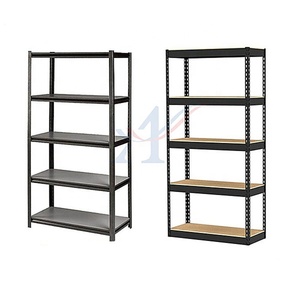
800*400*1500mm 4 Layers Adjustable Steel Rack
A compact four-layer steel rack for backrooms, spare parts, workshop tools, e-commerce SKUs and small warehouse zones. Easy to reconfigure and economical to ship in mixed containers.
View product details →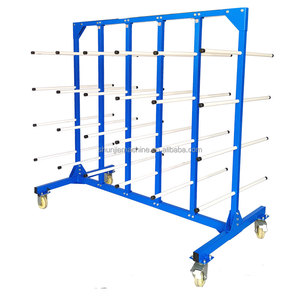
Customized 5 Tiers Cantilever Racking for Warehouse with Wheels Long Arms Metal Double Side Cantilever Rack Cart
Mobile double-sided cantilever storage for pipes, profiles, timber and long components. Long arms, wheeled movement and open access suit fabricators and building-material suppliers.
View product details →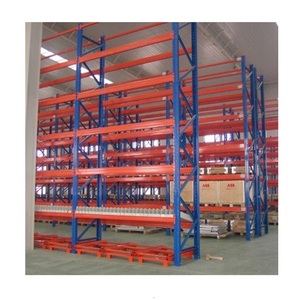
Industrial Heavy Duty Rack Factory Price Steel Pallet Racking Storage Systems From Warehouse Pallet Rack Manufacturer
A workhorse platform for high-bay warehouses, cold stores and retrofit projects. Specify steel grade, coating, beam locks, base plates and seismic anchors for your site.
View product details →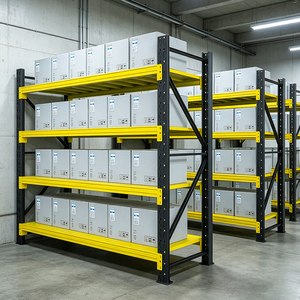
Warehouse Racking Pallet Rack warehouse Small Parts Shelves Tires Stacking Racks Shelves
Combines pallet racking, shelf levels and tire stacking in one layout. Useful where distributors need to store cartons, components and bulky items without losing picking access.
View product details →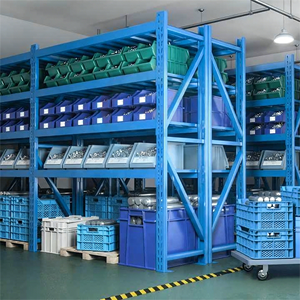
High Quality Durable Corrosion Protected Boltless Adjustable Warehouse Light Duty Industrial Metal Shelving Metal Storage Racks
Corrosion-protected boltless shelving for humid ports, freezer anterooms, retail backrooms and maintenance stores. Fast assembly and container-friendly packing reduce landed cost.
View product details →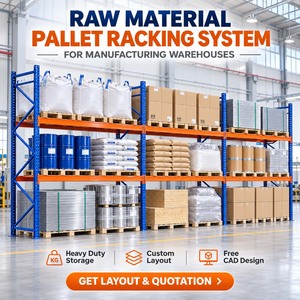
Pallet Racking System for Manufacturing Raw Material Warehouses
Purpose-built raw-material racking for coils, components, packaging and production buffers. Layouts can be designed around forklift, crane or future AGV access.
View product details →Need dimensions, load tables or a factory quotation for a shortlisted system?
Send an InquiryWhat “Top Factory” Should Mean When You Buy Pallet Shelf Racks from China
The best China pallet shelf rack supplier is not the one with the longest catalogue. It is the one that can prove structural design, steel traceability, coating durability, export packing discipline and after-sales support before the container leaves the port.
China’s storage-equipment ecosystem combines steel processing, laser cutting, roll forming, robotic welding, powder coating, fasteners and export logistics in a way that few markets can match. That depth gives serious buyers access to engineered racking at factory economics, not simply low-cost steel. However, the market is broad: trading companies, small fabrication workshops and genuine engineering-led factories can look similar on a product page. A top-tier supplier should be selected through a structured audit of engineering capability, material control, production equipment, coating process, testing records and export experience.
For procurement teams, the decision is increasingly about total installed cost and lifecycle risk. A pallet rack is a safety-critical structure. Poor upright thickness, inconsistent welding, weak beam locks, incorrect base plates or incomplete load signage can create inspection failures, downtime and insurance exposure long after the invoice has been paid. The right supplier provides marked drawings, load capacity tables, coatings specifications, container loading plans, installation guidance and spare-parts support. That is the difference between buying shelves and procuring a storage system.
Why China Still Sets the Benchmark for Pallet Shelf Rack Manufacturing
China’s advantage is not a single province or a single factory type. It is an integrated industrial supply chain: cold-rolled steel coils, high-strength Q235B and Q355B sections, precision roll forming, laser-cut base plates, robotic welding, hardware, powder coating and mature export packaging can be coordinated within a short industrial radius. This makes rapid iteration possible — a buyer can move from a CAD layout to a prototype, container-loading plan and production batch with fewer hand-offs than in many other sourcing markets.
The strongest factories have also matured beyond simple fabrication. They understand beam-to-upright connections, frame bracing, floor tolerances, forklift impact protection, sprinkler clearance and seismic anchorage. They can prepare load tables and marking drawings that align with EN 15512, FEM 10.2.08, EN 16681 and EN 15635 principles, and they can coordinate with local engineers when projects require country-specific verification. For warehouses in seismic zones, cold-chain facilities or high-bay distribution centres, this documentation is not administrative decoration — it is the basis for safe operation.
- Material discipline: steel certificates, section properties, thickness checks and batch traceability.
- Fabrication control: laser cutting, consistent hole pitch, controlled welding and squareness verification.
- Coating durability: pre-treatment, powder thickness, adhesion and salt-spray performance for humid or cold environments.
- Export readiness: sea-worthy packing, container optimisation, spare fasteners and clear installation sequences.

A top racking supplier should connect factory production with layout engineering, load signage and installation planning.
Six Proof Points That Separate Top Pallet Rack Factories from Catalogue Traders
Before requesting a price, ask for evidence. A real engineering-led factory can answer technical questions consistently, show process controls and explain how the racking will be inspected after installation.
1. Structural Calculations & Load Tables
Top suppliers can provide upright and beam capacity data, deflection checks, base-plate details, anchor specifications and seismic design input. Answers should be project-specific, not a generic catalogue page.
2. Steel Traceability
Ask for steel grade, coil certificates, section thickness and yield strength. A factory that understands Q235B versus Q355B will also understand why a lower steel mass is not always a saving.
3. Coating & Corrosion Control
For ports, cold stores and humid climates, ask about pre-treatment, powder thickness, adhesion and salt-spray test reports. A visually smooth finish is not the same as a durable coating system.
4. Welding, Hole Pitch & Squareness
Beam pitch accuracy, upright straightness, frame bracing and weld quality directly influence assembly speed and safety. Ask how the factory inspects jigs, hole spacing and post-weld distortion.
5. Export Packing & Container Loading
Top factories plan bundles, corner protection, fasteners, labels and unloading sequence. A good loading plan reduces damage, port delays and on-site confusion — especially for mixed containers.
6. Documentation, Spares & After-Sales
Load signs, installation drawings, inspection sheets and spare beam locks matter. A serious supplier supports the system after shipment through spare parts, inspection advice and capacity upgrades.
Pallet Shelf Rack Procurement Trends Reshaping China Sourcing, 2025–2030
Search intent is shifting from “cheap pallet rack price” to “warehouse racking supplier with engineering, documentation and lifecycle support”. These are the procurement criteria gaining weight with professional buyers.
TCO Over Unit Price
Buyers now compare landed cost, installation time, inspection risk, spare-parts availability and future reconfiguration. A low ex-works price can be expensive if the racking cannot pass inspection or fit the container efficiently.
Engineering-Led RFQs
Professional RFQs include pallet dimensions, loads, clear height, forklift type, throughput, floor slab and seismic zone. Suppliers that ask for these details usually provide more reliable layouts and fewer site surprises.
China Factory + Local Engineering
Hybrid sourcing is becoming standard: China manufacturing for steel structures, local structural review and installation supervision where codes require it. This balances cost with compliance.
ESG & Carbon Documentation
Warehouse owners increasingly ask about recycled steel content, coating emissions, packaging waste and container utilisation. Racking that uses less steel per pallet position can improve both cost and sustainability.
Digital Quality Records
PDF load tables, QR-linked inspection records, layout files and photo reports are becoming part of supplier evaluation. Buyers want data they can audit, not just a certificate image.
Automation-Ready Racking
Even manual warehouses are asking whether the racking can later support shuttles, AMRs or AS/RS interfaces. Upright tolerance, aisle geometry and floor flatness can become future automation constraints.
Product Development Trends Inside Leading Pallet Shelf Rack Factories
China’s strongest storage manufacturers are investing in product changes that matter at the system level: stronger sections, better coatings, faster assembly, seismic options and compatibility with automated material handling.
Higher-Strength Steel, Lower Waste
Optimised upright sections and high-strength steel can reduce material mass without reducing capacity. Buyers should compare section properties and calculations rather than steel weight alone.
Boltless & Faster Assembly
Boltless shelving and refined beam-lock designs shorten installation time. This is valuable where labour costs are high or where a warehouse must be reconfigured between seasons.
Corrosion Protection for Cold Chain
Freezer rooms, coastal ports and humid climates demand more than standard paint. Pre-galvanised steel, zinc-rich primers and controlled powder coating are increasingly specified for long service life.
Seismic-Ready Components
Base plates, anchor patterns, frame bracing and beam connector details are being engineered for seismic regions. This is especially relevant for Chile, Peru, Ecuador, Colombia and other active zones.
Automation Interfaces
Racking is being designed for shuttle systems, AMRs and high-bay cranes from the start. Tolerance control, floor specification and safety clearances are now part of the racking brief.
Smart Inspection & Load Signage
QR-coded load signs, inspection reminders and digital as-built records help facility teams manage racking safety. Suppliers that understand inspection culture create better long-term partners.
A 100-Point Supplier Scorecard & RFQ Data Checklist
Use a weighted scorecard to compare China pallet rack factories objectively. Price should be only one line in the decision, never the whole decision.
Practical Supplier Scorecard
Adjust weights by project. For seismic or cold-store projects, increase weight on engineering and coating documentation.
RFQ Data to Send to a Factory
- Warehouse location, clear height and floor slab information.
- Pallet length, width, height, weight and overhang.
- SKU count, turnover profile and required selectivity.
- Forklift type, mast height and aisle width constraints.
- Seismic zone, wind exposure or local code requirements.
- Cold-store temperature, humidity and wash-down conditions.
- Preferred coating colour, finish and corrosion class.
- Target load per level, levels per bay and estimated quantities.
- Destination port, container preference and installation scope.
Suppliers who request these details are more likely to return a usable drawing, load table and landed-cost estimate. Suppliers who quote only a per-bay price may be guessing.
Send an InquiryThe Real Nice Racks LLC Advantage: Factory Economics with Project-Grade Engineering
Real Nice Racks LLC designs and supplies industrial storage systems — pallet racking, shelving, cantilever, mezzanines and semi-automated storage — for warehouses that need more than a container of steel. The team connects factory production with layout engineering, load signage, installation planning and lifecycle support, helping buyers reduce the gap between a low-cost China quotation and a working warehouse system.
Projects can be supported from the first site survey through structural calculations, export packing, supervised installation and ongoing inspection. For seismic markets, racking can be calculated with reference to FEM 10.2.08 and coordinated with local requirements such as NCh 433, E.030, NSR-10 and ABNT NBR 15524 where applicable. For cold-chain warehouses, systems can be specified for chilled and freezer environments, including mobile racking where reduced refrigerated air volume improves energy efficiency.
The supplier approach also supports growth. P90 high-density layouts can unlock up to 20% more capacity within an existing building footprint, while mobile racking such as MOVO allows an aisle to open on demand and keeps 100% pallet accessibility. Procurement teams receive technical support in English, Spanish and Portuguese, with documentation and spare-parts planning aligned to long-term operation.

Mobile and high-density racking help buyers increase capacity without new construction.
Why Buyers Use Real Nice Racks LLC for Warehouse Racking Projects
Layout Engineering, Not Catalogue Selling
Every project starts with pallet profiles, clear height, handling equipment, throughput and growth assumptions. The result is a layout that fits real operations and can be phased over time.
Seismic & Compliance Support
Base plates, anchors, bracing and connectors can be specified for project locations. Documentation can be coordinated with local structural engineers and building-code requirements.
Cold-Chain & High-Density Options
Racking can be configured for chilled and freezer warehouses down to approximately -30°C, with mobile and high-density systems that reduce refrigerated volume and improve space utilisation.
Lifecycle Service
Support continues after handover through rack inspection, damage repair, training, capacity upgrades and spare-parts planning. This reduces long-term compliance risk.
Multilingual Project Communication
Technical support in English, Spanish and Portuguese helps procurement, engineering and warehouse teams stay aligned across time zones and project stages.
Scalable from Manual to Automated
Systems can start as manual selective racking and later migrate toward high-density, mobile or semi-automated storage as volumes change, avoiding a complete rebuild.
FAQ: Sourcing Pallet Shelf Racks from China Factories & Suppliers
Answers to the questions buyers ask most often before requesting a warehouse racking quotation.
How can I tell a genuine top pallet rack factory from a trading company?
Do not rely on a website or a showroom photo. Ask for the factory’s equipment list, steel certificates, section drawings, coating process, welding inspection method and recent export packing photos. A trading company can be acceptable if it has real engineering capability and quality control, but the final manufacturing source must be transparent. For safety-critical racking, request project-specific load tables, base-plate details and documentation before production.
What is the typical minimum order and lead time for China pallet shelf racks?
Many factories prefer a full 40HQ container or a mixed container with several product families, but smaller trial orders may be possible for standard shelving. Production lead time commonly starts after drawing approval and deposit; complex customized racking typically requires a longer schedule than standard boltless shelving. Always confirm whether lead time includes structural approval, coating, packing and inspection.
Can the racking be designed to EN standards or local building codes?
Yes. Serious suppliers can design static racking with reference to EN 15512, floor tolerances to EN 15620, operation and inspection guidance to EN 15635, and seismic methodology such as FEM 10.2.08 or EN 16681. For projects in Brazil, Chile, Peru, Colombia or Ecuador, documentation can be coordinated with local code requirements and reviewed by licensed engineers where required.
Do you supply racking for cold storage and freezer warehouses?
Yes. Cold-chain racking can be specified for chilled and freezer environments down to approximately -30°C, with coating, steel and connector details selected for the operating conditions. Mobile racking and high-density layouts are especially valuable in cold stores because they reduce the refrigerated air volume and can improve energy efficiency.
What information should I include in an RFQ for an accurate quotation?
Send the warehouse location, floor plan if available, clear height, pallet dimensions and weight, load per level, number of levels, SKU profile, forklift type, aisle constraints, seismic zone, cold-store temperature if applicable, preferred coating and destination port. The more operational data you provide, the more reliable the layout, load table and landed-cost estimate will be.
How are export packing, shipping and installation handled?
Top factories prepare bundle plans, corner protection, fasteners, labels and container-loading drawings to reduce transit damage. Shipping terms can vary by project, and installation may be handled by a supervised team, a local partner or the buyer’s contractor with factory drawings and remote support. Clarify the scope early: supply only, supply plus supervision, or turnkey installation.
Can I customize dimensions, colours, shelf levels and load capacity?
Yes. Pallet shelf racks and warehouse racking are commonly customized by bay width, depth, height, beam levels, load rating, upright colour, coating type, accessories and safety features. Customization should always be supported by structural calculations and clear load signage, not only by a dimensional sketch.
How do I request a technical review or factory quotation?
Use the inquiry button on this page and include your warehouse data, target capacity, product photos or drawings, destination port and preferred timeline. You can also mention whether you need seismic design, cold-store racking, mobile racking or future automation readiness. The clearer the brief, the faster the supplier can return a practical layout and quotation. Project contact: [email protected].
Turn Your Pallet Shelf Rack Requirement into an Engineered Procurement Package
Share your pallet dimensions, warehouse height, load per level, destination port and target capacity. The team can help compare China factory options, high-density alternatives and lifecycle support before you commit to a layout.