
8 Wholesale Warehouse Shelving Racks for Project Screening
Shortlist racking types by load, selectivity, clear height and handling equipment. Every product image is shown in full ratio, and every product URL is preserved for accurate specification review.
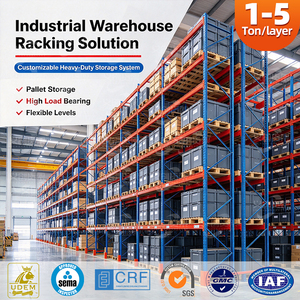
Heavy Duty Warehouse Storage Rack Selective Pallet Rack 1000-4500kg Load Capacity Q235B Steel Industrial Racking System
A workhorse selective pallet system for high-turn SKUs. The 1000–4500 kg load range, Q235B steel and adjustable beam pitch support fast, direct access to every pallet.
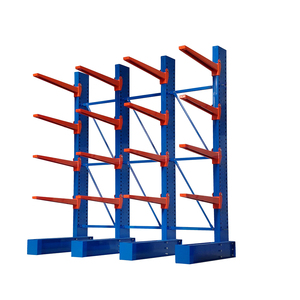
Industry Warehouse Steel Structural Pipe Rack Cantilever Rack for Pipe / Lumber Storage
Cantilever racks store pipes, lumber and profiles without front columns. Ideal for yards and distribution centers where long goods must be loaded from the open face.
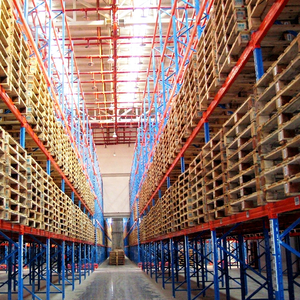
Manufacturer Heavy Duty Warehouse Shelving/storage Pallet Rack /selective Heavy Duty Racking System
Heavy-duty selective racking for manufacturers and wholesalers that need stable, modular pallet storage and straightforward expansion across multiple warehouse zones.
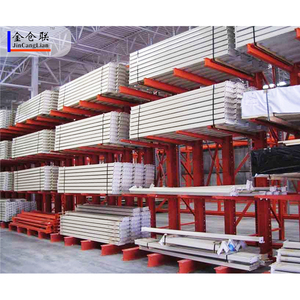
Industrial Heavy Duty Racking System Place Aluminum Profiles and Wood Panels Cantilever Arm Rack
An industrial cantilever arm rack for aluminum profiles, wood panels and surface-sensitive long goods. Arms support loads evenly and help protect finishes during storage.
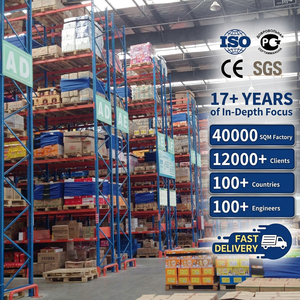
SDFD Heavy Duty Pallet Racking System Steel Durable Adjustable Box Beam Multi-layer Selective Pallet Rack for Warehouse Storage
Box-beam selective pallet racking delivers multi-layer storage and adjustable levels for changing pallet profiles and fast warehouse reconfiguration.
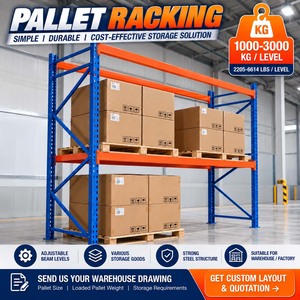
Wholesale Heavy Duty Pallet Racking System up to 3000 kg Per Level for Industrial Warehouse Storage
Heavy-duty pallet racking rated up to 3000 kg per level for industrial warehouse storage, dense pallet stacks and export-scale wholesale projects.
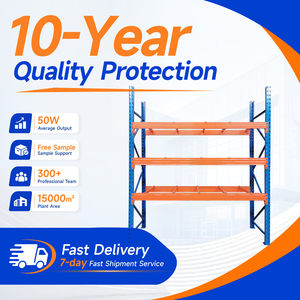
Adjustable Pallet Rack Warehouse Storage Heavy Duty Shelving Pallets Racking for Warehouse Storage
Adjustable pallet racking and heavy-duty shelving for warehouses that need flexible beam positions, fast installation and long service life.
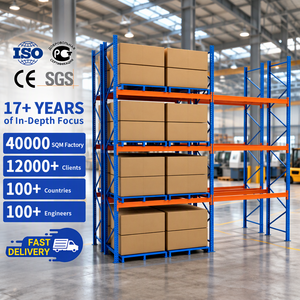
Heavy Duty Industrial Pallet Rack High Loading Multi-Level Metal Shelves Units Warehouse Steel Selective Pallet Racking System
High-load multi-level metal shelving units and selective pallet racking for large distribution centers and demanding industrial racking systems.
Why China Warehouse Shelving Racks Manufacturers Are Winning Global Wholesale Projects
Procurement teams no longer buy racking as a commodity. The winning supplier combines steel, engineering, export discipline and lifecycle documentation.
As a China top warehouse shelving racks manufacturer and wholesaler, the real advantage is not simply a lower unit price. It is the ability to consolidate Q235B steel uprights, box beams, cantilever arms, powder coating, pre-galvanized finishes, accessories and export packing into one coordinated specification. That reduces technical risk for distributors, system integrators and warehouse operators who need a repeatable wholesale programme rather than a one-off purchase.
Our project-support model follows the engineering logic demonstrated by Real Nice Racks LLC: start with the warehouse, not the catalogue. A site survey, pallet profile, SKU velocity, forklift or AGV type, clear height and seismic zone determine the layout before any beam is selected. This is how a wholesale rack programme avoids the hidden cost of rework, over-specified steel and unsafe aisle dimensions.
For buyers, the most useful information gain is a decision framework. Selective pallet racking is usually the best starting point when direct access and throughput matter most. Cantilever racking is the correct answer for pipes, lumber, profiles and panels. Adjustable box-beam racking becomes valuable when SKU profiles change. Heavy-duty selective systems suit dense pallet loads and multi-level storage. The rack should be selected by load case first, then by price.
Manufacturer and Wholesaler Advantages Built Around E-E-A-T
Experience, expertise, authority and trust are demonstrated through load calculations, standards, inspection records and delivery discipline — not advertising language.
Data-Led Layout Engineering
Every layout starts with pallet length, width, height, weight, load pattern, SKU velocity, clear height, floor condition and handling equipment. This avoids the common mistake of buying rack by nominal load alone.
Seismic and Structural Discipline
Racking for seismic markets can be calculated with reference to FEM 10.2.08 and EN 16681, then coordinated with local requirements such as NCh 433, NCh 2369, E.030, NEC-SE-DS and NSR-10 where projects require licensed review.
Cold-Chain and Corrosion Control
Chilled and freezer systems down to approximately -30°C can be specified for fruit, seafood, meat and dairy export hubs. Finish selection, mobile racking and air-volume reduction are considered together to lower refrigerated energy demand.
Documented Compliance
Projects can be aligned with EN 15512, floor tolerances per EN 15620, use and inspection guidance per EN 15635, and ABNT NBR 15524 in Brazil. Load signage, capacity tables and inspection records are supplied with installation.
Wholesale Scale, Export-Ready
Knock-down export packing, steel banding, edge protection, container loading plans and installation-sequence documentation support distributors who need reliable delivery to ports such as Santos, Callao, San Antonio, Buenos Aires, Cartagena, Guayaquil and Montevideo.
Lifecycle Support Across Languages
Survey, layout, structural design, manufacturing, export shipment, supervised installation, rack inspection, repair and capacity upgrades are managed as one lifecycle. Technical support is available in English, Spanish and Portuguese.
Match Racking Architecture to the Real Load Case
A rack recommendation should be written like a decision rule. The same warehouse may need two or three systems in different zones.
Selective Pallet Racking
Best when every pallet must be directly accessible and forklift throughput matters most. A Q235B selective system with adjustable beams is the default for high-turn distribution, spare parts and wholesale pallet storage.
Typical range: 1000–4500 kg per bay, depending on structural calculation.
Cantilever Pipe & Lumber Rack
Choose cantilever racking for pipes, lumber, profiles and bulky long stock that cannot sit safely on standard pallet beams. The open front removes columns from the loading face and improves crane or forklift access.
Best fit: building materials, steel service centers, lumber yards and fabrication stores.
Adjustable Box-Beam Racking
Adjustable box-beam selective racking supports multi-layer storage and changing pallet profiles. It is a practical recommendation for wholesalers whose SKU mix evolves faster than their building footprint.
Best fit: 3PL warehouses, seasonal inventory and mixed pallet sizes.
Heavy-Duty Selective Racking
Use heavy-duty pallet racking up to 3000 kg per level when pallet loads are dense and the structure must remain easy to inspect. Heavy-duty uprights and reinforced beam connections improve long-term durability.
Best fit: industrial warehouses, manufacturing plants and export distribution centers.
Industrial Multi-Level Racking
Multi-level metal shelving units and selective pallet racking expand usable storage height without expanding the building footprint. This is often the fastest route to capacity before a new warehouse lease is considered.
Best fit: large DCs, retrofit projects and high-clear-height facilities.
Freezer and Cold-Store Systems
Cold storage racking must consider steel finish, anchor design, condensation, inspection access and refrigerated air volume. Mobile racking can be especially effective because fewer open aisles reduce the volume of air that must be chilled.
Best fit: fruit, seafood, meat, dairy and pharmaceutical cold stores.
Racking Suitability Dashboard
Indicative planning profiles for early-stage comparison. Final values must be confirmed by site-specific structural calculations.
Future Procurement Trends in Warehouse Shelving Racks: 2026–2030
Buyers are moving from piece-price comparison toward lifecycle risk, compliance evidence and automation readiness.
Total Cost of Ownership Replaces Unit Price
Procurement will compare installation speed, damage risk, spare-part availability, inspection cost and future reconfiguration value. A slightly higher initial rack price can be cheaper over a ten-year lifecycle.
Compliance Evidence Moves into the Tender
Structural calculations, load signage, anchor specifications and inspection records will be requested before purchase, not after installation. Insurers and safety teams increasingly require documented rack capacity.
Resilience and Staged Deliveries
Wholesale buyers will plan phased shipments to match warehouse fit-out schedules, reducing site congestion and cash-flow pressure. Export packing quality and replacement-part planning will become selection criteria.
Automation-Ready Modularity
Racking purchased today should accept future shuttle, mobile or goods-to-person upgrades. Modular beam-and-upright platforms reduce the cost of scaling into semi-automated storage.
ESG and Steel Efficiency
Less steel per pallet position, lower refrigerated air volume and space-efficient layouts will support sustainability targets. High-density and mobile systems can reduce energy demand per stored pallet.
Local Installation Governance
Cross-border projects require coordination with local engineers, installers and inspectors. The strongest wholesaler will supply drawings, calculations and installation sequencing that local teams can execute consistently.
Product Development Trends Reshaping Rack Design
The next generation of warehouse shelving racks is more modular, better documented and easier to integrate with automation.
Platform-Based Selective Racking
Interchangeable uprights, beams and accessories allow a single rack platform to serve selective, push-back, shuttle or mobile layouts as volumes change. This reduces future upgrading risk.
High-Density and Mobile Configurations
As industrial land prices rise, buyers will combine selective racking with mobile bases, shuttle systems or narrow-aisle layouts. The design question shifts from “how many pallets?” to “how many pallets per square metre?”
Cold-Chain Specialization
Freezer warehouses need rack designs that tolerate condensation, low temperatures and stringent inspection access. Pre-galvanized or specialist coatings and mobile racking are becoming more common in food export hubs.
Semi-Automated Goods-to-Person
Vertical lift modules and storage machines are increasingly considered where labour costs rise and floor space is constrained. Rack layouts must be designed so future automation can be added without rebuilding the warehouse.
Seismic and Anchoring Innovation
Base plates, anchor selection, bracing and beam-to-upright connectors will continue to improve for seismic zones. Buyers will expect design assumptions to be visible in the structural documentation.
Digital Documentation and Inspection Readiness
Load signs, capacity tables and inspection records will increasingly be prepared for digital asset registers. This helps facility teams manage damage, repairs and capacity changes without losing the original engineering assumptions.
Standards, Documentation and Installation Control
Reliable wholesale racking is proven by drawings, calculations, signage and inspection records. These are the evidence layers procurement teams should request.

Structural Design References
Static steel racking can be designed in line with EN 15512, with floor tolerances per EN 15620, operation and inspection guidance per EN 15635, and seismic design reference to FEM 10.2.08 / EN 16681. In Brazil, projects can align with ABNT NBR 15524.
- Load signage and capacity tables
- Anchor and base-plate specification
- Licensed local engineer review where required

Cold-Chain and High-Density Verification
For cold stores and high-density layouts, the engineering review must consider temperature, condensation, aisle operation, forklift type and pallet condition. Mobile systems can reduce refrigerated air volume while preserving direct access to every pallet.
- Chilled and frozen applications
- Mobile and high-density configurations
- Reduced energy demand per pallet stored

Export, Installation and Lifecycle Support
Wholesale orders are packed for export and supported with installation sequencing. The project lifecycle covers site survey, layout and structural design, manufacturing, shipment to the nearest port, supervised installation and handover documentation.
- Support in English, Spanish and Portuguese
- Periodic rack inspection and repair
- Capacity upgrades without unnecessary rebuilds
Procurement FAQ for Warehouse Shelving Rack Wholesale Buyers
Direct answers for distributors, warehouse operators, system integrators and EPC teams comparing China racking manufacturers and wholesalers.
What is the typical load capacity of your warehouse shelving racks?
Selective pallet racking in this range is commonly engineered for 1000–4500 kg per bay or level, depending on upright section, beam profile, pallet footprint, load pattern and seismic requirements. Heavy-duty models can reach 3000 kg per level in the product links above. Capacity should always be confirmed by structural calculation rather than by a single catalogue number. Provide pallet dimensions, weight, load pattern, clear height and handling equipment before finalising the layout.
How do I choose between selective pallet racking and cantilever racking?
Use selective pallet racking when pallets need direct access and fast turnover. Use cantilever racking for pipes, lumber, aluminium profiles, wood panels and other long or bulky goods that cannot sit safely on standard beams. Many warehouses combine both: selective racking for palletised SKUs and cantilever racking for long stock in a separate zone.
Can racking be designed for seismic zones in Chile, Peru, Ecuador and Colombia?
Yes. Racking for the Pacific seismic belt can be calculated with reference to FEM 10.2.08 seismic methodology and EN 16681, then coordinated with local requirements such as NCh 433 and NCh 2369 in Chile, E.030 in Peru, NEC-SE-DS in Ecuador and NSR-10 in Colombia. Base plates, anchors, bracing and beam connectors should be specified for the site’s seismic zone and soil type, with final calculations reviewed by a locally licensed structural engineer where required.
Do you supply racking for cold storage and freezer warehouses?
Yes. Cold storage pallet racking, mobile racking and high-density systems can be specified for chilled and frozen environments down to approximately -30°C. This suits fruit, seafood, meat and dairy export hubs across South America and other cold-chain markets. Mobile racking is especially effective because it reduces the volume of air that must be refrigerated while keeping every pallet directly accessible.
What documentation comes with a wholesale racking order?
A professional order should include layout drawings, structural calculations, load signage, capacity tables, packing lists, installation sequencing and inspection guidance. Projects can be aligned with EN 15512, EN 15620, EN 15635, FEM 10.2.08 / EN 16681 and ABNT NBR 15524 where applicable. These documents protect the buyer during installation, insurance review and future warehouse modifications.
Can you upgrade an existing warehouse instead of building a new one?
Yes. Retrofit projects can combine re-layouts, higher-density systems such as drive-in, push-back, shuttle or mobile racking, mezzanine floors and narrow-aisle configurations. High-density pallet racking can deliver up to 20% more storage capacity within the same building footprint, avoiding the cost and delay of new construction.
How are wholesale orders packed and shipped?
Racking is normally packed knock-down for container export, with steel banding, edge protection, labelled bundles and a loading plan. Uprights, beams, bracing, anchors and accessories are sequenced to match installation. Typical delivery ports for international projects include Santos, Callao, San Antonio, Buenos Aires, Cartagena, Guayaquil and Montevideo.
How can buyers request a catalog and technical proposal?
Use the Get Catalog button to open the enquiry channel, or contact the project team with the warehouse location, floor plan, clear height, pallet dimensions, load per pallet, forklift or AGV type and seismic zone. The team can respond in English, Spanish or Portuguese and translate the data into a rack layout, capacity table and wholesale bill of materials.
Turn Your Warehouse Data into a Load-Calculated Rack Specification
Send the floor plan, clear height, pallet dimensions, load per pallet and handling equipment. The engineering team will translate the data into a practical rack layout, capacity table and wholesale bill of materials before you release the tender.
Get CatalogProject support: [email protected] · Technical documentation available for qualified wholesale buyers.