8 Beam Pallet Racking Products for Wholesale Buyers
These eight warehouse racking configurations cover selective pallet storage, high-capacity beam racking, multi-layer shelving, cold-store protection, gravity flow and mezzanine platform applications. Product links are preserved for direct technical review.
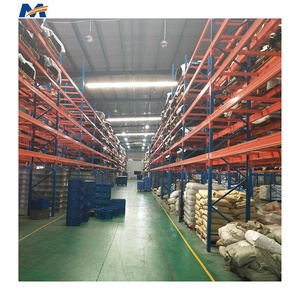
China Estantes Metalicos Heavy Duty Pallet Rack Beams Store Steel Shelving for Warehouse
Selective beam racking for mixed pallet profiles. Suitable for wholesale warehouse projects needing adjustable beam levels, stable upright frames and simple forklift access.
View product →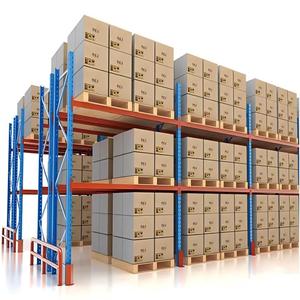
Adjustable Durable Storage Rack Powder Coating Finish Long Service Life CE Heavy Duty Metal Warehouse AU Standard Pallet Racking
Adjustable heavy-duty pallet racking with powder coating, AU-oriented project specification and a long service-life structure for distribution centers.
View product →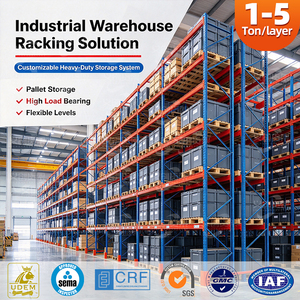
Heavy Duty Warehouse Storage Rack Selective Pallet Rack 1000-4500kg Load Capacity Q235B Steel Industrial Racking System
Q235B steel industrial selective racking with 1000–4500 kg load capacity options. A practical core product for wholesale racking catalogs and OEM projects.
View product →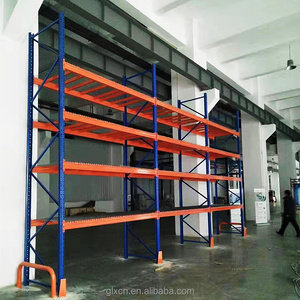
5 Layer Multi-Layer Pallet Racking System Cold Rolled Steel Beam Racks 1500kg Load Per Level Easy Knock-Down Structure
Multi-layer cold-rolled steel beam racking with 1500 kg per level and knock-down structure for efficient container loading and project shipment.
View product →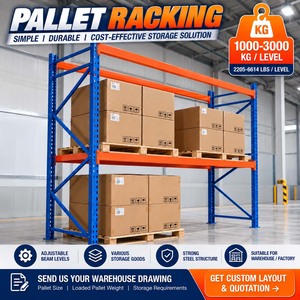
Wholesale Heavy Duty Pallet Racking System up to 3000 kg Per Level for Industrial Warehouse Storage
Up to 3000 kg per level for industrial warehouses. Ideal for wholesale buyers comparing beam sections, upright frame thickness and total cost per pallet position.
View product →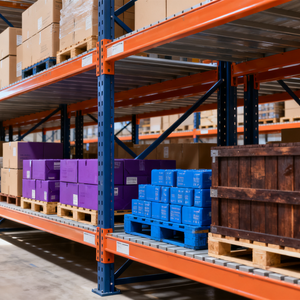
High-Capacity 5-Layer Durable Iron Steel Heavy Duty Corrosion Protection Pallet Rack for Warehouse Distribution Center Pallet
Corrosion-protected heavy-duty racking for distribution centers, coastal climates and cold-chain projects where coating durability is part of the specification.
View product →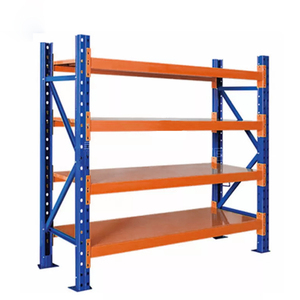
Gravity Flow Adjustable Steel 5-Layer Blue Warehouse Storage Racks with Easy Assembly Beam Shelving for Pallet Goods
Gravity-flow and adjustable multi-layer storage for pallet goods, with easy assembly and blue powder-coating finish suitable for export projects.
View product →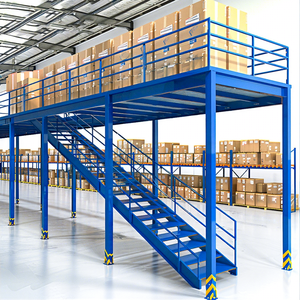
Warehouse Second Floor Terrace Floor Eu Warehouse Wood Pallet Storage Platform Schwerlastregal
Second-floor platform storage that uses vertical height for pallet goods, an alternative to new construction when warehouse footprint is constrained.
View product →What the Query “China Wholesale Beam Pallet Racking Factory & Supplier” Really Means
A buyer searching for a China wholesale beam pallet racking factory and supplier is rarely looking for a dictionary definition. The intent is commercial investigation: comparing load capacities, beam profiles, upright sections, coating durability, documentation quality, container loading, lead times and after-sales risk.
This page is therefore structured as a procurement resource rather than a simple product wall. It combines product recommendations, factory advantages, product development trends, future purchasing trends and technical FAQs so distributors, warehouse integrators and end users can evaluate a racking supplier with more confidence.
Engineering Intent
Selective pallet racking is a structural system, not a commodity shelf. Beam section, upright frame, bracing, footplates and anchors must match pallet weight, lift height, floor tolerance and local codes.
Commercial Intent
Wholesale buyers compare total cost of ownership, not only price per kilogram. Coating quality, packing efficiency, installation drawings and spare-part availability affect the real project cost.
Risk-Reduction Intent
Professional buyers request load tables, powder-coating specs, inspection records and seismic design support. Documentation is part of the product, especially for insurance, tender and audit requirements.
Beam Pallet Racking Anatomy: What a Wholesale Buyer Should Specify
Beam pallet racking, often called selective pallet racking, consists of upright frames connected by horizontal load beams. Each bay has one or more beam levels, and each level accepts pallets loaded by forklift, reach truck or stacker. The system is popular because every pallet is directly accessible, beam levels can be adjusted, and the racking can be expanded or reconfigured as storage demand changes.
The critical components are the upright frame, beam, beam-to-upright connector, safety pin, footplate and floor anchor. For export wholesale programs, the specification should state steel grade, upright section size, beam profile, powder-coating thickness, load per level, beam deflection limits, safety accessories and packaging method. A well-written RFQ should also include pallet dimensions, loaded pallet weight, clear warehouse height, forklift type, aisle width and floor condition.
- Upright frames and beams should be match-engineered as a system.
- Load signage, installation drawings and bill of materials should be supplied.
- Safety pins, end guards and column protectors should be included where risk assessment requires them.

High-density beam racking layouts can improve storage utilization when aisle width, handling equipment and selectivity are planned together.
Which Beam Pallet Racking Configuration Fits Your Project?
Recommended starting points for common warehouse scenarios. Final engineering should always be based on pallet data, floor survey and local requirements.
High-Throughput Distribution Center
Start with selective pallet racking and 1000–3000 kg beam levels. Keep aisle geometry aligned to forklift or reach-truck turning requirements. Use column protectors and clear load labels for fast inspection and safe daily operation.
Cold Store & Freezer Warehouse
Specify corrosion-protected steel, suitable powder coating and cold-store installation details. Multi-layer racking and mobile options can reduce refrigerated air volume while maintaining access to chilled or frozen pallet goods.
E-commerce & Retail Replenishment
Combine selective racking with multi-layer shelves or gravity-flow lanes for fast-moving SKUs. Plan reserve pallet storage above and picking zones below to use clear height without blocking replenishment routes.
Mezzanine & Second-Floor Storage
When land or building expansion is expensive, platform racking and mezzanine structures add usable pallet positions inside the existing envelope. Check floor loading, fire strategy, access stairs and goods movement before final layout.
How Beam Pallet Racking Procurement Is Changing
Buying behavior is shifting from short-term price comparison toward documented, lifecycle-oriented sourcing.
Total Cost of Ownership Becomes the Benchmark
Wholesale buyers increasingly evaluate steel weight, coating life, installation speed, replacement-part availability and container utilization together. A lower quote can become more expensive if beams are underspecified or documentation is incomplete.
Standards and Load Documentation Are Expected
Tenders now ask for EN 15512 design logic, EN 15635 inspection principles and load signage. Suppliers that provide load tables, packing lists, installation drawings and inspection guidance reduce approval friction for end users.
Automation-Ready Racking Gains Ground
Even manual warehouses are planned with future shuttle, mobile or automated high-bay expansion in mind. Rack layouts, floor tolerances and beam interfaces are more likely to be specified for phased upgrades rather than one-time installation.
Container-Optimized Export Packing Matters
Beam racking is bulky, so export packing directly affects freight cost. Knock-down structures, bundled upright frames, protected beam ends and efficient loading plans are becoming part of commercial evaluation.
Seismic and Local Code Coordination
For projects in Chile, Peru, Ecuador, Colombia and other seismic regions, buyers expect the racking supplier to coordinate calculations with locally licensed engineers and provide anchors and bracing suited to site conditions.
ESG and Material Efficiency
Warehouse owners want less steel and less energy per stored pallet. Higher-density layouts, corrosion protection that extends service life and reusable modular components support sustainability goals while protecting budgets.
Where Beam Pallet Racking Technology Is Moving
The next generation of warehouse racking is being shaped by structural efficiency, installation safety, digital documentation and cold-chain demand.
Higher-Strength Steel and Optimized Sections
Q235B and higher-strength steel options, refined beam profiles and controlled upright frame dimensions help manufacturers deliver stable structures with competitive steel consumption.
Safer Beam Locks and Visual Safety Features
Beam connectors, safety pins and clear load labels are receiving more attention because accidental beam disengagement is a major warehouse risk. Visual inspection aids improve operator awareness.
Powder Coating and Corrosion Protection
Coating systems are being specified for humid, coastal and cold-store environments. Pre-treatment, coating thickness and color consistency are becoming measurable purchase criteria rather than cosmetic details.
High-Density and Mobile Racking Integration
Drive-in, push-back, shuttle and mobile racking concepts use the same beam-and-upright logic but demand tighter engineering. Buyers increasingly ask suppliers to support phased density upgrades without replacing the whole system.
Cold-Chain and Seismic-Specific Design
Freezer warehouses and seismic zones require different base plates, anchors, bracing and material protection. Product development is moving toward modular kits that can be configured quickly for project-specific codes.
Digital Load Tables and QR Documentation
Load signage, QR-linked inspection records and installation drawings are becoming part of the product package. This supports asset managers, safety officers and maintenance teams throughout the racking lifecycle.

Why an Engineering-Led Wholesale Supplier Outperforms a Simple Trading Model
Real Nice Racks LLC’s storage engineering experience for South American warehouses informs this China wholesale beam pallet racking factory and supplier program. The advantage is not only production capacity; it is the discipline to start with real site data — pallet size, load per pallet, clear height, forklift type, floor tolerance and seismic zone — before a quotation is finalized.
This approach helps distributors and project owners avoid the common mistake of buying racking by “price per kilogram” alone. A beam system should be selected as an engineered assembly: upright frames, beams, safety devices, anchors, drawings and load signage must work together.
- Engineering-first quotation: layout, capacity check and bill of materials.
- Production discipline: steel grade, beam profile, coating and dimensional inspection.
- Export packaging: knock-down, bundled and container-optimized for heavy steel components.
- Multilingual support in English, Spanish and Portuguese, based on the original South America support model.
- Lifecycle service: expansion, inspection, repairs and capacity upgrades.
For buyers sourcing from China, this reduces the gap between factory price and project success. You gain access to wholesale manufacturing while keeping the technical documentation and installation logic expected by warehouse operators, insurers and local authorities.
Documentation That Supports Approval, Installation and Inspection
Static steel pallet racking should be designed and used with a clear technical reference framework. The exact scope depends on the project destination and engineer requirements.
For complex warehouses, final structural calculations should be reviewed by a locally licensed engineer where required. Load signage, capacity tables, installation drawings and inspection records should be handed over with the installed system so that warehouse teams can operate and maintain the racking safely.
From RFQ to Container Loading: A Clear Supplier Workflow
A disciplined five-stage process keeps price, engineering and delivery aligned for international buyers.
Analyse Data
Pallet size, weight, clear height, forklift type, floor plan and destination requirements.
Design Layout
Bay configuration, beam levels, capacity check, aisle planning and accessory list.
Confirm Quote
Material specification, finish, packing method, load tables and commercial terms.
Produce & Pack
Dimensional inspection, coating check, bundled frames and export-ready beam packing.
Ship & Support
Container loading, documentation, installation guidance and future expansion support.
How Professional Buyers Typically Rank Racking Quotations
Illustrative priority index for international beam pallet racking procurement. Actual weighting varies by project type and destination market.
RFQ evaluation priority index
Load capacity confidence and documentation usually outrank the lowest unit price once a project reaches tender stage.
Beam Pallet Racking Wholesale FAQ for International Buyers
Answers to common questions from distributors, warehouse integrators and project owners sourcing from a China wholesale factory and supplier.
What information is needed for an accurate wholesale quotation?
Provide pallet dimensions, loaded pallet weight, required beam levels, warehouse clear height, forklift type, floor plan, destination port and any local code or seismic requirements. Photos and floor condition notes help the supplier recommend the right beam and upright frame combination.
Can beam capacity be customized for different markets?
Yes. Beam pallet racking can be configured around different load requirements, upright sections, beam profiles and beam levels. Capacity should always be confirmed by an engineered load table, not by visual similarity to another rack.
Can you support cold storage and corrosion-protected projects?
Cold-store racking requires attention to coating, material behavior, anchors and installation conditions. Corrosion-protected finishes are available for humid, coastal and chilled environments, including freezer projects down to approximately -30 °C when specified correctly.
How is racking packed for export shipping?
Upright frames are usually bundled, beams are stacked and protected, and accessories are carton-packed or bagged with a packing list. The packing plan should consider container type, unloading method at site and protection of powder-coated surfaces during transport.
Can you provide CAD layouts and installation drawings?
For qualified projects, suppliers can provide layout drawings, bay configuration, bill of materials and installation guidance. For structural or seismic projects, drawings and calculations should be coordinated with a locally licensed engineer where required by the destination market.
Can an existing warehouse be upgraded instead of rebuilt?
Yes. Many warehouse projects increase capacity through re-layouts, additional beam levels, high-density systems, mezzanine platforms or mobile racking. High-density pallet racking can deliver up to 20% more storage capacity within the same footprint in suitable projects.
Request a China Wholesale Beam Pallet Racking Quotation
Send your pallet data, warehouse height, required capacity, destination port and project timeline. Our team can recommend beam pallet racking configurations, prepare a wholesale quotation and outline export packing options for your market.