China Wholesale Industrial Rack Storage Manufacturers & Supplier
Factory-direct pallet racking, high-density storage, mobile racking, shelving and mezzanine systems engineered for project buyers, distributors and warehouses serving South America.
8 Wholesale Industrial Rack Storage Products for Project Buyers
Wholesale buyers rarely purchase a rack as a single commodity. They buy a system that must fit pallet profiles, forklift geometry, clear height, floor tolerance, fire strategy, seismic zone, export packing and future automation. The eight products below form a practical starting point for distributors, 3PLs, factory owners and contractors comparing China wholesale industrial rack storage manufacturers and suppliers. Each product URL is retained exactly as supplied and can be engineered around OEM or ODM drawings, container loading plans and local documentation.
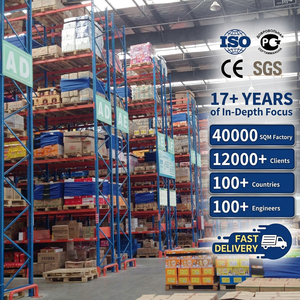
SDFD Heavy Duty Adjustable Selective Pallet Racking System
A box-beam, multi-layer selective rack for warehouses that need direct access to every pallet. Adjustable levels support mixed SKUs, while upright protectors and load signage make it suitable for wholesale projects and distribution centres.
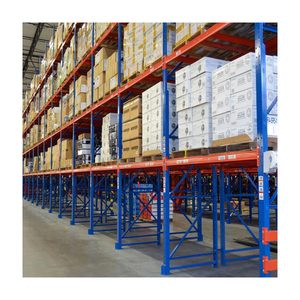
Heavy Duty Steel Pallet Racks for Warehouse Storage
A cost-efficient selective steel pallet rack for stacking and bulk storage. Recommended when buyers need repeatable frame depths, powder-coated finishes and export-packed beams for container shipment.
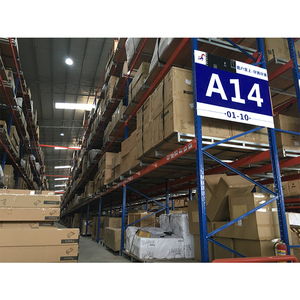
Industrial Heavy Duty Steel Pallet Rack Storage System
Designed for warehouse organization, this rack system combines modular uprights, adjustable beams and optional safety accessories. A robust base specification for factories, logistics parks and distribution centres.
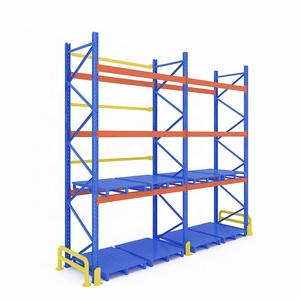
Warehouse Storage Industrial Pallet Rack with Back Stopper
A pallet rack configured with back stoppers to reduce load push-through risk. It is useful where forklift operators place pallets at speed or where mixed pallet depths increase handling risk.
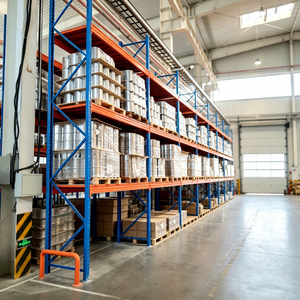
Practical Heavy Load Pallet Shelving Frame
A heavy-load pallet shelving frame for factory warehouses, logistics parks and bulk raw material storage. It can be planned as a single-level system or developed into a multi-tier storage project.
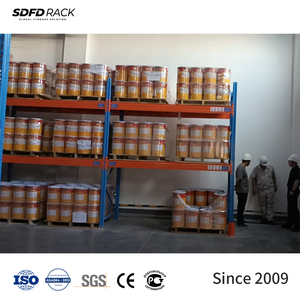
SDFD Industrial Heavy Duty Steel Pallet Rack System
A warehouse shelving system for stored goods that need a strong, straightforward steel structure. Beam levels, frame heights and accessory packages can be customized for wholesale orders.
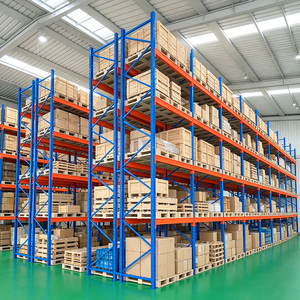
Adjustable Heavy Duty Pallet Rack with 1000–5000 kg Load Capacity
An adjustable pallet racking system for medium to heavy loads, with selectable shelf levels and safety locks. Can be specified with seismic bracing, anchor packages and capacity labels.
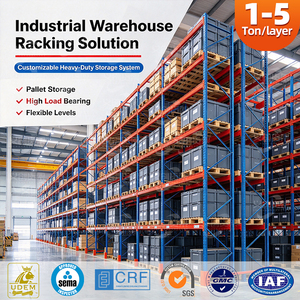
Heavy Duty Selective Pallet Rack System 1000–4500 kg
A selective rack system built around Q235B steel and adjustable beams for high-selectivity storage. A practical option for wholesale programs, warehouse retrofits and racking reorganization.
Why Real Nice Racks Is a Practical China Wholesale Industrial Rack Storage Manufacturer & Supplier
Real Nice Racks LLC supports buyers from the first layout to lifecycle service. For China wholesale sourcing, we coordinate production, export packing, documentation and technical submittals so project teams do not have to assemble the supply chain themselves. The advantage is not only product price: it is a clearer route from warehouse data to a safe, buildable and inspectable racking system.
Factory-Direct Wholesale Planning
Coordinates China production, OEM or ODM details, mixed-container loading and export packing around the actual project list rather than a generic catalogue SKU.
Engineering-Led Layouts
Uses pallet profiles, clear height, forklift type, floor tolerance and throughput data to select beam levels, frame depth, aisle width and safety accessories.
Seismic-Ready Options
Bracing, base plates, anchors and connectors can be specified for projects in Chile, Peru, Ecuador, Colombia and other seismic zones with local code coordination.
Cold-Chain Experience
Pallet racking, mobile racking and high-density systems can be specified for chilled and freezer environments down to approximately -30 °C for fruit, seafood, meat and dairy logistics.
Documented Compliance
Load signage, capacity tables and technical submittals help procurement teams, warehouse operators and insurers verify what has been supplied and how it should be used.
Lifecycle Service
Survey, installation supervision, inspection, damage repair and capacity upgrades keep the storage system usable long after the initial wholesale delivery.
Which Industrial Rack Storage System Should You Buy?
A lower price per upright is not the same as a lower lifetime cost. The right choice depends on selectivity, pallet turns, building height, cold-chain energy, handling equipment and how much disruption the warehouse can tolerate during installation.
Selective Pallet Racking
Choose adjustable selective rack when every pallet must be accessible and SKU velocity changes by week. It is the default for distributors, 3PLs and spare-parts warehouses that need direct access and simple reconfiguration.
P90 High-Density Racking
Drive-in, push-back, shuttle or mobile systems reduce aisle loss. In retrofit projects, high-density pallet racking can deliver up to 20% more storage capacity on the same footprint without new construction.
MOVO Mobile Pallet Racking
Mobile bases open one working aisle on demand. For chilled and frozen warehouses, fewer aisles can mean less refrigerated air, lower energy demand and more pallet positions inside the same insulated envelope.
Shelving and Mezzanines
Industrial shelving, multi-tier walkways and mezzanine floors add usable picking area without expanding the building footprint. They are often the fastest route to more storage in land-constrained cities.
Future Procurement Trends for Industrial Rack Storage
Buyer behaviour is shifting from “lowest price per tonne of steel” to “lowest project risk per pallet position”. That changes how wholesale racking is specified, packed, documented and supported.
OEM, ODM and Mixed-Container Buying
Wholesale buyers increasingly combine selective rack, shelving and accessories in one container to improve freight efficiency. OEM dimensions, colour specifications and accessory lists are becoming part of the normal quotation process rather than a special request.
Documentation-First Tenders
Procurement teams now ask for load tables, seismic assumptions, material certificates, installation records and inspection guidance. A racking supplier that can provide these documents early is easier to approve than one that only sends a price list.
Retrofit Before New Build
Land and construction costs around São Paulo, Santiago, Lima and Bogotá make warehouse expansion expensive. High-density racking, mezzanines and mobile systems allow buyers to release capacity from the existing building before committing to a new facility.
Automation-Ready and Climate-Resilient
Even when a project starts manually, buyers want an upgrade path to shuttle systems, semi-automated storage machines or AGV/AMR interfaces. Corrosion protection, cold-store specification and energy efficiency are also moving earlier into the design brief.
Product Development Trends in Industrial Rack Storage
Racking development is being shaped by steel efficiency, higher-density layouts and the need to integrate with semi-automated handling. The direction is clear: more useful pallet positions per tonne of steel, per square metre and per kilowatt-hour.
Stronger, More Efficient Steel Sections
High-strength Q235B and Q355 steel, optimized beam profiles and controlled coating systems help reduce material waste while maintaining stiffness and load safety. For wholesale buyers, this often improves container utilization as well as product performance.
Higher Density and Mobile Racking
Mobile racking, push-back, drive-in and pallet shuttle systems continue to grow where land is expensive or where cold-chain energy costs dominate. The engineering focus is on using fewer aisles without sacrificing access or safety.
Modular P90 Platforms and Digital Data
A common P90 platform lets a warehouse start with selective racking and later add drive-in, push-back, mobile or automation-ready configurations. Digital layout files, load signage and inspection records make future upgrades easier to plan.
Engineering Standards That Support Global Wholesale Sourcing
A racking quotation becomes more credible when it states which standards govern design, floor tolerance, use and inspection. Our technical approach references recognised European racking standards and coordinates with local building codes through locally licensed engineers where required.
For buyers comparing China wholesale industrial rack storage manufacturers and suppliers, the difference between a basic quotation and a project-ready submittal is often visible before installation: beam capacity tables, anchor specifications, load signage, packing plans and inspection criteria. These details reduce procurement uncertainty and support safer operation after handover.
Storage Density Comparison by System Type
High-density systems are not automatically right for every warehouse. Use this indicative comparison to frame an internal discussion about selectivity, handling speed, building height, energy cost and retrofit potential.
Indicative planning ranges only. Actual pallet positions depend on load, beam levels, aisle width, floor tolerance, local code and equipment.
From Inquiry to Installation: A Wholesale Project Workflow
A clear, four-stage process keeps budgets predictable and avoids the common problem of ordering racking before the warehouse flow, floor data and handling equipment are understood.
Analyse
Confirm warehouse location, floor plan, clear height, pallet size, load per pallet, forklift or AGV type, SKU velocity, seismic zone and target port.
Design
Compare layout options, frame depths, beam levels, capacity, accessory package, container loading plan and documentation requirements.
Manufacture & Pack
Coordinate steel production, coating, accessory supply, quality inspection and export packing for safe handling and efficient container utilization.
Deliver & Support
Ship to the agreed port, support supervised installation, hand over load signage and inspection records, then provide lifecycle upgrades and repairs.
What to Send for a Faster Wholesale Quotation
- Warehouse location, floor plan and available clear height.
- Pallet length, width, height and weight per pallet or per level.
- Forklift, reach truck or AGV type, aisle constraints and throughput target.
- Local seismic zone, building code, insurance requirement or required design standard.
- Target port, container preference, installation scope and required documentation.
- Required finish: powder coating, galvanizing, cold-store specification or corrosion protection.
Market Requirements in South America — Built Into the Export Plan
Although many buyers source from China wholesale industrial rack storage manufacturers and suppliers, the system must still satisfy local operating realities. Seismic activity, cold-chain energy, port logistics and local codes all influence the final specification.
Brazil
High-throughput distribution centres for e-commerce, retail and automotive. Selective racking projects can be aligned with ABNT NBR 15524, with narrow-aisle and high-density options for space-constrained sites.
Chile
One of the world’s most seismic markets. Racking design can reference NCh 433 and NCh 2369 principles, with cold storage demand from fruit and salmon supply chains near San Antonio and Valparaíso.
Peru
Logistics growth around Lima and Callao supports agro-exports such as blueberries and avocados. Mining spare-parts stores often need heavy-duty racking, pull-out units and seismic coordination with E.030.
Colombia
3PL hubs in Bogotá, Medellín and Cartagena serve flower, coffee, pharmaceutical and consumer supply chains. Structural checks can be coordinated with NSR-10 requirements and cold-chain operating needs.
Argentina
Food, beverage, meat and grain-related industries around Buenos Aires, Rosario and Córdoba often benefit from push-back, drive-in and retrofit solutions that maximize capacity inside existing buildings.
Ecuador, Uruguay & Paraguay
Banana and shrimp cold stores in Guayaquil can reference NEC-SE-DS; free-zone logistics in Montevideo and regional distribution in Asunción require flexible export packing and corrosion protection.
Common Questions About China Wholesale Industrial Rack Storage
These answers reflect the questions project buyers usually ask before comparing racking quotations, approving drawings or releasing a container order.
Are you a manufacturer or a trading company?
We operate as a wholesale industrial rack storage supplier with China manufacturing coordination and export project support. Buyers receive factory-level production planning, container loading advice, load data and documentation support rather than a catalogue-only quotation. This is especially useful when the project needs mixed racking types, accessories and phased delivery.
Can racking be customized for my warehouse dimensions?
Yes. Frame height, frame depth, beam length, beam levels, load capacity, accessory package, surface finish and packing method can be customized around the warehouse plan. Final drawings should consider pallet overhang, forklift clearances, sprinkler requirements, floor tolerance and local code requirements.
Which design standards can the racking reference?
Static steel racking can be designed with reference to EN 15512, with floor tolerances per EN 15620, operation and inspection guidance per EN 15635, and seismic design methodology per FEM 10.2.08 or EN 16681. In Brazil, projects can align with ABNT NBR 15524; other markets may require local structural review.
Can you supply racking for seismic zones in Chile, Peru, Colombia and Ecuador?
Yes. Base plates, anchors, bracing and beam connectors can be specified for the site seismic zone and soil conditions. Projects can be coordinated with local requirements such as NCh 433 and NCh 2369 in Chile, E.030 in Peru, NSR-10 in Colombia and NEC-SE-DS in Ecuador, with final calculations reviewed by a locally licensed structural engineer where required.
Do you supply cold storage and freezer racking?
Yes. Pallet racking, mobile racking and high-density racking can be specified for chilled and frozen environments down to approximately -30 °C. Cold-chain projects usually need attention to steel finish, material behavior, floor conditions, airflow, drainage and the reduced aisle strategy used by mobile racking.
What information is needed for an accurate quotation?
Send the warehouse location, floor plan, clear height, pallet dimensions, load per pallet, SKU velocity, forklift or AGV type, target port and required standard. If seismic design or building permits are involved, include the local code, seismic zone and any engineer or insurer requirement. Accurate inputs reduce design iterations and shipping surprises.
How are projects delivered and installed in South America?
A typical project follows site analysis, layout and structural design, manufacturing, export packing, shipment to the nearest port, supervised installation and handover with load signage and inspection documentation. Ports commonly used include Santos, Callao, San Antonio, Buenos Aires, Cartagena, Guayaquil and Montevideo.
Can you upgrade an existing warehouse instead of building new?
Yes. Retrofit projects often combine re-layouts, narrow-aisle racking, push-back, drive-in, shuttle or mobile racking, mezzanine floors and additional beam levels. High-density pallet racking can deliver up to 20% more storage capacity within the same building footprint, helping buyers avoid the cost and delay of new construction.
What about MOQ, samples and lead time?
Minimum order quantity depends on the product mix and customization level. Wholesale programs can often be planned around mixed containers, repeat components and phased shipments. Lead time should be confirmed after drawings, finish, accessories and documentation requirements are approved, especially for seismic or cold-store projects.
How is quality verified before shipment?
Quality control should cover raw material verification, section dimensions, weld quality, coating thickness, accessory fit, packing protection and load signage. Procurement teams can also request third-party inspection. For project buyers, documentation is as important as steel quality because it supports installation, safe operation and future inspection.
Request a China Wholesale Industrial Rack Storage Quote
Send your warehouse drawing, pallet load, clear height, target port and required standard. Our team can recommend a practical product mix, layout direction and export packing plan for your project. Real Nice Racks supports English, Spanish and Portuguese communication, with technical documentation and lifecycle guidance for buyers across South America and other export markets.
Contact UsEmail: [email protected] · Include warehouse location, pallet size, load per pallet, forklift type and target port for a faster response.