8 Industrial Storage Rack Lines for Wholesale & Export Projects
Compare product families by load profile, handling method and growth path. Every product URL below is preserved for direct technical review.
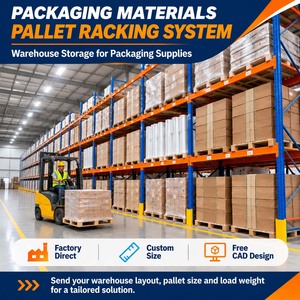
Warehouse Pallet Racking System for Packaging Materials Storage
A selective pallet racking solution for cartons, packaging materials and stable pallet loads. Adjustable beams and direct access support organised picking, replenishment and future reconfiguration.
View product details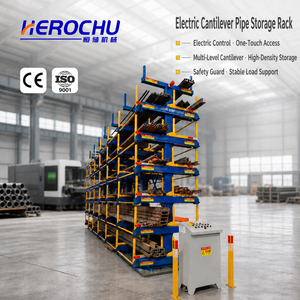
Electric Cantilever Rack Automated Retrieval System Foldable Q235B Carbon Steel Pipe Storage for Industrial Long Materials
Designed for pipes, profiles and long industrial materials. The cantilever format supports crane or forklift access and helps fabrication yards, steel service centres and infrastructure stores organise long goods.
View product details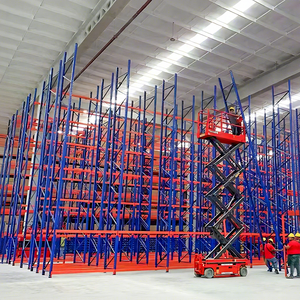
Pallet Rack Heavy Duty Industrial Warehouse High Quality Warehouse Heavy Duty Rack Industrial Racks for Storage
A robust heavy-duty warehouse rack for palletised goods, spare parts and general industrial storage. The system is configured around actual pallet dimensions, aisle width and throughput requirements.
View product details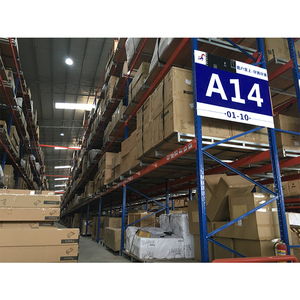
Industrial Storage Rack Heavy Duty Steel Pallet Rack System for Warehouse Organization
A steel pallet rack system for organised warehouse storage. Upright frames, beams and accessories can be combined to match pallet footprints, load levels and future expansion plans.
View product details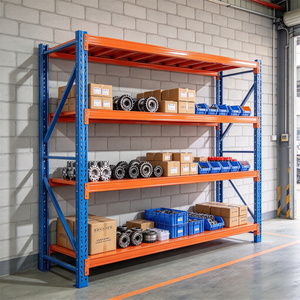
Steel Boltless Rivet Shelving Powder Coated Corrosion Protection Card Slot Assembly Warehouse Storage Rack
A practical boltless rivet shelving option for hand-loaded cartons, small parts, spare components and multi-tier storage rooms. Powder-coated corrosion protection and card-slot assembly support fast installation.
View product details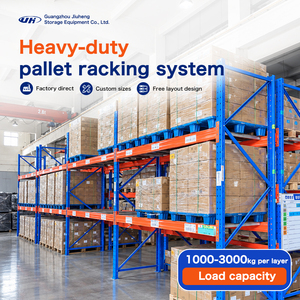
Industrial Steel Heavy Duty Pallet Racking Warehouse Storage System Adjustable Beam High Load Capacity Rack Manufacturer
Adjustable-beam heavy-duty pallet racking for high-load warehouse storage. Suitable for export projects that require documented capacity, consistent accessories and a modular route to higher density.
View product details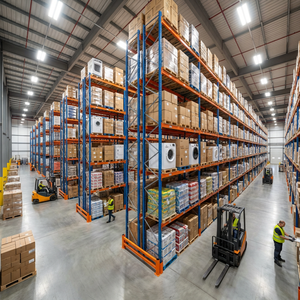
Custom Multi Level Heavy Duty Steel Warehouse Industrial Pallet Storage Shelf Rack
A custom multi-level racking concept for warehouses that need to use clear height more productively. Layouts can combine pallet levels, picking access and supporting structure around real building constraints.
View product details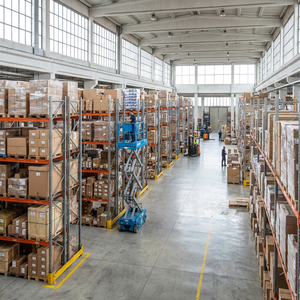
Professional Heavy Duty Pallet Rack Supplier Warehouse Storage System Manufacturer
A project-ready heavy-duty pallet rack supply package for warehouses and distributors. Uprights, beams, safety accessories and installation support can be specified as a complete export storage system.
View product detailsWhat Wholesale Buyers Really Need to Verify Before Ordering Industrial Racks
The query “China wholesale industrial racks for storage suppliers & exporters” usually combines three buyer intents: find a reliable source, compare technical specifications, and reduce total project risk.
Industrial racks are safety-critical assets. A pallet racking system supports moving loads, forklift impacts, thermal movement and, in some regions, seismic forces. For that reason, professional buyers evaluate upright section design, beam-to-column connectors, steel grade, welding consistency, powder-coating thickness, floor tolerance, anchor specification and load signage. Without this information, a low unit price can hide engineering, freight or replacement-part costs.
Real Nice Racks LLC approaches storage procurement as an engineering programme rather than a catalogue order. Every layout starts with real project data: pallet dimensions, load per pallet, SKU velocity, forklift type, aisle width, clear height, floor condition and seismic zone. That discipline is relevant whether a buyer sources selective pallet racking, heavy-duty industrial racks, boltless steel shelving or a cantilever system for long materials.
The eight product lines above are not isolated items. They are building blocks for a warehouse configuration that can start manually and grow toward high-density or semi-automated storage. This is the information gain that separates a serious wholesale industrial rack supplier from a trading company that simply forwards a quote.
- Documented structural calculations and load capacity tables supplied with the project.
- Standards-aligned design, with local code coordination where the site requires it.
- Export packing and accessory lists that match the installation sequence.
- Lifecycle support for inspection, repairs and capacity upgrades.

Storage systems are planned around pallet profiles, clear height, handling equipment and future capacity — not generic templates.
Recommended Configurations by Operational Scenario
A wholesale rack price is only meaningful when it is tied to the right operating model. These three configurations cover most industrial storage briefs.
High-Throughput Distribution & E-commerce
Start with selective pallet racking for fast-moving SKUs, then add narrow-aisle or pallet shuttle zones for slower, deep-inventory lines. Keep the upright and beam platform modular so pick faces can be reconfigured as SKU velocity changes. This approach protects service levels while controlling the cost of future automation.
Cold-Chain, Food & Pharmaceutical Storage
Specify racking for low-temperature environments, condensation control and washdown practices. Mobile pallet racking can reduce refrigerated air volume by opening only one working aisle on demand, which supports energy efficiency in freezer stores. For blast freezing and chilled zones, coating and steel choices must match the actual operating temperature.
Long Goods, Fabrication & Heavy Spares
Use cantilever racking for pipe, profiles, timber and fabricated steel, with crane or forklift access planned into the aisle. For dies, moulds and mining spare parts, pull-out units or heavy-duty shelving can improve access without wasting floor area. Load signage and safe working load discipline are essential in these environments.
Relative Storage Strategy Fit
Illustrative comparison · final design depends on project dataUse this chart to frame a specification discussion, not to replace structural calculation, throughput modelling or local code review.
Future Procurement Trends Shaping Wholesale Rack Buying
Buyers are becoming more technical. The strongest wholesale relationships are built on verified capacity, export discipline and lifecycle support rather than headline price alone.
1. Total Cost of Ownership Over Lowest Unit Price
Procurement teams increasingly compare landed cost, installation time, replacement-part availability and inspection requirements. A documented quote with steel specification, accessories and packing details is becoming as important as the unit price per upright or beam.
2. Cold-Chain Energy Efficiency
Fruit, seafood, meat, dairy and pharmaceutical warehouses need racking that performs at low temperature. Mobile racking and high-density layouts reduce refrigerated air volume and can lower energy use while preserving access to every pallet.
3. Automation-Ready Modularity
Racking is increasingly purchased as phase one of a longer automation plan. Uprights, beams and interfaces should be compatible with future shuttle, AMR, conveyor or semi-automated storage, avoiding a full replacement when volumes grow.
4. Seismic and Local-Code Confidence
Seismic markets require anchors, bracing and base plates calculated for site conditions. Buyers are asking for design reviews coordinated with local standards such as NCh 433/NCh 2369, E.030, NEC-SE-DS or NSR-10, not generic catalogue data.
5. Digital Documentation and Inspection
Load signage, as-built drawings, batch records, inspection checklists and QR-linked asset registers are becoming standard. They support safety audits, insurance reviews and maintenance planning throughout the racking lifecycle.
6. Sustainable Steel and Export Packaging
More buyers evaluate coating durability, recyclability, steel utilisation and packaging waste. Export packing must protect powder-coated parts during sea freight and align with unloading, site handling and installation sequencing.
Where Industrial Storage Rack Design Is Moving Next
The next generation of industrial racks must do more than hold pallets. It must support density, safety, energy efficiency and a staged route to automation.
High-Density Systems With Better Selectivity
Mobile pallet racking, pallet shuttle and push-back systems are being refined to deliver higher density without sacrificing too much selectivity. In cold stores and land-constrained cities, the value of reducing aisles is especially strong because it lowers both building footprint and refrigerated air volume.
Seismic, Cold-Chain and Corrosion Engineering Combined
Modern racking projects often combine multiple environmental requirements: seismic anchors, freezer temperatures, humidity, washdown and corrosive atmospheres. Suppliers that treat these as separate accessories create risk. The stronger approach is integrated design based on EN 15512, FEM 10.2.08 / EN 16681 and local structural requirements.
Hybrid Systems That Prepare for Automation
Manual racking is increasingly specified with automation in mind. Standardised beam levels, clear aisle planning, safety accessories and compatible interfaces allow a warehouse to add semi-automated storage machines, conveyors or shuttle systems later without discarding the original investment.
An Engineering Partner Behind the Wholesale Supply
Real Nice Racks LLC designs, supplies and supports industrial storage systems — pallet racking, mobile racking, shelving, cantilever, mezzanines and semi-automated storage machines — for warehouses and distribution centres, including projects across South America.
Real Project Data Before Layout
Every layout starts with pallet profiles, SKU velocity, forklift types, clear height, floor condition and seismic zone. The result is a system that fits how the warehouse actually works, not a generic template.
Documentation Built Into the Project
Structural calculations, load signage, capacity tables and installation records are treated as project deliverables. That documentation supports safety audits, insurance review and future rack inspection.
Standards and Local Code Awareness
Static steel racking is designed in line with EN 15512, with floor tolerances per EN 15620, inspection guidance per EN 15635 and seismic design referencing FEM 10.2.08 / EN 16681. Projects can be coordinated with local codes such as ABNT NBR 15524, NCh 433, NCh 2369, E.030, NEC-SE-DS and NSR-10 where applicable.
Cold-Chain and Seismic Experience
Cold storage racking, mobile racking and high-density systems can be specified for chilled and frozen environments down to approximately -30°C. Seismic zones require site-specific anchors, bracing and base plates reviewed with a locally licensed structural engineer when required.
Scalable Platform and Retrofit-Friendly
Storage systems can grow from manual picking to high-density or semi-automated storage. Retrofit projects can combine re-layouts, mobile racking, mezzanines and narrow-aisle configurations, with high-density pallet racking able to deliver up to 20% more storage capacity within the same building footprint in suitable projects.
Lifecycle Support and Multilingual Communication
Technical support is available in English, Spanish and Portuguese. After-sales services include periodic rack inspection, damage repair, operator guidance and capacity upgrades, helping buyers protect the investment long after installation.

Mobile racking opens a working aisle only where it is needed, supporting dense and energy-efficient storage.

Supervised installation with documented handover, load signage and inspection records.
From Inquiry to Installation: A Five-Stage Project Approach
A predictable workflow keeps budgets realistic and reduces surprises between factory packing and warehouse handover.
Analyse
Review site data, pallet loads, SKU profile, floor condition, clear height and local design requirements.
Design
Compare layout options, structural calculations, capacity and handling access before selecting the final configuration.
Manufacture
Produce steel components, accessories and safety parts with export packing planned around installation sequence.
Deliver & Install
Ship to the agreed port, coordinate unloading and support supervised installation at site.
Support
Provide handover documents, load signage, inspection guidance, repairs and future capacity upgrades.
Industrial Rack Procurement FAQ for Importers and Distributors
These are the questions technical buyers, distributors and warehouse developers ask most often when comparing wholesale industrial rack suppliers and exporters.
What is the best way to request a quotation for wholesale industrial racks?
Provide the warehouse location, floor plan, clear height, pallet dimensions, maximum load per pallet, handling equipment, SKU velocity, desired storage capacity, local seismic or environmental requirements, and target shipping port. Also state any required standards or documentation. A supplier can then size uprights, beams, bracing and accessories and quote accurate quantities. Generic requests often lead to higher contingency, late design changes or avoidable freight cost.
How should I compare load ratings from different suppliers?
Compare rated load per pair of beams at a defined beam span and load height, not a single headline number. Ask for upright capacity, beam capacity, deflection criteria, safety factors, and whether the calculation matches EN 15512 or another recognised standard. Confirm whether seismic, cold-store or dynamic factors are included. The load rating must correspond to the actual pallet loading pattern and not just the rack’s nominal capacity.
Can the racking be designed for seismic zones, cold stores and corrosive environments?
Yes, but these are design inputs, not simple accessories. Seismic projects need site-specific bracing, anchor and base-plate calculations coordinated with local codes such as NCh 433/NCh 2369, E.030, NEC-SE-DS or NSR-10 as applicable. Cold stores need steel and coating choices suited to low temperature. Corrosive environments may require galvanised or enhanced powder-coated finishes. Real Nice Racks references FEM 10.2.08 / EN 16681 for seismic design and EN 15512 for static racking.
What is the difference between selective, drive-in, push-back, shuttle and mobile racking?
Selective racking offers direct access to every pallet and is the most flexible. Drive-in uses lanes for high-density LIFO storage. Push-back uses nested carts for LIFO picking. Pallet shuttle uses a radio-controlled shuttle for deep-lane high-density storage. Mobile racking mounts runs on rails and opens an aisle only when needed, maximising density while keeping 100% access. The right choice depends on SKU count, throughput, pallet weight, building height and cold-store energy costs.
How are export orders packed and delivered?
Rack components are packed to protect powder-coated surfaces and facilitate unloading. Uprights, beams, bracing, anchors and accessories are bundled and labelled against the packing list and installation sequence. Shipment can be arranged to the nearest port, and installation can be supervised or coordinated with local teams. The quotation should clarify Incoterms, packing standard, shipping documentation and whether installation supervision is included.
Can you customise dimensions, colours and accessories?
Yes. Widths, depths, heights, load levels, beam spacing, shelf panels, dividers, card slots, guards and coating colours can be customised to the project. Customisation is valuable only when it matches the handling equipment and structural design. For wholesale programmes, standardising a small number of upright frames and beam lengths often improves lead time, spare-part availability and future reconfiguration.
What documents should come with a professional racking project?
A professional package should include layout drawings, structural calculations or load tables, load signage, installation instructions, packing list, inspection checklist and maintenance guidance. For export projects, commercial invoice, packing list, bill of lading and certificate of origin may be required. These documents support customs clearance, site acceptance, insurance review and future safety inspections.
How can buyers avoid hidden costs in a China wholesale industrial rack project?
Compare landed cost rather than FOB price. Include freight, insurance, port charges, duty, inland transport, unloading, installation, anchor bolts, safety accessories and future spare parts. Verify the supplier’s engineering support and warranty process. A quote that excludes engineering, packing upgrades or installation supervision may look cheaper initially but cost more once the project reaches site. Strong suppliers are transparent about assumptions, exclusions and documentation.
Ready to Shortlist a Safer, Export-Ready Industrial Rack System?
Share your warehouse dimensions, pallet loads, handling equipment, destination port and target capacity. The team can help you compare selective, high-density, cantilever, shelving and semi-automated options with documented assumptions. Whether you are evaluating China wholesale industrial racks for storage suppliers & exporters or upgrading an existing facility, the objective is the same: lower total risk and higher storage productivity.