8 Warehouse Pallet Storage Systems for Wholesale Buyers
These systems cover selective racking, adjustable steel shelving, boltless storage, cantilever long-goods racks and high-load pallet bay configurations. Each product link is preserved for direct technical review, while buyers should still confirm pallet dimensions, load per level, clear height, floor condition and handling equipment before ordering.
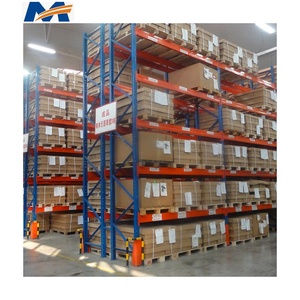
Pallet Racking System Warehouse Shelves Heavy Duty, Warehouse Picking Shelves Rack
A flexible selective racking workhorse for cartons, pallets and mixed-SKU picking. Direct access to every pallet supports fast-moving distribution.
View product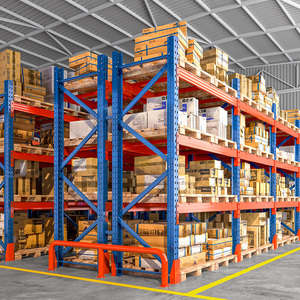
Heavy Duty Industrial Steel Storage Shelves 5 Layer Adjustable Rack System with Galvanized Surface for Warehouse Pallet Racking
Five adjustable levels and galvanized steel surfaces make this racking practical for humid ports, cold-chain anterooms and multi-shift warehouses.
View product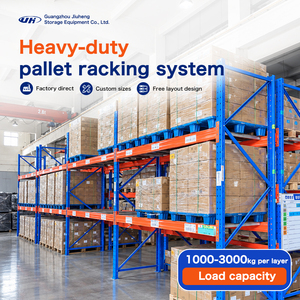
Industrial Steel Heavy Duty Pallet Racking Warehouse Storage System Adjustable Beam High Load Capacity Rack Manufacturer
A manufacturer-focused system with adjustable beams and high load capacity, designed around export drawings, load schedules and container-friendly packing.
View product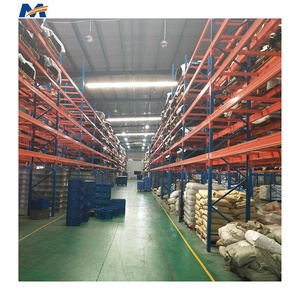
China Estantes Metalicos Heavy Duty Pallet Rack Beams Store Steel Shelving for Warehouse
A China-made Estantes Metalicos style solution for warehouses that need strong pallet beams, stable shelving and straightforward spare-part replacement.
View product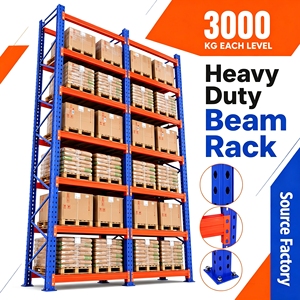
Factory Direct 3000kg High Load Metal Pallet Racking Industrial Steel Pallet Rack System for Warehouse Storage Heavy Goods
A factory-direct 3000 kg load option for dense storage of heavy goods, best specified with engineering load charts rather than catalogue estimates.
View product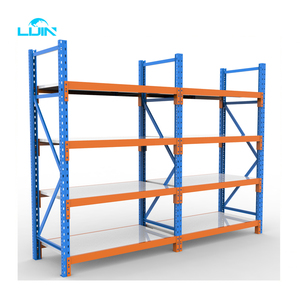
Boltless Adjustable Industrial Heavy Duty Pallet Racking System Warehouse Steel Metal Storage Racks Shelving Units
Boltless assembly shortens installation time and simplifies future reconfiguration — useful for 3PLs and e-commerce operators that change layouts frequently.
View product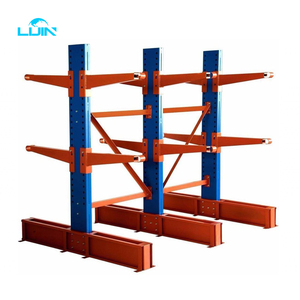
Heavy Duty Cantilever Racking System for Factory and Warehouse
Cantilever racking stores pipes, profiles, timber and other long goods without obstruction from front columns. Available for indoor or yard applications.
View product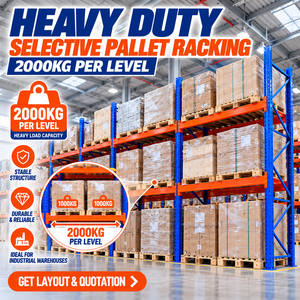
2000kg Per Level Heavy Duty Selective Pallet Racking System
A 2000 kg per level selective system that balances selectivity, aisle width and cost for regional distribution centres and export projects.
View productWhy China Wholesale Warehouse Pallet Storage Factories & Exporters Are Being Evaluated Differently
China wholesale warehouse pallet storage factories and exporters are no longer judged only on the price per bay. Serious importers compare load charts, coating systems, container density, safety documentation, spare-part availability and whether the supplier can translate a warehouse drawing into a code-aware layout. That shift matters because pallet racking is a structural storage product, not a commodity shelf.
The strongest suppliers provide information gain before the order: pallet profiles, beam load tables, upright capacities, floor tolerance assumptions, anchor specifications, seismic bracing options, packaging plans and installation guidance. When those details are missing, the lowest quotation often becomes the most expensive project after installation begins.
- Engineering review before quotation, not after deposit
- Documented load capacities, floor assumptions and safety signage
- Export packing, port delivery and installation support planned up front

High-bay pallet racking requires engineering data, not catalogue guesswork: load per level, aisle width, floor condition and handling equipment all shape the final quotation.
Choose by Load, Flow and Density — Not by Price Per Bay
The right pallet storage system depends on SKU velocity, pallet count, load height, handling equipment and how often the layout may change. Use the comparison below to narrow the shortlist before requesting an engineered layout from a China wholesale warehouse pallet storage factory or exporter.
Selective Pallet Racking
Best all-round choice. Direct access to every pallet suits fast-moving SKUs, mixed batches and frequent order picking. The trade-off is wider aisles and lower density.
Drive-In Racking
High-density LIFO storage for slow-moving or homogeneous loads. Selectivity is lower because forklifts enter the rack structure, so safety training and protective barriers matter.
Push-Back Racking
Nests pallets on carts for medium-density LIFO flows. A good fit for medium-moving SKUs, cooler environments and operations that want more density than selective racking without drive-in complexity.
MOVO Mobile Racking
Racking moves on rails to open one aisle on demand. Excellent pallet accessibility with lower refrigerated air volume — especially valuable in cold stores and high-cost land markets.
2025–2030 Procurement Trends for China Wholesale Warehouse Pallet Storage
Buyers are moving from transactional purchasing toward engineering partnership. The trends below show what importers, 3PLs and distributors are likely to demand from Chinese pallet storage factories and exporters over the next procurement cycle.
Total Cost of Ownership Beats Lowest FOB Price
Procurement teams will compare installation time, spare parts, reconfiguration flexibility, inspection needs and safety risk alongside the basic quotation. A slightly higher initial price can be cheaper across a ten-year life cycle.
Documented Compliance Becomes Standard
Load signage, capacity tables, anchor data, inspection records and standard references such as EN 15512, EN 15620, EN 15635, FEM 10.2.08 and EN 16681 will be requested earlier in the buying process.
Container-Optimised Engineering
Beam lengths, upright frames and bracing kits will be designed around container loading efficiency without compromising structural performance. Export packing quality will remain a key differentiator.
Hybrid Manual-to-Automation Pathways
Warehouses will invest in racking that can evolve toward shuttle systems, AMRs or high-bay automation. Modular design and clear data on tolerances matter as much as today’s static capacity.
Climate-Specific Performance
Hot coastal humidity, freezer environments and seismic zones will drive demand for galvanized finishes, cold-store specifications and locally coordinated structural checks.
Regional Support and Spare-Part Readiness
Export buyers will favour suppliers that can support English, Spanish and Portuguese communication, provide replacement beams or uprights, and advise on inspection and damage repair after handover.
What the Next Generation of Warehouse Pallet Storage Will Deliver
Product development is shifting toward stronger steel utilisation, faster assembly, better corrosion control and more useful digital documentation. For buyers, the practical benefit is a storage system that remains safe and adaptable long after the first installation.
Higher Strength-to-Weight Profiles
Optimised cold-formed steel sections will help exporters reduce freight volume while maintaining beam and upright capacity for demanding pallet loads.
Smarter Coating Systems
Galvanized, powder-coated and hybrid finishes will be specified by climate, port humidity, cold-store condensation and wash-down routines — not simply by colour preference.
Modular, Retrofit-Friendly Designs
Boltless and adjustable systems will make it easier to expand, relocate or convert a manual warehouse into a denser or semi-automated operation without replacing every component.
Digital Load and Inspection Data
Capacity labels, installation records and inspection schedules will be supplied in clearer formats, helping buyers demonstrate due diligence to insurers, auditors and local authorities.
Why Real Nice Racks LLC Is Built for Export-Scale Storage Projects
Real Nice Racks LLC designs, supplies and supports industrial storage systems — pallet racking, mobile racking, shelving, cantilever, mezzanines and semi-automated storage machines — for warehouses and distribution centres across South America. Its project model combines engineering review, manufacturing coordination, export packing and lifecycle support, which is the same standard serious buyers should expect from China wholesale warehouse pallet storage factories and exporters.
The company supports multinational brands and fast-growing regional companies from the first site survey to installation, inspection and ongoing service. Every layout starts with real operational data: pallet profiles, SKU velocity, forklift types, clear height and seismic zone. That approach helps avoid the common export-buying mistake of ordering racking from a catalogue before the warehouse constraints are fully understood.
For South American buyers, technical support is available in English, Spanish and Portuguese, with load signage, capacity tables and inspection records supplied as part of the project handover. The emphasis is on long-term partnership rather than a one-off transaction.
- Seismic-ready bracing, anchors and base-plate options for high-risk zones
- Cold-chain and freezer experience down to approximately -30 °C
- Scalable designs that grow from manual picking toward automation

Supervised installation and documented handover help reduce safety risk and support long-term warehouse operations.
Engineering and Standards
Static racking is designed in line with EN 15512, with floor tolerances per EN 15620, inspection guidance per EN 15635 and seismic design referencing FEM 10.2.08 / EN 16681. Brazil projects can align with ABNT NBR 15524.
Seismic and Cold-Chain Experience
Designs can be coordinated with local requirements such as NCh 433 and NCh 2369 in Chile, E.030 in Peru, NEC-SE-DS in Ecuador and NSR-10 in Colombia, while cold-store layouts account for condensation, freezer temperatures and refrigeration volume.
Export-Ready Project Delivery
Each project follows a defined lifecycle: site survey and data analysis, layout and structural design, manufacturing, export packing, shipment to the nearest port, supervised installation and handover with load signage.
Lifecycle Support
After-sales services include periodic rack inspection, damage repair, capacity upgrades and reconfiguration advice. Buyers can also request technical documents and catalogues when preparing a project brief.
A 4-Stage Procurement Process That Reduces Export Risk
A disciplined process protects budget, installation schedule and safety outcomes. Use these four stages when comparing China wholesale warehouse pallet storage factories and exporters.
Analyse
Collect the warehouse location, floor plan, clear height, pallet dimensions, load per pallet, forklift type and seismic zone. These inputs define the real design problem.
Design
Compare layout options, aisle widths, racking density and structural assumptions. Request load tables and technical drawings before comparing suppliers.
Manufacture & Pack
Confirm quality control, finish specification, component marking, export packing and container loading. Good packing reduces damage and site delays.
Install & Support
Plan installation supervision, handover documents, load signage, inspection schedules and replacement-part availability for the life of the system.


Export Engineering for South America and Other High-Seismic Markets
Seismic activity along the Pacific coast, humid tropical climates, cold-chain agro-exports and fast e-commerce growth all shape warehouse design. These are the practical considerations that separate a generic export quotation from a project-ready storage system.
Brazil
High-throughput distribution centres for e-commerce, retail and automotive around São Paulo, Minas Gerais and Paraná. Projects can align with ABNT NBR 15524 for selective pallet racking, with narrow-aisle options where land costs are high.
Chile
One of the world’s most seismic markets. Racking can be verified against NCh 433 and NCh 2369 principles, with fruit and salmon cold stores near San Antonio and Valparaíso requiring freezer-ready materials.
Peru
Logistics growth around Lima and Callao supports agro-exports such as blueberries and avocados. Mining spare-parts stores often need heavy-duty systems designed with reference to E.030.
Colombia
3PL hubs in Bogotá, Medellín and Cartagena serve flower, coffee and pharmaceutical distribution. Structural checks can be coordinated with NSR-10, while cold-chain projects require careful coating and hygiene planning.
Argentina
Food, beverage, meat and grain-related industries around Buenos Aires, Rosario and Córdoba often gain from high-density and push-back systems that maximise each existing building.
Ecuador, Uruguay & Paraguay
Banana and shrimp export cold stores in Guayaquil can follow NEC-SE-DS seismic requirements, while free-zone logistics in Montevideo and regional distribution in Asunción benefit from modular racking and corrosion protection.
FAQ: Buying Warehouse Pallet Storage from China Wholesale Factories & Exporters
These are the questions procurement and engineering teams should ask before confirming a pallet racking order. Detailed answers reduce specification risk and help suppliers quote accurately.
How do I choose a China wholesale warehouse pallet storage factory or exporter?
Compare engineering capability, not only unit price. Request load tables, beam and upright capacities, finish specifications, export packing details, installation guidance, spare-part availability and references for similar projects. A strong supplier will ask for pallet dimensions, load per pallet, clear height, aisle requirements and handling equipment before finalising a quotation.
Can the racking be designed for seismic zones in Chile, Peru, Ecuador and Colombia?
Yes. Racking for the Pacific seismic belt can be calculated with reference to FEM 10.2.08 seismic methodology and EN 16681, coordinated with local requirements such as NCh 433 and NCh 2369 in Chile, E.030 in Peru, NEC-SE-DS in Ecuador and NSR-10 in Colombia. Base plates, anchors, bracing and beam connectors should be specified for the site’s seismic zone and soil type, with final calculations reviewed by a locally licensed structural engineer where required.
Which design standards should I request from a pallet racking supplier?
For static steel racking, request design alignment with EN 15512, floor tolerances per EN 15620, operation and inspection guidance per EN 15635 and seismic design per FEM 10.2.08 / EN 16681. In Brazil, projects can be aligned with ABNT NBR 15524 for selective pallet racking. Load signage, capacity tables and inspection records should be supplied with the installation.
Do Chinese factories and exporters supply racking for cold storage and freezer warehouses?
Yes, provided the finish, steel specification and layout are adapted. Cold storage pallet racking, mobile racking and high-density systems can be specified for chilled and frozen environments down to approximately -30 °C, which suits fruit, seafood, meat and dairy export hubs in Chile, Peru, Ecuador, Argentina and Brazil. Mobile racking such as MOVO is especially effective because it reduces the volume of air that must be refrigerated.
How are projects delivered and installed across South America?
A typical lifecycle includes site survey and data analysis, layout and structural design, manufacturing, export packing, shipment to the nearest port, supervised installation and handover with load signage and inspection documentation. After-sales services should include periodic rack inspection, damage repair and capacity upgrades. Early planning around port clearance and site access helps keep installation on schedule.
Can I upgrade an existing warehouse instead of building a new one?
Yes. Retrofit projects often combine re-layouts, higher-density systems such as drive-in, push-back, shuttle or mobile racking, mezzanine floors and narrow-aisle configurations. High-density pallet racking can deliver up to 20% more storage capacity within the same building footprint, avoiding the cost and delay of new construction. A site survey should confirm floor capacity, clear height, sprinkler clearance and forklift access before redesign begins.
Request a Layout, Load Calculation and Export Quote
Send the warehouse location, floor plan, clear height, pallet dimensions, load per pallet, required temperature range, seismic zone and handling equipment. A complete brief makes it easier to compare China wholesale warehouse pallet storage factories and exporters on real engineering value rather than a headline price.
Contact Us