Custom OEM Pallet Warehouse Racking Factories & Factory
Engineered selective, high-density, mobile and cold-chain pallet storage for warehouses in South America and global growth markets — documented to EN 15512, FEM 10.2.08, EN 16681 and coordinated with local seismic codes where required.
8 Custom Pallet Warehouse Racking Solutions for OEM Buyers
Compare heavy-duty selective racking, adjustable beam systems, stainless boltless shelving, logistics racking and custom warehouse layouts. Every product can be reviewed against pallet size, load capacity, clear height, handling equipment, seismic zone and cold-store conditions.
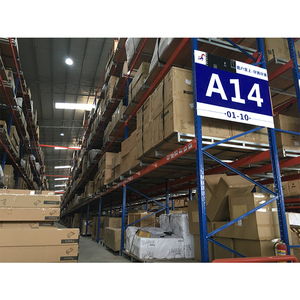
Industrial Storage Rack Heavy Duty Steel Pallet Rack System for Warehouse Organization
Factory-direct steel pallet racking for organized high-volume storage, with custom height, beam levels and load ratings.
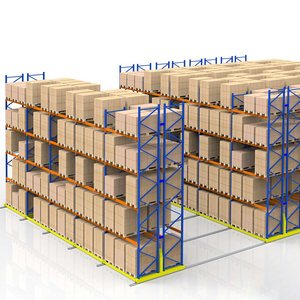
Custom Heavy Duty Selective Pallet Rack System One-Stop Warehouse Storage & Layout Design Solution in UAE
One-stop selective pallet racking and layout design for projects that require direct access, clearer picking routes and custom builds.
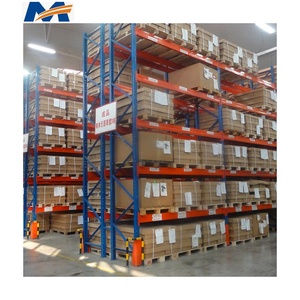
Pallet Racking System Warehouse Shelves Heavy Duty, Warehouse Picking Shelves Rack
Combined pallet storage and picking shelf system for distribution centers that need racking and accessible order-picking zones.
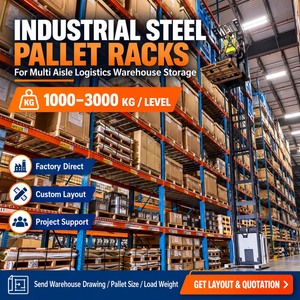
Selective Pallet Racking System with Adjustable Beam Levels for Different Pallet Heights
Flexible beam levels allow mixed pallet heights and future SKU changes without replacing the whole storage structure.
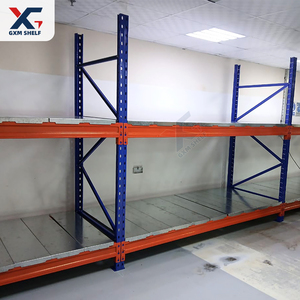
GXM Adjustable Stainless Steel Pallet Rack System Boltless Rack Storage Warehouse Heavy Duty Shelving
Adjustable stainless steel storage for moisture-sensitive, hygienic or corrosion-conscious warehouse environments.
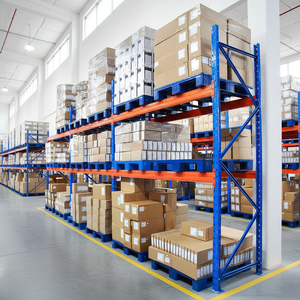
Heavy Duty Adjustable Corrosion Pallet Racking System Industrial Warehouse Storage Racks for Logistics E-commerce
Adjustable industrial pallet racking engineered for logistics environments where throughput, durability and future reconfiguration matter.
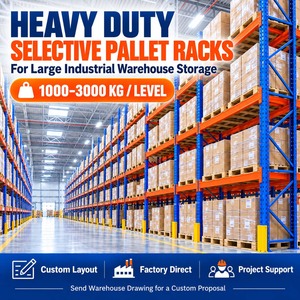
Heavy Duty Selective Pallet Racks for Large Industrial Warehouse Storage
Selective racks for large industrial warehouses that require straightforward access, high load capacity and clear aisle planning.
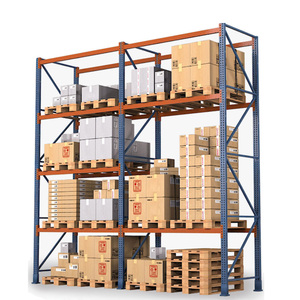
Heavy-Duty Selective Pallet Racking System for Warehouse Storage, Custom Size, Factory Direct
Custom-size selective pallet racking supplied directly by the factory for projects requiring specific upright frames, beams and finishes.
What a Custom OEM Pallet Warehouse Racking Factory Should Prove Before You Buy
Custom OEM pallet warehouse racking factories are not simply product sellers. They translate warehouse constraints into an engineered storage system. The strongest shortlist is not the one with the lowest price per beam or upright; it is the one that can prove load capacity, selectivity, code coordination and future reconfiguration.
A catalogue system starts with standard frames and beams. A custom OEM factory starts with your operating data: pallet footprint and overhang, load per pallet, beam-level count, SKU velocity, clear height, floor tolerance, forklift or AGV type, fire strategy, local seismic zone and cold-store temperature. These inputs determine uprights, beam sections, bracing, base plates, anchors, accessories, load signage and installation tolerances. For procurement teams, the key question is “Can this factory turn our real data into a documented, buildable racking system?” rather than “What is the unit price?”
That distinction matters in South America, where seismic activity along the Pacific coast, humid tropical climates, cold-chain agro-exports and fast e-commerce growth shape how warehouses are designed. A racking layout that works for a dry distribution center in São Paulo may need different anchors, bracing, finishes and aisle strategy for a cold store near San Antonio or an agro-export facility near Lima. Use this page as a buyer’s guide: compare the eight product routes, review the procurement trends, then send a brief with warehouse location, floor plan, clear height, pallet size, load per pallet and handling equipment for a factory recommendation.
Four Advantages of a Documented OEM Racking Approach
Real Nice Racks LLC designs, supplies and supports industrial storage systems across Brazil, Chile, Peru, Colombia, Argentina, Ecuador, Uruguay and Paraguay. The advantage is not just factory pricing; it is the engineering and lifecycle documentation behind the quotation.
Engineering-led customization
Custom dimensions, load capacities, beam levels, finishes and accessories are specified from your pallet profile and operational data, not from a generic catalogue page.
One platform, multiple systems
Selective, drive-in, push-back, shuttle, mobile and narrow-aisle racking can follow a shared P90 platform logic, helping you standardize spares and reconfigure as volumes change.
Safety you can document
Load signage, capacity tables, installation records and inspection guidance support procurement reviews, insurer questions and safer day-to-day operation.
Lifecycle support
Site survey, layout, manufacturing, export packing, supervised installation, inspection, repairs and capacity upgrades keep the system useful beyond handover.
Choose Pallet Racking by Operating Scenario, Not by Photo Alone
Use the selection logic below to narrow the layout before requesting engineered drawings. The final recommendation should always be checked against your pallet data, building and local code requirements.
Selective pallet racking
Best for fast-moving SKUs, 3PL operations and warehouses that need direct access to every pallet. Adjustable beams and clear signage make this a practical starting point for many OEM projects.
High-density P90 racking
Use drive-in, push-back or shuttle options when SKU counts are lower but pallet volumes are high. High-density racking can deliver up to 20% more storage capacity within the same building footprint.
Mobile and cold-chain storage
MOVO mobile pallet racking opens one working aisle on demand, reducing the volume of refrigerated air and increasing pallet positions inside the same insulated envelope. Suitable for chilled and freezer environments.
Mezzanines, shelving and specialist layouts
When pallet racking alone cannot solve the problem, combine mezzanine floors, industrial shelving, cantilever racking or pull-out units for small parts, long goods and heavy tooling.
Storage Density Comparison at a Glance
Relative density potential only; actual capacity depends on pallet size, aisle width, clear height, local code and handling equipment.
What Warehouse Racking Buyers Will Ask For Next
Procurement teams are moving from unit-price comparisons to total cost per usable pallet position, documented safety and scalability. These trends are already visible in South American logistics projects.
1. Total cost per pallet position
Buyers increasingly compare installed cost, capacity, energy use, maintenance, reconfiguration potential and spare-part availability. A lower steel price can lose value if the layout wastes clear height or cannot grow with the business.
2. Seismic and local-code evidence
Projects in Chile, Peru, Ecuador and Colombia require more than a generic racking brochure. Buyers ask for calculations, anchor schedules, bracing details and coordination with local structural requirements where required.
3. Cold-chain energy efficiency
Fruit, seafood, meat and dairy exporters need more pallets inside the same refrigerated envelope. Mobile racking and higher-density layouts reduce aisle volume, which can reduce the air that must be cooled and maintained.
4. Automation-ready design
Even manual warehouses are being prepared for AGVs, shuttles or semi-automated storage machines. Floor tolerance, base plate position, beam clearances and module design should be checked early to avoid future retrofit conflicts.
5. Digital submittals and asset records
Procurement and maintenance teams want clear layouts, load signs, capacity tables, component lists and inspection records. Better documentation reduces installation disputes and supports safer long-term operation.
6. Resilience and regional distribution
As supply chains add regional DCs and near-shoring capacity, racking must be scalable, export-packable and supported with replacement parts. Modular platforms make phased investment more practical than one-time overbuild.
How Custom Pallet Racking Products Are Evolving
The strongest warehouse storage systems are becoming more flexible, more data-led and easier to integrate with cold-chain, e-commerce and automation requirements.
High-density systems on one platform
Selective, drive-in, push-back and shuttle configurations increasingly share compatible design logic. This helps buyers standardize maintenance knowledge and re-use structural components as storage strategy changes.
Mobile racking for compact footprints
Mobile pallet racking is moving beyond niche projects. It is especially relevant where land prices are high, buildings are constrained or refrigerated volume is expensive to operate.
Semi-automation and goods-to-person
Vertical lift modules and semi-automated storage machines are being combined with pallet racking and shelving to save floor space and speed up picking where labor availability or land cost pressures are significant.
Cold-store and corrosion finishes
Freezer environments, humid climates and food-grade warehouses demand careful finish selection, zinc-rich protection where suitable and layout details that avoid condensation, ice buildup and damage risk.
Adjustable, reconfigurable structures
Beam-level adjustment, modular frames and accessory integration allow a warehouse to respond to changing pallet heights and SKU profiles without abandoning the entire structure.
Lower steel and circular-economy thinking
More efficient layouts can reduce steel intensity per pallet stored. Designers are also considering reuse, repair, powder-coating durability and component recovery as part of a more sustainable warehouse plan.
Factory-Direct OEM Engineering, Not Generic Hardware
Real Nice Racks LLC designs and supplies industrial storage and shelving systems that help businesses increase capacity, productivity and operational safety. The team supports multinational brands and regional companies from the first site survey to installation, inspection and ongoing service. A custom OEM approach means the final layout is built around your real pallet profiles, SKU velocity, forklift and AGV types, clear height, floor tolerance and seismic zone.
For international buyers, the practical advantage is one partner covering multiple system types: selective pallet racking, high-density P90 racking, MOVO mobile racking, industrial shelving, cantilever, pull-out units, mezzanines and semi-automated storage. Technical support is available in English, Spanish and Portuguese, with documentation prepared against recognized European racking standards and coordinated with local building codes by licensed engineers where required.
- Structural calculations and load signage supplied with every project scope
- Seismic-ready base plates, anchors and bracing coordinated with local codes
- Cold-chain and freezer-ready options down to approximately -30°C
- Scalable systems from manual picking to mobile and automation-ready layouts
- Installation, inspection, damage repair and capacity upgrade support
- Export packing and shipment planning to major South American ports

High-bay pallet racking planning requires coordination between load capacity, floor tolerance, handling equipment and local code requirements.
Five Stages from Warehouse Brief to OEM Racking Handover
A clear project sequence keeps budgets predictable and timelines realistic, especially for multi-country rollouts.
Analyze
Site survey, SKU and throughput data, floor assessment, pallet definition and seismic-zone review.
Design
Layout options, structural calculations, capacity comparison and component selection for local conditions.
Manufacture
Factory production, finish control, export packing and preparation of load signage and submittal documents.
Deliver & Install
Shipment to the agreed port, supervised installation and checks against the approved layout.
Support
Rack inspection, damage repair, operator guidance, spares and capacity upgrades over the system lifecycle.
Racking Standards Buyers Ask About in Due Diligence
Standards should be named clearly in the technical offer, then checked against the project’s actual location, building and local regulatory requirements.
Where required, final structural verification should be reviewed with a locally licensed structural engineer familiar with the site’s seismic zone, soil conditions, fire strategy and building authority requirements.
Custom OEM Pallet Warehouse Racking Factories & Factory FAQ
Practical questions from procurement teams, warehouse engineers and distribution managers comparing factory-direct racking suppliers.
What is a custom OEM pallet warehouse racking factory?
A custom OEM pallet warehouse racking factory produces or supplies pallet racking configured to a buyer’s layout, pallet profile, load capacity, clear height and local code requirements. The output typically includes engineered drawings, upright frames, beams, bracing, base plates, anchors, accessories, load signage and installation documentation. OEM principles can apply even when some components follow a standard platform, because the final system is customized around the warehouse’s real operating data.
Can racking be manufactured to custom dimensions and load capacities?
Yes, provided the design is checked as a complete structural system rather than as isolated parts. Custom upright heights, beam lengths, beam levels, load ratings, finishes and accessory positions are common. For safety, the capacity table and load signage must reflect the final configuration. Buyers should avoid mixing components from unknown sources unless a qualified engineer confirms compatibility.
What information should I send for an accurate quotation?
Send the warehouse location, floor plan or CAD file if available, clear height, pallet dimensions including overhang, maximum load per pallet, number of pallet positions required, forklift or AGV type, aisle width constraints, SKU velocity profile, cold-store temperature if applicable and any local seismic or fire requirements. This allows the factory to propose realistic layouts and avoid quoting against assumptions.
How do you handle seismic design in South America?
Racking for the Pacific seismic belt is calculated with reference to seismic methodologies such as FEM 10.2.08 and EN 16681, then coordinated with local requirements where applicable, including NCh 433 and NCh 2369 in Chile, E.030 in Peru, NEC-SE-DS in Ecuador and NSR-10 in Colombia. Base plates, anchors, bracing and beam connectors are specified for the site’s seismic zone and soil conditions. Final calculations are reviewed with a locally licensed structural engineer when required by the project.
Do you supply racking for cold storage and freezer warehouses?
Yes. Cold storage pallet racking, mobile racking and high-density systems can be specified for chilled and frozen environments down to approximately -30°C. This suits fruit, seafood, meat and dairy export hubs across Chile, Peru, Ecuador, Argentina and Brazil. Mobile racking such as MOVO is particularly relevant because it reduces the volume of air that must be refrigerated and can improve pallet density within the same insulated envelope.
How long does a custom racking project take?
Lead time depends on design complexity, quantity, finish, component availability, inspection requirements and shipping route. The safest approach is to confirm the sequence after the layout and technical scope are approved: design and structural review, factory production, quality checks, export packing, shipment to the nearest port, customs clearance and installation scheduling. Procurement teams should build review milestones into the schedule rather than asking for a single blanket lead time before specifications are fixed.
Can you upgrade an existing warehouse instead of building new?
Yes. Retrofit projects commonly combine re-layouts, higher-density systems such as drive-in, push-back, shuttle or mobile racking, mezzanine floors and narrow-aisle configurations. High-density pallet racking can deliver up to 20% more storage capacity within the same building footprint, avoiding the cost and delay of new construction. Existing racking should be inspected before reuse, and any mixed configuration should be verified by a qualified engineer.
How can buyers verify quality and compliance before ordering?
Request the design basis, capacity tables, load signage specification, component list, finish specification, installation method statement and inspection criteria. Ask how the supplier coordinates with local codes and whether third-party or locally licensed engineering review is available. A credible factory should welcome these questions and provide consistent documentation across the quotation, drawing and handover stages.
Send Your Warehouse Data for a Custom OEM Racking Recommendation
Share your location, floor plan, clear height, pallet size, load per pallet, handling equipment, target pallet positions and any cold-store or seismic requirements. The engineering team can then assess selective, high-density, mobile or specialist layouts for your project.
For a faster technical review, include the information above and note whether the project is a new warehouse, an extension or a retrofit of existing racking.
Send an Inquiry