Custom OEM Warehouse Racking Manufacturer & Suppliers
Engineering-led pallet racking, mezzanine storage, tire racking and high-density warehouse systems for buyers who need documented safety, export-ready production and South America project support.
Eight Custom Racking Product Lines for High-Performance Warehouses
Compare the racking formats most often specified for OEM projects: selective pallet racking, mezzanine platforms, tire and industrial storage, high-capacity pallet systems, logistics-center racking, bulk-storage selective racks, CE-oriented adjustable racking and e-commerce mezzanine shelving.
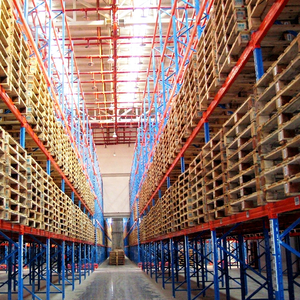
Heavy Duty Selective Pallet Racking System
Adjustable-beam OEM pallet racking for mixed-SKU warehouses that require direct access to every pallet, with project-specific upright capacity, beam lengths, finishes and load signage.
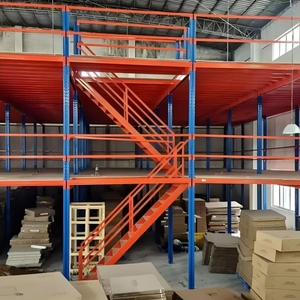
Heavy Duty Mezzanine Floor Racking
Rack-supported mezzanine storage that adds picking, storage or light-production space inside the existing building envelope, coordinated with decking, stairs, guardrails and access routes.
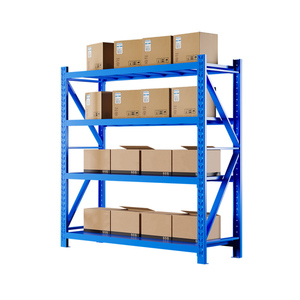
Industrial 5-Layer Pallet Racking with Tire Storage
Five-level storage for tires, bulky cartons and industrial SKUs, with slotted-angle and stacking options for non-palletized loads where pick faces must stay accessible.
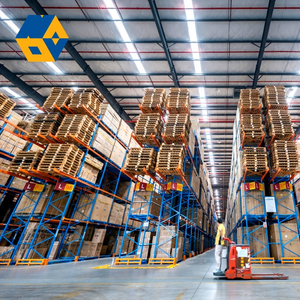
2000 kg per Layer High-Capacity Pallet Rack
Heavy-duty racking for dense, high-mass pallets in logistics, manufacturing and spare-parts stores, with uprights and connectors sized for the actual load case rather than a headline figure.
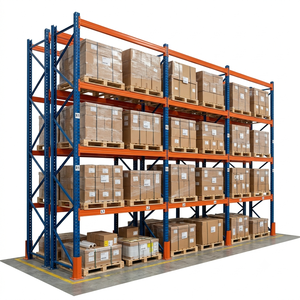
Heavy Duty Pallet Rack for Logistics Centers
Modular pallet racking that balances storage density and forklift throughput, configured with beam levels, protectors and aisle widths for 3PL, distribution and cross-dock operations.
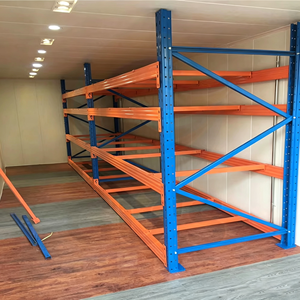
Selective Racking System for Bulk Storage
High-strength Q235B steel selective racking for bulk inventories where every SKU must remain accessible, suitable for high-bay layouts, heavy pallets and long-life powder-coated performance.
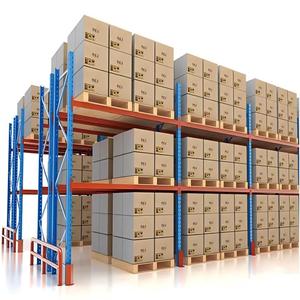
Adjustable CE Heavy Duty Pallet Racking
Durable, adjustable racking with powder-coating finish and CE-oriented design documentation, suited to buyers who need repeatable OEM production, consistent tolerances and export-ready packing.
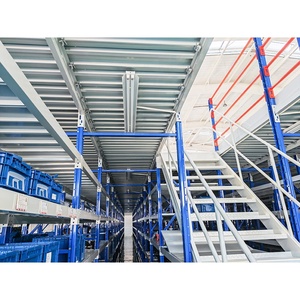
E-commerce & Chemical Plant Mezzanine Shelving
A 500 kg/m² mezzanine shelving platform for e-commerce picking and chemical-plant storage, separating fast-moving SKUs and supporting multi-level order picking within a compact building.
Send pallet dimensions, load per level, clear height and target throughput for an engineering review.
Custom OEM Warehouse Racking Built Around Load, Flow and Local Code
The strongest OEM quotation is not the one with the lowest beam price. It is the one that converts your operating data into a safe, buildable and repeatable racking system.
What custom actually changes
Most racking buyers compare upright weight or beam price, but a safer and more economical comparison starts with the operating model: pallet footprint, load per level, fork entry, SKU velocity, clear height, floor tolerance, climate, seismic zone and local building code. A reliable custom OEM warehouse racking manufacturer should convert those inputs into a technical package before production begins — layout, structural assumptions, bill of materials, load signage, installation sequence and inspection plan.
For South American projects, that package must also reflect the reality of the site. A racking system in Chile or Peru may need seismic bracing and anchor details reviewed against local requirements. A freezer warehouse in Ecuador or Argentina may need steel, coatings and mobile bases specified for sub-zero operation. An e-commerce mezzanine in Brazil may need 500 kg/m² shelving, protected pick faces and a phased installation that keeps orders moving.
Real Nice Racks LLC works as an engineering-led OEM partner for pallet racking, shelving, mezzanines, mobile racking and semi-automated storage. The objective is not to force every buyer into automation. It is to deliver a modular system that can start manual, improve density and later integrate with new handling equipment without replacing the entire structure.
- Site survey and storage analysis before final bay sizing
- Load signage, capacity tables and installation documentation
- Design references aligned with EN 15512, FEM 10.2.08 / EN 16681 and local codes where required
- Technical support in English, Spanish and Portuguese

Which Racking System Fits Your Operation?
Start with the storage behaviour, not the product name. The four modules below show how the eight product lines above are typically matched to real warehouse priorities.
High-turnover DC
Choose selective pallet racking when fast access, mixed SKUs and clear pick faces matter more than maximum cube. Configure beam levels and aisle widths around forklift or AGV movement.
Cold-chain export
Use mobile or high-density racking when every square metre of refrigerated space is expensive. Fewer aisles can reduce refrigerated air volume and improve pallet positions per cubic metre.
E-commerce & chemicals
Choose mezzanine shelving when picking speed, segregation and usable floor area drive the business case. A 500 kg/m² platform can create pick levels without new construction.
Heavy industrial / tire
Specify 5-layer pallet racking or 2,000 kg/layer systems when mass, tire profiles or non-palletized loads require stronger beams and additional pick faces.
Indicative storage-density comparison
Density depends on pallet size, aisle width, clear height, handling equipment and code requirements. The bars below are a planning aid, not a fixed design value.
Warehouse Racking Procurement Trends for 2025–2030
Buyers are moving from lowest-price component sourcing to documented lifecycle value. These six trends are shaping OEM racking specifications across South America and export-led supply chains.
Seismic documentation becomes a gate
Chile, Peru, Ecuador and Colombia procurement teams increasingly ask for bracing, base-plate, anchor and beam-connector logic before award. A racking quote without a seismic route is harder to compare or insure.
Cold-chain efficiency moves central
Fruit, seafood, meat and dairy exporters are reviewing refrigerated volume per pallet. Mobile racking and high-density layouts can reduce aisle volume, energy use and the cost of every chilled pallet position.
Retrofit beats new construction
Land around São Paulo, Santiago, Lima and Bogotá is expensive. Upgrades using P90 high-density racking, mezzanines and narrow aisles can add capacity without the delay and capital risk of a new building.
Automation-ready interfaces
Even manual warehouses now ask whether racking can later accept AGVs, shuttles or semi-automated storage. Clear height, floor tolerance, beam deflection and controls integration need to be considered early.
ESG value per pallet stored
Fewer redundant aisles, optimised steel sections, powder coating and a serviceable lifecycle reduce material intensity. Buyers increasingly compare total steel, coating durability and repairability rather than price per bay alone.
Port-aware supply chains
OEM buyers plan around Santos, Callao, San Antonio, Buenos Aires, Cartagena, Guayaquil and Montevideo. Packaging, container loading, documentation and installation sequencing are now part of the technical comparison.
What the Next Racking Platform Must Deliver
Racking development is moving toward one modular platform that supports multiple density levels, documented compliance and simpler expansion.
One platform, many racking types
Adjustable, drive-in, push-back, shuttle, mobile and narrow-aisle systems are increasingly designed around shared components. This makes later upgrades faster and reduces spare-part complexity.
Mobile racking for compact sites
MOVO-type mobile pallet racking keeps 100% direct access while reducing permanent aisles. In cold stores, that can lower the refrigerated air volume that must be maintained every hour of operation.
Mezzanine and multi-tier integration
E-commerce, chemical and spare-parts operations need mezzanine shelving that integrates with picking, packing and safety routes. Load ratings such as 500 kg/m² are now specified by activity, not by steel weight alone.
Documentation as a product feature
Load signs, capacity tables, inspection criteria and repair procedures are becoming part of the delivered product. Buyers want a racking system that can be maintained safely, not only installed quickly.
Safety You Can Document — Not Just Promise
Every project should be traceable from design assumption to handover. We prepare structural calculations, load signage and installation records with recognised European racking standards and coordinate with local building-code requirements where required.
Information gain: prepare a better OEM racking brief
Suppliers can only optimise what they can measure. A complete brief shortens the first quote cycle and reduces later design changes. Include the following in your RFQ:
- Warehouse location, floor plan, clear height and floor tolerance
- Pallet length, width, height, weight and load per level
- Forklift, reach truck or AGV type, plus aisle constraints
- SKU count, turnover, FIFO/LIFO requirement and pick faces
- Temperature, humidity, corrosion risk and hygiene needs
- Seismic zone, local code and target port of discharge
- Target capacity, go-live date and future automation plan
Why the RFQ quality changes the outcome
Two OEM quotes can look similar on paper but use different assumptions for beam deflection, upright capacity, floor fixing, seismic bracing or coating durability. When the RFQ includes the data above, suppliers quote to the same design brief. That makes price comparison more meaningful and helps prevent change orders after the design freeze.
For buyers in South America, the port and installation plan matter as much as the steel schedule. A technically sound racking package that arrives without the right protection, packing marks or installation documentation can still create delays on site. The best procurement approach combines engineering rigour with logistics realism.
Why Buyers Choose Real Nice Racks LLC
Our advantage is not a single warehouse product. It is the ability to connect design, manufacturing coordination, export delivery and lifecycle support for warehouse projects across South America.
Engineering-led custom OEM
We start with your pallet profile, throughput, clear height, seismic zone and future automation plan. The result is a racking layout with a defined capacity basis, not a generic catalogue selection.
Manufacturing and export coordination
Quality-controlled production, powder-coating options, export packing and shipment to the nearest port are coordinated as one project. Repeat OEM buyers benefit from consistent components and documentation.
South America project experience
We support projects in Brazil, Chile, Peru, Colombia, Argentina, Ecuador, Uruguay and Paraguay, with awareness of local seismic expectations, cold-chain needs and delivery ports.
Lifecycle service and multilingual support
Survey, installation supervision, inspection, damage repair and capacity upgrades continue after handover. Technical support is available in English, Spanish and Portuguese.
From Site Survey to Long-Term Support
A clear five-stage project approach keeps budgets predictable and installation sequences realistic, even for multi-country rollouts.
Analyse
Site survey, SKU and throughput data, floor review and seismic assessment.
Design
Layout options, structural calculations and capacity comparison.
Manufacture
Quality-controlled steel production, coating and export packing.
Deliver & install
Shipment to the nearest port and supervised installation.
Support
Inspection, repairs, training and future capacity upgrades.
Built for the Realities of South American Warehousing
Seismic activity, humid climates, agro-exports, cold-chain investment and e-commerce growth all change how a warehouse should be designed. Here is how custom racking is adapted by market.
Brazil
High-throughput DCs for e-commerce, retail and automotive warehousing, with projects aligned to ABNT NBR 15524 for selective pallet racking.
Chile
Seismic design coordination for one of the world's most active seismic markets, plus fruit and salmon cold stores near San Antonio and Valparaíso.
Peru
Agro-export growth around Lima and Callao, blueberry and avocado cold-chain needs, and mining spare-parts storage designed with seismic awareness.
Colombia
3PL hubs in Bogotá, Medellín and Cartagena, flower and coffee cold chain, pharmaceutical distribution and NSR-10 structural coordination.
Argentina
Food, beverage, meat and grain-related industries around Buenos Aires, Rosario and Córdoba, where push-back and high-density systems maximise each building.
Ecuador · Uruguay · Paraguay
Banana and shrimp export cold stores in Guayaquil, free-zone logistics in Montevideo and regional distribution in Asunción.
Common Questions from Warehouse Racking Buyers
These are the questions procurement and engineering teams ask most often when comparing custom OEM warehouse racking manufacturers and suppliers.
Can you design custom racking for seismic zones?
Yes. Racking for the Pacific seismic belt is calculated with reference to FEM 10.2.08 / EN 16681 and coordinated with local requirements such as NCh 433 and NCh 2369 in Chile, E.030 in Peru, NEC-SE-DS in Ecuador and NSR-10 in Colombia. Base plates, anchors, bracing and beam connectors are specified for the site's seismic zone and soil type, with locally licensed review where required.
What information is needed for an accurate OEM quote?
Provide the warehouse location, floor plan, clear height, pallet dimensions, load per pallet, load per level, forklift or AGV type, temperature range, SKU turnover, target capacity and port of discharge. If you have a local code requirement or a future automation plan, include it in the first brief so the design can be sized correctly.
Are you both a manufacturer and supplier for overseas buyers?
We work as an engineering-led OEM partner, coordinating custom production, export packing and delivery with project documentation. Buyers receive a system-based quotation that can include racking, shelving, mezzanines, installation supervision and lifecycle support rather than isolated components.
Which racking is best for cold storage and freezer warehouses?
Cold storage projects often use selective racking, mobile racking or high-density systems designed for chilled and frozen environments down to approximately -30°C. Mobile racking such as MOVO is especially effective because it reduces the number of permanent aisles and the volume of air that must be refrigerated.
Can you upgrade an existing warehouse instead of building new?
Yes. Retrofit projects commonly combine re-layouts, high-density P90 racking, mezzanine floors, narrow aisles and mobile racking. High-density pallet racking can deliver up to 20% more storage capacity within the same building footprint, avoiding the cost and delay of new construction.
What standards and handover documents are supplied?
Static steel racking is designed in line with EN 15512 principles, with floor tolerances per EN 15620, operation and inspection guidance per EN 15635, and seismic design per FEM 10.2.08 / EN 16681. Load signage, capacity tables and inspection records are supplied with each installation; projects in Brazil may be aligned with ABNT NBR 15524.
Request a Custom OEM Racking Review
Send your warehouse location, floor plan, clear height, pallet dimensions, load per level, handling equipment, temperature range, target capacity and port of discharge. Our team will review the project for pallet racking, mezzanine shelving, mobile racking or a high-density configuration.
Get a Quote