8 Export-Ready Warehouse Shelving and Racking Products
Start with a proven storage platform, then customise beam length, upright height, load capacity, decking, safety accessories, powder-coat finish, private-label packaging and export documentation. The original product links are preserved below for direct specification requests.
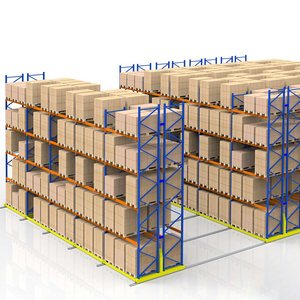
Custom Heavy Duty Selective Pallet Rack System One-Stop Warehouse Storage & Layout Design Solution in UAE
View product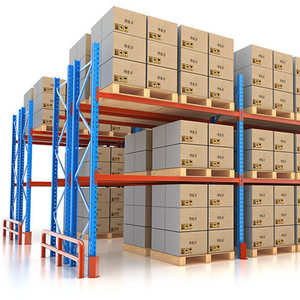
Selective Heavy Duty Warehouse Storage Rack Shelving System Pallet Racking
View product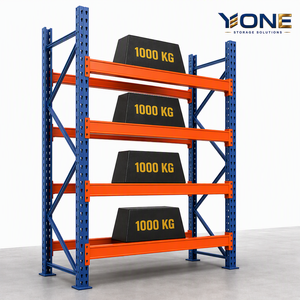
Durable Steel Storage Rack Heavy Duty Pallet Racking for Industrial Warehouse Storage with Safety Accessories
View product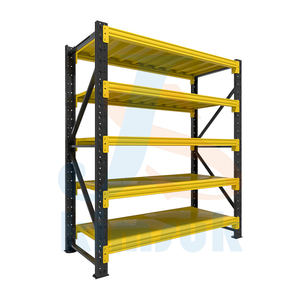
Garage Warehouse Rack Adjustable Storage Stacking Racks Pallet Steel Metal Shelving Shelves
View product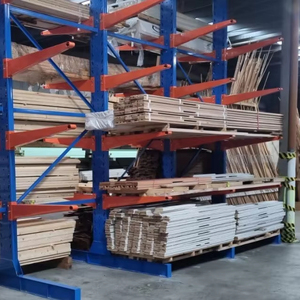
Cantilever Racking Wholesale Double-sided Heavy Pipe Warehouse Rack Industrial Heavy Duty Cantilever Racking Pallet Racking
View product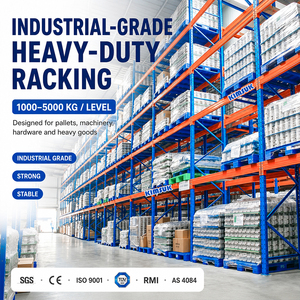
Heavy Duty Warehouse Racking Steel Pallet Storage Shelving, Adjustable Rack System with Easy Assembly for Factory
View product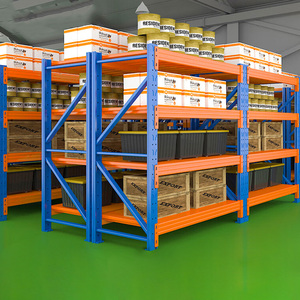
HY Heavy Duty Warehouse Rack Warehouse Rack Storage Shelf Heavy Duty Pallet Racking Warehouse Racking Industrial Pallet Shelving
View product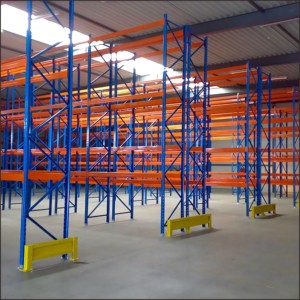
HONGYUN Heavy Duty 6 Meters High Metal Pallet Rack 5 Layer Anti-Rust Iron Shelving for Warehouse Storage for Garages
View productCustom OEM Warehouse Shelving and Racking: What Serious Buyers Should Verify Before Ordering
The market is shifting from catalogue purchasing to specification-based sourcing. Importers, warehouse contractors and regional distributors no longer buy only “a rack”; they buy a documented storage system that must fit pallet geometry, floor conditions, handling equipment, building height, fire strategy, seismic zone, climate and future automation plans.
A capable custom OEM warehouse racking exporter should behave like an engineering partner, not a price list. That means translating buyer requirements into manufacturable drawings, capacity tables, anchor specifications, finish options, export packaging and installation guidance. It also means explaining where standard components end and custom fabrication begins, so procurement teams can compare bids on the same technical basis.
For SEO and procurement teams evaluating suppliers, the most useful information gain is not a longer product description. It is a clear pre-order checklist: pallet width, depth and height; load per pallet; racking bay length; clear warehouse height; aisle equipment; floor slab tolerance; seismic zone; indoor or cold-store environment; finish expectations; port of discharge; and required documentation. When these inputs are known, a supplier can propose a system that is safer, faster to install and less expensive to own over its lifecycle.
- Provide pallet dimensions, maximum load and load type, including overhang and unstable goods.
- Share a floor plan, clear height, floor slab details and any local seismic or building-code requirements.
- Confirm forklift, reach truck, AGV or manual handling equipment and required aisle width.
- State whether the project is a new warehouse, retrofit, cold store, high-bay store or phased expansion.
- Request load signage, capacity tables, packing list, finish specification and installation method statements.
- Define the commercial scope: FOB, CIF, installation supervision, spare parts, private label and packaging.

High-bay racking, selective pallet storage and export-ready layouts are planned around real pallet and handling data.
Product Recommendations by Load, Aisle and Growth Plan
Use this planning table to shortlist systems before an RFQ. Final configurations must be confirmed by engineering calculation, site survey and local code review.
| Storage system | Best suited to | Why export buyers choose it | Custom OEM options |
|---|---|---|---|
| Selective heavy-duty pallet racking — products 1, 2, 3, 6 and 7 | Fast-moving SKUs, mixed pallets, 3PL warehouses, distributors, factory stores and spare-parts operations. | Direct access to every pallet, straightforward inspection, flexible beam levels and easy phased expansion. | Upright height and load, beam length, pitch, powder-coat colour, safety accessories, decking, private label and documentation. |
| Adjustable steel storage shelving — product 4 | Garage storage, warehouse cartons, small parts, service parts and hand-loaded picking areas. | Fast assembly, adjustable shelf levels and practical storage for lighter or irregular goods. | Shelf loading, panel type, bin boxes, dividers, multi-tier configuration, packaging and label-ready cartons. |
| Double-sided cantilever racking — product 5 | Pipes, steel profiles, timber, long goods, building materials and industrial fabrication stores. | Open front access for long loads, efficient crane or forklift handling and flexible arm spacing. | Single or double-sided layout, arm length, load per arm, outdoor coating, bracing and custom base plates. |
| High-rise metal pallet rack — product 8 | Six-metre-high warehouse storage, five-layer pallet storage, anti-rust requirements and garage warehouses. | Higher cube utilisation, robust steel structure and practical density where floor space is constrained. | Height, layer count, beam capacity, anti-corrosion finish, decking, anchor plan, export packing and load signage. |
| High-density, mobile and retrofit systems — P90, MOVO and mezzanine programme | Cold stores, land-constrained distribution centres, warehouse upgrades and operations planning for automation. | More pallet positions without new construction, lower refrigerated air volume and scalable layouts. | Drive-in, push-back, shuttle, mobile bases, mezzanine integration, seismic design coordination and phased delivery. |
Procurement insight: compare bids using total cost of ownership, not price per upright or beam. Freight volume, packing efficiency, installation time, spare-part availability, reconfiguration potential and documentation quality often change the true ranking of suppliers.
Get CatalogFuture Procurement Trends in Warehouse Racking
Buyer intent is becoming more sophisticated. The following procurement shifts are especially relevant to importers, distributors and project buyers comparing warehouse racking exporters.
Documentation-led buying
Load capacity, beam deflection, anchor details, inspection records and signage are moving from “nice to have” to prequalification requirements for serious projects.
Total cost of ownership
Freight density, installation labour, spare parts and future reconfiguration are now part of the purchase decision, not only the steel price per bay.
Climate-specific specification
Cold-chain, freezer, humid and coastal environments require suitable finish, component selection, condensation control and installation planning.
Consolidated OEM sourcing
Buyers prefer one export partner for racking, shelving, cantilever, mezzanine accessories, packaging and private-label documentation, reducing coordination risk.
For South American markets, tender requirements increasingly reference both international racking standards and local code frameworks. Projects in Brazil may align with ABNT NBR 15524; Chile projects may require review against NCh 433 and NCh 2369 principles; Peru commonly references E.030 for seismic design; Colombia references NSR-10; and Ecuador references NEC-SE-DS. The exporter’s value is in coordinating these requirements early, before purchase orders and shipping deadlines compress the engineering window.
Another clear trend is retrofit-first planning. Industrial land around São Paulo, Santiago, Lima and Bogotá is expensive and construction lead times can be long. As a result, importers and warehouse operators are asking for layout optimisation, mobile racking, mezzanines, narrow-aisle configuration and selective upgrades that unlock capacity inside an existing building. A supplier that can model these options together creates more useful information than one that quotes only standard selective racking.
Product Development Trends in OEM Warehouse Shelving and Racking
Custom OEM programmes are evolving toward modular engineering, higher density, cold-chain readiness and automation-friendly interfaces.
High-density and mobile racking
P90 high-density layouts and MOVO mobile pallet racking reduce aisle waste, improve cold-store energy performance and increase pallet positions in constrained buildings.
Seismic-ready modular design
Bracing, base plates, anchors and beam connectors are increasingly specified as part of the export package, with calculations reviewed by locally licensed engineers where required.
Automation-ready interfaces
Racking is being prepared for shuttle systems, AGVs, semi-automated storage machines and future goods-to-person expansion without a complete redesign.
Private-label export packages
Custom labels, manuals, packing marks, spare-part kits and finish specifications are being bundled for distributors that sell under their own brand.
The most competitive OEM products are not simply heavier versions of standard racking. They are configured around installation conditions. For example, export cartons may need reinforced corners and moisture protection; beam levels may need pre-marked pitch to speed on-site assembly; uprights may require touch-up paint; and accessories may need to be packed in the same container as the main steel. These details reduce site delays and protect the buyer’s installation margin.
Energy performance is also shaping product development. In cold stores, reducing aisle volume lowers refrigeration demand. In high-bay warehouses, better cube utilisation reduces the building area required per pallet. In coastal or humid markets, anti-rust treatment and appropriate powder coating extend service life. That is why product recommendations should be linked to operating conditions rather than made from a generic catalogue page.
Why Work With Real Nice Racks LLC as Your Custom OEM Export Partner
Real Nice Racks LLC designs, supplies and supports industrial storage systems — pallet racking, mobile racking, shelving, cantilever, mezzanines and semi-automated storage — for warehouses and distribution centres across South America and international export markets.
We support multinational brands and fast-growing regional companies from the first site survey through layout design, manufacture, export packing, installation supervision, inspection and ongoing service. Every project starts with your operational data: pallet profiles, SKU velocity, forklift types, clear height and seismic zone. That practical, data-led approach helps buyers avoid the common mistake of purchasing racking that fits a catalogue but not the warehouse.
Technical support is available in English, Spanish and Portuguese. Structural calculations, load signage and installation records are prepared as part of a documented handover, and high-value projects can be coordinated with locally licensed structural engineers where local regulations require it.

Supervised installation and documented handover help protect project schedules and long-term safety.
End-to-end engineering
Site survey, layout options, structural design, capacity comparison and export documentation are coordinated by one technical team.
Safety documentation
Load signage, capacity tables, anchor plans and inspection records support safer operation and easier insurer or auditor review.
Seismic and cold-chain capability
Racking can be specified for seismic zones, chilled stores and freezer environments down to approximately -30°C.
Multilingual support
English, Spanish and Portuguese communication helps procurement, engineering and installation teams stay aligned across borders.
Export packing and port logistics
Projects can be packed for efficient container loading and shipped to ports such as Santos, Callao, San Antonio, Buenos Aires, Cartagena, Guayaquil and Montevideo.
Lifecycle service
Inspection, damage repair, spare parts, training and capacity upgrades help protect the investment after commissioning.
Standards, Load Signage and Export Documentation That Buyers Can Verify
Procurement teams and insurers increasingly ask for proof, not promises. Static steel racking is planned in line with EN 15512, with floor tolerances per EN 15620, operation and inspection guidance per EN 15635, and seismic design methodology coordinated with FEM 10.2.08 / EN 16681. Local requirements can be addressed through NBR 15524 in Brazil, NCh 433 and NCh 2369 in Chile, E.030 in Peru, NSR-10 in Colombia and NEC-SE-DS in Ecuador, with final calculations reviewed by a locally licensed structural engineer where required.
Every export project should define the documentation package before the order is placed: arrangement drawings, bill of materials, beam and upright capacity tables, load signage, finish specification, anchor plan, packing list, installation method statement and inspection criteria. This is the practical side of E-E-A-T for industrial products: experience expressed through documents, expertise expressed through calculations, authority expressed through standards, and trust expressed through transparent assumptions.
Illustrative early-planning comparison. Final density, selectivity and energy outcomes depend on load profile, building envelope, handling equipment and engineering calculation.

High-density racking can unlock significant additional capacity inside an existing warehouse footprint.
From Site Survey to Lifecycle Support
A clear five-stage export project model keeps budgets predictable and timelines realistic, even for multi-country rollouts.
Analyse
Site survey, SKU and throughput data, floor assessment, climate and seismic review.
Design
Layout options, structural calculations, capacity comparison and accessory selection.
Manufacture
Quality-controlled steel production, finish control, private label and export packing.
Deliver & install
Shipment to the nearest port, installation supervision, load signage and handover.
Support
Inspection, repair, training, spare parts and future capacity upgrades.
FAQ for Custom OEM Warehouse Racking Buyers
Direct answers for procurement, engineering and distribution teams comparing custom OEM warehouse shelving and racking exporters.
What does custom OEM mean for warehouse shelving and racking?
It means the storage system is produced to the buyer’s technical and commercial requirements rather than only selected from a fixed catalogue. Custom OEM can include beam length, upright height, load capacity, decking, safety accessories, powder-coat colour, packaging, labels, manuals and private-brand presentation. The buyer should still receive verifiable capacity tables and drawings so that “custom” does not mean undocumented.
Can you manufacture to our drawings, load requirements and private label?
Yes. Export OEM projects can be developed from buyer drawings or from a shared requirement brief. The process usually starts with pallet dimensions, load per pallet, bay layout, clear height, handling equipment and environmental conditions. Private-label manuals, packaging marks, spare-part kits and finish specifications can be discussed as part of the export package.
Which standards and documents can be provided?
Racking projects can be planned with reference to EN 15512, EN 15620, EN 15635, FEM 10.2.08 / EN 16681 and relevant local codes such as ABNT NBR 15524, NCh 433 / NCh 2369, E.030, NSR-10 and NEC-SE-DS. Typical documentation includes layout drawings, bill of materials, capacity tables, load signage, anchor plans, finish specifications, packing lists and installation guidance.
How do you handle seismic and cold-storage projects?
For seismic zones, base plates, anchors, bracing and beam connectors are specified around the site’s seismic zone, floor condition and local code requirements, with final calculations reviewed by a locally licensed structural engineer where required. For cold storage, racking and mobile systems can be configured for chilled and freezer environments down to approximately -30°C, with suitable finish and installation planning.
What information should be included in an RFQ?
Include the warehouse location, floor plan, clear height, pallet width, depth and height, load per pallet, load type, forklift or handling equipment, aisle requirements, seismic zone, indoor or cold-store conditions, required finish, target port and required documentation. MOQ, lead time and shipping plan can then be quoted against a defined technical scope rather than a generic product list.
How can buyers request the catalog and technical data?
Use the catalog request button on this page to start a conversation with the export team. For project-specific review, prepare your warehouse location, pallet data, clear height, floor plan and local code requirements. Product catalogues, technical documents and layout discussion can then be matched to the correct racking, shelving, cantilever or high-density system.
Build a More Competitive OEM Racking Programme
Whether you are developing a distributor range, sourcing shelving for a warehouse chain or planning a high-density retrofit, the next step is a technical brief. Share pallet data, clear height, floor plan, port of discharge and target documentation so the export team can recommend the right product, finish and packing plan.
Technical enquiries: [email protected]