Eight Industrial Racking Systems for Global Procurement
Start with a proven configuration, then adapt beam length, upright height, load capacity, finish, packaging and installation scope to your project. The product URLs below are preserved for direct review by your procurement and engineering teams.
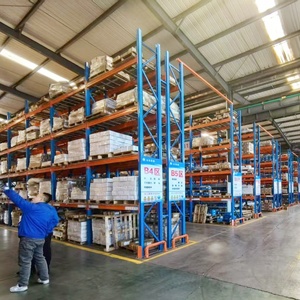
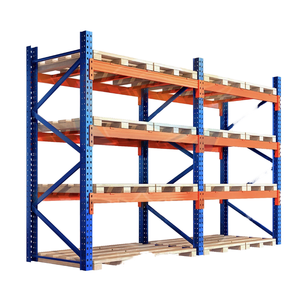
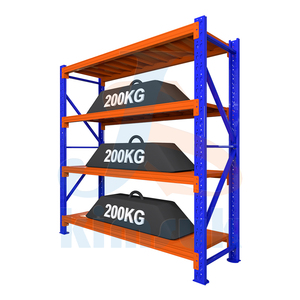
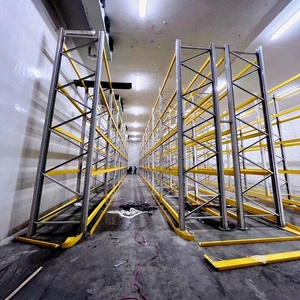
Adjustable Heavy-Duty Selective Pallet Racking System, 800–3000 kg/Level
View product →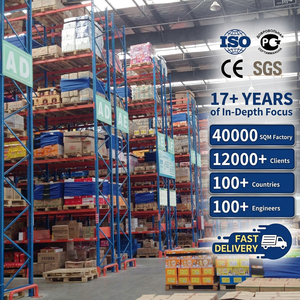
OEM/ODM Racking Export Is a Specification Business, Not a Steel Auction
Buyers comparing industrial racking systems exporters usually compare three things: price, speed and risk. Price is visible. Speed is promised. Risk is hidden in the details — an unchecked upright section, a missing load sign, a container plan that damages powder coating before installation, or a layout that cannot be permitted because seismic anchorage was never calculated.
Real Nice Racks LLC works with importers, system integrators and warehouse owners who need more than a catalogue. We support OEM/ODM customisation across selective pallet racking, VNA boltless systems, detachable stacking racks, multi-level pallet racking and industrial shelving. The goal is information gain at the quotation stage: clear load tables, practical installation sequences and export documentation that reduces surprises at the port.
For projects in Brazil, Chile, Peru, Colombia, Argentina, Ecuador, Uruguay and Paraguay, the design brief must also reflect seismic zone, humidity, cold-store temperature, forklift type, floor tolerance and future automation. That is where an experienced industrial racking exporter creates value beyond the factory gate. A racking system that is merely “cheap per kilogram” can become expensive when it fails inspection, slows forklift operations or cannot be expanded without replacing the upright frames.
As an OEM/ODM racking export partner, we align product design with the buyer’s commercial model: private-label packaging, installation manuals in the target language, project-specific load signage, spare-parts kits and staged deliveries for warehouses that must keep operating during a retrofit. This is the practical meaning of E-E-A-T in industrial storage procurement — engineering experience, documented expertise, supply authority and reliable delivery.

Why Global Buyers Shortlist Real Nice Racks as an Industrial Racking Export Partner
A reliable exporter must connect steel manufacturing, structural design, export logistics and after-sales support. These four capabilities reduce project risk before the first container is loaded.
Engineering-Led OEM/ODM
Custom beam lengths, upright sections, accessories, branding and pack marks are developed around your warehouse layout, pallet profile and installation sequence — not a generic catalogue template.
Compliance & Documentation
Static racking can be designed with reference to EN 15512, floor tolerances to EN 15620, use and inspection guidance to EN 15635, and seismic methodology such as FEM 10.2.08 / EN 16681. Local alignment can include ABNT NBR 15524, NCh 433, NCh 2369, E.030, NEC-SE-DS and NSR-10.
Seismic & Cold-Chain Ready
Base plates, anchors, bracing and beam connectors can be specified for seismic zones, while cold-store systems support chilled and freezer environments down to approximately -30°C for fruit, seafood, meat and dairy export hubs.
Lifecycle Project Support
Site survey, layout design, export packing, shipment to the nearest port, supervised installation, inspection records, repair advice and capacity upgrades — supported in English, Spanish and Portuguese.
Recommended Racking Systems by Procurement Scenario
The right system depends on SKU velocity, selectivity, building height, handling equipment, floor condition and climate. Use these recommendations as a starting point for an OEM/ODM technical discussion.
Selective Pallet Racking for Mixed-SKU Distribution
Best for importers and 3PL warehouses that need 100% direct access to every pallet. The adjustable selective system supports 800–3000 kg per level and is easy to reconfigure as SKU profiles change.
View system →VNA Boltless Racking for High Land Costs
Narrow-aisle configurations help warehouses near São Paulo, Santiago, Lima or Bogotá increase pallet positions where industrial land is expensive. Boltless assembly supports faster deployment and future adjustment.
View system →Detachable Stacking Racks for Bulk Storage
Suitable for seasonal peaks, bulk pallet storage and project sites that need stackable, relocatable storage. The 1–5 layer configuration supports flexible yard or warehouse planning without permanent rack installation.
View system →Q235B Multi-Level Pallet Racking
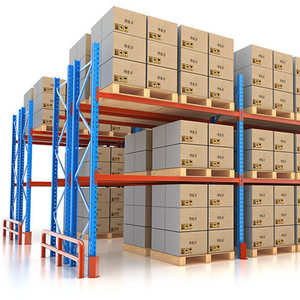
For buyers who require steel specification traceability and multi-level storage, this system can be developed around certificate requirements, load schedules and export documentation for large warehouse projects.
View system →Boltless Heavy-Duty Warehouse Racking
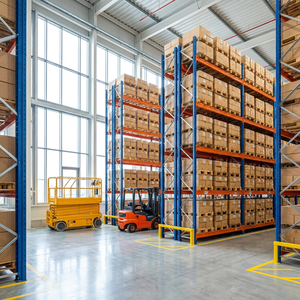
An efficient option for warehouses that need fast installation, adjustable beams and straightforward maintenance. Ideal for distributors that plan to expand racking bay by bay as throughput grows.
View system →Light-Duty Industrial Shelving for Small Parts
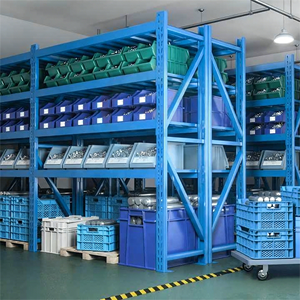
For spare parts, e-commerce SKUs, tools and archive storage, boltless light-duty shelving provides economical hand-loaded storage that complements pallet racking and mezzanine layouts.
View system →What Industrial Racking Buyers Will Ask For in 2026–2030
Procurement teams are moving from lowest unit price toward total project value. The following shifts are already visible in export inquiries for warehouse racking systems.
1. Total Cost of Ownership
Buyers are comparing installation time, inspection frequency, replacement-part availability and expansion cost — not only steel weight. An OEM/ODM exporter that supplies load tables and spare-parts lists reduces long-term operating risk.
2. Compliance-First Sourcing
Structural calculations, anchor specifications and load signage are increasingly requested at quotation stage. Insurers, safety teams and local engineers want documented assumptions before approving a warehouse layout.
3. Climate and Seismic Adaptation
Projects on the Pacific seismic belt require bracing and anchorage logic that differs from standard static racking. Humid ports, cold stores and freezer rooms also demand coating, material and installation details adapted to the site.
4. Automation-Ready Modularity
Even manual warehouses now ask whether the racking can later support AGVs, AMRs, pallet shuttles or WMS-directed picking. Modular upright frames and beam interfaces protect future investment.
5. Nearshoring and Faster Cycles
Importers want shorter quotation cycles, clear container loading plans and installation documentation that local contractors can follow. Export packing quality directly affects project schedule and damage claims.
6. ESG and Steel Efficiency
Warehouse developers are evaluating how much steel is used per pallet position, whether systems can be relocated, and whether surface treatments meet environmental requirements. Efficient design is becoming a procurement KPI.
Project Value at a Glance
Illustrative comparison. Final capacity, temperature and load ratings depend on project-specific engineering and local requirements.
How Industrial Racking Systems Are Evolving
Racking is becoming a data-rich, modular asset rather than a static steel structure. Export buyers should understand these development directions when evaluating an ODM proposal.
Hybrid Density + Selectivity
Warehouses increasingly mix selective, drive-in, push-back and mobile racking in one building. The goal is to match density to SKU velocity instead of applying one racking type to the whole floor.
Cold-Chain Optimisation
Mobile racking and high-bay cold-store layouts reduce the volume of air that must be refrigerated. Coating, lubricant and installation details are being specified for freezer operation from the start.
Digital Load Signage
QR-linked load plates, inspection records and damage-reporting workflows help safety teams verify capacity at the bay level. Export documentation can include these identifiers for easier handover.
AGV/AMR-Ready Interfaces
Racking design now considers floor tolerance, aisle width, beam height and pick-face presentation for automated handling equipment. A system that is “automation-ready” avoids premature replacement.
Modular OEM/ODM Components
Interchangeable upright frames, beam connectors, protectors and accessories allow importers to localise branding, simplify spare-parts planning and serve multiple customer segments from one platform.
Sustainable Steel and Reuse
Relocatable systems, bolted connections and recyclable steel profiles support warehouse circularity. Buyers are asking exporters to document material specifications and surface-treatment choices.
How to Evaluate an Industrial Racking Exporter Before You Request a Quote
A credible racking export quotation should answer engineering, logistics and lifecycle questions at the same time. Use this checklist to compare suppliers beyond unit price.

- Request bay-by-bay load calculations, upright capacities and beam deflection limits.
- Confirm steel grade, coating specification and material traceability for OEM/ODM production.
- Ask for seismic anchorage, base plate and bracing details if the site is in a high-risk zone.
- Review export packing, container loading plan and port of loading before confirming the order.
- Clarify installation scope: supervision, contractor training, torque checks and handover documentation.
- Check spare-parts availability, inspection intervals and expansion planning for future capacity growth.
For cold stores, add temperature range, insulation details, freezer door locations and defrost cycles to the brief. For seismic projects, include soil type, zone, building usage and local engineer requirements. For retrofit projects, provide existing rack make, beam levels, floor flatness and clear height. These details allow an export-focused engineering team to provide a more accurate proposal with fewer assumptions.
Common Questions from Industrial Racking Importers
These are the questions export buyers ask most often when comparing OEM/ODM industrial racking systems exporters.
Do you provide OEM/ODM industrial racking systems for importers and distributors?
Yes. OEM/ODM projects can include custom upright heights, beam lengths, load capacities, accessory selection, powder-coating colours, buyer branding, packaging marks and installation documentation. The key is to share the warehouse layout, pallet dimensions, weight per pallet and handling equipment so the racking design matches the real operating requirement.
What information is needed for an accurate racking quotation?
Provide the warehouse location, floor plan, clear height, pallet length, width and height, load per pallet, number of pallet positions, forklift or reach-truck type, aisle requirements and target port. For seismic or cold-store projects, add the local code, temperature range and any engineer-specified requirements. Photos of the site and existing racking are also useful for retrofit projects.
Can you design racking for seismic zones in Chile, Peru, Ecuador and Colombia?
Racking for the Pacific seismic belt can be calculated with reference to FEM 10.2.08 seismic methodology and EN 16681, then coordinated with local requirements such as NCh 433 and NCh 2369 in Chile, E.030 in Peru, NEC-SE-DS in Ecuador and NSR-10 in Colombia. Base plates, anchors, bracing and beam connectors can be specified for the site’s seismic zone and soil type, with final review by a locally licensed structural engineer where required.
Can you supply racking for cold storage and freezer warehouses?
Yes. Cold storage pallet racking, mobile racking and high-density systems can be specified for chilled and frozen environments down to approximately -30°C. This is relevant for fruit, seafood, meat and dairy export hubs in Brazil, Chile, Peru, Ecuador and Argentina. Mobile racking is especially effective in cold stores because it reduces the number of refrigerated aisles.
Which design and safety standards can be used?
Static steel racking can be designed in line with EN 15512, with floor tolerances per EN 15620, operation and inspection guidance per EN 15635, and seismic design per FEM 10.2.08 / EN 16681. In Brazil, projects can be aligned with ABNT NBR 15524 for selective pallet racking. Load signage, capacity tables and inspection records should be supplied with the installation.
How is export packing and container loading handled?
Export packing should protect uprights, beams, bracing and accessories during ocean transport and local trucking. A practical export file includes packing lists, container loading plans, carton or bundle marks, steel component labels and installation drawings. For OEM/ODM orders, buyer-specific shipping marks and documentation requirements can be incorporated before production.
Can you match existing racking or upgrade an existing warehouse?
Retrofit projects can combine re-layouts, higher-density systems such as drive-in, push-back, shuttle, VNA or mobile racking, mezzanine floors and narrow-aisle configurations. To assess compatibility, share the existing rack manufacturer, upright section, beam profile, floor condition and load signage. High-density pallet racking can deliver up to 20% more storage capacity within the same building footprint in suitable projects.
What support is available after delivery?
Support can include installation supervision, handover documentation, load signage, inspection guidance, damage assessment, replacement-part planning and capacity upgrades. For export projects, technical communication is available in English, Spanish and Portuguese so warehouse teams, contractors and procurement staff can work from the same specifications.
Start an OEM/ODM Industrial Racking Export Project with Real Nice Racks
Send your warehouse location, floor plan, clear height, pallet size, load per pallet, handling equipment, target port and project timeline. Our team will help translate the brief into an export-ready racking proposal with the right product configuration, packing plan and documentation scope.