Eight Industrial Storage Rack Configurations for OEM, ODM and Wholesale Programs
Below is a practical starting range for distributors, system integrators and warehouse operators sourcing industrial storage racks in volume. Each product can be developed as an OEM item, an ODM configuration or a repeatable wholesale SKU, with dimensions, load classes, powder-coat colours, upright protection, beam profiles and documentation adapted to the project.
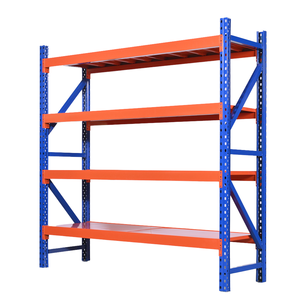
Factory Price Wire Shelving & Display Rack Units 200kg 300kg 500kg Stacking Racks for Durable Warehouse Storage Made of Steel
A flexible steel display and stacking system for retail backrooms, spare-parts stores and durable warehouse storage. Configure 200 kg, 300 kg or 500 kg load classes as a repeatable wholesale item.
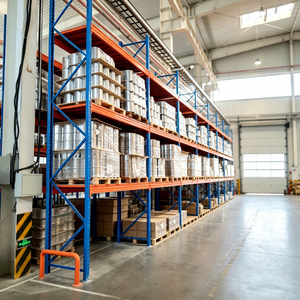
Practical Heavy Load Pallet Shelving Frame for Factory Warehouse Logistics Park and Bulk Raw Material Storage Pallet Rack
Wide-span pallet shelving for bulk raw material, factory logistics and logistics-park storage where forklift access and clear load visibility matter.
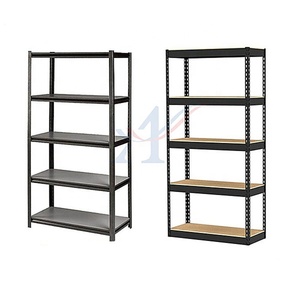
800*400*1500mm 4 Layers Adjustable Steel Rack
A compact 800 × 400 × 1,500 mm four-layer adjustable rack for small-parts warehouses, workshops and distributor assortments; easy to replicate in OEM colours and shelf counts.
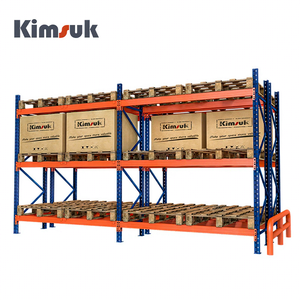
Industrial Warehouse Storage Racking Heavy Duty Cantilever Rack System for Warehouse Lumber Steel Beams Pipe
Open-front cantilever storage for lumber, steel beams, pipes and long profiles; ideal for yards and distribution centres that need fast crane or forklift access.
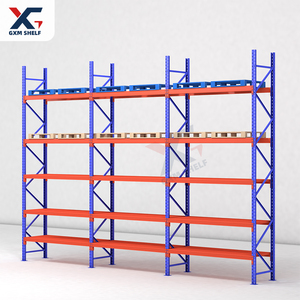
Heavy Duty Pallet Racking Warehouse Pallet System Pallet Storage Rack Heavy Duty Rack Shelf Heavy Duty Racking System
Selective heavy-duty pallet racking for mixed-SKU warehouses that require high selectivity, documented beam capacity and long-term reconfiguration.
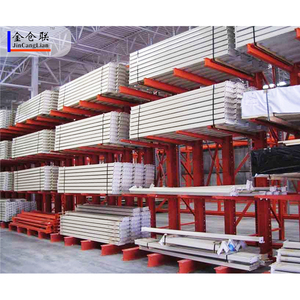
Industrial Heavy Duty Racking System Place Aluminum Profiles and Wood Panels Cantilever Arm Rack
A cantilever-arm system configured for aluminium profiles and wood panels, with arm spacing and upright protection matched to long, heavy or surface-sensitive loads.
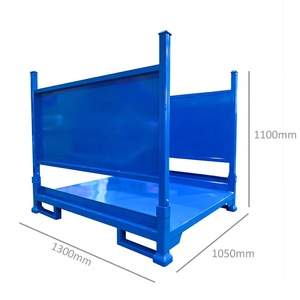
Storage Warehouse Equipment Stackable Collapsible Fabric Roll Storage Rack
Stackable and collapsible fabric-roll storage for textile warehouses, upholstery suppliers and export packing areas; improves aisle use and return-container economics.
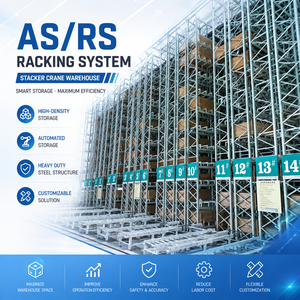
Customized ASRS Stacker Crane Pallet Racking System Heavy Duty Steel Automated Warehouse Storage Retrieval Solution
An ASRS-ready stacker crane pallet racking system for automated warehouse storage and retrieval, designed around throughput, clear height, shuttle or stacker geometry and future expansion.
Why OEM/ODM Industrial Storage Racks Are Becoming a Strategic Procurement Category
Industrial storage racks are no longer treated as commodity steel. They influence building utilisation, labour productivity, insurance evidence, fire and sprinkler planning, forklift safety and the feasibility of automation. For wholesalers, contractors and warehouse operators, the winning sourcing model combines standardised engineering platforms with project-specific configuration and documented safety data.
OEM control without losing engineering discipline
OEM sourcing lets distributors specify colour, branding, packaging, upright protection, beam locking, shelf decking and accessory kits. The strongest programs do not stop at cosmetics: they lock down steel grades, section properties, weld quality, load tables and inspection documentation so the product remains defensible after it leaves the container.
ODM accelerates market entry
ODM configurations help wholesalers and private-label brands reach the market faster with proven upright, beam, cantilever, wire shelving and ASRS-compatible modules. Instead of reinventing every part, buyers can adopt a mature platform and focus their differentiation on dimensions, load classes, finish, packaging and service level.
Documentation is now part of the product
Procurement teams increasingly require load signage, capacity tables, anchor specifications, installation records and inspection guidance. A rack that performs well but arrives without evidence creates risk for the buyer, the installer and the end user. Information gain in this category means better engineering evidence, not more adjectives.
Industrial Storage Rack Procurement Trends Shaping 2026–2030
Buyer behaviour is shifting from lowest-piece-price purchasing toward total cost, safety evidence, speed of layout change and readiness for automation. These trends are especially visible in export-driven regions where land is expensive, labour is changing and cold-chain capacity is expanding.
Total cost of ownership over unit price
Buyers are comparing reconfiguration cost, spare-part availability, inspection burden, aisle utilisation, energy use in cold stores and downtime risk. A racking system that supports faster SKU changes can be more valuable than a lower initial invoice.
Retrofit-first warehouse planning
Instead of building new warehouses, operators are asking for re-layouts, higher-density pallet racking, mobile racking, mezzanine floors and narrow-aisle configurations. High-density pallet racking can unlock up to 20% more storage capacity within the same building footprint when planned correctly.
Cold-chain and agro-export investment
Fruit, seafood, meat, dairy and pharmaceutical supply chains need racking that performs in chilled and freezer environments. Cold-store procurement now considers air volume, aisle width, corrosion protection and condensation control as part of the racking decision.
Automation-ready, phased investment
Many buyers are not ready for a full ASRS project, but they do not want to buy a dead-end system. The market is moving toward pallet racking that can start as manual or semi-automated storage and later support stacker cranes, shuttle systems or goods-to-person workflows.
How Industrial Storage Rack Products Are Evolving
Product development is moving in two directions at once: stronger, more standardised steel platforms for wholesale economics, and more configurable interfaces for project engineering. The best exporters and wholesalers will compete on how well they connect those two worlds.
High-density and mobile racking
Mobile pallet racking, pallet shuttle, push-back and drive-in systems are being refined for faster aisle opening, better energy performance in cold stores and smoother integration with forklift or AGV traffic. Mobile racking preserves direct access while reducing the number of permanent aisles.
Corrosion protection for ports and humidity
Coastal warehouses, free zones and humid climates require more attention to surface preparation, powder-coat systems, galvanising options and fastener selection. Export buyers increasingly specify corrosion classes and touch-up procedures as part of the purchase order.
Modular wholesale components
Uprights, beams, braces, base plates, safety clips and decking are being designed for mixed-container loading and regional assembly. This reduces freight waste and helps wholesalers hold fast-moving components while customising finished systems locally or at the project staging point.
Digital documentation and traceability
Load signage, capacity tables, installation checklists and inspection records are becoming easier to trace by project, production batch and component family. This supports facilities teams, insurers and maintenance contractors throughout the rack lifecycle.
Match the Storage Rack Architecture to the Real Operational Constraint
The most expensive racking decision is rarely the invoice. It is the cost of choosing a system that blocks access, wastes height, cannot support the pallet profile or cannot scale into the next phase. A technical OEM/ODM exporter should help the buyer compare selectivity, density, handling equipment and future automation before finalising the bill of materials.
Selective pallet racking remains the default for mixed-SKU warehouses because it offers direct access to every pallet. Cantilever racking is the logical choice for long goods. Mobile and high-density systems are appropriate when the cost of floor space, refrigeration volume or building expansion is higher than the cost of a denser system. ASRS-ready racking is specified when labour availability, throughput and accuracy justify the automation investment.
Density versus selectivity: planning view
Indicative positioning, not a substitute for project-specific racking design and structural calculation.
What a Serious OEM/ODM Rack Exporter and Wholesaler Should Provide
Real Nice Racks LLC approaches industrial storage as an engineering and lifecycle category. The objective is not only to supply steel, but to help buyers reduce project risk, improve capacity utilisation and maintain safety evidence after handover.
Seismic-ready engineering
Racking for seismic regions is developed with reference to FEM 10.2.08 and EN 16681, coordinated with local requirements such as NCh 433 and NCh 2369 in Chile, E.030 in Peru, NEC-SE-DS in Ecuador and NSR-10 in Colombia. Base plates, anchors, bracing and beam connectors are specified for the site condition.
Cold-chain and freezer capability
Chilled and frozen systems are designed for environments down to approximately -30°C, suitable for fruit, seafood, meat and dairy export hubs. Mobile racking can reduce refrigerated air volume because fewer permanent aisles are required.
Standards and documentation
Static steel racking is designed in line with EN 15512, with floor tolerances per EN 15620, operation and inspection guidance per EN 15635, and seismic design per FEM 10.2.08 / EN 16681. In Brazil, projects can align with ABNT NBR 15524. Load signage and capacity tables support handover.
Lifecycle and multilingual support
Projects can follow a defined lifecycle: site survey and data analysis, layout and structural design, manufacturing, export packing, shipment to the nearest port, supervised installation, handover and after-sales inspection. Technical support is available in English, Spanish and Portuguese.

Built for the Realities of International Warehouse Projects
South America illustrates why exporters and wholesalers need more than a product catalogue. Seismic activity along the Pacific coast, humid tropical climates, cold-chain agro-exports, mining spare parts, pharmaceutical distribution and fast e-commerce growth all shape the technical brief. A racking layout that works in a dry inland warehouse may be unsuitable for a coastal freezer or a high-seismic zone.
Typical delivery ports include Santos, Callao, San Antonio, Buenos Aires, Cartagena, Guayaquil and Montevideo. Procurement teams can email [email protected] with the warehouse location, floor plan, clear height, pallet dimensions, load per pallet and handling equipment. Product catalogues and technical documentation can also be requested through the downloads process.
Standards, Load Data and Handover Documents Buyers Should Request
For industrial storage racks, trust is built through traceable calculations and clear responsibilities. A credible exporter should be able to explain which standard governs static design, which standard or local code governs seismic action, how floor tolerance is handled, and how the system will be inspected after installation.
EN 15512
Design basis for adjustable steel pallet racking, including upright and beam verification assumptions that underpin load tables.
FEM 10.2.08 / EN 16681
Seismic design references for static racking, used alongside site seismic zone, soil type and locally licensed engineering review where required.
EN 15620 & EN 15635
Floor tolerance, operation and inspection guidance that helps protect long-term performance after the rack is loaded and used.
Local code coordination
Alignment with frameworks such as ABNT NBR 15524, NCh 433, E.030 and NSR-10 depending on the project location and authority requirements.
Analyse
Site survey, SKU and throughput data, floor condition and seismic assessment.
Design
Layout options, structural calculations, capacity comparison and accessory selection.
Manufacture
Quality-controlled steel production, finish specification and export packing.
Deliver & install
Shipment to the nearest port, supervised installation and safe handover.
Support
Inspection, repairs, training, spare parts and capacity upgrades over the lifecycle.

What to Send With an RFQ for a Faster, More Accurate Racking Quote
A precise RFQ reduces engineering iterations and protects the buyer from under-specified load assumptions. For OEM and ODM programs, include both commercial requirements and physical operating data. This is where high-quality procurement teams outperform those that simply ask for a price per pallet position.
The more clearly these inputs are stated, the more useful the technical comparison becomes. A serious supplier should explain assumptions, exclusions and interfaces with sprinklers, lighting, forklift protection and building columns before the order is placed.
OEM/ODM Industrial Storage Racks: Common Procurement Questions
These are the questions that repeatedly appear in distributor, contractor and warehouse-operator procurement reviews. The answers are written to support search-intent evaluation, technical shortlisting and a more productive inquiry.
What is the difference between OEM and ODM industrial storage racks?
OEM supply usually starts from a buyer’s specification or brand requirement: dimensions, load class, colour, packaging, labelling and sometimes a proprietary component interface. ODM supply starts from a proven platform that the buyer adapts for its market. In practice, many projects combine both models: the manufacturer supplies an engineered base platform, while the buyer customises finish, accessories, documentation and commercial packaging.
Can warehouse racking be customized for wholesale programs and private labels?
Yes. Wholesale programs can specify upright heights, beam lengths, load classes, shelf decking, wire shelving, cantilever arms, guard protection, powder-coat colours, logo plates, packaging marks and spare-part kits. The key is to lock the engineering variables that affect safety while allowing the commercial variables to support the buyer’s brand and market positioning.
How should I verify load capacity and safety documentation?
Ask for the design basis, beam and upright load tables, assumed pallet loading pattern, floor tolerance requirements, anchor specification and load signage. For exported projects, the quotation should clarify which standards are used for static design and seismic design, and whether final calculations will be reviewed by a locally licensed engineer. Avoid suppliers that cannot explain the assumptions behind a capacity claim.
Are the racks suitable for seismic zones and cold-store warehouses?
Seismic-ready racking can be designed with reference to FEM 10.2.08 and EN 16681, then coordinated with local requirements such as NCh 433 and NCh 2369 in Chile, E.030 in Peru, NEC-SE-DS in Ecuador and NSR-10 in Colombia. Cold-store and freezer systems can be specified for chilled and frozen environments down to approximately -30°C, with finish and accessory choices adjusted for condensation and cleaning routines.
Which storage system should I choose for long goods such as pipes, beams or panels?
Cantilever racking is usually the best fit because it keeps the front open and supports long, heavy or awkward profiles without a front beam obstruction. The design should consider arm length, arm spacing, load per arm, upright capacity, crane or forklift access, and protection against impact. For mixed operations, cantilever storage can sit alongside selective pallet racking and small-parts shelving.
What is the typical project path from inquiry to installation?
A disciplined project usually follows five stages: analyse the site and data, design the layout and structural solution, manufacture and pack for export, deliver and supervise installation, then support the system through inspection and upgrades. Buyers should confirm what is included at each stage, especially unloading, installation supervision, anchor verification, load signage and final handover documentation.
Can you support multi-country projects across South America?
Projects can be structured for markets including Brazil, Chile, Peru, Colombia, Argentina, Ecuador, Uruguay and Paraguay, with support in English, Spanish and Portuguese. Typical delivery ports include Santos, Callao, San Antonio, Buenos Aires, Cartagena, Guayaquil and Montevideo. Local code requirements, port logistics and installation responsibility should be confirmed during technical clarification.
How do I start a wholesale or OEM inquiry?
Send the warehouse location, floor plan, clear height, pallet dimensions, load per pallet, handling equipment, required selectivity, temperature or corrosion environment, and any branding or packaging requirements. That information allows the engineering and sales team to recommend a realistic system, prepare a more accurate scope and identify the documents needed for internal approval.
Request an Engineered OEM/ODM Storage Rack Quotation
Share your warehouse location, floor plan, clear height, pallet dimensions, load per pallet and handling equipment. The team can then evaluate selective pallet racking, cantilever, mobile, cold-chain or ASRS-ready options against your operational constraints and wholesale program requirements.