8 Recommended OEM/ODM Industrial Storage Shelves and Racks for 2026 Projects
Use this shortlist as a sourcing baseline. Each product below supports a different buyer intent: high-selectivity distribution, factory-price project supply, adjustable heavy-duty storage, boltless carton shelving, manufacturing raw-material storage, high-capacity beam racking, powder-coated corrosion protection and 2000 kg-per-level selective racking. Keep the original product URL for technical follow-up, then request a layout and load calculation before comparing quotations.
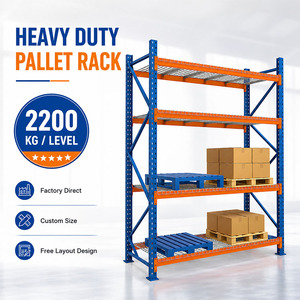
Selective Pallet Racking Heavy Duty Steel Warehouse Rack System for Industrial Storage and Logistics Use
Best-fit intent: mixed-SKU distribution and logistics warehouses that need direct access to every pallet.
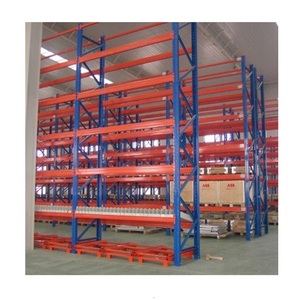
Industrial Heavy Duty Rack Factory Price Steel Pallet Racking Storage Systems From Warehouse Pallet Rack Manufacturer
Best-fit intent: project buyers comparing manufacturer pricing, export packing and repeatable pallet racking supply.
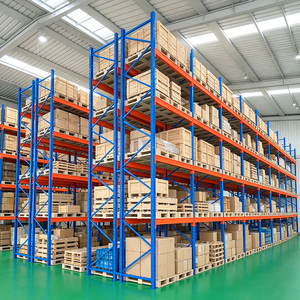
Industrial Heavy Duty Pallet Rack 1000-5000KG Load Capacity Warehouse Storage Racking System with Adjustable Shelves
Best-fit intent: heavy loads where beam adjustment, capacity planning and aisle efficiency must be balanced.
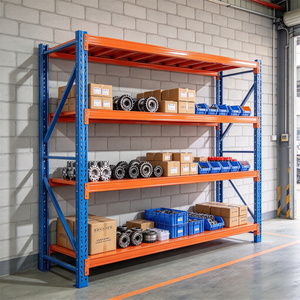
Steel Boltless Rivet Shelving Powder Coated Corrosion Protection Card Slot Assembly Warehouse Storage Rack
Best-fit intent: cartons, spare parts and hand-loaded storage where fast assembly and corrosion protection matter.
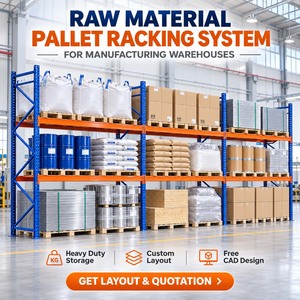
Pallet Racking System for Manufacturing Raw Material Warehouses
Best-fit intent: production plants storing raw materials, packaging and work-in-progress close to the point of use.
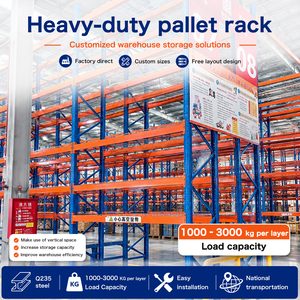
Industrial Warehouse Heavy Duty Pallet Rack System Steel Storage Racking Adjustable Beam High Capacity Storage Solution
Best-fit intent: high-capacity warehouses that require adjustable beams and a scalable pallet storage platform.
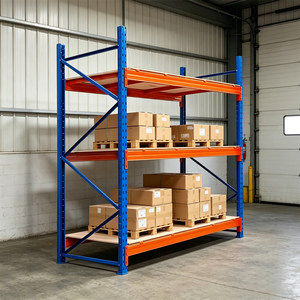
Powder Coated Heavy Duty Rack Industrial Warehouse Storage Pallet Racking Adjustable Industrial Shelves
Best-fit intent: humid, coastal or freezer-adjacent sites where finish quality and clean maintenance are priority criteria.
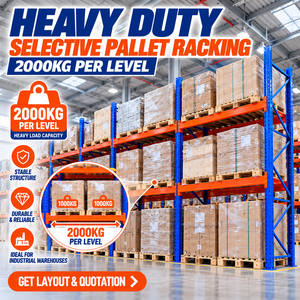
2000kg Per Level Heavy Duty Selective Pallet Racking System
Best-fit intent: dense but accessible pallet storage where each level must support a verified 2000 kg load reference.
The Procurement Question Has Changed: From Price per Bay to Risk per Pallet
Industrial storage procurement is no longer a simple commodity purchase. Warehouse operators, EPC contractors and private-label distributors are assessing racking as infrastructure: it must survive seismic events, pass insurer reviews, support cold-chain energy targets and remain reconfigurable as SKU profiles change.
For OEM/ODM buyers, the most useful manufacturer is not the one that quotes the lowest steel weight. It is the one that can show the calculation basis, load signage, installation method and inspection plan behind every bay. This is especially important in South America, where a single project may combine Pacific seismic zones, humid tropical environments, high-altitude sites, cold stores and fast-growing e-commerce hubs. A racking layout that works in a temperate distribution centre may fail a local code review in Chile, Peru, Ecuador or Colombia if base plates, anchors, bracing and beam connectors are not specified for the site. The result is delay, rework and unplanned cost.
That is why the best RFQs now ask for a safety case, not only a bill of materials. The supplier should be able to explain how uprights, beams, frames, floor fixings and accessories were selected for the real pallet load, aisle geometry, handling equipment and building tolerance. When that evidence is missing, procurement teams carry hidden risk long after the invoice is paid.
Six Procurement Trends Shaping Industrial Storage Shelves and Racks
Search intent around OEM/ODM industrial storage racks is becoming more technical. Buyers are not simply looking for a catalogue; they are looking for evidence that a manufacturer can reduce project risk, support local compliance and remain useful after handover.
Standards-First RFQs
EN 15512, EN 15620, EN 15635, FEM 10.2.08 / EN 16681 and local codes are moving from optional attachments to tender requirements. Buyers want the design basis stated clearly.
Seismic and Soil-Specific Design
Base plates, anchors, bracing and beam connectors must reflect seismic zone and soil type. Chile, Peru, Ecuador and Colombia often require coordination with NCh 433/NCh 2369, E.030, NEC-SE-DS and NSR-10.
Cold-Chain Energy Efficiency
Freezer and chilled warehouses are specifying racking that reduces refrigerated air volume. Mobile racking and high-density layouts can lower energy demand per pallet position.
Retrofit Before New Build
Land and construction costs make existing-building optimisation attractive. Re-layouts, mezzanines and higher-density systems can unlock capacity without new permits and construction.
Lifecycle Documentation
Buyers want load signage, inspection records, damage reports and spare-part availability, not only delivery. This supports insurance, safety audits and maintenance planning.
Multilingual, Export-Ready Support
English, Spanish and Portuguese communication, export packing and port logistics reduce friction for projects across Brazil, Chile, Peru, Colombia, Argentina, Ecuador, Uruguay and Paraguay.
Product Development Trends: What the Next Generation of Racking Must Do
OEM/ODM storage systems are evolving from static steel structures into reconfigurable infrastructure. The winning platform is the one that can adapt to growth, automation and climate without forcing a complete rebuild.
Modular Platforms
One platform should support selective, drive-in, push-back, shuttle and mobile configurations, so future growth does not require replacing the entire system.
Mobile and Compact Storage
Rail-guided mobile racking opens a working aisle only when needed, increasing pallet positions and reducing refrigerated air volume in cold stores.
Density With Selectivity Balance
Drive-in, push-back and shuttle systems are selected by SKU velocity and FIFO/LIFO requirements, not by density alone. The right answer depends on how pallets actually move.
Semi-Automated Goods-to-Person
Vertical lift modules and storage machines fit where labour and land costs rise and order profiles become more fragmented.
Corrosion Protection and Finish
Powder coating, galvanising and site-specific treatments are increasingly specified for humid, coastal and freezer environments.
Data-Ready Layouts for AGVs and AMRs
Aisle widths, floor tolerances and pick-face design must be planned for automated handling, even if automation is several years away.
Engineering, Documentation and Lifecycle Support From Real Nice Racks LLC
Real Nice Racks LLC designs and supplies industrial storage and shelving for warehouses and distribution centres across South America. The advantage is not simply a product catalogue; it is the ability to connect site survey, layout, structural calculation, manufacturing, export packing, supervised installation and after-sales inspection into one accountable project.
Projects are developed around real operating data: pallet dimensions, load per pallet, SKU velocity, forklift or AGV type, clear height, floor tolerance and seismic zone.
Static steel racking is designed in line with EN 15512, with floor tolerances per EN 15620, operation and inspection guidance per EN 15635, and seismic design with reference to FEM 10.2.08 / EN 16681. In Brazil, projects can be aligned with ABNT NBR 15524; across the Pacific seismic belt, local requirements such as NCh 433 and NCh 2369 in Chile, E.030 in Peru, NEC-SE-DS in Ecuador and NSR-10 in Colombia are coordinated with licensed local engineers where required.

Supervised installation with documented handover and inspection records.
Four Evidence Points to Request From Any OEM/ODM Racking Manufacturer
Before approving a supplier, ask for evidence that the system can be engineered, installed, inspected and expanded — not only shipped.
Calculation Pack
Request the design basis for uprights, beams, frames, floor fixings, seismic parameters and load combinations used for your bay configuration.
Load Signage and Handover
Every installation should leave clear load signs, capacity tables and inspection documentation that warehouse teams can actually use.
Inspection and Damage Control
Ask how damaged uprights, beams and accessories are identified, reported and replaced without compromising the safety case.
Retrofit Roadmap
Confirm whether the platform can move from selective racking to mobile, shuttle, mezzanine or semi-automated storage as volumes change.
OEM/ODM Industrial Storage Racks Procurement FAQ
These are the questions procurement, engineering and operations teams ask most often when comparing industrial storage shelves and rack manufacturers.
What is the difference between an OEM and ODM supplier for industrial storage racks?
An OEM supplier builds storage racks to the buyer’s specification, drawing set or brand requirements. An ODM supplier offers a proven platform and customises it for the project. For complex warehouses, the more important question is whether the supplier can provide calculations, load signage, installation supervision and local code coordination, not only steel fabrication. Many projects combine both models: a standard racking platform with project-specific engineering and branding.
What information should be included in an RFQ for pallet racking or shelving?
Include the warehouse location, floor plan, clear height, floor condition or tolerance, pallet dimensions, load per pallet, SKU velocity, forklift or AGV type, seismic zone, temperature range, required selectivity, target pallet positions, local code requirements, delivery port and required documentation. Missing data often leads to layout revisions, higher contingency pricing and delays during approval.
How is load capacity verified for industrial storage racks?
Capacity is not determined by beam size alone. It depends on the upright section, beam section, frame height, bracing, connector design, floor fixing and how the load is applied. Ask for the calculation basis, load signs, permitted deflection and installation criteria. Final capacity should be verified for the actual bay configuration and load profile, not copied from a generic catalogue table.
Can pallet racking be designed for seismic zones in Chile, Peru, Ecuador and Colombia?
Yes. Racking for the Pacific seismic belt is calculated with reference to FEM 10.2.08 and EN 16681 and coordinated with local requirements such as NCh 433 and NCh 2369 in Chile, E.030 in Peru, NEC-SE-DS in Ecuador and NSR-10 in Colombia. Base plates, anchors, bracing and beam connectors are specified for the site’s seismic zone and soil type, and final calculations can be reviewed with a licensed local structural engineer where required.
Do you provide racking for cold storage and freezer warehouses?
Yes. Cold storage pallet racking, mobile racking and high-density systems can be specified for chilled and frozen environments down to approximately -30 °C, which suits fruit, seafood, meat and dairy export hubs in Chile, Peru, Ecuador, Argentina and Brazil. Mobile racking is especially effective because it reduces the volume of air that must be refrigerated while maintaining direct access to every pallet.
Can we upgrade an existing warehouse instead of building a new one?
Yes. Retrofit projects typically combine re-layouts, higher-density systems such as drive-in, push-back, shuttle or mobile racking, mezzanine floors and narrow-aisle configurations. High-density pallet racking can deliver up to 20% more storage capacity within the same building footprint in suitable projects, avoiding the cost and delay of new construction. The actual gain must be confirmed by layout and structural review.
How are projects delivered and installed across South America?
Each project follows a defined lifecycle: site survey and data analysis, layout and structural design, manufacturing, export packing and shipment to the nearest port, supervised installation, and handover with load signage and inspection documentation. After-sales services include periodic rack inspection, damage repair and capacity upgrades.
How can buyers start an OEM/ODM inquiry for industrial storage shelves and racks?
Send the warehouse location, floor plan, clear height, pallet dimensions, load per pallet, handling equipment and target capacity. The engineering team can then review constraints and recommend a product mix — selective, heavy-duty, boltless, mobile, high-density or semi-automated — with the documentation needed for procurement and local code review. Use the Inquire Now button to begin the discussion.
Get a Layout, Load Calculation and OEM/ODM Proposal
Send your warehouse location, clear height, pallet dimensions, load per pallet, handling equipment and target capacity. The engineering team will review your constraints and recommend a product mix — selective, heavy-duty, boltless, mobile, high-density or semi-automated — with the documentation needed for procurement and local code review.
Inquire Now