OEM/ODM Industrial Warehouse Racking Manufacturers & Wholesaler
Engineering-led pallet racking, high-density storage, mezzanine shelving, mobile racking and cold-chain systems for distributors, 3PLs, manufacturers and industrial buyers — designed to recognised standards, coordinated with local codes and supported through the full asset lifecycle.
Eight Industrial Warehouse Racking Systems Buyers Shortlist First
For OEM/ODM projects and wholesale procurement, the right starting point is not the lowest unit price. It is the system that matches load profiles, selectivity, handling equipment, building height, fire strategy, seismic exposure and future growth. These eight product families cover a large share of real warehouse enquiries, from direct-access selective racking to shuttle, drive-in, push-back, mezzanine and specialist fabric-roll storage.
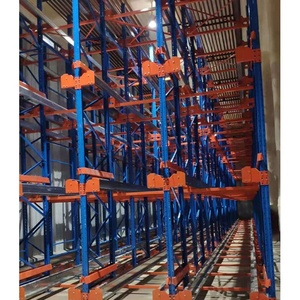
Customized Steel Pallet Rack Shuttle Racking for Industrial Warehouses
Best for deep-lane pallet storage where selective racking runs out of aisle capacity and semi-automated throughput is required.
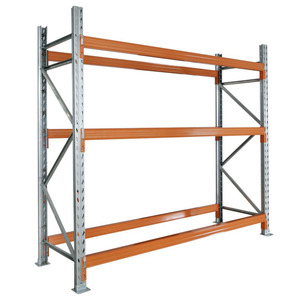
NOVA Boltless Heavy Duty Steel Pallet Racking System
Fast-build warehouse racking for wholesale programmes, rapid installation and flexible beam-level adjustment.
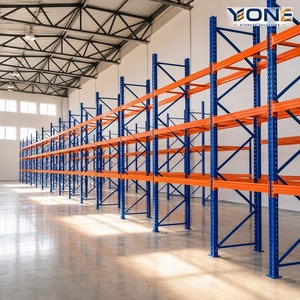
Heavy Duty Selective Steel Pallet Racking System
The default recommendation for 3PLs, distributors and mixed-SKU warehouses that need direct access to every pallet.
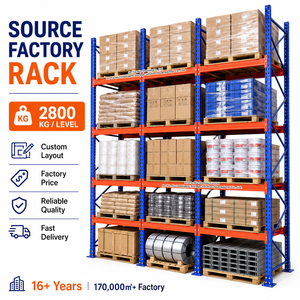
2800KG 5 Levels High Bay Industrial Pallet Racking System
Engineered for heavier pallet loads and taller clear heights, with structural calculations and documented load signage.
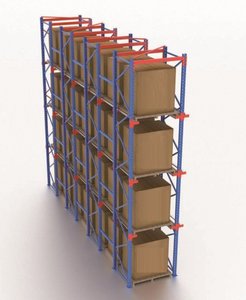
High Density Drive-In Pallet Rack Warehouse Storage System
Efficient LIFO storage for homogeneous pallets, seasonal stock and cold stores where aisle space is expensive.
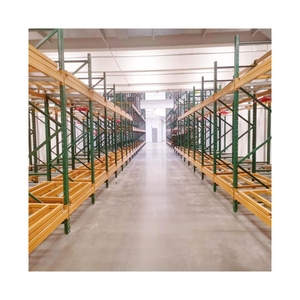
Custom Push Back Pallet Racking with Guide Rail
Better selectivity than drive-in and higher density than selective racking — useful for manufacturing buffers and seasonal inventories.
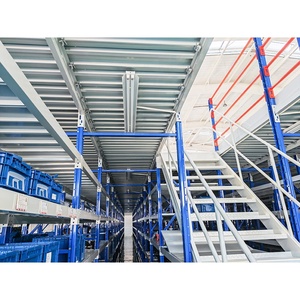
E-commerce and Chemical Plant Warehouse Mezzanine Shelving Rack
Creates a usable storage or picking floor inside an existing building, with a 500 kg/m² load capability.
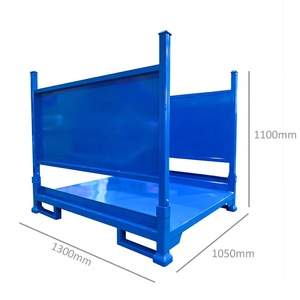
Stackable Collapsible Fabric Roll Storage Rack
A specialist OEM/ODM solution for textile rolls, showing how bespoke storage can reduce damage and improve cube utilisation.
What Serious Buyers Really Mean When They Search for an OEM/ODM Warehouse Racking Wholesaler
Search demand for “industrial warehouse racking manufacturers”, “pallet racking wholesaler”, “OEM racking supplier” and “ODM storage racking” is rarely a single, simple buying signal. Behind those queries are at least three distinct intent groups: buyers who need a standard, fast-delivery product; project buyers who need engineered layouts and documentation; and trade buyers who want an OEM/ODM manufacturing partner for private-label programmes, regional distribution or system integration. A credible supplier should qualify the intent before quoting, because a catalogue price without structural context is not a procurement decision — it is a risk transfer exercise.
The highest-value searches often come from operations directors, warehouse managers, procurement teams and system integrators who are comparing total cost of ownership, safety evidence, installation support and future scalability. They are not only asking whether a rack can hold a pallet. They are asking whether the system can be permitted, installed, inspected, expanded and audited over ten to twenty years. This is why a warehouse racking wholesaler should behave more like an engineering partner than a commodity trader.
OEM and ODM are risk-allocation models, not just labels
In an OEM engagement, the buyer typically controls specifications, drawings, branding, packaging and compliance requirements, while the manufacturer provides production discipline, material traceability and export packing. In an ODM engagement, the supplier contributes a proven platform — for example selective, drive-in, push-back, shuttle or mobile racking — and adapts dimensions, capacities and accessories to the project. Both models can work well, but the contract must clarify who owns structural calculations, load signage, anchor specification, installation supervision, inspection criteria and local-code coordination. Real Nice Racks LLC supports both routes with engineered storage systems, multilingual project communication and lifecycle documentation.
- Define pallet dimensions, load per pallet, beam levels and clear height before comparing prices.
- Confirm seismic zone, floor tolerance, fire strategy, operating temperature and forklift or AGV type.
- Require load signage, capacity tables, installation records and inspection guidance as deliverables.
- Plan the upgrade path: selective to high-density, manual to shuttle, or racking to mezzanine and semi-automation.
For buyers in Brazil, Chile, Peru, Colombia, Argentina, Ecuador, Uruguay and Paraguay, the procurement context adds another layer: imported racking must survive ocean freight, port handling, customs documentation and site installation. A supplier with export experience and local engineering awareness reduces the hidden cost of delays, rework and non-compliant anchors. That is the practical meaning of information gain in this category: useful technical evidence that helps a buyer make a safer, faster and more defensible decision.

Engineered pallet racking layouts begin with real data: pallet profiles, SKU velocity, clear height, handling equipment and seismic exposure.
Enterprise Advantages Built Around Engineered Storage, Not Commodity Racking
Real Nice Racks LLC designs and supplies industrial storage and shelving that helps businesses increase capacity, productivity and operational safety. The advantage is not a single product SKU; it is the combination of engineering analysis, standards awareness, export discipline, installation support and after-sales service across the asset lifecycle.
Engineering-Led Layouts From Real Data
Every layout starts with the warehouse reality: pallet profiles, SKU velocity, forklift types, clear height, floor condition and seismic zone. This avoids the common failure mode where a low-cost catalogue layout cannot support actual operations.
Global Standards With Local Code Coordination
Static racking design follows EN 15512 principles, with seismic design referencing FEM 10.2.08 / EN 16681, floor tolerances per EN 15620 and use/inspection guidance per EN 15635. Projects can be aligned with local requirements such as ABNT NBR 15524 in Brazil, NCh 433 and NCh 2369 in Chile, E.030 in Peru, NSR-10 in Colombia and NEC-SE-DS in Ecuador.
High-Density and Mobile Racking Expertise
The P90 high-density platform and MOVO mobile pallet racking can unlock more pallet positions inside the existing building envelope. High-density retrofit projects can deliver up to 20% more storage capacity on the same footprint, while mobile racking maintains direct access by opening a working aisle on demand.
Cold-Chain and Export-Ready Systems
Cold storage pallet racking, mobile racking and high-density systems can be specified for chilled and frozen environments down to approximately -30 °C. This supports fruit, seafood, meat and dairy export hubs across Chile, Peru, Ecuador, Argentina and Brazil. Typical delivery ports include Santos, Callao, San Antonio, Buenos Aires, Cartagena, Guayaquil and Montevideo.
Lifecycle Service and Documentation
Structural calculations, load signage and installation records are treated as project deliverables. After handover, periodic rack inspection, damage repair and capacity upgrades help protect the investment and maintain operational safety.
Multilingual, Multi-Country Project Support
Technical support is available in English, Spanish and Portuguese for multinational brands and fast-growing regional companies. Procurement and engineering teams can discuss layouts, standards, documentation and installation scope without losing technical nuance across languages.
Match the Racking System to the Operational Intent
A high-performing procurement brief should describe the operational problem before naming a product. The same warehouse can justify selective racking, high-bay racking, mobile racking or mezzanine shelving depending on whether the priority is selectivity, density, heavy-load capability or speed of expansion.
Maximum Selectivity for Daily Picking
Choose heavy-duty selective pallet racking when every pallet must be directly accessible. It suits 3PLs, distributors, spare-parts warehouses and mixed-SKU operations where picking speed and inventory visibility matter more than maximum cube utilisation.
Compare selective rackingMaximum Density in Cold or Land-Constrained Stores
Drive-in, shuttle and mobile racking reduce aisle space and can improve energy efficiency in refrigerated warehouses because there is less air volume to cool. MOVO mobile racking is particularly effective where 100% access must be retained but aisle count must be reduced.
Explore high-density systemsHeavy Loads and Tall Clear Heights
High-bay systems such as the 2800KG five-level pallet racking require disciplined structural design, anchor specification and load signage. They are suitable for new distribution centres and high-clearance buildings where vertical space is underused.
Review high-bay rackingUse Existing Footprint Before Building New
Mezzanine shelving, push-back racking, narrow-aisle layouts and mobile systems can add capacity without new construction. For many buyers facing high industrial land prices, retrofit-first procurement is faster and more capital-efficient than relocation.
See mezzanine optionsFuture Procurement Trends That Will Shape Warehouse Racking Buying Decisions
Warehouse racking procurement is moving from a price-led purchase to a lifecycle risk decision. The strongest buyers are asking suppliers to prove capacity, safety, compliance, installation quality and future flexibility before awarding a contract.
Total Cost of Ownership Replaces Lowest Unit Price
Procurement teams increasingly model installation labour, inspection frequency, downtime risk, energy use, reconfiguration cost and spare-part availability. A cheaper rack that cannot be inspected, repaired or expanded may cost more over its service life.
Compliance Evidence Becomes a Gate
Insurers and corporate buyers want documented design assumptions, load signage, anchor specification, installation records and inspection guidance. For seismic regions, site-specific calculations and local engineer review are becoming standard expectations rather than optional extras.
Retrofit-First Strategies Accelerate
High industrial land prices and long construction cycles encourage warehouse retrofit and upgrades. Re-layouts, high-density racking, mezzanine floors and narrow-aisle configurations can unlock capacity inside the existing building envelope, with high-density systems offering up to 20% more storage capacity in suitable projects.
Automation-Ready Modularity
Buyers want systems that start manual today and migrate to shuttle, AGV or goods-to-person operations later. Modular platforms reduce stranded assets and allow phased investment instead of a single, high-risk capital event.
Cold-Chain Energy Efficiency
In frozen and chilled warehouses, every unnecessary aisle is a volume of air that must be refrigerated. Mobile racking, drive-in and shuttle systems help reduce this refrigerated air volume while increasing pallet positions inside the same insulated envelope.
Export Logistics and Local Service Alignment
International buyers compare suppliers on export packing, shipping to the nearest port, installation supervision, documentation and after-sales response. A supplier who understands ports such as Santos, Callao, San Antonio, Cartagena or Guayaquil can reduce project friction for the entire procurement team.
Where Industrial Warehouse Racking Engineering Is Heading Next
Product development is converging around higher density, better documentation, lower energy use and adaptability. The most useful innovations are not cosmetic; they help buyers store more pallets, reduce project risk or extend the service life of the installation.
High-Density Platforms Are Converging
Selective, drive-in, push-back, shuttle and mobile racking are increasingly designed on modular platforms so a warehouse can reconfigure as volumes change. This reduces the cost of future upgrades and improves long-term asset flexibility.
Mobile Racking Meets Robotics-Ready Operations
MOVO mobile pallet racking demonstrates how aisle space can be opened only when needed. As AGVs and automated forklifts become more common, racking layouts must be designed for clear travel paths, precise floor conditions and reliable aisle control.
Seismic Engineering Becomes Site-Specific
In Chile, Peru, Ecuador and Colombia, seismic design cannot be reduced to a generic specification. Anchors, base plates, bracing and beam connectors are selected for the site’s seismic zone, soil conditions and local code requirements, with licensed engineer review where required.
Cold Storage Demands Better Materials and Detailing
Freezer environments require attention to condensation, corrosion protection, floor conditions and installation tolerances. Racking specified for approximately -30 °C helps protect structural performance in fruit, seafood, meat and dairy cold stores.
Semi-Automated Storage Machines Extend Racking
Vertical lift modules and goods-to-person storage machines are used where floor space and labour costs rise. They complement pallet racking by moving small-parts and carton picking into a faster, more space-efficient system.
Documentation Becomes Part of the Product
Load signage, capacity tables, installation records and inspection documents are no longer afterthoughts. They are part of the deliverable because they support safe operation, insurer review and long-term maintenance planning.
Safety You Can Document — Not Just Promise
Racking is structural equipment. When a supplier cannot explain the design basis, the buyer inherits an uncontrolled risk. Real Nice Racks LLC approaches racking as engineered storage: load assumptions are documented, layouts are compared against operational requirements, and installation is handed over with the information needed for safe use and inspection.
For multinational and regional buyers, this is where E-E-A-T becomes practical rather than theoretical: experience in export projects, expertise in racking standards, authority through documented calculations, and trust built through transparent installation and after-sales support. Where local building codes apply, final calculations can be reviewed with a locally licensed structural engineer.
Procurement teams should ask for more than a drawing set. Request the structural assumptions, beam load tables, anchor specification, plumb tolerance, installation method statement and inspection checklist. These documents protect the operator, the maintenance team and the balance sheet.

Supervised installation with documented handover, load signage and inspection records helps convert engineering design into safe daily operation.
From Site Survey to Lifecycle Support: A Procurement-Ready Process
A clear project sequence keeps budgets predictable and timelines realistic, including multi-country rollouts. Each stage produces information the buyer can review, approve and use for internal stakeholder sign-off.
Analyse
Site survey, SKU and throughput data, pallet dimensions, floor condition, clear height, temperature profile and seismic assessment.
Design
Layout options, structural calculations, capacity comparison, load signage planning and integration with handling equipment.
Manufacture & Deliver
Quality-controlled steel production, export packing and shipment to the nearest port, with documentation prepared for customs and site planning.
Install & Support
Supervised installation, handover with load signage and inspection guidance, followed by periodic inspection, repairs and capacity upgrades.
Frequently Asked Questions from OEM/ODM Warehouse Racking Buyers
Can you manufacture warehouse racking under an OEM or ODM model?
Yes. OEM and ODM projects can be structured around buyer drawings, branding, packaging and documentation requirements, or around an existing engineered platform such as selective, drive-in, push-back, shuttle or mobile racking. The important step is to define who owns structural calculations, load signage, local-code coordination, inspection criteria and installation supervision before production begins.
What information is needed to prepare a technical quotation?
Provide the warehouse location, floor plan, clear height, pallet dimensions, load per pallet, required beam levels, handling equipment, operating temperature, seismic zone, expected throughput and target capacity. If you are comparing systems, also state whether you need direct access to every pallet or whether high-density LIFO/FIFO storage is acceptable.
Which racking standards can the design follow?
Static steel racking can be designed with reference to EN 15512, with floor tolerances per EN 15620, operation and inspection guidance per EN 15635, and seismic design referencing FEM 10.2.08 / EN 16681. In Brazil, projects can be aligned with ABNT NBR 15524. Other local requirements may include NCh 433 and NCh 2369 in Chile, E.030 in Peru, NSR-10 in Colombia and NEC-SE-DS in Ecuador.
Can pallet racking be designed for seismic zones in Latin America?
Yes. For seismic markets, base plates, anchors, bracing and beam connectors are specified for the site’s seismic zone and soil type. Projects in Chile, Peru, Ecuador and Colombia can be coordinated with local code requirements, and final calculations can be reviewed with a locally licensed structural engineer where required.
Do you supply racking for cold storage and freezer warehouses?
Yes. Cold storage pallet racking, mobile racking and high-density systems can be specified for chilled and frozen environments down to approximately -30 °C. This supports fruit, seafood, meat and dairy export hubs. Mobile racking is particularly effective because it reduces the volume of air that must be refrigerated.
How are projects delivered and installed across multiple countries?
Each project follows a defined lifecycle: site survey and data analysis, layout and structural design, manufacturing, export packing, shipment to the nearest port, supervised installation, and handover with load signage and inspection documentation. After-sales services include periodic rack inspection, damage repair and capacity upgrades.
Can you upgrade an existing warehouse instead of building a new one?
Yes. Retrofit projects commonly combine re-layouts with higher-density systems such as drive-in, push-back, shuttle or mobile racking, plus mezzanine floors and narrow-aisle configurations. High-density pallet racking can deliver up to 20% more storage capacity within the same building footprint, avoiding the cost and delay of new construction.
How do buyers request technical information or an engineered proposal?
Use the inquiry button to start a conversation with the project team. Include the warehouse location, floor plan, clear height, pallet size and weight, load per pallet, handling equipment and target capacity. Procurement and engineering teams can also request catalogues, technical documentation and installation scope details. Support is available in English, Spanish and Portuguese.
Send Your Warehouse Data and Get an Engineered Racking Recommendation
Share the location, floor plan, clear height, pallet dimensions, load per pallet, handling equipment and target capacity. The engineering team can respond with system options, compliance notes, retrofit opportunities and a procurement-ready scope for OEM/ODM or wholesale supply.
- Selective, drive-in, push-back, shuttle or mobile racking
- High-bay and heavy-load systems
- Mezzanine and special storage
- Cold-chain and seismic requirements
- Installation and lifecycle support
Real Nice Racks LLC engineers pallet racking, shelving, mezzanines and semi-automated storage for warehouses across Brazil, Chile, Peru, Colombia, Argentina, Ecuador, Uruguay and Paraguay. Project support is available in English, Spanish and Portuguese. For technical discussions, include your warehouse location, floor plan, clear height, pallet dimensions, load per pallet and handling equipment.