8 OEM/ODM Pallet Rack Storage Systems for Global Buyers
Shortlist factory-direct systems for heavy-duty pallet storage, long-material cantilever storage, multi-level platforms, selective racking and custom warehouse layouts. Every product can be engineered to your drawings, load schedule, seismic zone, packaging requirements and brand documentation.
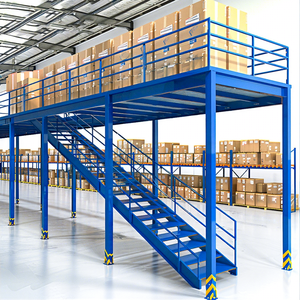
EU Warehouse Second Floor Wood Pallet Storage Platform
Adds usable pallet positions above the floor slab for compact warehouses and mezzanine storage projects.
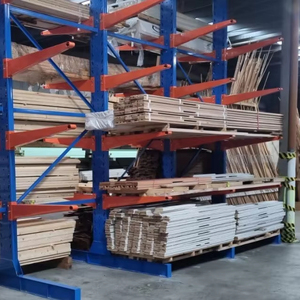
Double-Sided Heavy-Duty Cantilever Pipe Warehouse Rack
Open-front arms support pipes, tubes, profiles and long goods for industrial yards and warehouses.
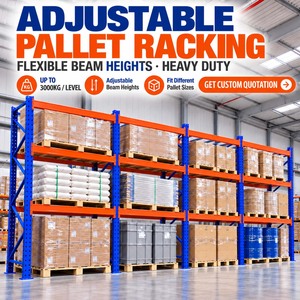
Adjustable Steel Pallet Racking System for Heavy Storage
Beam-adjustable selective racking gives direct access to every pallet and adapts as SKU profiles change.
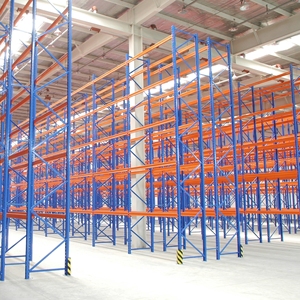
Custom 2–6 Level Heavy-Duty Warehouse Pallet Racking
Project-specific uprights, beams and layouts for distributors, 3PLs and industrial storage projects.
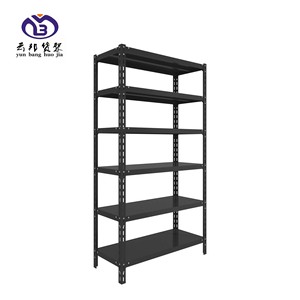
Heavy-Duty Industrial Steel Pallet Racking & Shelving
Reliable workshop and warehouse storage for mixed pallets, spare parts and industrial equipment.
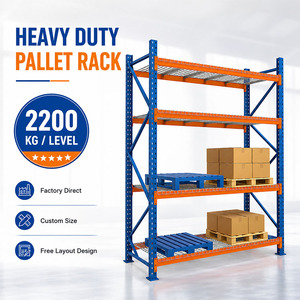
Selective Heavy-Duty Pallet Racking Warehouse System
High-visibility pallet access for fast-moving distribution centres and logistics operations.
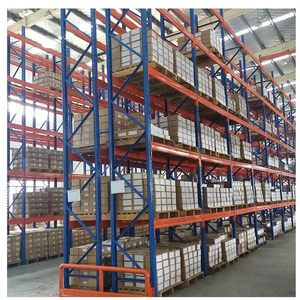
Industrial Selective Pallet Rack for Warehouse Storage
Bolt-together structure for efficient shipping, fast installation and future reconfiguration.
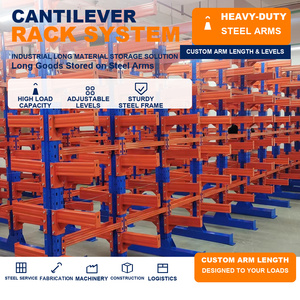
Multi-Level Cantilever Rack for Long Material Storage
Adjustable arms and multiple levels store timber, steel bars and profiles safely and efficiently.
Factory-Direct OEM/ODM Pallet Rack Storage Is Now a Supply-Chain Decision
Pallet rack storage is no longer purchased only by steel weight and price per bay. Warehouse operators, distributors, system integrators and e-commerce fulfilment teams now evaluate factories on engineering depth, load data, seismic calculation capability, export packing quality, installation support and lifecycle documentation. A pallet rack storage system that cannot be verified, expanded or inspected safely becomes a liability long before it becomes a storage asset.
This buyer guide is designed for procurement teams and technical decision-makers comparing OEM/ODM pallet rack storage system factories and exporters. It explains how OEM and ODM models differ, which configurations suit different load profiles, what procurement trends will shape tenders through 2030, how product design is changing, and what documentation a serious factory should provide before a purchase order is released.
For international buyers, the strongest supplier is not simply the one with the lowest ex-works price. It is the one that can translate pallet dimensions, clear height, forklift type, SKU velocity, floor tolerance, local seismic requirements and port logistics into a buildable, exportable and supportable storage system.
What a Mature OEM/ODM Partner Should Deliver
Engineering, manufacturing and export execution must work as one process, not three disconnected departments.
OEM or ODM? Match the Manufacturing Model to Project Risk
The right model depends on how much design responsibility you want to retain, how quickly the project must move, and how much local compliance evidence the final installation requires.
| Decision Area | OEM Pallet Rack Manufacturing | ODM Pallet Rack Supply |
|---|---|---|
| Design ownership | Buyer supplies drawings, load requirements, branding and packaging specifications; factory manufactures to order. | Factory provides a proven design platform and adapts dimensions, levels, bracing and accessories to the project. |
| Best fit | Distributors, integrators and established brands with engineering capability and repeat product ranges. | Buyers needing faster quotations, lower development risk and a practical route to customised storage systems. |
| Customisation | Highly custom profiles, colours, labels, manuals, packaging and documentation. | Configurable uprights, beams, arms, decking, accessories and layout options based on standard modules. |
| Speed to tender | Potentially longer because drawings, approvals and samples must be aligned. | Generally faster because a mature platform can be quoted and engineered around the buyer’s data. |
| Documentation | Buyer and factory coordinate structural calculations, load signage, inspection records and local code review. | Factory can provide standard capacity tables, load signage, installation guidance and engineering support. |
For complex projects, many buyers combine the two: an ODM base platform for speed, with OEM branding, packaging, technical submittals and project-specific engineering layered on top.
Recommended Pallet Rack Storage Configurations by Load Profile
Use this selector to align storage density, selectivity and handling equipment before requesting factory drawings. The best system is the one that reduces total cost per accessible pallet, not simply the one with the lowest steel cost.
| System | Storage Logic | Best Applications | Procurement Note |
|---|---|---|---|
| Selective pallet racking | Direct access to every pallet; adjustable beams and levels. | Fast-moving SKUs, distribution centres, mixed pallet profiles, 3PL operations. | Usually the safest first choice when SKU velocity and selectivity matter more than maximum density. |
| Drive-in / drive-through racking | Pallets stored several deep in lanes; forklift enters the structure. | High-volume, low-SKU inventories such as beverage, food and seasonal goods. | Confirm forklift type, lane depth and required FIFO or LIFO flow before layout approval. |
| Push-back racking | Pallets sit on nested carts and push back along inclined rails. | Medium-density storage with better selectivity than drive-in. | Check cart quantity, unloading sequence and energy use of handling equipment. |
| Pallet shuttle racking | Semi-automated shuttle moves pallets deep inside lanes. | High-throughput cold stores, food distribution and dense warehouses. | Evaluate battery charging, spare shuttle units and operator training as part of the package. |
| Mobile pallet racking | Racking runs move on rails to open one working aisle on demand. | Cold-chain, freezer rooms, land-constrained warehouses and high-value storage. | Strong fit where reducing refrigerated air volume and footprint creates measurable energy savings. |
| Cantilever racking | Open arms support long or bulky materials without front columns. | Pipes, timber, steel profiles, aluminium extrusions, construction products. | Specify arm load, arm spacing, single- or double-sided configuration and outdoor coating if required. |
| Mezzanine platform systems | Creates a second usable storage level inside the existing building. | Small parts, pallet platforms, picking areas, spare-parts stores and offices. | Check slab capacity, fire strategy, stair access and future expansion before finalising the design. |
How Pallet Rack Buyers Will Procure Storage Systems Through 2030
Procurement is shifting from price comparison to total cost, compliance and supplier resilience. These trends are especially relevant for importers, distributors and project buyers sourcing from OEM/ODM factories and exporters.
Total Cost of Ownership
Buyers will increasingly compare cost per accessible pallet, energy consumption, inspection cost, repairability and expansion potential rather than the lowest initial quote. A slightly higher racking price can be offset by faster installation, lower damage rates and fewer replacement parts.
Documentation and Certification
Tenders will request structural calculations, load signage, capacity tables, inspection records and standard references earlier in the process. Factories that provide clear documentation reduce approval risk and make insurance submissions more predictable.
Multi-Country Sourcing and Port Strategy
Importers are planning around port congestion, freight volatility and customs clearance. Export packaging, container loading plans, Incoterms and spare-parts availability will be reviewed together, not left to the shipping stage.
Automation-Ready Procurement
Even manual warehouses now ask whether racking can later support shuttles, AGVs, conveyors or warehouse execution software. Buyers will favour modular systems that can be upgraded without dismantling the entire installation.
ESG and Steel Efficiency
Warehouse operators want less steel, less wasted floor space and lower energy use per pallet stored. High-density layouts, mobile racking and right-sized beam sections will be evaluated as sustainability measures, not only cost measures.
Digital Procurement and Factory Audits
Remote buyers will request factory videos, sample inspections, weld checks, coating reports and 3D layout files before placing orders. Digital evidence shortens approval cycles and supports transparent supplier comparison.
For best results, include your warehouse location, clear height, pallet load, handling equipment, target throughput, port of discharge and required documentation in the first enquiry. This allows the factory to respond with a layout and technical package rather than a generic price list.
Pallet Rack Product Trends Shaping Factory Designs
OEM/ODM factories are developing systems that are more modular, more efficient per pallet and easier to verify. These developments matter to buyers because they affect lead time, installation speed, future expansion and lifecycle cost.
High Density With Better Selectivity
Buyers want the density of drive-in or shuttle systems without losing all selectivity. Mobile racking, push-back and shuttle-ready selective layouts are bridging this gap, allowing more pallets in the same building while keeping critical SKUs accessible.
Cold-Chain and Energy Efficiency
Freezer warehouses are adopting compact layouts that reduce refrigerated air volume. Racking integrated with mobile bases, anti-corrosion coatings and low-temperature steel specifications helps cut energy use while maintaining pallet access.
Seismic and Structural Engineering
For projects in seismic regions, factories are providing more detailed base-plate, anchor, bracing and beam-connector calculations. Buyers are asking for coordination with local codes and independent review where the project warrants it.
Modular Expansion and Retrofit
Warehouses are no longer planned as fixed assets. Bolt-together structures, standard beam pitches and compatible accessories allow buyers to add levels, extend runs or convert a manual layout into a semi-automated one without replacing the whole system.
Corrosion Protection for Humid and Coastal Sites
Ports, tropical climates and food plants require powder coating, galvanising or higher-spec surface treatment. Factory development is focusing on coating consistency, touch-up kits and documentation so that corrosion protection is verifiable after shipment.
Inspection, Sensors and Digital Records
Rack inspection is becoming data-driven. QR labels, digital capacity records, damage logging and sensor-enabled safety systems help operators document inspections and respond faster to impact damage, improving both safety culture and insurance confidence.
Why Real Nice Racks LLC Is a Reliable OEM/ODM Pallet Rack Partner
Real Nice Racks LLC combines engineering-led storage design with export execution and lifecycle support. The company serves warehouses and distribution centres across South America and international markets, with systems engineered around real operating data rather than generic catalogue layouts.
Engineering-Led Customisation
Projects start with site survey, pallet profiles, SKU velocity, clear height, forklift type and seismic zone. This reduces over-design, supports safe layouts and helps buyers compare options on measurable performance.
Standards and Technical Documentation
Storage systems can be designed with reference to EN 15512, EN 15620, EN 15635, FEM 10.2.08 / EN 16681 and local codes such as ABNT NBR 15524, NCh 433, E.030 and NSR-10, with load signage and capacity tables supplied.
Seismic and Climate Adaptation
Base plates, anchors, bracing and coatings can be specified for seismic zones, humid tropical climates, coastal air and cold-store environments. Local structural engineer review can be coordinated where required.
Cold-Chain and High-Density Expertise
Cold storage racking, mobile racking and high-density configurations can support chilled and freezer operations down to approximately -30°C, serving fruit, seafood, meat, dairy and pharmaceutical supply chains.
Export Packing and Installation Support
Factory packing, container loading, port shipment and supervised installation are planned as one project lifecycle. The company supports buyers in Brazil, Chile, Peru, Colombia, Argentina, Ecuador, Uruguay and Paraguay.
Lifecycle Service and Multilingual Communication
Technical support in English, Spanish and Portuguese, periodic rack inspection, damage repair, capacity upgrades and retrofit planning help protect the investment long after handover.
Documentation Package for Tender and Compliance Review
Procurement teams and insurers increasingly ask for proof, not promises. A serious OEM/ODM factory should provide a documentation package that lets your project team verify design assumptions, installation quality and ongoing inspection requirements. For international projects, documentation should align with the selected design standard and be coordinated with local code requirements where applicable.
- Layout drawing with aisle widths and clear heights
- Pallet load and beam capacity schedule
- Structural calculation references and assumptions
- Load signage and capacity labels
- Installation method statement and safety guidance
- Inspection checklist and damage reporting format
- Coating and surface-treatment specification
- Packing list, container plan and spare-parts list
Illustrative Capacity and Efficiency Levers
Actual results depend on the building, load profile, handling equipment and layout. The chart shows how different levers can improve storage performance.
Use these figures as discussion prompts during layout comparison, not as guaranteed project outcomes.
Common Questions From OEM/ODM Pallet Rack Buyers
These answers help procurement and engineering teams prepare a clearer enquiry and compare factory responses more consistently.
What is the difference between OEM and ODM pallet rack supply?
OEM supply usually means the factory manufactures racking to your drawings, specifications, brand and packaging requirements. ODM supply means the factory provides a proven design platform and adapts it to your pallet loads, building dimensions and layout requirements. Many projects combine both approaches: an ODM base design with OEM branding, documentation and project-specific engineering.
Can the factory design racking for seismic zones?
Yes, projects can be engineered for seismic regions with appropriate base plates, anchors, bracing and connection details. Calculations can reference FEM 10.2.08 / EN 16681 and be coordinated with local requirements such as NCh 433 and NCh 2369 in Chile, E.030 in Peru, NEC-SE-DS in Ecuador and NSR-10 in Colombia. Final review by a locally licensed structural engineer can be arranged where required.
Which standards should I request in a pallet racking quotation?
For adjustable steel pallet racking, request reference to EN 15512 for design, EN 15620 for floor tolerances, EN 15635 for use and inspection guidance, and FEM 10.2.08 / EN 16681 for seismic design where relevant. Projects in Brazil may also align with ABNT NBR 15524. The quotation should state which standards apply and which local approvals remain the buyer’s responsibility.
Can you supply racking for cold storage and freezer warehouses?
Yes. Cold storage pallet racking, mobile racking and high-density systems can be specified for chilled and frozen environments down to approximately -30°C. Mobile racking is particularly useful because reducing aisle count lowers refrigerated air volume and can improve energy efficiency, while maintaining direct access to pallets.
How are products shipped and installed for international projects?
A typical project includes site survey and data analysis, layout and structural design, manufacturing, export packing, shipment to the nearest port, supervised installation and handover with load signage and inspection documentation. For remote projects, installation guidance, video support and third-party installer coordination can be arranged.
Can you upgrade an existing warehouse instead of building new?
Yes. Retrofit projects often combine re-layouts, higher-density systems such as drive-in, push-back, shuttle or mobile racking, mezzanine platforms and narrow-aisle configurations. High-density pallet racking can deliver up to 20% more storage capacity within the same building footprint in suitable projects, avoiding the cost and delay of new construction.
What information should I send with my first enquiry?
Send the warehouse location, floor plan or dimensions, clear height, pallet dimensions, load per pallet, handling equipment, target throughput, port of discharge and any local design standards. If available, include photos, rack inspection reports and future expansion plans so the factory can recommend a layout that supports both current and future operations.
How can I request a catalogue or quotation?
Use the Get Catalog button to start a direct enquiry. For technical review, include your pallet load data, building height, layout constraints and required standards. A complete brief helps the engineering team respond with a more accurate product recommendation, export plan and preliminary quotation.
Request Factory Pricing, Layout Support and Export Documentation
Share your warehouse dimensions, pallet loads, target capacity and port of discharge. The engineering team can then recommend the right pallet rack storage system and prepare a technical package for your tender.