8 Cantilever Racking Configurations from the Wholesale Range
These configurations cover the most common long-goods storage briefs: steel profiles, pipes, timber, aluminium extrusions, building materials and heavy fabricated parts. Images are shown in full ratio for accurate specification review.
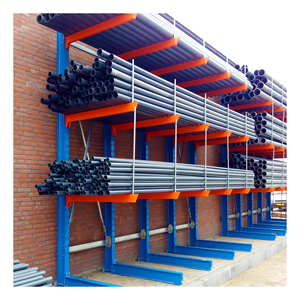
China Wholesale Industrial Warehouse Heavy Duty Single Side Cantilever Rack
Space-saving wall-side storage for steel bars, profiles and pipe bundles in high-throughput warehouses.
View specification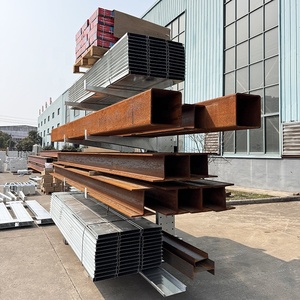
Outdoor Storage Corrosion Protection Hot-dip Galvanized Single Sided Cantilever Rack for Profile Storage
Hot-dip galvanised construction for yards, ports and humid environments where weather exposure is constant.
View specification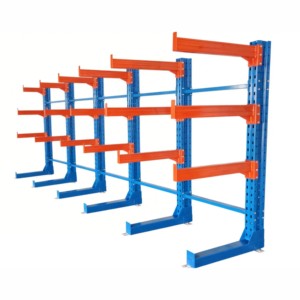
CE Certified Heavy Duty Steel Cantilever Rack Adjustable Foldable Arm Racking/Shelves Anti-Rust Corrosion Protection for
Adjustable and foldable arm design for changing SKU profiles, mixed loads and efficient warehouse reconfiguration.
View specification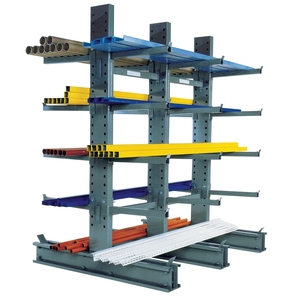
CE / ISO Certified Customized Cantilever Rack Heavy Duty for Industrial Racking From Nanjing Victory
Project-specific columns, arm spacing and base plates for non-standard loads, heights and handling equipment.
View specification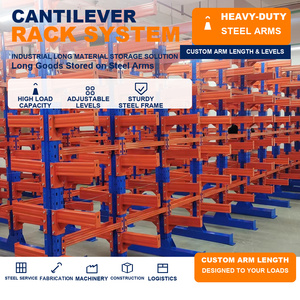
Cantilever Rack Heavy Duty Multi Level Storage Racking System Adjustable Arm Shelving Unit for Long Material Warehouse Use
Multi-level arm positions increase selectivity for long material families without blocking access to lower storage tiers.
View specification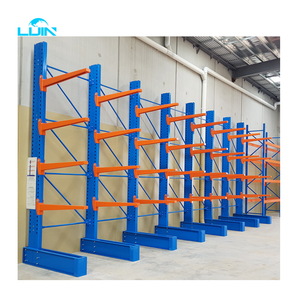
Factory Price Cantilever Rack Heavy Duty Industrial Cantilever Racking Steel Storage
A cost-conscious starting point when buyers have stable load profiles and can standardise arm spacing.
View specification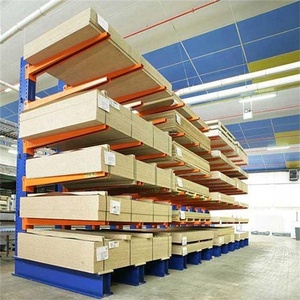
Heavy Duty Industrial Warehouse Storage Cantilever Arm Racking System
Engineered for dense storage of heavy steel, aluminium and fabricated components with crane or forklift handling.
View specification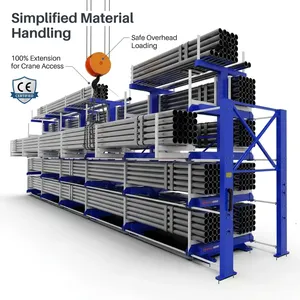
Double Sided Telescopic Cantilever Rack Manual Crank 100% Extension Steel Tube Pipe Storage Crane Access CE Certified
Double-sided telescopic arms support pipe and tube handling with full extension and safer crane access.
View specificationWhat the “Top 10” List Should Really Prove to a Buyer
A credible top 10 cantilever warehouse racking manufacturers and wholesaler shortlist should not be built on price alone. It should prove that each supplier can translate load data, handling equipment, climate, seismic risk and future growth into a storage asset that remains safe and productive for decades.
Cantilever racking looks deceptively simple: columns, bases, arms and braces. In practice, it is a structural system for long, awkward and often heavy loads. The buyer’s real search intent is usually a mix of supplier credibility, load capacity, customisation, corrosion protection, certification, delivery time and lifecycle service. That is why this guide uses an information-gain approach: instead of listing vague claims, it gives procurement teams a scorecard, specification checklist and lifecycle view that can be used in RFQs, supplier audits and internal capex reviews.
For warehouses handling steel beams, pipes, timber, aluminium profiles or fabricated parts, the wrong cantilever specification can create unsafe arm deflection, blocked access, premature coating failure or costly rework. The right manufacturer or wholesaler should be able to document column load capacity, arm capacity, base plate design, anchor requirements, finish specification and installation tolerances. In South America, the brief becomes more complex because seismic zones, coastal humidity, cold-chain operations and long export lead times can all influence the final configuration.
This white paper is written for operations directors, procurement managers, warehouse engineers, 3PL providers and project contractors who need a defensible shortlist. It compares the themes that separate a true top-tier cantilever supplier from a transactional wholesaler: engineering depth, manufacturing control, documentation, regional support and the ability to scale from a single bay to a multi-country rollout.
Top 10 Scorecard: What Separates Leading Cantilever Racking Suppliers
Use these ten dimensions to structure supplier questionnaires, technical bids and factory audits. A strong answer is specific, documented and traceable to the proposed system.
Structural Engineering
Load calculations, deflection limits, arm spacing and base plate design for the real load profile.
Certified Manufacturing
Material traceability, welding control, dimensional checks and CE/ISO documentation where applicable.
Customisation
Single- or double-sided layouts, adjustable arms, telescopic arms, crank extension and non-standard heights.
Corrosion Protection
Powder coating, hot-dip galvanising and hardware selection matched to indoor, outdoor or coastal use.
Seismic Documentation
Bracing, anchors and calculations coordinated with local codes and licensed structural review where required.
Cold & Outdoor Suitability
Steel, coating and fixing choices for chilled stores, freezer environments, ports and humid yards.
Handling Compatibility
Clearance for forklifts, side-loaders, cranes, lifting beams and manual picking access.
Automation Readiness
Ability to evolve toward telescopic, electric or automated retrieval systems without abandoning the layout logic.
Export & Port Logistics
Protective packing, container loading, documentation and delivery to ports such as Santos, Callao or San Antonio.
Lifecycle Support
Installation supervision, load signage, inspection, spare parts, repair and future capacity upgrades.
Why Cantilever Racking Demand Is Rising
The growth of cantilever racking is not only a warehouse trend; it reflects changes in industrial supply chains. Construction, energy, mining, shipbuilding, fabrication and infrastructure projects all depend on long materials that cannot be stored efficiently in conventional pallet racking. As project sizes increase and stockyards become more constrained, buyers are moving from ad hoc pipe stacks and timber piles to engineered cantilever storage systems.
The strongest search intent comes from buyers who already know that long goods require open-front access, but who need help comparing engineered suppliers. They ask about arm loading, column heights, base lengths, hot-dip galvanising, indoor versus outdoor use, double-sided layouts, crane access and whether a wholesale price still includes structural documentation. The answer is that a genuine top 10 supplier should make documentation part of the offer, not an afterthought.
From “Buy a Rack” to “Buy a Load-Flow System”
The purchasing conversation has shifted. Instead of buying isolated bays, leading buyers now request a system that aligns with material families, stock rotation, lifting equipment and future SKU growth. A timber merchant may need weather-resistant outdoor storage with high arms; a steel service centre may need heavy-duty columns and crane clearance; a pipe distributor may need telescopic arms and 100% extension for safe lifting. The more precisely these variables are specified, the more a manufacturer can differentiate itself from a catalogue-only wholesaler.
Procurement Priority Index
Indicative weighting used by industrial buyers when comparing cantilever suppliers.
Product Development Trends Buyers Should Specify Now
Cantilever racking is evolving from static steel structures into configurable long-goods storage infrastructure. These trends should appear in a forward-looking RFQ.
Hot-Dip Galvanising
Outdoor yards, ports and humid industrial zones increasingly specify galvanised columns, arms and hardware to reduce repainting and downtime.
Telescopic Arms
Extension arms improve crane access and safer handling for long pipes, tubes and profiles, especially where lifting space is tight.
Electric & Automated Retrieval
Electric cantilever systems and automated retrieval concepts are moving long-goods storage toward lower labour dependency and higher repeatability.
Higher Capacity Steels
Q235B, Q355 and equivalent structural steels are being paired with refined column and base designs to support heavier project loads.
Seismic-Ready Bracing
Projects along the Pacific seismic belt require more attention to base plates, anchor design, bracing and review by local engineers.
Cold-Chain Compatibility
Freezer stores and chilled export hubs need materials and finishes that perform at low temperature without brittle coating failure.
Modular Export Design
Bolted, container-friendly systems reduce packing volume, simplify site assembly and support phased expansion across multiple sites.
Digital Documentation
Load charts, inspection records and BIM-friendly layouts are becoming part of procurement value, not optional extras.
Future Procurement Trends: How the Next Top 10 Will Be Chosen
Price comparison will remain important, but total cost of ownership, compliance evidence and local support are becoming decisive.
Documented Compliance
Buyers will ask for structural calculations, load signage, material traceability and CE/ISO evidence before approving capex.
Regional Delivery Support
Port-ready packing and local installation knowledge matter in Brazil, Chile, Peru, Colombia, Argentina, Ecuador, Uruguay and Paraguay.
Total Cost of Ownership
Wholesale price alone is insufficient. Coating life, downtime, reconfiguration, inspection and repair costs should be modelled.
ESG & Material Efficiency
Designs that use steel efficiently, reduce energy-intensive floor space and support recyclable materials will win strategic tenders.
Lead-Time Reliability
Suppliers with controlled production, export packing and port experience will be preferred when projects cannot slip.
Automation Readiness
Even manual yards should be laid out with future telescopic, electric or automated retrieval upgrades in mind.
Enterprise Advantage: Why Real Nice Racks Belongs on a Serious Shortlist
Real Nice Racks LLC designs and supplies industrial storage and shelving that helps businesses increase capacity, productivity and operational safety. For cantilever projects, that means starting with real load data, handling equipment, floor conditions, clear height and the climate of the site rather than forcing a catalogue item into a complex warehouse.
The company supports multinational brands and fast-growing regional businesses from the first site survey through installation, inspection and ongoing service. Projects can be aligned with recognised storage engineering standards, including EN 15512, EN 15620, EN 15635 and seismic methodology such as FEM 10.2.08 / EN 16681, with coordination to local codes where required. For South American projects, technical support can be provided in English, Spanish and Portuguese.
- Site survey, SKU and throughput data review before layout design.
- Structural calculations, load signage and project documentation delivered with the system.
- Seismic-ready design for the Pacific belt, coordinated with local engineering requirements.
- Cold-chain and freezer-capable storage options for agro-export, seafood, meat and dairy hubs.
- Scalable systems that can grow from manual long-goods storage toward automation.
- Lifecycle services including installation supervision, rack inspection, repair and capacity upgrades.
South America Project Capability
Support for warehouses and distribution centres across Brazil, Chile, Peru, Colombia, Argentina, Ecuador, Uruguay and Paraguay.
Typical delivery ports Santos · Callao · San Antonio · Buenos Aires · Cartagena · Guayaquil · Montevideo Local code awareness ABNT NBR 15524 · NCh 433 / NCh 2369 · E.030 · NSR-10 · NEC-SE-DS Technical languages English · Spanish · Portuguese Lifecycle scope Survey, design, export packing, supervised installation, inspection and upgrades.Cantilever Racking Procurement Checklist
A concise RFQ checklist that helps buyers compare manufacturers and wholesalers on equal terms.
Load Data
Provide load length, weight, centre of gravity, load per arm, uniform load and maximum deflection requirements.
Arm & Column Layout
Define single- or double-sided access, arm spacing, arm length, column height, base length and future SKU changes.
Coating Specification
State indoor powder coating, hot-dip galvanising or enhanced coastal protection, including fixings and touch-up requirements.
Seismic & Anchoring
Share site location, seismic zone and slab details. Request base plate and anchor calculations for local review.
Handling Equipment
Confirm forklift, side-loader, crane or manual access, aisle width, lifting height and required clearances.
Documentation & Support
Ask for load signage, inspection records, installation guidance, spare parts and after-sales service terms.
Frequently Asked Questions About Cantilever Warehouse Racking
These are the questions procurement and engineering teams most often ask when comparing manufacturers and wholesalers.
What is the difference between single-sided and double-sided cantilever racking?
Single-sided cantilever racking is usually placed against a wall or structural line and uses floor space efficiently where access from both sides is not required. Double-sided systems have arms on both sides of the column and support higher storage density in central yard positions. The correct choice depends on forklift or crane access, aisle layout, load length and whether the stock needs one-direction or two-direction retrieval.
How do I compare arm capacity between cantilever racking suppliers?
Do not compare a single headline load figure. Ask for the load capacity per arm, the load position, the arm length, the column capacity and the base plate design. The capacity should be stated for the actual load type and centre of gravity. A professional supplier will also explain deflection limits and whether the proposed arms are fixed, adjustable or telescopic.
When should I choose hot-dip galvanised cantilever racking?
Hot-dip galvanising is appropriate for outdoor yards, coastal sites, humid climates and facilities where repainting would interrupt operations. It is especially relevant for ports, steel stockyards, timber yards and construction-material storage. Indoor warehouses may use powder coating if the environment is dry and controlled, but the specification should always match the real corrosion risk.
Can cantilever racking be designed for seismic zones in South America?
Yes. Racking in seismic regions should be designed with reference to recognised seismic methodology and coordinated with local requirements. Relevant codes can include NCh 433 and NCh 2369 in Chile, E.030 in Peru, NSR-10 in Colombia and NEC-SE-DS in Ecuador. Base plates, anchors, bracing and beam or arm connections must be reviewed for the site’s seismic zone and soil conditions, with locally licensed structural review where required.
What information should I include in an RFQ for an accurate quotation?
Provide the warehouse or yard location, floor plan, clear height, slab details, load length, load weight, load per arm, handling equipment, indoor or outdoor exposure, coating requirement, target delivery port and required completion date. Include product photos or drawings if available. The more precise the input data, the more reliable the load capacity, layout and export packing estimate will be.
Can a wholesaler provide the same documentation as a manufacturer?
A wholesale supplier can provide equivalent documentation if it has engineering control over the source factory and the proposed design. Buyers should ask for material traceability, dimensional inspection, coating specification, load charts, packing lists and installation guidance. For safety-critical projects, a supplier that can coordinate calculations, local code review and post-installation inspection is usually lower risk than a supplier that only quotes a price per bay.
Is automation available for long-goods cantilever storage?
Automation is developing quickly in this category. Electric cantilever systems, telescopic arms and automated or semi-automated retrieval concepts are increasingly used where repetitive handling, labour availability or safety risk are major concerns. Even where automation is not immediate, the initial layout should preserve the possibility of future mechanisation, crane access and control-system integration.
Get an Engineered Cantilever Racking Proposal
Share your warehouse location, load dimensions, weight per arm, clear height, handling equipment and target port. The engineering and procurement team can then compare layouts, coatings, seismic requirements and lifecycle costs before you commit.
Contact Us