What a Top 10 Industrial Pallet Racking Systems Exporter & Wholesaler Should Prove
Google's quality raters and industrial buyers ask the same question: can the supplier demonstrate real experience, documented engineering and accountable after-sales support? A top-10 position is not a badge printed on a brochure. For pallet racking it must be evidenced by load calculations, local seismic coordination, export packing records, installation supervision and a lifecycle plan that protects the investment after handover.
Engineering Is the Product
Every credible quotation starts with pallet dimensions, load per level, clear height, forklift type, floor tolerance and seismic zone. The output should be a layout that can be inspected, approved and safely used — not a price list with unverified capacities.
Export & Wholesale Discipline
Export packing, container loading, port delivery and clear documentation turn a factory order into a predictable project. Typical delivery ports include Santos, Callao, San Antonio, Buenos Aires, Cartagena, Guayaquil and Montevideo, with shipping plans matched to project milestones.
Lifecycle Partnership
Load signage, inspection records, damage repair and capacity upgrades extend service life. That matters most in cold stores, high-throughput distribution centres and 3PL warehouses where unplanned downtime is far more expensive than the racking itself.
8 Industrial Pallet Racking Systems Recommended for Export & Wholesale Programs
The systems below suit wholesale, project and OEM buyers looking for flexible, export-ready storage. Each product link preserves the original destination and gives procurement teams a direct route to specifications.
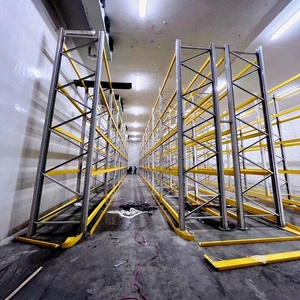
VNA Boltless Warehouse Racking
High-density very narrow aisle storage with boltless assembly and adjustable metal shelves. A practical choice for wholesalers that need fast container unloading, flexible level changes and efficient pallet access in medium-height warehouses.
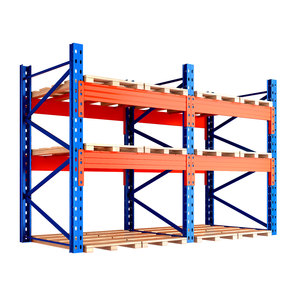
Heavy Duty Industrial Pallet Racking
Heavy-duty steel pallet racking for stacking units and industrial storage shelves. Engineered for repeatable pallet loads, accessory integration and export-friendly installation across distribution centres and manufacturing stores.
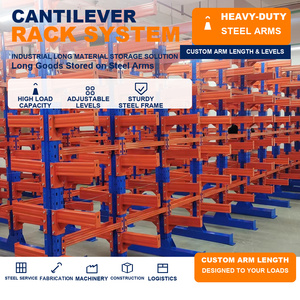
Cantilever Rack for Long Materials
Multi-level cantilever racking with adjustable arms for pipes, timber, profiles and long goods. Ideal for construction supply, steel service centres, building-material wholesalers and yards using forklifts or cranes.
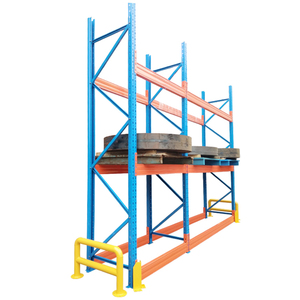
Adjustable Selective Pallet Racking
Selective beam racking that delivers direct access to every pallet. Customisable frames, beams, accessories and load signage make it a strong baseline for 3PLs, distribution centres and mixed-SKU warehouses.
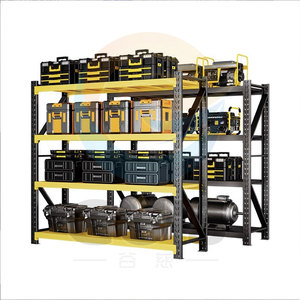
Boltless 5-Layer Steel Shelving
Heavy-duty boltless shelving for industrial and home warehouse use. Five steel layers, fast assembly and a knock-down structure support small-parts, carton, e-commerce and retail storage with minimal installation time.
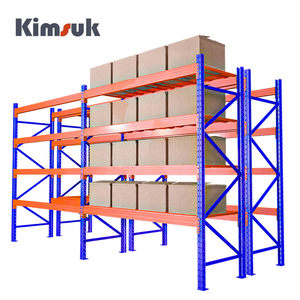
Heavy-Duty Pallet Storage System
A robust warehouse pallet storage solution for high-load applications. Suitable for dense storage zones, rack-supported projects and operations that need a long service life with predictable inspection and repair access.
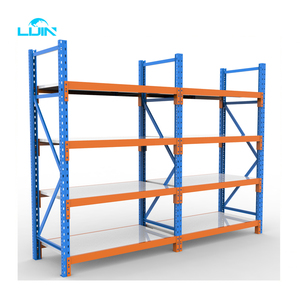
Boltless Adjustable Pallet Racking
Adjustable boltless pallet racking with steel racking and shelving units. The system reduces installation time while keeping beams and levels adaptable as SKU profiles, pallet heights and throughput requirements change.
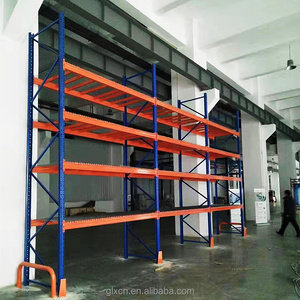
5-Layer 1500 kg Pallet Racking
Cold-rolled steel beam racking with 1500 kg load per level and an easy knock-down structure. A strong candidate for wholesalers requiring multi-layer storage, repeatable export packing and straightforward site assembly.
A Scorecard for Industrial Pallet Racking Systems Procurement
Use this weighted scorecard during tender evaluation. The percentages reflect the criteria that most often change total cost of ownership; they are not a substitute for project-specific engineering.
Top-10 Evaluation Weighting
Indicative weighting for commercial and technical review. Adjust by project type, seismic zone and cold-chain exposure.
What Industrial Pallet Racking Buyers Are Already Pricing Into 2025–2030 Projects
The buying conversation has moved from cost per beam to safety evidence, energy per pallet and flexibility over the system's life. These six trends are visible across tenders, 3PL contracts and cross-border wholesale programs.
Seismic Documentation Becomes a Gate
In Chile, Peru, Ecuador and Colombia, procurement teams increasingly require seismic calculations, anchor specifications and engineer review before purchase order. Suppliers respond with FEM 10.2.08 / EN 16681 workflows and local-code coordination.
Energy per Pallet, Not Cost per Beam
Cold-store operators compare racking by refrigerated volume, airflow and kWh per pallet. Mobile racking and compact layouts reduce aisles and energy demand, especially for fruit, seafood, meat and dairy export hubs.
Retrofit-First Capital Planning
Rising land prices around São Paulo, Santiago, Lima and Bogotá make existing-building upgrades attractive. High-density pallet racking can unlock up to 20% more capacity on the same footprint, avoiding new construction delays.
Total Cost of Ownership
Buyers now scope inspection, spare parts, repair and future reconfiguration into the business case. The cheapest initial quote can be the most expensive after five years if documentation, coating and service support are weak.
Local Code Alignment Across Borders
Multi-country distributors want one engineering standard with local adaptation: ABNT NBR 15524 in Brazil, NCh 433 / 2369 in Chile, E.030 in Peru, NEC-SE-DS in Ecuador and NSR-10 in Colombia.
Automation-Ready Flexibility
Even manually operated warehouses ask for racking that can later accommodate shuttles, AGVs or semi-automated storage machines. Modular platforms such as P90 reduce the cost of the next upgrade.
How Industrial Pallet Racking Systems Are Evolving
Racking development is no longer just about heavier beams. The strongest systems combine modularity, cold-chain performance, export-friendly assembly and data-ready handover.
Modular P90 Platforms
One frame and beam family can support selective, drive-in, push-back, shuttle and narrow-aisle configurations, giving buyers room to change without abandoning the original investment.
Mobile Racking for Cold Chain
MOVO-style rail-guided bases open a single aisle on demand, preserve 100% pallet access and reduce refrigerated air volume. This is a strong fit for freezer warehouses where space and energy are both expensive.
Higher Strength per Tonne
Cold-rolled steel beams, optimised profiles and 1500 kg load levels help reduce steel mass per pallet position while keeping safety margins aligned with EN 15512 and project requirements.
Boltless and Knock-Down Export Design
Boltless shelving and easy knock-down structures lower installation time and improve container utilisation. For wholesale buyers, this can reduce site labour and simplify phased delivery to multiple locations.
Corrosion Protection for Ports and Humidity
Coastal and tropical environments require coating specifications matched to humidity, salt exposure and washdown. Powder coating and galvanising choices are now evaluated at design stage, not after delivery.
Data-Ready Handover
Load signs, capacity tables, inspection records and clear user guidance are becoming part of product delivery, not an optional extra. This supports insurance, internal audits and safer operation over the system's life.
Why Real Nice Racks LLC Is Built for Export & Wholesale Buyers
Real Nice Racks LLC designs, supplies and supports industrial storage systems for warehouses and distribution centres across South America, with an engineering-led approach to safety, compliance and lifecycle performance.
Engineering-Led Layout & Calculations
Designs reference EN 15512, EN 15620, EN 15635 and FEM 10.2.08 / EN 16681 where relevant, with local adaptation for seismic and building codes. Load signage and capacity tables are delivered with the project.
South America-Focused Expertise
Projects across Brazil, Chile, Peru, Colombia, Argentina, Ecuador, Uruguay and Paraguay reflect the region's seismic zones, cold-chain exports, 3PL growth and port logistics.
Full-Scope Product Range
Pallet racking, VNA, cantilever, boltless shelving, heavy-duty storage, mezzanine, mobile racking and semi-automated storage can be specified by one team, reducing coordination risk across a warehouse.
Lifecycle Service Model
From site survey and layout to manufacturing, export packing, supervised installation, inspection and upgrades, the project follows a five-stage lifecycle that keeps safety and performance visible after handover.
Multilingual Communication
Technical and commercial support is available in English, Spanish and Portuguese, reducing specification risk between headquarters, local engineers, customs teams and installation crews.
Port-Ready Delivery & After-Sales
Export packing and shipment to ports such as Santos, Callao, San Antonio, Buenos Aires, Cartagena, Guayaquil and Montevideo are supported by inspection, repair and capacity-upgrade services.
Storage Engineering Built Around South American Warehousing Realities
Seismic activity along the Pacific coast, humid tropical climates, agro-exports and fast e-commerce growth all shape how a warehouse should be designed. Here is how the approach adapts by market.
Brazil
E-commerce and automotive DCs around São Paulo, Minas Gerais and Paraná need high-throughput selective, narrow-aisle and VNA racking. Projects are aligned with ABNT NBR 15524 where applicable.
Chile
One of the world's most seismic markets. Racking concepts are checked against NCh 433 / NCh 2369 principles, with cold storage for fruit and salmon exports near San Antonio and Valparaíso.
Peru, Ecuador & Colombia
Agro-export, mining-parts, pharmaceutical and 3PL warehouses near Lima, Callao, Guayaquil, Bogotá and Cartagena require seismic adaptation to E.030, NEC-SE-DS and NSR-10 as applicable.
Argentina, Uruguay & Paraguay
Food, beverage and meat industries around Buenos Aires and Rosario, free-zone logistics in Montevideo and regional distribution in Asunción benefit from push-back, high-density and cold-chain systems.
From Enquiry to Long-Term Support: A Five-Stage Project Lifecycle
A clear project sequence keeps budgets predictable, documentation complete and timelines realistic, even for multi-country wholesale rollouts.
Analyse
Share warehouse location, floor plan, clear height, pallet size, load per pallet and forklift type. We assess seismic zone, floor tolerance and throughput.
Design
Layout options, structural calculations, capacity comparison and local-code coordination are prepared before commercial commitment.
Manufacture
Steel production, quality checks, powder coating or galvanising, and export packing for container efficiency and site safety.
Deliver & Install
Shipment to the nearest port and supervised installation, with safety signage and handover documentation.
Support
Periodic inspection, damage repair, spare parts and capacity upgrades protect performance over the system's life.
Industrial Pallet Racking Systems Procurement FAQ
Direct answers for procurement teams, engineers and wholesale buyers comparing exporters and suppliers.
What distinguishes a top-10 exporter and wholesaler from a low-cost trader?
A top-10 partner proves engineering capability, documented compliance, export experience and lifecycle support. Ask for structural calculations, load signage, installation supervision, inspection templates and references in comparable seismic or cold-chain environments. Price alone cannot demonstrate safety or total cost of ownership.
Can your pallet racking be designed for seismic zones in Chile, Peru, Ecuador and Colombia?
Yes. Racking for the Pacific seismic belt is calculated with reference to FEM 10.2.08 seismic methodology and EN 16681, and coordinated with local requirements such as NCh 433 and NCh 2369 in Chile, E.030 in Peru, NEC-SE-DS in Ecuador and NSR-10 in Colombia. Base plates, anchors, bracing and beam connectors are specified for the site's seismic zone and soil type, with final calculations reviewed by a locally licensed structural engineer when required.
Which design standards do your storage systems follow?
Static steel racking is designed in line with EN 15512, with floor tolerances per EN 15620, operation and inspection guidance per EN 15635, and seismic design per FEM 10.2.08 / EN 16681. In Brazil, projects are aligned with ABNT NBR 15524 for selective pallet racking. Load signage, capacity tables and inspection records are supplied with each installation.
Do you supply racking for cold storage and freezer warehouses?
Yes. Cold storage pallet racking, mobile racking and high-density systems are specified for chilled and frozen environments down to approximately -30 °C, which suits fruit, seafood, meat and dairy export hubs in Chile, Peru, Ecuador, Argentina and Brazil. Mobile racking such as MOVO is especially effective because it reduces the volume of air that must be refrigerated.
How are projects delivered and installed across South America?
Each project follows a defined lifecycle: site survey and data analysis, layout and structural design, manufacturing, export packing and shipment to the nearest port, supervised installation, and handover with load signage and inspection documentation. After-sales services include periodic rack inspection, damage repair and capacity upgrades.
Can you upgrade an existing warehouse instead of building a new one?
Yes. Retrofit projects typically combine re-layouts, higher-density systems such as P90 drive-in, push-back, shuttle or mobile racking, mezzanine floors and narrow-aisle configurations. High-density pallet racking can deliver up to 20% more storage capacity within the same building footprint, avoiding the cost and delay of new construction.
What information do you need to prepare a quote?
Send the warehouse location, floor plan or CAD, clear height, pallet dimensions, load per pallet and per level, forklift type, target throughput, seismic zone and any local code requirements. Email [email protected] or use the quote button on this page; the more complete the data, the faster the engineering review.
What about MOQ, lead times and wholesale programs?
Because racking is engineered to project requirements, MOQ and lead time are confirmed after layout, finish and destination port are defined. Wholesale and multi-site programs can be phased by site, container or product family. Early engineering review reduces risk before container planning and helps align production with installation crews.
Request a Project-Specific Pallet Racking Proposal
Send your warehouse location, floor plan, clear height, pallet dimensions, load per level and target port. The engineering team will respond with layout options, product recommendations, export packing considerations and next steps for a wholesale or multi-site program.