8 Industrial Shelving & Pallet Rack Systems Below the Banner
These eight product families represent practical starting points for warehouses, factories, distribution centres and cold stores. Each link below preserves the original product URL so procurement teams can move from research to technical review without losing context.
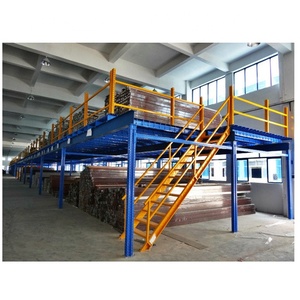
Mezzanine Shelf Storage Heavy Duty Rack System Metal Racks Warehouse Mezzanine Platform
A two-level platform that converts underused vertical space into picking, buffer or light-assembly area. Best evaluated with clear height, column grid, stair access and fire strategy in view.
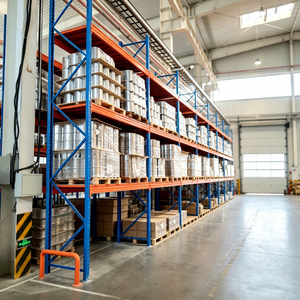
Practical Heavy Load Pallet Shelving Frame for Factory Warehouse Logistics Park and Bulk Raw Material Storage Pallet Rack
A robust pallet shelving frame for factory warehouses, logistics parks and raw-material buffers. Repeatable bay widths and beam levels help standardise load signage and operator training.
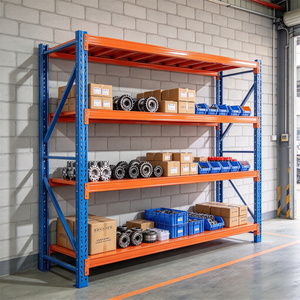
Steel Boltless Rivet Shelving Powder Coated Corrosion Protection Card Slot Assembly Warehouse Storage Rack
Powder-coated boltless rivet shelving with card-slot assembly for fast configuration. A practical fit for spare parts, cartons and hand-loaded SKUs where reconfiguration speed matters.
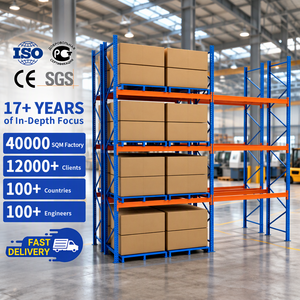
Heavy Duty Industrial Pallet Rack High Loading Multi-Level Metal Shelves Units Warehouse Steel Selective Pallet Racking System
Selective pallet racking provides 100% access to every pallet and remains one of the most flexible bases for multi-level warehouse steel units. Suitable for mixed SKUs and future reconfiguration.
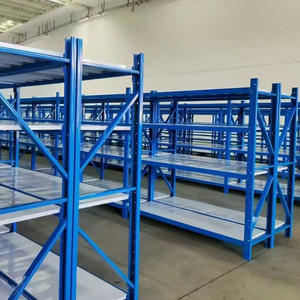
Manufacture Factory 4 Layers Metal Materials Light Duty Racks Warehouse Storage Racks
An economical four-layer metal shelving rack for lighter materials, packaging and small components. Useful in factories and workshops where hand-loaded storage must be clean and adjustable.
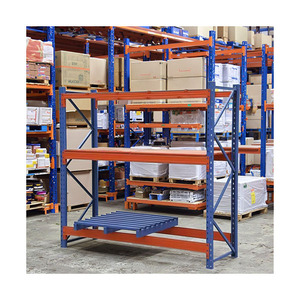
Selective Pallet Racking System Stable Modular Steel Distribution Center Warehouse Storage Rack 2000kg Heavy Duty
A modular selective pallet rack for distribution centres and 3PL operations, with 2000 kg-class configurations available. Modular steel design supports staged expansion and spare-parts planning.
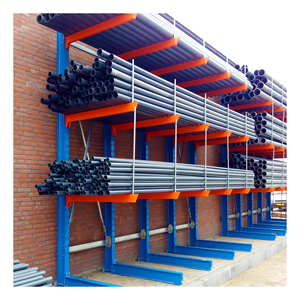
China Wholesale Industrial Warehouse Heavy Duty Single Side Cantilever Rack
Single-side cantilever rack stores pipes, profiles, timber and long goods with unobstructed front access. The open front reduces double handling when cranes or long-load forklifts are used.
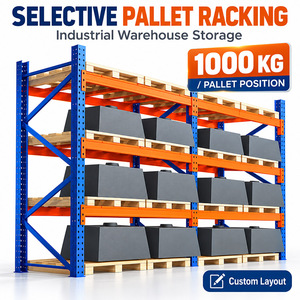
Factory Direct Heavy Duty Selective Pallet Racking System 2000kg Per Level 3-Level Adjustable Warehouse Storage Rack
A three-level adjustable selective system for warehouses that need direct pallet access and predictable load limits. Factory-direct supply can shorten the specification loop when drawings are clear.
Why “Top 10” Lists Fail Industrial Pallet Rack Buyers
Searching for the top 10 industrial shelving pallet racks factories & supplier usually starts with a simple price comparison. It should end with a documented engineering decision. A pallet rack is not a commodity shelf; it is a structural system that interacts with the building slab, seismic zone, forklift fleet, sprinkler design, insurance requirements and the future automation roadmap.
This guide therefore focuses on information gain rather than a copied directory. The product families above show system fit. The sections below explain how to audit factories and suppliers, what procurement trends will shape 2025–2030 budgets, which product developments matter, and what to include in an RFQ. Real Nice Racks LLC is used as the reference supplier because its scope covers pallet racking, shelving, cantilever, mezzanines, mobile racking and semi-automated storage for warehouses across South America.
What a Serious Industrial Rack Supplier Must Prove
Real Nice Racks LLC designs and supplies industrial storage systems that help South American businesses increase capacity, productivity and operational safety. The company supports multinational brands and fast-growing regional companies from the first site survey to installation, inspection and ongoing service. Every layout should begin with real data — pallet profiles, SKU velocity, forklift types, clear height and seismic zone — so the system fits how the warehouse actually works, not a generic template.
For buyers comparing factories, this means asking for a partner that can connect product supply with structural calculations, load signage, installation supervision and lifetime support. A low unit price can be expensive if it lacks documentation, compatibility or spare-parts availability.

Warehouse storage systems are engineered around loads, aisle strategy, building height and local codes.
Engineering Before Quotation
Site survey, SKU and throughput analysis, floor review, clear-height checks and seismic assessment come before a final layout. This reduces rework after purchase orders are issued.
Seismic-Ready Design
Racking for the Pacific seismic belt can be calculated with reference to FEM 10.2.08 and EN 16681, coordinated with NCh 433/NCh 2369, E.030, NEC-SE-DS and NSR-10 requirements.
Cold-Chain Capability
Chilled and freezer systems can be specified for temperatures down to approximately -30 °C, supporting fruit, seafood, meat and dairy export hubs across South America.
Documented Standards
Static racking can align with EN 15512, floor tolerances with EN 15620, inspection guidance with EN 15635, and Brazilian selective racking projects with ABNT NBR 15524.
Full-Scope Product Range
Selective, drive-in, push-back, shuttle, mobile and narrow-aisle racking sit alongside shelving, cantilever, mezzanines and semi-automated storage machines.
Lifecycle Service
Survey, design, manufacture, export packing, port delivery, supervised installation, handover with load signage, periodic inspection, damage repair and capacity upgrades.
The Top 10 Factory & Supplier Due-Diligence Signals
A credible “top 10” shortlist is the outcome of a repeatable audit, not a copied ranking. Use these ten signals to compare industrial shelving pallet rack factories and suppliers on evidence rather than presentation.
Application Data
Ask for a layout based on pallet size, load, velocity, lift equipment, aisle width and clear height.
Structural Calculation
Confirm beam capacity, upright load, base plate, anchor and bracing assumptions are documented.
Local Code Fit
Verify seismic and building-code coordination for the actual project location and soil condition.
Material & Finish
Check steel specification, powder coating, corrosion protection and compatibility with cold or humid sites.
Factory QA
Review tolerances, welding control, pre-shipment inspection and packing method for export handling.
Installation Method
Supervised installation reduces alignment errors and protects warranty position on anchors and connectors.
Load Signage
Every bay should carry clear capacity signage, and operators should be trained to read it before storage.
Spare Parts
Ask for connector, beam, upright and accessory availability over the planned service life of the system.
Automation Roadmap
Test whether the platform can evolve into mobile, shuttle, narrow-aisle or semi-automated storage.
RFQ Transparency
Compare exclusions, shipping terms, drawings, documentation, warranty and inspection scope line by line.

Mobile pallet racking compresses aisle space and can reduce refrigerated air volume in cold stores.
Data Visualisation: Storage Density Is Not the Same as Storage Efficiency
High density can reduce aisle space, but it can also reduce selectivity, increase handling time and complicate inspection. The right decision depends on SKU velocity, pallet count, truck cycle time and future growth. The illustrative index below compares general planning positions, not guaranteed performance for every site.
Illustrative Storage Density Index
Illustrative planning index only. Actual density depends on pallet profile, rack height, forklift type, aisle standard, fire protection and local code requirements.
Industrial Shelving & Pallet Rack Procurement Trends for 2025–2030
Procurement teams are moving from “price per bay” to total cost of ownership. The strongest suppliers will be judged on engineering evidence, delivery reliability, energy performance and the ability to adapt without replacing the whole system.
Total Cost of Ownership
Buyers will compare installation, inspection, repair, energy use and reconfiguration cost — not only steel price. A system that can be expanded on the same platform reduces future capital friction.
Resilience Documentation
Seismic, wind, fire and floor-loading assumptions will be requested earlier. Suppliers that can coordinate with local licensed engineers shorten approval cycles and reduce project risk.
Cold-Chain Energy Efficiency
Mobile and high-density racking will be evaluated for refrigerated volume reduction. Fewer aisles can mean less air to chill, lower energy demand and more pallet positions inside the same envelope.
Automation-Ready Modularity
Even manual warehouses will ask whether the rack can support future shuttle, mobile or semi-automated storage. A modular platform protects the next investment stage.
Digital Lifecycle Records
Load signage, inspection dates, damage reports and spare-parts lists will be managed as asset data. Buyers will favour suppliers that hand over structured documentation.
Retrofit & Land Constraints
Nearshoring and urban logistics growth make new land expensive. Retrofit projects will combine re-layouts, mezzanines, narrow aisles and high-density racking to unlock capacity without new construction.
How Industrial Shelving and Pallet Racks Are Evolving
The product itself is changing. Racking is becoming a configurable platform that must support safety, energy goals, automation and circular-economy requirements over a longer service life.
High Density With Better Selectivity
Push-back, shuttle and mobile systems are reducing the traditional trade-off between storage density and access. Controls and layout software make it easier to choose the right compromise.
Mobile Systems Moving Mainstream
Mobile pallet racking is no longer limited to niche cold stores. It is increasingly used where land cost, energy cost or building height makes every square metre strategic.
Cold-Store-Specific Engineering
Freezer applications require attention to steel behaviour, condensation, lubrication, anchor design, door placement and maintenance access, not just a standard rack painted for cold conditions.
Semantically Clear Load Signage
Signage is becoming part of product design. Clear bay IDs, load limits and inspection status help operators, auditors and insurers read the system without ambiguity.
Integration With Semi-Automation
Vertical lift modules and storage machines are being planned alongside static racking. A supplier that understands both can prevent isolated islands of automation.
Sustainable Steel & Reuse
Less steel per pallet position, modular connectors and reusable components support sustainability targets. The most sustainable rack is often the one that can be reconfigured instead of scrapped.
From Factory Audit to Installation Handover
A supplier should follow a defined lifecycle: site survey and data analysis, layout and structural design, manufacturing, export packing and shipment to the nearest port, supervised installation, and handover with load signage and inspection documentation. After-sales services should include periodic rack inspection, damage repair and capacity upgrades.
For South American projects, port planning matters. Typical delivery discussions include Santos, Callao, San Antonio, Buenos Aires, Cartagena, Guayaquil and Montevideo. A practical supplier will align packaging, documentation and installation sequencing with the chosen port and site access constraints.
This is where Real Nice Racks LLC positions itself as a lifecycle partner: technical support in English, Spanish and Portuguese; product breadth across racking, shelving, cantilever, mezzanine and semi-automated storage; and a documented approach to load capacity and inspection.

Installation supervision and handover records protect safety, warranty and future inspection quality.
Industrial Shelving Pallet Rack Supplier FAQ
These are the questions procurement, engineering and operations teams most often ask when comparing factories and suppliers.
What should buyers compare in a top 10 pallet rack supplier shortlist?
Compare engineering evidence, not only price. Ask for structural calculations, load signage, standards alignment, installation method, spare-parts support, export packing, warranty and inspection scope. A supplier that can explain assumptions is easier to audit than one that only sends a catalogue and a unit price.
Can pallet racking be designed for seismic zones in South America?
Yes. Racking for the Pacific seismic belt can be calculated with reference to FEM 10.2.08 and EN 16681, then coordinated with local requirements such as NCh 433 and NCh 2369 in Chile, E.030 in Peru, NEC-SE-DS in Ecuador and NSR-10 in Colombia. Base plates, anchors and bracing should be specified for the site’s seismic zone and soil type.
Which design standards should be written into the RFQ?
For static steel racking, reference EN 15512. For floor tolerances, EN 15620; for operation and inspection guidance, EN 15635; for seismic design, FEM 10.2.08 or EN 16681. Brazilian selective racking projects may align with ABNT NBR 15524. Local building codes still need licensed engineering review where required.
Do suppliers provide racking for cold stores and freezer warehouses?
Yes, but the specification must be cold-store specific. Systems can be prepared for chilled and frozen environments down to approximately -30 °C. Mobile racking is especially relevant because fewer aisles can reduce the volume of air that must be refrigerated and may lower energy consumption.
How can I judge whether a factory is genuinely capable?
Request pre-shipment inspection records, material certificates, tolerance controls and examples of export packing. Ask how beams, uprights, base plates and safety accessories are matched to the load calculation. A capable factory can trace a component from drawing to packing list.
How are projects delivered and installed across South America?
A defined process usually includes site survey, data analysis, layout and structural design, manufacturing, export packing, shipment to the nearest port, supervised installation, and handover with load signage and inspection documentation. The exact sequence should be agreed before shipment.
Can an existing warehouse be upgraded instead of building new?
Yes. Retrofit projects often combine re-layouts, higher-density racking, mezzanine floors and narrow-aisle configurations. High-density pallet racking can deliver up to 20% more storage capacity within the same building footprint, avoiding the cost and delay of new construction.
What information should be included in an inquiry?
Include warehouse location, floor plan, clear height, pallet dimensions, load per pallet, forklift type, aisle constraints, temperature range, seismic zone if known, target capacity and required delivery port. Product catalogues and technical documentation can then be matched to the actual project.
How do buyers request technical information or a quotation?
Use the inquiry button on this page to start a technical conversation. Provide the RFQ data listed above so the supplier can respond with layout options, product recommendations, documentation requirements and a realistic delivery path.
Build a Defensible Shortlist for Your Next Warehouse Project
Whether you are comparing industrial shelving pallet rack factories for a new distribution centre, retrofitting an existing warehouse, or planning a cold-chain expansion, the strongest decisions start with clear data and documented engineering. Share your location, floor plan, clear height, pallet size, load per pallet and handling equipment to move from browsing to technical review.