Top 10 Pallet Racking Industrial Suppliers & Exporter
How procurement teams identify export-ready racking partners for high-density, seismic-ready, cold-chain and automation-friendly warehouses — and why Real Nice Racks LLC is a benchmark supplier for South America.
Send an Inquiry8 Pallet Racking Systems That Matter in Supplier Shortlists
The fastest way to evaluate an industrial racking exporter is to compare real product architectures against your load profile. These eight systems cover selective access, drive-in density, boltless deployment, stainless hygiene, wire mesh safety and factory-direct heavy-duty storage. Product URLs are preserved for engineering review.
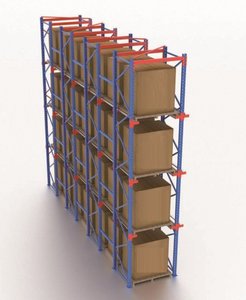
High Density Commercial Shelves Storage Warehouse Racking Systems Drive-In Pallet Rack for Industrial Factory Racks
Best for high-volume factories and distribution centres where aisle space is expensive, pallet selectivity is secondary and cubic utilisation decides the return on investment.
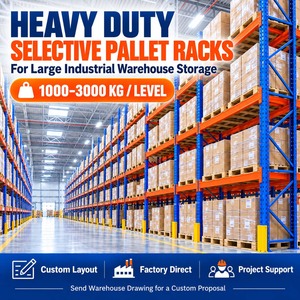
Heavy Duty Selective Pallet Racks for Large Industrial Warehouse Storage
Best for mixed-SKU warehouses that need direct access to every pallet, flexible beam adjustment and simple forklift operation without sacrificing structural strength.
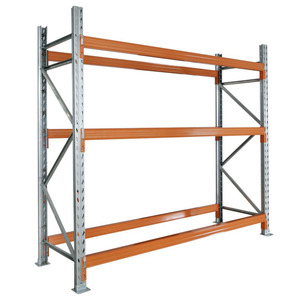
NOVA Full Automatic Warehouse Q235 Steel Boltless Store Heavy Duty Stacking Rack Industrial Storage Pallet Racking System
Best for Q235 steel boltless storage where fast installation, heavy-duty capacity and industrial stacking flexibility reduce project downtime.
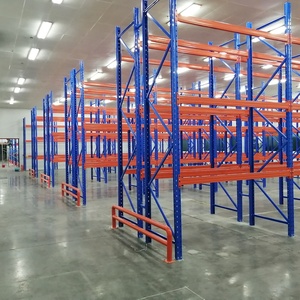
High-quality Heavy-duty Adjustable Steel Shelving with 5 Tiers for Industrial Warehouse Storage Solutions
Best for hand-loaded spare parts, cartons and multi-tier storage where five adjustable tiers improve pick-face control and inventory visibility.
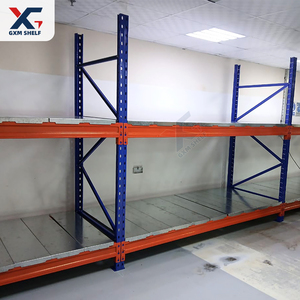
GXM Adjustable Stainless Steel Pallet Rack System Boltless Rack Storage Warehouse Heavy Duty Shelving
Best for humid, hygienic or corrosion-sensitive environments where stainless steel racking improves cleanability, durability and long-term appearance.
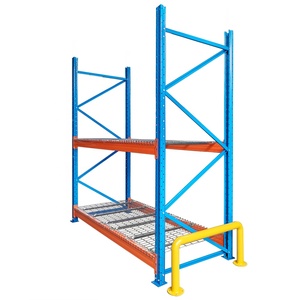
2500kg Layer Load Warehouse Storage Pallet Shelving Rack with Wire Mesh Decking
Best for pallet shelving with wire mesh decking that improves load support, protects smaller cartons, reduces debris fall-through and supports safer picking.
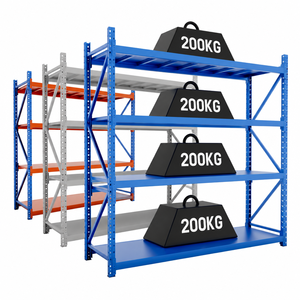
Factory Direct 4-Layer 100/200/300kg Medium Heavy Duty Pallet Racking System Steel Adjustable Long Span Warehouse Storage Racks
Best for factory-direct medium and heavy-duty storage with adjustable long-span performance for controlled project budgets and predictable lead times.
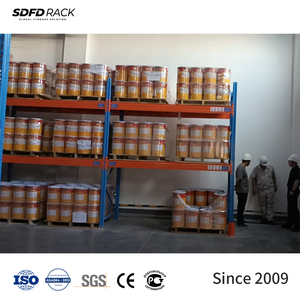
SDFD Industrial Heavy Duty Steel Pallet Rack Warehouse Shelving System for Storage Goods
Best for general industrial heavy-duty pallet storage requiring a robust steel rack and warehouse shelving system that can absorb daily forklift operations.
How the Top 10 Pallet Racking Industrial Suppliers & Exporters Are Judged
A top-10 shortlist is only as reliable as the criteria used to build it. In pallet racking, the strongest quotations are rarely the ones with the lowest price per bay; they are the ones that reduce structural risk, installation downtime, compliance ambiguity and future reconfiguration cost.
Industrial buyers now compare suppliers on cost per accessible pallet, not simply cost per upright or beam. They ask whether the exporter can coordinate seismic calculations, supply load signage, provide inspection records, supervise installation and support a warehouse retrofit without forcing a new building. This is especially important in South America, where seismic zones, cold-chain exports, high land prices and fast e-commerce growth create very different racking requirements across Brazil, Chile, Peru, Colombia, Argentina, Ecuador, Uruguay and Paraguay.
Real Nice Racks LLC is used in this guide as a benchmark because its model reflects what serious procurement teams expect from a top-tier pallet racking industrial supplier and exporter: engineering-led layouts, documented safety, export packing, multilingual communication and lifecycle support. The focus is not on catalogue size but on the ability to convert a warehouse constraint into a safe, high-density and scalable storage system.
The title “Top 10 Pallet Racking Industrial Suppliers & Exporter” therefore points to ten capabilities that separate engineering-led exporters from transactional vendors. Those ten capabilities should be used as a due-diligence checklist before any purchase order is released.
The 10 Capabilities Behind a Genuine Top-Tier Supplier
Use these ten checks to compare pallet racking suppliers and exporters with the same rigour you apply to steel grade, beam capacity and delivery schedule.
Engineering Calculations
Clear structural calculations, load tables and load signage for every bay, not generic catalogue claims.
Standards Fluency
Familiarity with EN 15512, FEM guidance and local code coordination helps insurers and engineers approve faster.
Seismic Readiness
Base plates, bracing and anchors specified for the site’s seismic zone, not assumed from a standard layout.
Cold-Chain Experience
Chilled and freezer racking down to approximately -30°C, with materials and layouts suited to refrigerated space.
High-Density Layout Skill
Drive-in, push-back, shuttle, mobile and narrow-aisle expertise to release capacity from the same footprint.
Export-Grade Packing
Protective packing, clear marking and port-ready logistics that reduce damage risk before installation begins.
Installation Supervision
Method statements, supervised erection and documented handover help protect schedules and safety performance.
Multilingual Support
Technical communication in English, Spanish and Portuguese reduces errors across procurement and site teams.
Lifecycle Service
Inspection, repair, reconfiguration and capacity upgrades avoid premature replacement and operational disruption.
Automation Readiness
A modular platform that can evolve toward semi-automated storage or high-bay automation when volumes justify it.
Match the Racking System to the Warehouse Scenario
Product selection should start with inventory behaviour, not steel weight alone. The right system balances selectivity, density, handling equipment, temperature, safety and long-term flexibility.
Selective Pallet Racking
Recommended when fast-moving and slow-moving pallets must remain directly accessible. It is the most flexible baseline for 3PL, e-commerce and spare-parts warehouses.
Compare selective rackingDrive-In Pallet Racking
Recommended when large quantities of similar pallets can be stored in LIFO flow and aisle space is more valuable than individual pallet access.
Review drive-in densityBoltless Steel Racking
Recommended for projects that need rapid installation, simple reconfiguration and heavy-duty Q235 steel performance without complex site fabrication.
Explore boltless rackingStainless Steel Racking
Recommended for humid, wash-down, food-adjacent or corrosion-sensitive areas where standard painted steel may age faster than the operational plan allows.
Review stainless optionsWire Mesh Decking
Recommended where small cartons, loose goods or irregular pallets need better load support, safer picking and reduced debris risk between beam levels.
Review mesh rackingFactory-Direct Heavy Duty
Recommended when a buyer needs adjustable long-span storage, predictable budget control and a direct manufacturer relationship for a multi-bay rollout.
Review factory-direct racking2025–2030 Pallet Racking Procurement Trends
Buyer intent is shifting from “How much per upright?” to “How much verified storage capacity, safety and future flexibility does this system deliver?” These shifts should shape your next RFQ.
Seismic Proof Becomes Standard
In Chile, Peru, Ecuador and Colombia, buyers increasingly require seismic calculations, anchor specifications and locally coordinated review before approval. Racking is now treated as structural equipment, not furniture.
Cold-Chain Capacity Expands
Fruit, seafood, meat and dairy exporters need freezer-ready systems that reduce refrigerated air volume. Mobile racking and high-density layouts are becoming procurement priorities in port-linked cold stores.
Retrofits Beat New Builds
Industrial land around São Paulo, Santiago, Lima and Bogotá is expensive. Procurement teams are re-layouting existing buildings, adding mezzanines, narrowing aisles and using high-density racking to unlock capacity faster.
Automation-Ready Decisions
Even manual warehouses now ask whether racking can later support shuttles, goods-to-person systems or high-bay automation. Modular platforms reduce the risk of buying a system that cannot evolve.
Lifecycle Cost Overtakes Lowest Price
Buyers are comparing inspection frequency, damage repair, reconfiguration potential and spare-part availability. A slightly higher upfront price can be cheaper over ten years if the system is safer and more adaptable.
Documentation Is Part of the Product
Load signage, capacity tables, inspection records and installation handover are moving into the core specification. Insurers and internal safety teams increasingly expect evidence, not verbal assurance.

High-density racking allows procurement teams to release more storage capacity from an existing building footprint before committing to new construction.
Product Development Trends Shaping the Next Generation of Racking
The next competitive advantage will not come from heavier steel alone. It will come from systems that are more modular, more data-ready and easier to adapt as inventory profiles change.
Modular Platforms
Shared upright, beam and connector families let warehouses expand, reconfigure or convert density levels without replacing the entire system.
Mobile Cold Storage
Rail-guided mobile racking reduces refrigerated aisle volume, lowers energy load and increases pallet positions inside the same insulated envelope.
Semi-Automated Storage
Vertical lift modules and goods-to-person storage machines are becoming practical for high-value SKUs, spare parts and labour-constrained operations.
Lower-Carbon Steel
Buyers are beginning to ask about steel utilisation, recyclability and embodied carbon, making efficient layout design a sustainability issue as well as a cost issue.
Sensor-Ready Inspection
Digital handover, QR-coded load signage and inspection records are preparing racking systems for more systematic maintenance and risk management.
Why Real Nice Racks LLC Is a Benchmark Among Industrial Racking Exporters
Real Nice Racks LLC designs, supplies and supports industrial storage systems for warehouses and distribution centres across South America. Its model reflects what procurement teams should demand from a top-tier exporter: engineering before quotation, documentation before installation and lifecycle support after handover.
Projects begin with a site survey and data analysis covering pallet profiles, SKU velocity, clear height, floor condition, forklift type and seismic zone. Layouts are then engineered for the real operating environment rather than copied from a catalogue. The product platform includes selective, drive-in, push-back, shuttle, mobile and narrow-aisle pallet racking, as well as industrial shelving, mezzanines, cantilever racking and semi-automated storage.
- Seismic-ready design coordinated with local requirements in Chile, Peru, Ecuador and Colombia.
- Cold storage capability down to approximately -30°C for fruit, seafood, meat and dairy supply chains.
- Standards fluency across EN 15512, FEM 10.2.08 / EN 16681, EN 15620, EN 15635 and local code coordination.
- High-density systems such as P90 and MOVO mobile racking that can unlock up to 20% more capacity on the same footprint.
- Export packing, port logistics and supervised installation across Brazil, Chile, Peru, Colombia, Argentina, Ecuador, Uruguay, Paraguay and Bolivia.
- Technical support in English, Spanish and Portuguese, plus lifecycle inspection, repair and capacity upgrades.
This is the practical difference between buying racking bays and buying a storage system: the supplier can prove how the structure will perform, how it will be installed and how it will support the next stage of warehouse growth.
Send an Inquiry
Engineering-led racking design connects storage density, safety documentation, export logistics and future automation readiness.
From RFQ to Handover: Five Stages Procurement Teams Should Expect
A disciplined export project should make responsibilities, approvals and documentation visible at every stage. This is how buyers avoid delays between factory release, port arrival and site installation.
Survey & Analyse
Warehouse dimensions, load data, SKU profile, handling equipment, floor condition and seismic zone are reviewed.
Design & Calculate
Layout options, structural calculations, capacity comparison and safety documentation are prepared for approval.
Manufacture & Pack
Steel components are produced, checked and export-packed with clear marking to protect the shipment.
Ship & Install
Goods move to the nearest port and installation is supervised against the approved layout and method statement.
Handover & Support
Load signage, inspection records and operational guidance are handed over, followed by lifecycle service.
Pallet Racking Industrial Supplier FAQs
These are the questions that most often determine whether a supplier shortlist advances to technical review or stops at the quotation stage.
What information should be included in a pallet racking RFQ?
Include the warehouse location, floor plan, available clear height, pallet dimensions, load per pallet, SKU velocity, forklift or reach-truck type, floor condition, seismic zone and temperature range. If you are retrofitting, add photos, rack inspection reports and any known restrictions on aisle width, column spacing or fire protection. This allows the supplier to calculate capacity and layout before quoting.
How should procurement compare the top 10 pallet racking suppliers and exporters?
Compare engineering capability, standards fluency, seismic and cold-store experience, export packing, installation supervision, documentation and lifecycle support. Ask for load tables, capacity calculations, anchor specifications and inspection records. A low price per bay can hide higher costs in rework, downtime, underused cube or premature replacement. The stronger comparison is cost per accessible pallet over the life of the system.
Can racking be designed for seismic zones and cold storage at the same time?
Yes, but it requires project-specific engineering. Seismic design determines bracing, base plates, anchors and connector strategy, while cold-store design considers steel behaviour, condensation, cleaning, traffic and air volume. Systems for Chile, Peru, Ecuador and Colombia should be coordinated with local seismic requirements and reviewed by a locally licensed engineer where required.
What is the difference between selective, drive-in and boltless racking?
Selective racking offers direct access to every pallet and is ideal for mixed SKUs. Drive-in racking increases density by storing pallets in lanes, usually on a LIFO basis, and is better for large quantities of similar goods. Boltless racking uses a simpler connection system for faster installation and reconfiguration, making it attractive for projects that need speed and flexibility.
Do suppliers offer stainless steel, wire mesh and multi-tier shelving options?
Yes. Stainless steel racking is used in hygienic, humid or corrosion-sensitive environments. Wire mesh decking improves load support and safety for smaller cartons or irregular pallets. Five-tier adjustable shelving is suitable for spare parts, cartons and hand-loaded storage. The correct option depends on load weight, picking method, cleaning regime and the environment.
Can an existing warehouse be upgraded instead of building a new facility?
Yes. Retrofit projects often combine re-layouts, higher-density pallet racking, mezzanine floors, narrow-aisle configurations and mobile racking. High-density pallet racking can deliver up to 20% more storage capacity within the same building footprint, avoiding the cost and delay of new construction. A site survey is essential to confirm floor capacity, clear height and operational feasibility.
How can buyers reduce risk during export and installation?
Use a supplier that provides export-grade packing, clear shipment marking, approved layout drawings, installation method statements and documented handover. Confirm who is responsible for anchors, floor preparation, permits and inspection. For South American projects, plan around port selection, customs documentation and site access so that installation teams are not delayed after arrival.
How do I request a technical proposal or quotation?
Share the warehouse location, floor plan, clear height, pallet size and weight, load per pallet, handling equipment, temperature range and target capacity. You can also email [email protected] with drawings or photos. The more accurate the input data, the faster the supplier can return a layout, capacity comparison and export quotation.
Build a Safer, Denser and More Export-Ready Racking Plan
Whether you are comparing industrial pallet racking suppliers, planning a cold-store retrofit or expanding a distribution centre in South America, the next step is a data-based layout review. Share your warehouse dimensions, pallet loads and growth target to receive a practical system recommendation.
Send an Inquiry