8 Pallet Storage Racking Systems for Wholesale Programs
The systems below are practical starting points for distributor, 3PL, manufacturing and cold-chain projects. Each product URL is preserved so buyers can review the exact configuration before requesting engineering drawings, load tables or an export quotation.
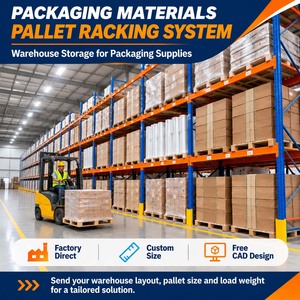
Warehouse Pallet Racking System for Packaging Materials Storage
Selective and stackable storage for cartons, packaging film, consumables and bulky packaging inventory, with fast SKU access and simple bay reconfiguration.
View export specification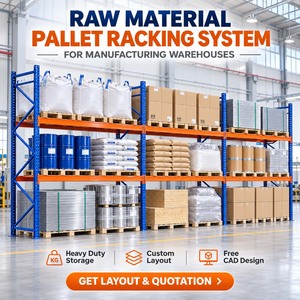
Pallet Racking System for Manufacturing Raw Material Warehouses
Heavy-duty raw-material storage for coils, components and production inputs, with engineered beam levels, clear load signage and forklift-friendly access.
View export specification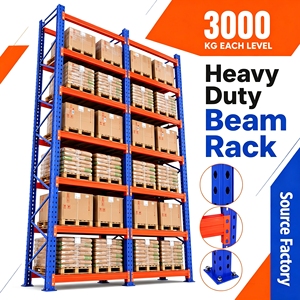
Factory Direct 3000kg High Load Metal Pallet Racking Industrial Steel Pallet Rack System for Warehouse Storage Heavy Goods
Factory-direct 3000 kg high-load steel pallet racking for dense industrial storage, export packed and specified by bay capacity, beam level and accessory set.
View export specification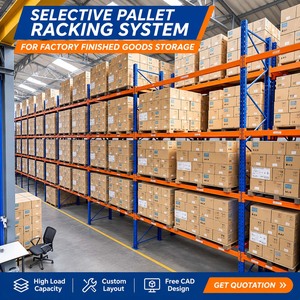
Selective Pallet Racking System for Factory Finished Goods Storage
High-selectivity racking for finished goods, cartons and palletised inventory where every SKU must remain directly accessible for picking and replenishment.
View export specification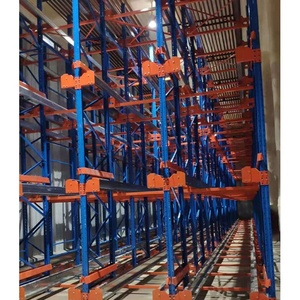
Customized Steel Pallet Rack Stacking Racks & Shelves Warehouse Storage Rack Heavy Duty Shuttle Racking for Industrial
Custom shuttle-ready high-density racking for industrial warehouses, increasing pallet count where aisle space is the real constraint and throughput is predictable.
View export specification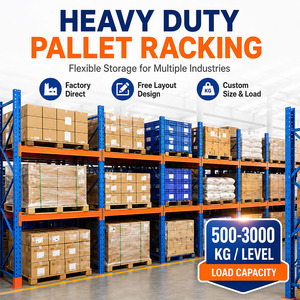
Heavy Duty Steel Warehouse Pallet Rack Storage Racking System for Industrial Warehouse Applications
A robust heavy-duty pallet rack platform for general industrial warehouses, distribution centres and 3PL operations with mixed pallet profiles.
View export specification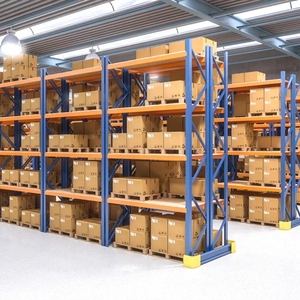
Racks Steel Storage Shelf Industrial Factory Stacking Rack Shelving Heavy Duty Warehouse Pallet Racking System
Stacking rack and shelving-based pallet storage for factories that need flexible, durable storage and straightforward installation across multiple production zones.
View export specification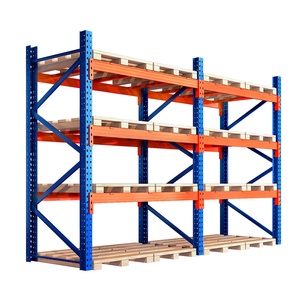
Industrial Heavy Duty Storage Shelves system Stacking Units Metal Rack Warehouse Steel Pallet Racking
Industrial pallet racking and stacking units for mixed loads, spare parts and high-turnover warehouse zones where durability and simple expansion matter.
View export specificationSeismic-Ready by Calculation
Bracing, base plates and anchors coordinated for Andean and Pacific seismic zones.
Cold-Chain to -30°C
Freezer-ready specifications for fruit, seafood, meat and dairy export hubs.
Standards-Led Documentation
Load tables, capacity signage, inspection records and project handover files.
Export Logistics Support
Container planning, export packing, port delivery and supervised installation.
What “Top 10” Should Mean in an Engineering-Led Sourcing Decision
Searching for the top 10 pallet storage racking system exporters and wholesaler is rarely about collecting brand names. It is a risk-management exercise.
A pallet rack is a structural system. Its performance depends on beam load tables, upright capacity, floor tolerance, anchor design, seismic bracing, forklift impact protection, aisle geometry and documented inspection. For a warehouse in São Paulo, Santiago, Lima, Bogotá or Buenos Aires, a low unit price can become an expensive mistake if the supplier cannot translate a floor plan into a buildable, insurable and scalable storage system.
That is why serious procurement teams score exporters against evidence, not adjectives. They ask for calculated capacity per bay, not just a headline load per level. They request seismic and local code coordination, not a generic certificate. They compare container loading plans, spare-parts availability and lifecycle service, because the true cost of racking is measured over a decade of operation.
- Compare suppliers by engineering evidence, not catalogue photography.
- Use a weighted scorecard for safety, export readiness and lifecycle cost.
- Request layout options that show pallet positions, aisle widths and future expansion.

Mobile pallet racking can reduce refrigerated air volume while preserving 100% pallet accessibility.
Top 10 Pallet Storage Racking System Exporter & Wholesaler Evaluation Framework
Use these ten checks as a shortlisting filter. A supplier that cannot answer them in writing should not proceed to an export project, regardless of headline price.
Calculated Capacity per Bay
Ask for beam and upright calculations by bay, level and load pattern. Compare permitted loads against real pallet weights, not optimistic catalogue limits.
Seismic and Local Code File
Request coordination with NCh 433, E.030, NSR-10, NEC-SE-DS or ABNT NBR 15524 where relevant, plus FEM 10.2.08 and EN 16681 seismic methodology.
Cold-Chain and Corrosion Detail
Confirm finish, tolerances, anchor specification and material behaviour for chilled, freezer or humid coastal environments down to approximately -30°C.
Load Signage and Inspection Pack
Every handover should include load signage, capacity tables, installation records and a clear inspection and damage-reporting routine.
Export Packing and Container Plan
Review packing methods, steel protection, container utilisation, unloading sequence and port delivery responsibility before the order is released.
Wholesale Component Consistency
For distributors and wholesalers, repeatable components matter. Confirm that beams, uprights, bracing and accessories can be reordered without redesign.
Handling Equipment Integration
Aisle width, turning radius, lift height and forklift or AGV type must shape the layout. Racking should fit the handling fleet, not the other way around.
Installation Supervision
Ask who supervises installation, how tolerances are checked and how handover is documented when the project is shipped across borders.
Lifecycle and Retrofit Support
Racking is rarely static. Evaluate spare parts, inspection, repair and expansion support, including P90, drive-in, push-back, shuttle and mobile upgrades.
Commercial and Spare-Parts Clarity
Confirm Incoterms, lead times, drawing approval steps, warranty terms and consumable or spare-part availability in writing.
2025–2030 Pallet Racking Procurement Trends
Buyers are shifting from price-per-kilogram purchasing toward availability, safety evidence and total lifecycle performance. The strongest exporters and wholesalers will be those who can document all three.
Documentation-Led Buying
Insurers, auditors and corporate procurement teams increasingly require load tables, seismic calculations and inspection records before approval.
Cold-Chain and Agro Export Growth
Fruit, seafood, meat and dairy exporters need compact, energy-efficient and freezer-rated systems that maximise pallet positions inside the cold envelope.
Retrofit-First Capital Planning
High-density racking, mezzanines and narrow aisles let buyers add capacity inside existing buildings before committing to new construction.
Automation-Ready Interfaces
Even manual warehouses now ask whether a layout can later support shuttles, AMRs, vertical lifts or ASRS without abandoning the original steel frame.
Illustrative Buyer Scorecard Weighting
This is not survey data. It is a practical weighting model that procurement teams can adapt when comparing pallet racking exporters and wholesalers for an export project.
Where Pallet Storage Racking Systems Are Heading
Racking development is moving in four connected directions: modularity, density, cold-chain efficiency and digital confidence. The winning systems will be those that can be reconfigured without being replaced.
Modular P90 Platforms
One structural platform can support selective, drive-in, push-back, shuttle and narrow-aisle layouts, reducing redesign risk as volumes change.
Mobile and Shuttle Density
MOVO mobile racking and pallet shuttles reduce aisle waste while maintaining access. They are especially valuable where land is scarce or costly.
Cold-Chain Energy Reduction
Fewer aisles mean less refrigerated air to move and condition. Freezer-rated racking is becoming a strategic energy decision, not just a storage choice.
Digital Load Traceability
QR-coded load signage, digital inspection records and capacity registers are becoming part of the product, not an afterthought.

Why Real Nice Racks LLC Belongs on a Serious Export Shortlist
Real Nice Racks LLC supports multinational brands and fast-growing regional companies with industrial storage systems designed around real operating data.
The company’s advantage is not simply a product catalogue. It is the ability to connect site survey, layout design, structural calculation, export packing, shipment to the nearest port, supervised installation and lifecycle support into one project path. That matters in South America, where seismic zones, cold-chain requirements, import logistics and local building codes vary significantly from country to country.
- Engineering calculations and load signage delivered with every project.
- Technical support in English, Spanish and Portuguese.
- Systems that scale from manual picking to semi-automated storage.
Seismic-First Engineering
Projects for Chile, Peru, Ecuador and Colombia can be coordinated with local seismic requirements, base-plate specification and anchor design.
South America Focus
Support for Brazil, Chile, Peru, Colombia, Argentina, Ecuador, Uruguay and Paraguay, with port-aware export planning.
One Storage Platform
Pallet racking, mobile racking, shelving, cantilever, mezzanines and semi-automated storage can be planned as one system.
Documented Safety
EN 15512, FEM 10.2.08 / EN 16681, EN 15620, EN 15635 and local code alignment can be built into the project file.
Export Logistics Discipline
Export packing, container optimisation and shipment to ports such as Santos, Callao, San Antonio, Cartagena and Guayaquil can be coordinated.
Lifecycle Partnership
Inspection, repair, retrofit and capacity upgrades help protect the original investment for years after handover.
Safety You Can Document — Not Just Promise
Procurement teams and insurers increasingly ask for proof. A credible pallet racking exporter should provide calculations, load signage, installation records and a standards map before shipment.
Analyse
Site survey, SKU data, pallet profiles, forklift types, floor condition and seismic assessment.
Design
Layout options, structural calculations, capacity comparison and export-friendly configuration.
Manufacture
Quality-controlled steel production, finish specification and protective export packing.
Deliver & Install
Shipment to the nearest port, unloading sequence and supervised installation.
Support
Handover with load signage, inspection records, repairs, training and future upgrades.
Built for the Realities of South American Warehousing
Seismic activity, humid climates, agro-export cold chains, mining spare parts and fast e-commerce growth all shape how a warehouse should be designed. The best export partner adapts the engineering, not just the price.
Brazil
High-throughput distribution centres for e-commerce, retail and automotive around São Paulo, Minas Gerais and Paraná. Projects can align with ABNT NBR 15524 for selective pallet racking.
Chile
One of the world’s most seismic markets. Racking can be verified against NCh 433 and NCh 2369 principles, with fruit and salmon cold stores near San Antonio and Valparaíso.
Peru & Ecuador
Agro-export growth around Lima, Callao and Guayaquil for blueberries, avocados, bananas and shrimp. Seismic checks can reference E.030 and NEC-SE-DS; freezer systems require careful finish specification.
Colombia, Argentina & Neighbours
3PL hubs in Bogotá, Medellín and Cartagena, plus food and beverage distribution in Buenos Aires, Rosario and Córdoba. Uruguay and Paraguay add free-zone and regional distribution requirements.
FAQ: Sourcing Pallet Storage Racking from Exporters and Wholesalers
These are the questions procurement and engineering teams most often ask when comparing suppliers for cross-border warehouse projects.
Can your pallet racking be designed for seismic zones in Chile, Peru, Ecuador and Colombia?
Yes. Racking for the Pacific seismic belt can be calculated with reference to FEM 10.2.08 and EN 16681, and coordinated with local requirements such as NCh 433 and NCh 2369 in Chile, E.030 in Peru, NEC-SE-DS in Ecuador and NSR-10 in Colombia. Base plates, anchors, bracing and beam connectors should be specified for the site’s seismic zone and soil type, with final calculations reviewed by a locally licensed structural engineer where required.
Which design standards should I ask for from a pallet racking exporter?
Static steel racking is typically designed in line with EN 15512, with floor tolerances per EN 15620, operation and inspection guidance per EN 15635, and seismic design per FEM 10.2.08 / EN 16681. In Brazil, projects can be aligned with ABNT NBR 15524 for selective pallet racking. Load signage, capacity tables and inspection records should be supplied with every installation.
Do you supply racking for cold storage and freezer warehouses?
Yes. Cold storage pallet racking, mobile racking and high-density systems can be specified for chilled and frozen environments down to approximately -30°C, which suits fruit, seafood, meat and dairy export hubs in Chile, Peru, Ecuador, Argentina and Brazil. Mobile racking such as MOVO is especially effective because it reduces the volume of air that must be refrigerated.
What is the difference between a racking exporter and a wholesaler?
An exporter manages cross-border commercial terms, export packing, documentation and shipment. A wholesaler supplies repeatable products and components, often in volume, to distributors, integrators or multi-site buyers. For complex warehouse projects, the best partner combines both capabilities with engineering support, installation supervision and spare-parts availability.
How are projects delivered and installed across South America?
A well-controlled project follows a defined lifecycle: site survey and data analysis, layout and structural design, manufacturing, export packing and shipment to the nearest port, supervised installation, and handover with load signage and inspection documents. After-sales services should include periodic rack inspection, damage repair and capacity upgrades.
How can buyers request technical information or a quotation?
Procurement and engineering teams should provide the warehouse location, floor plan, clear height, pallet dimensions, load per pallet, forklift or handling equipment type, target pallet count and any seismic or cold-chain requirements. You can email [email protected] or use the quote button on this page to start the technical review.
Build a Safer, Denser, More Export-Ready Warehouse
Share your warehouse location, clear height, pallet dimensions, loads, forklift type and target capacity. The engineering team can then review layout options, export packing and a practical quotation path.