Top 10 Rack Push Back Factory & Wholesalers
A procurement-grade guide for comparing push-back rack factories, wholesalers and high-density pallet storage partners — with engineering proof, seismic and cold-chain readiness, product shortlists and future buying trends.
8 Rack & Storage Products to Compare for Push-Back and High-Density Projects
These eight product families come from an industrial storage range that supports selective racking, high-density layouts, cantilever long-goods storage, shelving and logistics-centre expansion. Use them to benchmark load capacity, decking, adjustability, corrosion protection and customisation before requesting a push-back rack quotation.
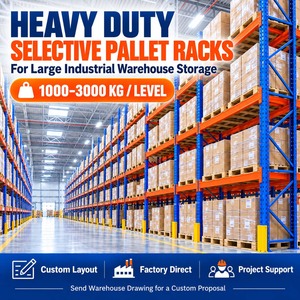
Heavy Duty Selective Pallet Racks for Large Industrial Warehouse Storage
A strong baseline for warehouses comparing selective access with push-back density. Useful where SKU variety is high and each pallet must remain directly accessible.
View product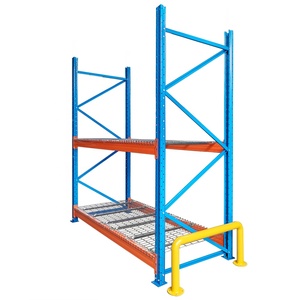
2500kg Layer Load Warehouse Storage Pallet Shelving Rack with Wire Mesh Decking
Wire mesh decking improves load distribution and helps contain small items. A relevant specification for mixed pallet loads and retrofit racking projects.
View product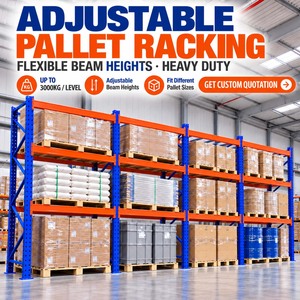
Adjustable Steel Pallet Racking System for Heavy Pallet Storage
Adjustable beam levels support changing pallet heights and seasonal inventory. Ask for load tables, beam-lock verification and floor-fixing guidance for seismic zones.
View product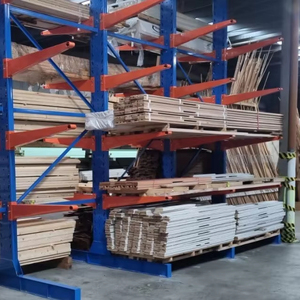
Cantilever Racking Wholesale Double-sided Heavy Pipe Warehouse Rack Industrial Heavy Duty Cantilever Racking Pallet Racking
Double-sided cantilever racking supports pipes, profiles, timber and bulky building products. Useful where a warehouse handles both palletised goods and long materials.
View product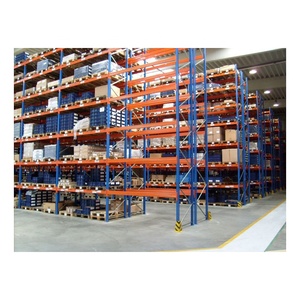
Customized Heavy Duty Pallet Racking System Industrial Warehouse Storage Rack Adjustable Steel Selective Pallet Rack
Custom dimensions reduce wasted aisle width and improve clear-height utilisation. Request calculations based on pallet weight, rack height, floor condition and local seismic factors.
View product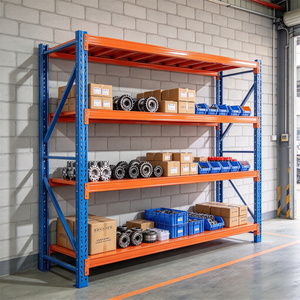
Steel Boltless Rivet Shelving Powder Coated Corrosion Protection Card Slot Assembly Warehouse Storage Rack
Boltless rivet shelving suits spare parts, MRO stock and small-batch storage alongside pallet racking. Powder coating helps resist humid port and food-plant environments.
View product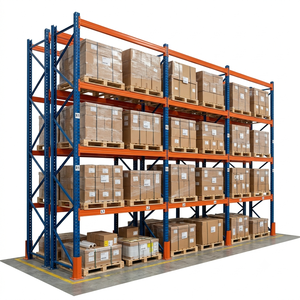
Heavy Duty Pallet Rack Industrial Warehouse Shelving Adjustable Steel Storage Rack System for Logistics Center
A system-level racking option for distribution centres planning narrow-aisle, high-bay or future semi-automated storage. Scalability should be part of the engineering brief.
View product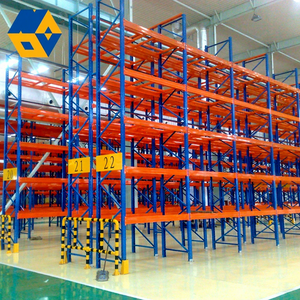
Customized Competitive Industrial Warehouse Storage Steel Heavy Duty Pallet Rack
A customised heavy-duty option for wholesalers, distributors and project rollouts where delivered cost, installation speed and repeatable specifications matter.
View productWhat “Top 10” Should Mean to a Push-Back Rack Buyer
Search demand for rack push back factory and push-back rack wholesalers is driven by a practical problem: warehouses need more pallet positions without buying land or building a new facility. Push-back racking stores pallets two to five deep on nested carts and inclined rails. When a forklift puts away a pallet, the new load pushes the earlier pallet deeper into the lane. Retrieval is LIFO, so the system fits medium-to-high-volume SKUs where several pallets of the same item move regularly.
That technical definition is easy to publish. The harder question is supplier quality. A real factory should be able to show structural calculations, controlled cart geometry, load signage, coating specifications and installation supervision. A trading intermediary may quote quickly but struggle to explain lane depth, cart maintenance, seismic anchoring or cold-store performance. For procurement teams, the title “Top 10 Rack Push Back Factory & Wholesalers” should therefore be treated as a ten-point quality screen, not a popularity ranking.
User intent is mixed. Some buyers need product specifications; others need price benchmarks, local code alignment, delivery to South American ports, installation planning or lifecycle service. This guide answers those intents together, using Real Nice Racks LLC and its published storage-engineering scope as a reference model for factory-grade evaluation.
Procurement reality check
- Ask whether structural design is in-house or subcontracted.
- Request seismic and cold-store references, not only warehouse photos.
- Compare delivered cost per usable pallet position, not price per bay.
- Confirm who supervises installation and signs off load signage.
- Check if the racking can later expand into mobile, shuttle or semi-automated storage.
Top 10 Factory & Wholesaler Verification Matrix
Use these ten checks in an RFQ, supplier audit or technical clarification meeting. They separate a factory-grade push-back supplier from a catalogue reseller and create comparable, defensible quotations.
Engineering Ownership
Confirm who calculates beams, columns, bracing and base plates. Ask for EN 15512-style calculations and a named responsible engineer.
Seismic Evidence
For Chile, Peru, Ecuador and Colombia, request FEM 10.2.08 / EN 16681 methodology and coordination with NCh 433, E.030, NEC-SE-DS or NSR-10.
Push-Back Cart Design
Check cart nesting height, rail slope, stoppers, anti-jam geometry, wheel quality and maximum lane depth for your pallet type.
Cold-Store Capability
Verify steel toughness, coating, lubricants, clearances and installation details for chilled or freezer rooms down to approximately -30°C.
Coating & Corrosion Control
Powder coating, galvanising or zinc-rich systems matter in humid ports, food plants and coastal warehouses. Request the coating specification.
Load Signage & Traceability
Every bay should carry capacity signage. Project records should identify steel batches, inspection status and installation completion.
Layout & Data Simulation
Provide pallet profiles, SKU velocity, clear height, forklift type and throughput. A credible supplier should model layout options rather than send a catalogue page.
Export Packing & Ports
Ask how racking is protected for ocean freight and unloading. South American projects often ship to Santos, Callao, San Antonio, Buenos Aires, Cartagena, Guayaquil or Montevideo.
Installation Supervision
Racking is structural. Confirm whether installation is supervised, who checks anchor torque, beam locks and aisle tolerances, and who hands over documentation.
Lifecycle & TCO
Compare inspection, repair, training and upgrade support. Total cost of ownership includes damage risk, downtime, energy use and future reconfiguration.
Why Real Nice Racks LLC Fits the Factory-Wholesaler Evaluation Model
Real Nice Racks LLC designs and supplies industrial storage systems — pallet racking, mobile racking, shelving, cantilever, mezzanines and semi-automated storage machines — for warehouses and distribution centres across South America. Its scope is relevant because push-back racking is rarely bought in isolation; it is compared with selective, drive-in, mobile and shuttle alternatives.
Engineering Before Quotation
Site survey, SKU and throughput analysis, layout design, structural calculations and load signage are treated as part of the project, not an afterthought.
South America Delivery Support
Project support is structured for Brazil, Chile, Peru, Colombia, Argentina, Ecuador, Uruguay, Paraguay and Bolivia, with English, Spanish and Portuguese communication.
Cold-Chain & High-Density
Chilled and freezer systems, mobile pallet racking and high-density layouts help reduce refrigerated air volume and increase pallet positions within existing envelopes.
Lifecycle Service
Inspection, damage repair, capacity upgrades and retrofit planning help protect the investment after handover — a key trust signal for E-E-A-T-conscious buyers.
Analyse
Site survey, pallet data, floor condition, clear height, seismic zone and handling equipment.
Design
Layout options, capacity comparison, structural calculation and load signage planning.
Manufacture
Controlled production, coating specification and export packing for ocean freight.
Deliver & Install
Shipment to the nearest port, supervised installation and documented handover.
Support
Inspection, repair, training and future high-density or automation-ready upgrades.
What Buyers Will Require from Push-Back Rack Suppliers by 2028
Price will remain important, but the next procurement cycle will reward suppliers who can prove engineering, climate performance, delivery execution and lifecycle value.
Evidence-Based Sourcing
RFQs will require calculations, load signage, inspection records and installation method statements. Brochure-only suppliers will be filtered out earlier.
Retrofit-First Economics
High-density layouts can unlock up to 20% more capacity within the same footprint, making warehouse retrofits more attractive than new construction.
Seismic + Cold Dual Specs
Projects in the Pacific seismic belt and export cold chains will demand one racking design that satisfies both structural and temperature requirements.
Automation-Ready Density
Even manual push-back systems will be planned with future AGV, shuttle, WMS or semi-automated storage interfaces in mind.
Port-Efficient Logistics
Export packing, container planning and installation sequencing will matter as much as factory price for South American distribution projects.
From Steel Racking to Engineered Storage Infrastructure
Push-back racking is evolving from a mechanical catalogue product into a more precisely engineered storage system. The strongest factories are focusing on cart reliability, corrosion resistance, cold-store detail, load traceability and future layout flexibility.
Steel sections are being optimised to reduce unnecessary mass while preserving capacity, stiffness and safety margins. In coastal or humid environments, powder coating and zinc-rich protection are becoming specification items rather than optional upgrades. In cold stores, low-temperature lubricants, material toughness and installation tolerances must be considered together.
Cart design is another development focus. A push-back system is only as good as its ability to keep pallets moving smoothly under load. Anti-jam geometry, replaceable components and service access reduce maintenance risk. This is where a factory with real engineering control has an advantage over a wholesaler that simply assembles third-party parts.
Digital documentation is becoming part of the product. Modern buyers expect load tables, inspection tags, layout files and structured handover records. That improves insurer confidence, internal safety audits and future expansion planning. Push-back racking remains a manual high-density solution, but the data around it should be ready for automation decisions later.
Modular Cart & Rail Design
Replaceable rollers, predictable nesting and anti-jam details reduce downtime and simplify spare-parts planning.
Application-Specific Coatings
Corrosion protection is increasingly specified for ports, food plants, cold rooms and humid tropical warehouses.
Seismic & Cold Detail
Anchors, bracing, clearances and component materials must be coordinated for the site’s seismic zone and operating temperature.
Digital Documentation
Load tables, inspection records and handover files make racking easier to audit, insure and expand later.
Push-Back Racking vs Other High-Density Storage Systems
Push-back is a strong compromise between selectivity and density, but it is not the right answer for every SKU profile. Compare it against selective, drive-in, mobile and shuttle options before fixing the layout.
Selective Racking
Best when every pallet must be accessible and SKU variety is high. Lower density than push-back, but simple operation and easier FIFO control.
Push-Back Racking
Balanced density for medium-to-high-volume SKUs. LIFO operation, two to five pallets deep, fewer aisles and direct access to the front pallet in each lane.
Drive-In Racking
Very high density for a small number of SKUs, but low selectivity and stricter operating discipline. Often suitable for seasonal or homogeneous inventories.
Mobile & Shuttle
Higher capital investment and higher density. Mobile racking is compelling in cold stores because it reduces refrigerated air volume; shuttles suit large, fast-moving facilities.
Push-Back Rack Factory & Wholesaler FAQ
Common questions from warehouse owners, procurement managers, system integrators and engineering teams comparing push-back rack suppliers.
What is the difference between a rack push-back factory and a push-back rack wholesaler?
A factory controls design, manufacturing, coating, packing and often installation supervision. A wholesaler may resell products and can be useful for small orders, but may not control structural calculations, cart geometry or load traceability. For high-density pallet racking, ask who signs the calculation, who controls manufacturing tolerances and who handles site support.
Is push-back racking suitable for cold storage and freezer warehouses?
Yes, provided the system is specified for the temperature and operating conditions. Cold-store projects require attention to steel toughness, coating, lubricants, clearances and installation detail. Systems can be designed for chilled or frozen environments down to approximately -30°C, which is relevant for fruit, seafood, meat and dairy export hubs.
Can push-back racking be designed for seismic zones in Chile, Peru, Ecuador and Colombia?
Yes. Racking for the Pacific seismic belt should be calculated with reference to seismic methodology such as FEM 10.2.08 and EN 16681, then coordinated with local requirements such as NCh 433 and NCh 2369 in Chile, E.030 in Peru, NEC-SE-DS in Ecuador and NSR-10 in Colombia. Anchors, base plates, bracing and beam connectors must be selected for the site’s seismic zone and soil condition.
What information should be included in a push-back rack quotation request?
Send the warehouse location, floor plan, clear height, pallet dimensions, load per pallet, SKU velocity, number of pallets per SKU, forklift or reach-truck type, temperature range, seismic zone and any local code requirements. This lets the supplier compare push-back depth, aisle strategy and cart quantities accurately instead of quoting a generic catalogue price.
Which standards should appear in an RFQ?
For static steel racking, reference EN 15512 for design, EN 15620 for floor tolerances, EN 15635 for use and inspection, and FEM 10.2.08 / EN 16681 for seismic design. In Brazil, projects may also reference ABNT NBR 15524. Local structural codes and licensed-engineer review may be required depending on the project and jurisdiction.
How should buyers compare delivered cost and return on investment?
Compare cost per usable pallet position, not price per bay. Include cart count, steel weight, coating, seismic components, installation supervision, freight packing and documentation. Then model the value of capacity gained within an existing building. A retrofit that adds up to 20% more capacity can avoid the cost and delay of new construction, which often changes the ROI case completely.
What are the delivery and installation considerations for South America?
Projects typically move through site survey, layout and structural design, manufacturing, export packing, shipment to a port such as Santos, Callao, San Antonio, Buenos Aires, Cartagena, Guayaquil or Montevideo, then supervised installation and handover. Lead times depend on engineering, order volume, shipping mode and installation resources, so a responsible supplier will confirm them only after reviewing the layout and pallet data.
Can an existing warehouse be upgraded instead of building a new facility?
Yes. Retrofit projects often combine re-layouts, higher-density systems such as push-back, drive-in, shuttle or mobile racking, narrow-aisle configurations and mezzanine floors. The right answer depends on SKU profile, throughput, fire strategy, floor capacity and clear height. A formal capacity comparison should be completed before ordering.
Build a Defensible Push-Back Rack Quotation
Share your warehouse location, clear height, pallet size, load per pallet, SKU profile and handling equipment. The engineering review can compare push-back with selective, drive-in, mobile and shuttle layouts before pricing is finalised. Quotes reviewed by engineering are more useful than fast prices without calculations.