Top 10 Warehouse Racking Beams Factories & Wholesalers
A buyer-focused white paper on beam quality, load ratings, seismic safety and total landed cost—with eight engineered racking systems from Real Nice Racks for warehouses across South America.
Eight Engineered Systems for the Racking Beam Shortlist
Warehouse racking beams are not commodity steel. Beam profile, steel grade, hook design, powder coating, load-table accuracy and seismic detailing decide whether a low unit price becomes a safe, low-risk installation. The systems below are matched to different handling patterns, load profiles and warehouse climates.
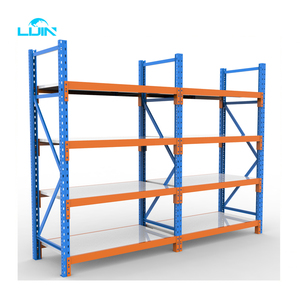
Boltless Adjustable Industrial Heavy Duty Pallet Racking System Warehouse Steel Metal Storage Racks Shelving Units
A boltless, adjustable beam platform for fast layout changes. Suits 1,000–5,000 kg pallet loads when engineered with the correct beam profile, upright and connector set; useful for wholesalers needing flexible warehouse steel.
View system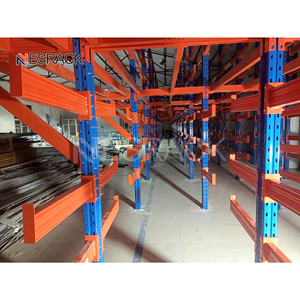
Customized Used Cantilever Racking System Rack Cantilever CE Certificated Heavy Duty Equipment Warehouse Racking Price
For pipes, profiles, timber and other long goods. Beam-free arms protect product surfaces; specify arm load, column height, finish and indoor or outdoor exposure before comparing quotations.
View system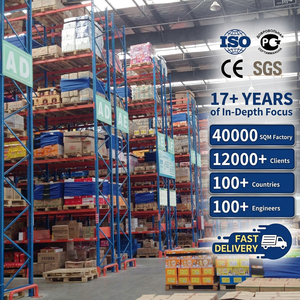
SDFD Heavy Duty Pallet Racking System Steel Durable Adjustable Box Beam Multi-layer Selective Pallet Rack for Warehouse Storage
Selective pallet racking with adjustable box beams and multi-level access. A strong fit for 3PLs and distributors that need direct SKU access, fast picking and phased expansion without changing the building envelope.
View system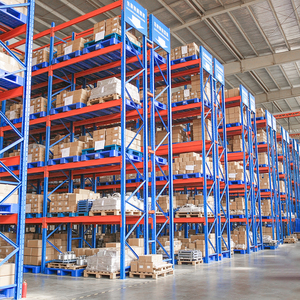
Heavy Duty Pallet Rack 1000-5000KG Load Capacity Industrial Storage Racking System for Warehouse Rack
A heavy-duty beam and upright configuration for dense industrial loads. Ask for stamped load tables, beam deflection limits, anchor specifications and inspection guidance before ordering.
View system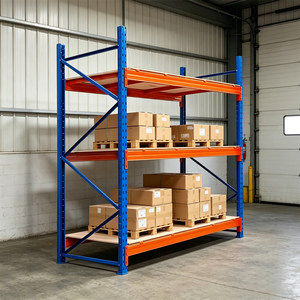
Powder Coated Heavy Duty Rack Industrial Warehouse Storage Pallet Racking Adjustable Industrial Shelves
Powder-coated finish for humid, coastal and food-adjacent warehouses. Discuss salt-spray exposure, touch-up procedures and beam labelling so inspection teams can verify capacity over time.
View system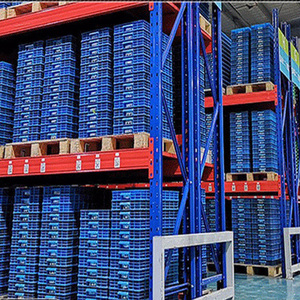
Industrial Heavy Duty Steel Selective Pallet Racking Corrosion Protection 2-Ton Capacity Powder Coated Flow Racks Warehouse
A 2-ton-class selective system with corrosion protection. Useful benchmark for comparing beam steel thickness, connector fit, powder-coat quality and total installed cost per pallet position.
View system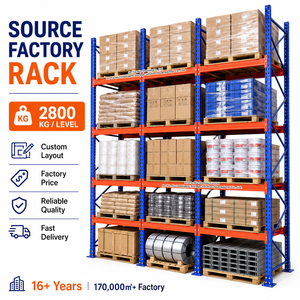
2800KG 5 Levels High Bay Industrial Pallet Racking Heavy Duty Warehouse Rack System
High-bay, five-level configuration for vertical capacity. Requires early coordination of clear height, sprinkler clearance, forklift reach, beam span and seismic bracing.
View system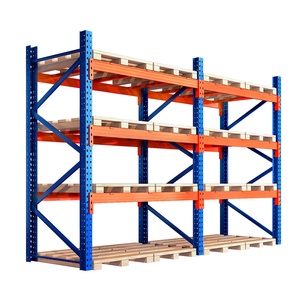
Industrial Heavy Duty Storage Shelves system Stacking Units Metal Rack Warehouse Steel Pallet Racking
A general-purpose steel pallet racking platform for mixed loads. Best specified with pallet dimensions, weight, aisle width and handling-equipment data—not catalogue guesswork.
View systemNeed a beam-level comparison? Send pallet dimensions, load per pallet, clear height and target port. Our engineering team will review the right beam profile and system fit.
Get a QuoteWhat Separates Reliable Racking Beam Factories & Wholesalers
This is not a pay-to-play logo list. For procurement teams comparing factories, wholesalers and regional stockists, the following ten evidence points reveal which supplier can support a safe, low-total-cost project.
Steel traceability
Verify coil origin, steel grade, yield strength and roll-forming tolerance. A beam’s safe working load is only credible when the material and section are documented.
Load calculations
Ask for beam deflection limits, upright capacity and connection checks. Catalogue tables without project-specific calculations are not enough for high-bay or heavy-load storage.
Seismic evidence
For Chile, Peru, Ecuador and Colombia, require FEM 10.2.08 / EN 16681 calculations plus local code coordination, anchor design, bracing plans and base-plate details.
Connector quality
Inspect beam hooks, safety pins, welding consistency and the beam-to-column fit. Small connector tolerances can become large inspection issues after installation.
Factory transparency
Know who owns the tooling, who rolls the beams, who applies the finish and who approves quality. A wholesaler should be able to show the manufacturing route, not just a price sheet.
Finish durability
Compare pre-galvanized steel, powder coating thickness and salt-spray data. Coastal humidity, freezer condensation and food environments demand a finish strategy, not a generic colour choice.
Customization range
Beam lengths, step-beam profiles, pallet support bars, decking, dividers and upright heights should be modular. Customization must remain compatible with load tables.
Export logistics
Confirm export packing, container loading plans, port experience and damage-replacement terms. South American deliveries often involve Santos, Callao, San Antonio, Buenos Aires, Cartagena or Guayaquil.
Documentation package
Require load signs, capacity tables, batch markings, installation records and inspection guidance. Insurers and auditors increasingly ask for evidence, not verbal assurances.
Lifecycle support
Replacement beams, repair advice, capacity upgrades and multilingual support in English, Spanish and Portuguese matter long after the container leaves the factory.
2025–2030 Procurement Trends Buyers Will Reward
Racking beam procurement is moving away from lowest-cost purchasing toward total cost per safe pallet position. Price still matters—but it is increasingly judged after freight, compliance, installation, inspection and downtime are included.
Total landed cost becomes the buying unit
Teams are comparing price per safe pallet position after shipping, duties, installation, inspection and operational disruption. A lower beam price that forces rework or early replacement is no saving.
Hybrid sourcing: factory direct plus local stock
Buyers combine factory-direct structural steel with local wholesaler stock for fast replacement beams. The best partners publish lead times for both full projects and emergency replenishment.
Compliance evidence travels with the quote
EN 15512 calculations, FEM seismic checks and local code coordination are becoming RFQ requirements. Suppliers without load tables, anchor details and batch traceability are filtered out earlier.
Cold chain and high-density demand
Fruit, seafood, meat and dairy exporters need freezer-ready racking, corrosion control and fewer refrigerated aisles. Mobile and high-density systems reduce cooled volume and energy cost per pallet.
Automation-ready interfaces
Even manual warehouses now ask whether beams, uprights and tolerances can accept shuttles, AGVs or future AS/RS. Modular racking that is ready for tomorrow reduces stranded capital.
Digital lifecycle records
QR-coded beams, load signs and inspection histories are shifting from premium features to standard expectations. They reduce insurance friction and make damaged-beam replacement faster.
Illustrative capacity index inside the same building envelope
Indexed pallet-position potential for discussion only. Final performance depends on load, aisle strategy, clear height, sprinkler clearance and local engineering.
Where Racking Beam Design Is Heading
The next generation of racking beams will be judged less by appearance and more by engineering evidence, adaptability and lifecycle traceability.
High-strength steel, optimised sections
Modern beam sections use high-strength steel and refined roll-forming to reach load targets with less mass. Buyers should compare safe working load, deflection and steel grade—not visual thickness alone.
Boltless modularity
Boltless connectors, adjustable beams and standard hole pitches let warehouses reconfigure without cutting steel. This is valuable where SKU profiles change faster than buildings.
Seismic engineering convergence
In Chile, Peru, Ecuador and Colombia, beam-to-column connection behaviour under lateral movement is a design input, not an afterthought. Expect site-specific bracing and anchor plans.
Cold-store and corrosion focus
Freezer environments and coastal humidity push buyers toward pre-galvanized components, powder coating, stainless options and cleanable interfaces that resist condensation and washdown.
Automation-ready racking
Racking is increasingly specified as an interface to shuttles, AGVs and storage machines. Beam tolerance, floor flatness and future aisle strategy now matter earlier in the design process.
Digital load signage
Beam-level labels and QR codes are replacing paper-only load signs. They allow maintenance teams to verify capacity, batch details and replacement parts during inspection rounds.
Why Real Nice Racks Belongs on Your Shortlist
Real Nice Racks LLC designs, supplies and supports industrial storage systems for warehouses and distribution centres across Brazil, Chile, Peru, Colombia, Argentina, Ecuador, Uruguay and Paraguay. Unlike a catalogue-only trader, our work starts with site data: pallet profiles, SKU velocity, clear height, handling equipment, floor condition and seismic zone.
- Engineering-led beam specification: profile, upright capacity, connector type, anchor and bracing selected from real load and zone data.
- Safety documentation aligned with EN 15512, FEM 10.2.08 / EN 16681, EN 15620 and EN 15635, plus local NBR 15524, NCh 433 / NCh 2369, E.030, NEC-SE-DS and NSR-10 coordination.
- Cold-chain, mobile racking and retrofit capability—including freezer environments down to approximately -30 °C and high-density storage that can unlock up to 20% more capacity on the same footprint.
- Support in English, Spanish and Portuguese, with delivery experience across major South American ports and a lifecycle approach covering survey, design, installation, inspection and upgrades.

Storage engineering for seismic zones, cold chain and fast-growing distribution networks.
Questions Buyers Ask About Racking Beams
Use these answers to prepare a cleaner RFQ and compare factories, wholesalers and engineering partners on the same technical basis.
What are warehouse racking beams, and how do they affect load capacity?
Racking beams are horizontal load-bearing members that connect upright frames and support pallets, decking or support bars. Capacity depends on beam profile, steel grade, span, connector design, upright capacity, load placement and bracing. Never mix beam brands or profiles without written engineering approval.
How should I compare box beams and step beams?
Box beams are closed profiles that suit many clean pallet loads and offer efficient stiffness. Step beams include a lip or step that locates decking, wire mesh or pallet support bars. The correct choice depends on pallet type, load distribution, decking strategy and the manufacturer’s tested load tables.
Which standards should racking beam factories follow?
Static steel racking is commonly designed to EN 15512, with floor tolerances per EN 15620, operation and inspection guidance per EN 15635, and seismic design per FEM 10.2.08 / EN 16681. In Brazil, projects may also reference ABNT NBR 15524. Ask for material certificates, capacity tables, load signage and inspection records.
Can racking beams be engineered for seismic zones in Chile, Peru, Ecuador and Colombia?
Yes. Pacific seismic belt projects require site-specific calculations, base plates, anchors, bracing and beam-to-column connection checks. Designs are coordinated with local requirements such as NCh 433 and NCh 2369 in Chile, E.030 in Peru, NEC-SE-DS in Ecuador and NSR-10 in Colombia, with a locally licensed engineer where required.
What is the typical MOQ, lead time and shipping process?
MOQ depends on beam lengths, upright quantities, finish and container loading. Lead time usually includes engineering, production, powder coating, export packing and ocean freight. Buyers should provide the destination port, required delivery window and whether local wholesaler stock is needed for emergency replacement beams.
Are these systems suitable for cold storage and freezer warehouses?
Yes. Cold storage pallet racking, mobile racking and high-density systems can be specified for chilled and frozen environments down to approximately -30 °C. Finish selection, condensation control, inspection access and aisle strategy are critical; mobile racking can reduce the volume of air that must be refrigerated.
Can I source replacement beams or upgrade an existing warehouse?
Replacement and retrofit projects require the existing beam profile, connector photos, upright punch pattern, load signs and as-built layout. Upgrades may combine re-layout, high-density racking, mezzanine floors or narrow-aisle configurations. High-density systems can deliver up to 20% more capacity within the same building footprint.
What information should I provide for an accurate quote?
Send the warehouse location, floor plan, clear height, pallet dimensions and weight, load per pallet, target beam spans, handling equipment, seismic zone, operating temperature, required pallet positions and delivery port. Email [email protected] or request a review through the quote button.
Request a Beam-Level Review for Your Warehouse
Share your load, layout and destination port. We will compare beam profiles, system density, seismic requirements, finish options and delivery routes so your team can evaluate factories and wholesalers on evidence rather than catalogue claims.
Technical documents, layout data and pallet schedules can also be sent to [email protected].