China Manufacturer & Wholesaler · Engineered Storage Systems
Top China Industrial Shelf Rack Manufacturer & Wholesaler
Factory-direct pallet racking, selective racking, boltless shelving, corrosion-protected storage and high-density warehouse systems — engineered for export, compliance and long-term total landed cost.
Inquire NowProduct Recommendations
8 Industrial Shelf Rack Products for High-Performance Warehouses
The products below are selected for B2B buyers who compare industrial shelving racks by selectivity, storage density, installation speed, climate resistance and future automation readiness. Every product URL is preserved for direct specification review.
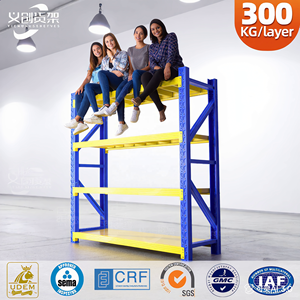
Manufacturer Direct Warehouse Light Middle Storage Industrial Racks
Recommended for cartons, spare parts, small components and multi-SKU storage where fast access and a clean shelf profile matter. A practical factory-direct option for distributors, workshops and 3PL overflow areas.
View product specification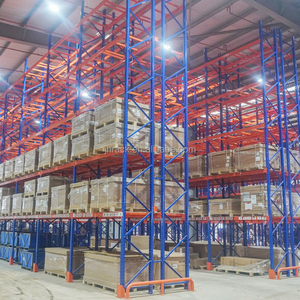
Heavy-Duty Corrosion Protected Pallet Racking Systems for Warehouse and Factory Storage
A strong recommendation for humid ports, food production, cold rooms and coastal warehouses. Surface protection and robust steel sections help extend service life where moisture, cleaning chemicals or temperature swings accelerate wear.
View product specification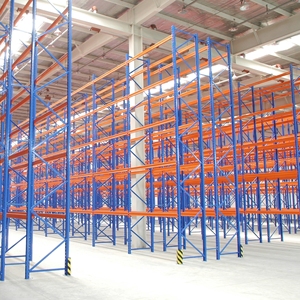
Low Price Custom 2-6 Level Heavy Duty Pallet Racking System
Best suited to warehouses that need flexible beam levels, mixed pallet heights and phased expansion. Custom 2–6 level configurations allow procurement teams to match capital spend to current stock profiles while preserving future reconfiguration options.
View product specification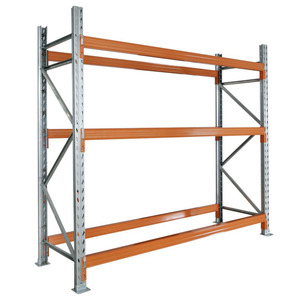
NOVA Boltless Heavy-Duty Q235 Steel Pallet Racking System
Recommended when installation speed and modularity are critical. Boltless assembly reduces site labor, supports rapid warehouse ramp-up and makes future adjustment easier for fast-growing distributors and e-commerce fulfillment operators.
View product specification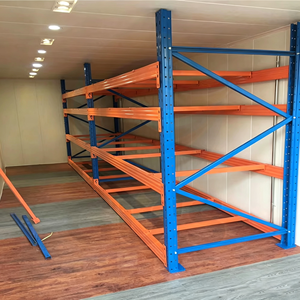
Massive Storage Selective Pallet Racking System
A high-selectivity workhorse for warehouses with varied SKUs and direct forklift access requirements. Selective racking supports FIFO discipline, fast picking and straightforward inspection — often the safest first investment for mixed inventory.
View product specification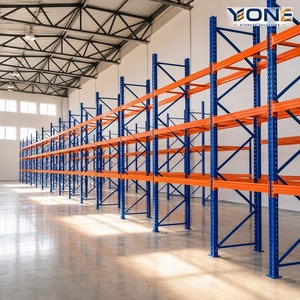
Q235B Heavy-Duty Selective Steel Pallet Racking
Recommended as a durable standard for factories, distribution centers and spare-parts warehouses. Q235B steel selective racking balances structural strength, beam adjustability and predictable procurement cost for repeatable multi-bay projects.
View product specification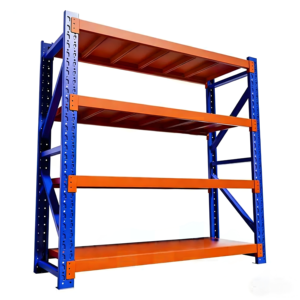
Customized 4-Tier Steel Storage Shelving with Corrosion Protection
A practical choice for retail backrooms, workshops, offices and garage storage where four-tier access and protected surfaces are required. Good for buyers consolidating small-to-medium storage needs into one repeatable shelving specification.
View product specification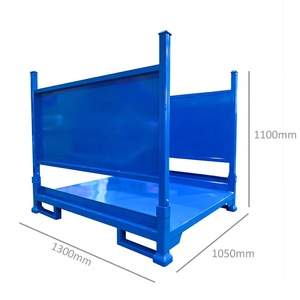
Stackable Collapsible Fabric Roll Storage Rack
Recommended for textile, upholstery, packaging and roll-goods warehouses that need stackable capacity and collapsible return logistics. The format improves cube utilization and reduces empty-space cost when racks are not in active use.
View product specificationProcurement Intelligence
Industrial Shelf Rack Procurement Outlook: 2026–2030
Industrial shelf racks are no longer a commodity line item. Buyers now evaluate total landed cost, seismic documentation, cold-chain performance, installation labor, spare-parts availability and the ability to retrofit automation. A China manufacturer and wholesaler with engineering depth can reduce project friction — but only when the specification is precise.
Potential capacity gain from high-density layouts versus conventional racking on the same footprint.
Freezer-ready storage specifications for fruit, seafood, meat and dairy export cold chains.
Engineering reference for static steel racking, with seismic design coordinated to local codes.
Technical support languages: English, Spanish and Portuguese for cross-border projects.
For procurement teams, the strongest information gain comes from comparing the cost of steel with the cost of unused cube, unsafe inspection findings, delayed installation and lost sales. A racking system that costs slightly more per bay but improves selectivity, reduces aisle waste or allows a future mobile upgrade may deliver a materially lower lifetime cost. This is why serious buyers request layout drawings, load calculations, floor tolerances, installation method statements and inspection documentation — not only a price per kilogram.
Future Procurement Trends
3 Purchasing Shifts Reshaping Industrial Shelf Rack Buying
Procurement is moving from “lowest quoted price” toward “lowest risk-adjusted cost.” These shifts favor manufacturers that can support engineering decisions, export documentation and long-term system expansion.
Total Landed Cost Becomes the Default Metric
Buyers increasingly compare steel cost, container loading efficiency, customs documentation, installation time, damage risk and future reconfiguration in one model. A cheaper rack that slows installation or blocks cube can cost more over five years than a better-engineered system. Procurement teams should request packing plans, anchor requirements, beam-level drawings and a bill of materials that can be audited before purchase order approval.
Cost EngineeringAutomation-Ready and Retrofit-First Planning
New warehouses are increasingly designed for a future shuttle, mobile racking or semi-automated storage phase. Modular platforms such as P90 and MOVO allow buyers to begin with selective racking and upgrade density without abandoning the original investment. The procurement question is no longer only “What is the rack capacity today?” but “What can this bay become in three years?”
Scalable CAPEXCompliance Evidence and Climate-Specific Design
Seismic zones, humid ports, freezer rooms and fire-access corridors each change the specification. Buyers are asking for calculations, load signage, inspection records and alignment with local codes such as NBR 15524, NCh 433, E.030 and NSR-10. A wholesaler without engineering support creates hidden risk for the importer, installer and end user.
Risk ControlProduct Development Trends
What the Next Generation of Industrial Shelf Racks Must Deliver
Racking innovation is being driven by land scarcity, labor cost, cold-chain growth and stricter safety documentation. The next procurement cycle will reward systems that combine steel efficiency with operational intelligence.
High-Density Without Losing Access
Selective racking remains essential for mixed SKUs, but density pressure is increasing the use of mobile racking, push-back, shuttle-ready and narrow-aisle configurations. MOVO mobile racking opens one working aisle exactly where the forklift needs it, supporting 100% pallet accessibility while reducing wasted aisle volume — especially valuable in refrigerated buildings where every cubic meter of chilled air has an energy cost.
Cold-Chain and Corrosion Performance
Freezer and chilled warehouses demand careful steel specification, surface protection and consideration of brittle fracture risk at low temperature. For humid coastal or food-processing sites, corrosion-protected racking protects the asset lifecycle. Buyers should specify environment, cleaning regime and temperature range at the quotation stage, not after installation.
Digital Documentation and Semi-Automation Readiness
Modern buyers want more than steel: they want load tables, inspection points, spare-part lists and handover packs that support safety audits. Racking is also being planned as the physical layer for future semi-automated storage machines. A supplier that can document the system today is better positioned to support mechanization, WMS integration and capacity upgrades tomorrow.
Company Advantages
Why Real Nice Racks Is a Practical China Manufacturing & Wholesale Partner
Real Nice Racks combines export-oriented manufacturing with warehouse storage engineering. The advantage is not only product range — it is the ability to support layout decisions, compliance expectations and lifecycle service across demanding markets.
Factory-Direct Manufacturing and Export Packing
As a China industrial shelf rack manufacturer and wholesaler, Real Nice Racks supports factory-direct procurement, controlled steel production and export packing for container shipment. That matters for buyers who need repeatable quality, consolidated purchasing and predictable delivery to ports such as Santos, Callao, San Antonio, Buenos Aires, Cartagena, Guayaquil and Montevideo.
China DirectEngineering Standards and Seismic Design
Static steel racking is designed with reference to EN 15512, floor tolerances to EN 15620, operation and inspection guidance to EN 15635, and seismic design methodology to FEM 10.2.08 / EN 16681. Projects can be coordinated with local requirements such as ABNT NBR 15524, NCh 433, E.030, NEC-SE-DS and NSR-10, with documentation available for review by licensed local engineers when required.
ComplianceFull Product Ecosystem: P90, MOVO and Shelving
The range covers pallet racking, industrial shelving, cantilever, pull-out units, mezzanines, semi-automated storage machines and MOVO mobile pallet racking. The P90 platform supports high-density upgrades and can deliver up to 20% more storage capacity within the same footprint in suitable projects. This allows buyers to source one coordinated family of systems instead of mismatched components.
One PartnerLifecycle Support and Multilingual Communication
Projects follow a defined path: site survey and data analysis, layout and structural design, manufacturing, export packing, shipment, supervised installation and handover with load signage and inspection documentation. Technical support is available in English, Spanish and Portuguese, with after-sales inspection guidance, damage repair planning and capacity upgrades.
LifecycleEngineering & Compliance
Safety You Can Document — Not Just Promise
Procurement teams, insurers and facility owners increasingly require proof. For industrial shelf racks, the evidence chain includes design assumptions, steel specification, floor condition, anchor design, beam load tables, installation records and post-handover inspection intervals.
Every serious quotation should state the design basis. For export projects, this means aligning the racking calculation with European practice and local code requirements. Load signage and capacity tables should be delivered with the system, because the safest rack is the one operated within its documented limits.
- EN 15512 reference for adjustable steel pallet racking design
- FEM 10.2.08 / EN 16681 seismic methodology for static racking
- EN 15620 floor tolerances and EN 15635 use and inspection guidance
- Local coordination with NBR 15524, NCh 433, E.030, NEC-SE-DS and NSR-10
- Supervised installation, load signage and documented handover

Engineered racking is a system: steel, floor, anchors, installation, inspection and operator training must work together.
Project Workflow
From Site Survey to Long-Term Support
A reliable China wholesale relationship is built on engineering discipline. This five-stage approach keeps budgets comparable and timelines realistic, especially for multi-country rollouts.
Analyse
Warehouse survey, SKU profile, pallet data, throughput, floor condition and seismic zone review.
Design
Layout options, capacity comparison, beam levels, structural calculations and bill of materials.
Manufacture
Steel production, quality control, surface protection and export packing for container efficiency.
Deliver & Install
Shipment to the nearest port, customs-ready documentation and supervised installation.
Support
Inspection guidance, damage repair planning, spare parts and capacity-upgrade advice.
Common Procurement FAQ
Industrial Shelf Rack Buying Questions Answered
These are the questions most frequently raised by importers, distributors, project contractors and warehouse owners comparing China industrial shelf rack suppliers.
How do I choose between selective, boltless, mobile and corrosion-protected racking?
Start with SKU count, pallet selectivity, handling equipment, load per pallet, clear height, floor condition and climate. Selective racking is best for high SKU variety and direct access. Boltless systems speed installation and future adjustment. Mobile racking increases density when aisle space is the bottleneck. Corrosion-protected racking is appropriate for humid, coastal, food-processing or cold-chain environments. A proper recommendation should compare these options using the same warehouse data.
Can the racking be designed for seismic zones and local building codes?
Yes. For seismic regions, racking should be calculated with reference to FEM 10.2.08 methodology and EN 16681, then coordinated with local requirements where applicable. Projects in Chile may reference NCh 433 and NCh 2369 principles, Peru E.030, Ecuador NEC-SE-DS and Colombia NSR-10. Base plates, anchors, bracing and beam connectors must be specified for the site’s seismic zone and soil conditions. Final calculations can be reviewed with a locally licensed structural engineer when required.
Do you supply racking for cold storage and freezer warehouses?
Yes. Cold storage pallet racking, mobile racking and high-density systems can be specified for chilled and frozen environments down to approximately -30°C. This suits fruit, seafood, meat and dairy export hubs. Mobile racking such as MOVO is especially relevant because reducing aisle volume also reduces the volume of air that must be refrigerated, supporting energy efficiency in cold-chain operations.
How are projects delivered and installed across export markets?
Each project follows a defined lifecycle: site survey and data analysis, layout and structural design, manufacturing, export packing, shipment to the nearest port, supervised installation, and handover with load signage and inspection documentation. After-sales services can include periodic rack inspection, damage repair planning and capacity upgrades. Early sharing of port location, container constraints and site access helps avoid later delays.
Can existing warehouses be upgraded instead of building new?
Yes. Retrofit projects typically combine re-layouts, higher-density systems such as drive-in, push-back, shuttle or mobile racking, mezzanine floors and narrow-aisle configurations. High-density pallet racking can deliver up to 20% more storage capacity within the same building footprint in suitable projects, avoiding the cost and delay of new construction. The first step is a measured survey of the existing floor, clear height and fire-access constraints.
What information should I provide to get an accurate quotation?
Provide warehouse location, floor plan, clear height, pallet dimensions, load per pallet, number of pallet positions, forklift or AGV type, SKU velocity, temperature range, floor condition and any local code requirements. For retrofit projects, include photos of existing racking and a damage report. The more complete the data, the faster the manufacturer can return a layout, load calculation and export-ready quotation instead of a generic price list.
Request a Technical Proposal
Turn Your Pallet, Load and Warehouse Data Into a Verified Racking Layout
Share your building dimensions, pallet profiles, target capacity and operating environment. The engineering team can recommend selective, boltless, high-density, cold-storage or corrosion-protected systems — with export packing, compliance documentation and lifecycle support planned from the start.
Inquire Now