Top China Industrial Style Shelving Manufacturers & Exporters
A procurement white paper for importers sourcing powder-coated steel shelving, heavy-duty pallet racking and warehouse storage systems from China — engineered for seismic, cold-chain, high-density and automation-ready projects.
8 Industrial Style Shelving Products Selected for Export Buyers
These products represent the practical core of the China industrial style shelving category: selective pallet racking, adjustable heavy-duty racking, light-duty multi-layer shelving and high-load warehouse systems. Use this shortlist to compare load capacity, height, coating durability and container-loading efficiency before requesting a layout.
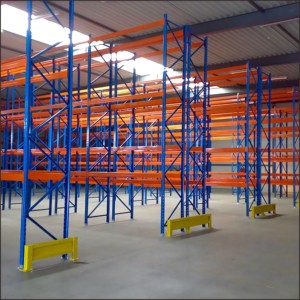
HONGYUN Heavy Duty 6 m High Metal Pallet Rack
Five-layer anti-rust iron shelving for warehouse and garage storage. A strong option for distributors that need tall pallet positions, factory-direct packing and stable heavy-load performance.
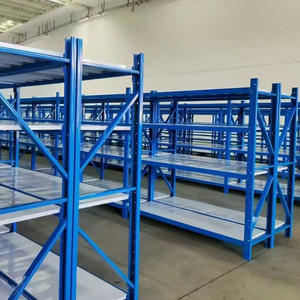
4-Layer Light Duty Warehouse Storage Racks
Factory-made 4-layer steel shelving for cartons, spare parts and light SKU picking. Suited to e-commerce backrooms, retail distribution and small-parts storage.
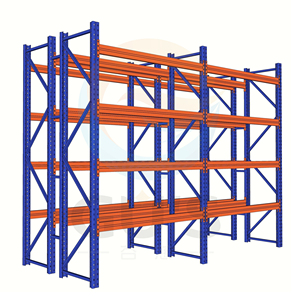
Industrial Heavy Duty Pallet Racking System
Selective pallet racking for industrial warehouses, with adjustable beams and pallet support. Designed for mixed-SKU, high-turnover storage where direct access matters.
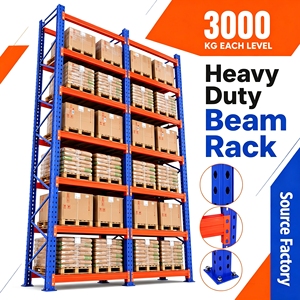
Factory Direct 3000 kg Steel Pallet Rack System
High-load steel pallet racking rated to 3000 kg for heavy goods. A strong fit for manufacturing, building materials and export consolidation warehouses.
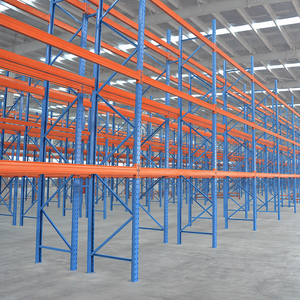
Heavy Duty Adjustable Steel Warehouse Racking
Cold-rolled steel racking with powder coating and strong load capacity. Adjustable beam levels support changing pallet profiles and seasonal stock variance.
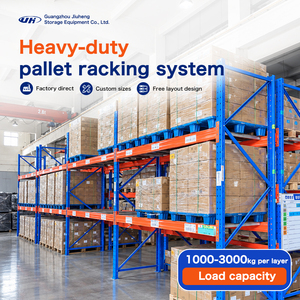
Industrial Steel Heavy Duty Pallet Racking Manufacturer
Adjustable-beam pallet racking with high load capacity and export manufacturer support. Suitable for project buyers needing layout review and mixed-container loading.
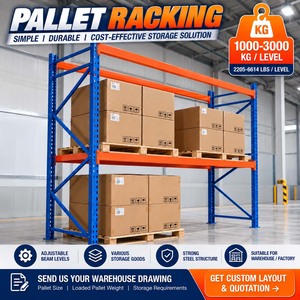
Wholesale Heavy Duty Pallet Racking up to 3000 kg
Wholesale pallet racking up to 3000 kg per level for industrial warehouse storage. A practical choice for distributors, contractors and multi-site buyers.
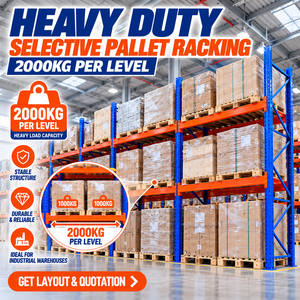
2000 kg Per Level Selective Pallet Racking System
Selective pallet racking rated at 2000 kg per level, balancing selectivity, density and cost. Ideal for multi-SKU warehouses that require direct pallet access.
What Makes Top China Industrial Style Shelving Manufacturers & Exporters Different?
The term “industrial style shelving” often starts as a visual specification — exposed steel uprights, powder-coated beams, visible load labels and a functional warehouse aesthetic. In export procurement, however, style is only the visible layer.
The real differentiator is the engineering discipline behind the finish: steel grade, upright profile, beam section, welding consistency, powder-coat adhesion, load signage, packaging and documentation. That is why serious buyers compare China industrial style shelving manufacturers and exporters on total project value rather than FOB price alone.
A capable China export partner should translate warehouse data — pallet dimensions, load per level, clear height, forklift type, floor tolerance, seismic zone, humidity and temperature — into a safe, buildable layout. The supplier should also make the commercial route transparent: factory-direct pricing, container loading plan, spare-parts list, installation manuals and load charts. Without these, a low unit price can become a high total landed cost.
- Heavy-duty options from 2000 kg to 3000 kg per level, with 6 m high pallet racking and 5-layer configuration.
- Engineering references including EN 15512, FEM 10.2.08 / EN 16681 and local seismic codes.
- Cold-chain supply for chilled and freezer warehouses down to approximately -30 °C.
- OEM/ODM production, multilingual documentation and export-safe packing.

Industrial style shelving becomes a strategic asset when layout, load capacity and export documentation are engineered together.
Three Ways Industrial Style Shelving Creates Measurable Procurement Value
Buyers do not purchase steel profiles in isolation. They purchase storage capacity, operating safety, installation speed and future flexibility. These three principles separate a commodity supplier from a top-tier China exporter.
Aesthetic system, engineered core
Industrial style shelving should look clean, but it must first behave predictably under load. Upright thickness, beam locking, base plate design and bracing determine whether a rack remains stable under forklift impact, floor settlement and seismic events. A credible China manufacturer will provide capacity tables, load signage and material specifications — not only product photos.
Modularity is the real cost driver
Modular beams, uprights and accessories reduce spare-part complexity and make future reconfiguration possible. For distributors and 3PL operators, a modular China-made racking system can be shipped as mixed containers, installed in phases and expanded without replacing the entire installation. This is a major advantage over one-off custom structures.
Documentation turns a product into a project
Export buyers increasingly need structural calculations, load diagrams, installation drawings, inspection records and safety labels. These documents reduce approval risk with landlords, insurers and local engineers. For Chinese exporters, documentation quality is also a trust signal: it shows that the factory understands the project context, not just the bill of materials.
Recommended Industrial Shelving Configurations by Warehouse Type
Different operations need different combinations of selectivity, density, height and handling speed. The most effective procurement decision is to match the system to the real operating profile before comparing quotations.
3PL & e-commerce fulfillment
Use selective pallet racking for palletised inventory, 4-layer light-duty shelving for carton picking and mezzanine floors where vertical space is available. Prioritise direct access, clear labelling and fast reconfiguration.
Cold chain & food export
Specify cold-store pallet racking, anti-corrosion coating and mobile racking where refrigerated volume must be reduced. Mobile systems such as MOVO open only the aisle required, cutting the air volume that must be chilled.
Manufacturing & heavy goods
Choose 2000 kg to 3000 kg per level heavy-duty racking, reinforced beams and pull-out units for dies, moulds and spare parts. Load signage and inspection access should be planned at the design stage.
Wholesalers & distributors
Combine 4-layer light-duty racks with adjustable heavy-duty racking for mixed pallet and carton storage. Factory-direct China supply works well here because modular components can be consolidated into efficient container loads.
Future Procurement Trends for China Industrial Style Shelving, 2025–2030
Buyer behaviour is shifting from “lowest FOB quote” to “lowest risk, highest lifecycle value.” These eight trends should be written into RFQs and supplier scorecards for the next planning cycle.
1. Total landed cost replaces FOB price
Buyers now compare container fill rate, steel gauge, coating warranty, installation time and spare-part availability. A lower unit price can lose once freight, damage and downtime are included.
2. Structural documentation becomes non-negotiable
Landlords, insurers and local engineers increasingly ask for load calculations and seismic review. Exporters that provide documentation in English, Spanish and Portuguese will win more projects.
3. Cold-chain capability moves into the mainstream
Chilled and freezer warehouses require compatible steel, coating and layout. Mobile racking and high-density systems reduce refrigerated air volume and energy cost.
4. Automation-ready interfaces are specified earlier
Even manual warehouses should be designed for future shuttle, AMR or semi-automated storage. Beam tolerances, floor flatness and control interfaces should be considered at RFQ stage.
5. High-density retrofit gains priority over new build
Where land and construction costs are high, buyers prefer re-layout, drive-in, push-back or mobile racking. High-density pallet racking can unlock up to 20% more capacity on the same footprint.
6. Steel traceability and coating warranty matter
Anti-rust performance depends on pre-treatment, powder thickness and curing. Buyer scorecards should request steel certificates, coating test data and a clear warranty statement.
7. Multilingual O&M and training are part of the product
Installation manuals, load charts, inspection schedules and operator training reduce project risk. Language coverage in English, Spanish and Portuguese supports regional rollouts.
8. Container optimisation becomes a design task
Top exporters design packaging and component lengths around 20 ft and 40 ft containers to reduce freight waste. Mixed loading plans can significantly lower cost per pallet position.
High pallet racking options for vertical capacity
Heavy-duty load capacity per level
Freezer-ready cold storage configurations
Potential capacity gain through high-density retrofit
Product Development Trends Shaping the Next Generation of Industrial Shelving
China’s shelving manufacturers are moving beyond commodity fabrication. The next competitive frontier is modularity, coating durability, automation readiness and lifecycle service.
Mobile and high-density racking
Mobile bases, rail-guided systems and high-density selective layouts help buyers store more pallets per cubic metre. For cold stores and land-constrained warehouses, density is now a board-level metric.
Powder coating and anti-rust engineering
Humid ports, unheated warehouses and cold-chain environments demand better surface preparation. Buyers are requesting coating thickness, salt-spray data and scratch-resistant finishes for long-term appearance.
Automation-ready steel structures
Warehouse layouts are being designed with future shuttle systems, AMRs and semi-automated storage in mind. Consistent upright spacing, floor tolerance planning and beam accuracy make later automation less disruptive.
Modular retrofit and circular steel
Retrofit projects reuse existing buildings and often extend the life of steel structures. Modular components, replaceable beams and documented load upgrades support circular-economy procurement and reduce construction waste.
What a Top China Industrial Shelving Export Partner Should Prove
The strongest China industrial style shelving manufacturers and exporters combine factory production with engineering review, export logistics and lifecycle support. The following capabilities reflect the storage-engineering practice behind Real Nice Racks LLC’s international projects and should be used as a benchmark when vetting any China-based manufacturing partner.
Seismic-ready design support
Bracing, anchors and base plates should be calculated for the site’s seismic zone and soil type. Reference methodologies include FEM 10.2.08 / EN 16681, with local coordination for NCh 433 and NCh 2369 in Chile, E.030 in Peru, NEC-SE-DS in Ecuador and NSR-10 in Colombia.
Cold-chain and freezer capability
Chilled and frozen systems should be specified for temperatures down to approximately -30 °C. This suits fruit, seafood, meat and dairy export hubs. Mobile racking reduces the volume of air that must be refrigerated, improving energy efficiency.
Engineered standards and load signage
Static steel racking should align with EN 15512, floor tolerances per EN 15620 and inspection guidance per EN 15635. In Brazil, projects can follow ABNT NBR 15524 for selective pallet racking. Load signage, capacity tables and inspection records should be supplied with every installation.
Lifecycle service, not one-time shipment
A serious export partner supports site survey, layout design, supervised installation, rack inspection, damage repair and capacity upgrades. This lifecycle approach lowers downtime and protects the original capital investment.
Multilingual project communication
Technical support in English, Spanish and Portuguese helps procurement, engineering and installation teams work from the same drawings. Clear communication reduces change orders, installation errors and spare-part mistakes.
Factory-direct export control
Steel traceability, weld inspection, coating checks, pre-assembly and container loading photos should be routine. Export packing must protect beams, uprights and accessories during sea freight and inland transport.
How to Verify a China Industrial Shelving Exporter Before You Place a Deposit
A good supplier can show you product photos. A great supplier can show you how the product will perform in your building, under your loads, in your climate and through your customs process.
Ask for material certificates, coating data, load calculations, installation drawings and a packing plan. Confirm who reviews seismic requirements and who signs off on final capacity. If the project includes cold storage, verify compatible steel and coating performance at low temperature. If the project is a retrofit, request a re-layout study rather than a simple product quotation.

Mobile racking opens only the aisle needed — a major advantage in refrigerated warehouses.

High-density layouts can add capacity without new construction, provided structural limits are checked.
From Inquiry to Long-Term Support: A Five-Stage Export Workflow
A clear process keeps budgets predictable and timelines realistic, even for multi-country rollouts and mixed-container projects.
Analyse
Site survey, SKU and throughput data, floor condition, clear height and seismic assessment.
Design
Layout options, beam and upright selection, load calculations and capacity comparison.
Manufacture
Quality-controlled steel production, powder coating, pre-assembly and dimensional checks.
Export
Protective packing, container loading plan, shipping documents and delivery to port.
Support
Supervised installation, load signage, rack inspection, damage repair and capacity upgrades.
Common Questions from Industrial Shelving Buyers Sourcing from China
These are the questions procurement and engineering teams ask most often when comparing China industrial style shelving manufacturers and exporters.
Can you design racking for seismic zones in Chile, Peru, Ecuador, Colombia and other markets?
Yes. Racking for seismic regions can be calculated with reference to FEM 10.2.08 seismic methodology and EN 16681, and coordinated with local requirements such as NCh 433 and NCh 2369 in Chile, E.030 in Peru, NEC-SE-DS in Ecuador and NSR-10 in Colombia. Base plates, anchors, bracing and beam connectors are specified for the site’s seismic zone and soil type. Final calculations should be reviewed with a locally licensed structural engineer when required by the project authority.
Which design standards do your shelving and racking systems follow?
Static steel racking should be designed in line with EN 15512, with floor tolerances per EN 15620, operation and inspection guidance per EN 15635, and seismic design per FEM 10.2.08 / EN 16681. In Brazil, selective pallet racking projects can be aligned with ABNT NBR 15524. Load signage, capacity tables and inspection records should be supplied with every installation so that warehouse teams can operate the system safely.
Do you supply cold storage and freezer racking?
Yes. Cold storage pallet racking, mobile racking and high-density systems can be specified for chilled and frozen environments down to approximately -30 °C. This is suitable for fruit, seafood, meat and dairy export hubs. Mobile racking is especially effective in cold stores because it reduces the volume of air that must be refrigerated, improving energy efficiency and pallet density inside the same insulated envelope.
How are projects delivered and installed across export markets?
Each project typically follows a defined lifecycle: site survey and data analysis, layout and structural design, manufacturing, export packing, shipment to the nearest port, supervised installation, and handover with load signage and inspection documentation. After-sales services can include periodic rack inspection, damage repair, spare-part supply and capacity upgrades. For multi-country buyers, phased delivery and mixed-container loading can be planned.
Can you upgrade an existing warehouse instead of building a new one?
Yes. Retrofit projects often combine re-layouts, higher-density systems such as drive-in, push-back, shuttle or mobile racking, mezzanine floors and narrow-aisle configurations. High-density pallet racking can deliver up to 20% more storage capacity within the same building footprint, avoiding the cost and delay of new construction. A retrofit study should confirm floor loading, clear height, fire strategy and forklift access before final design.
How can buyers request technical information or an export quotation?
Procurement and engineering teams can use the Inquire Now button to start a technical review. Please prepare the warehouse location, floor plan, clear height, pallet dimensions, load per pallet, handling equipment type, seismic zone and temperature requirements. Product catalogues, load charts and technical documentation can then be matched to the project. For reference, export engineering support is available at [email protected].
Request a Layout Review, Load Check and Export Quote
Share your warehouse data and product requirements with our export engineering team. We will help you compare selective racking, heavy-duty shelving, high-density systems and cold-store options against your load profile, building constraints and growth plan.
Helpful details to include: warehouse location, floor plan, clear height, pallet size and weight, forklift type, seismic zone, temperature range and target shipment date.