8 Wholesale Pallet Racking Products for Warehouse Buyers
Compare heavy-duty storage shelves, selective pallet racking and factory-direct racking systems. Every product below keeps its original URL so buyers can move from research to technical enquiry without losing context.
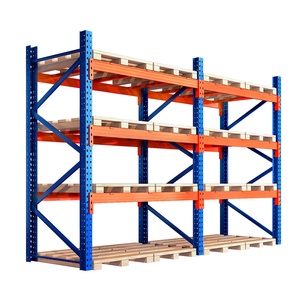
Industrial Heavy Duty Storage Shelves System Stacking Units Metal Rack Warehouse Steel Pallet Racking
For high-turnover pallets where robust uprights, beam safety locks and clear load signage are essential.
View product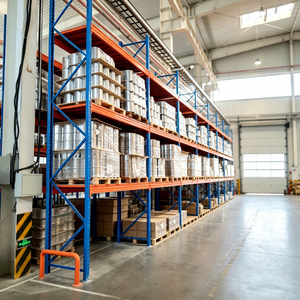
Practical Heavy Load Pallet Shelving Frame for Factory Warehouse Logistics Park and Bulk Raw Material Storage Pallet Rack
A practical storage frame for factories, logistics parks and raw-material stores that need fast pallet access.
View product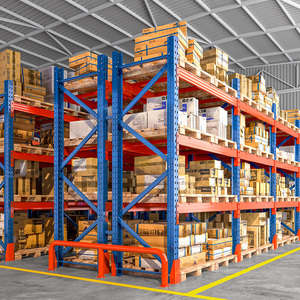
Heavy Duty Industrial Steel Storage Shelves 5 Layer Adjustable Rack System with Galvanized Surface for Warehouse Pallet Racking
Galvanized adjustable racking for humid, coastal or cold-chain environments where surface protection matters.
View product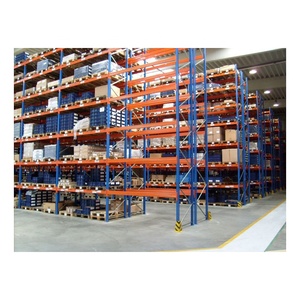
Customized Heavy Duty Pallet Racking System Industrial Warehouse Storage Rack Adjustable Steel Selective Pallet Rack
Custom selective racking for mixed SKUs, fast item access and warehouse retrofit projects.
View product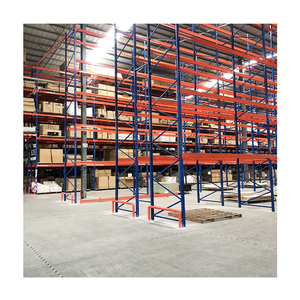
Heavy Duty Warehouse Pallet Rack Industrial Storage Shelf Metal Racking Systems Boltless Steel Shelving
Boltless steel racking for faster installation, simpler adjustment and flexible storage layouts.
View product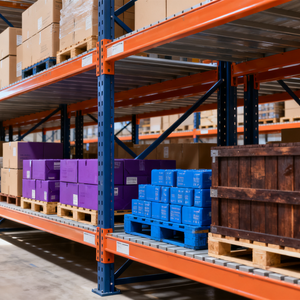
High-Capacity 5-Layer Durable Iron Steel Heavy Duty Corrosion Protection Pallet Rack for Warehouse Distribution Center Pallet
Corrosion-protected five-layer storage for distribution centres, coastal warehouses and export facilities.
View product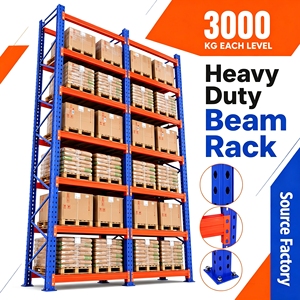
Factory Direct 3000kg High Load Metal Pallet Racking Industrial Steel Pallet Rack System for Warehouse Storage Heavy Goods
Factory-direct heavy load racking for buyers comparing capacity, price and lead time for demanding goods.
View product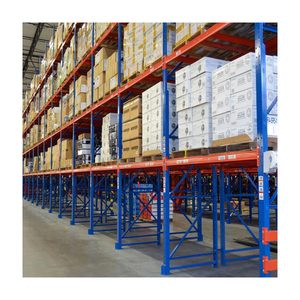
Wholesale Price Heavy Duty Storage Racks Warehouse Stacking Racks Selective Steel Pallet Rack Heavy-Duty Racking for Sale
Wholesale selective racking and stacking racks for buyers balancing budget, selectivity and capacity.
View productWhy Buyers Compare China Pallet Racking Exporters & Wholesalers Before Requesting a Quote
Pallet racking procurement is rarely a simple price comparison. Commercial buyers are usually balancing storage density, pallet selectivity, installation speed, local code compliance, export logistics and long-term inspection costs. A low unit price can become expensive if the beam capacity, upright section, floor tolerance or seismic bracing does not match the real warehouse brief. That is why the strongest enquiries begin with pallet dimensions, load per pallet, forklift type, clear height and the target number of pallet positions — not with a generic racking photo.
Real Nice Racks LLC supports this process with engineered storage planning and export-oriented supply. Every layout starts with real data: pallet profiles, SKU velocity, handling equipment, clear height and seismic zone. Systems are designed in line with recognised racking standards, including EN 15512 principles for steel pallet racking, FEM 10.2.08 / EN 16681 seismic methodology, EN 15620 floor tolerance guidance and EN 15635 inspection practice. Where required, local code references such as ABNT NBR 15524, NCh 433, NCh 2369, E.030, NEC-SE-DS and NSR-10 are coordinated with licensed local engineers.
For wholesale buyers, the practical advantage is an export-ready supplier who understands both factory economics and engineering risk. Product catalogues, structural calculations, load signage and installation records can be supplied together, so procurement teams can compare offers with fewer hidden assumptions. Technical support is available in English, Spanish and Portuguese, which reduces friction for international projects and multi-country rollouts.
- Structural calculations and load signage supplied with engineered projects.
- Support in English, Spanish and Portuguese for cross-border purchasing teams.
- Scalable systems from manual selective racking to high-density and semi-automated storage.

Warehouse pallet racking planned around pallet data, forklift access and long-term inspection.
What a China Pallet Racking Wholesaler Should Provide Beyond the Product List
A reliable exporter should help buyers reduce engineering uncertainty, control total landed cost and protect the warehouse investment after delivery.
Engineering-Led Manufacturing
P90-style modular racking, structural calculations and load signage help align factory production with real warehouse capacity requirements.
Seismic & Cold-Chain Capability
Base plates, anchors, bracing and finishes can be specified for seismic zones, humid climates and freezer stores down to approximately -30°C.
Wholesale & Export Coordination
Factory-direct supply, protective export packing and shipment planning to ports such as Santos, Callao, San Antonio, Buenos Aires and Cartagena.
Lifecycle Project Support
Survey, layout, manufacturing, supervised installation, rack inspection, damage repair and capacity upgrades for the life of the system.
Match Pallet Racking to the Warehouse’s Real Storage Intent
Use these recommendation patterns to narrow the shortlist before requesting a formal layout and quotation.
Selective Pallet Racking for Fast Access
Best for distribution centres with many SKUs, frequent picking and the need to access every pallet directly. Selective racking is the most flexible starting point and can be retrofitted as volumes change.
High-Density & Mobile Racking for Capacity
Ideal for cold stores, export warehouses and urban logistics sites where building space is expensive. Mobile pallet racking opens one aisle on demand while keeping 100% direct access to every pallet.
Factory-Direct Heavy-Duty Racking for Loads
Suitable for factories, logistics parks and raw material stores handling dense pallet loads. Confirm upright capacity, beam deflection, decking type and forklift impact protection before ordering.
Pallet Racking Procurement Trends Wholesale Buyers Should Plan For
Buyer intent is shifting from lowest unit price to documented total cost of ownership, faster reconfiguration and stronger support for cold, high-density and automation-ready warehouses.
1. Total Cost of Ownership Beats Lowest Quote
Freight, export packing, installation supervision, inspection and future reconfiguration now sit inside the buying decision, not outside it.
2. Higher Density in Land-Constrained Hubs
Warehouse rents and land costs push buyers toward drive-in, push-back, shuttle and mobile systems that can add up to 20% more capacity on the same footprint.
3. Seismic Documentation Becomes a Requirement
Projects in Chile, Peru, Ecuador and Colombia increasingly require seismic calculations, anchor specifications and local engineer review before approval.
4. Cold-Chain Expansion and Energy Efficiency
Freezer-ready finishes and mobile racking reduce refrigerated volume, helping food, seafood, fruit and dairy exporters control energy costs.
5. Automation-Ready Racking
Buyers now ask whether selective or high-density racking can later integrate with shuttles, AGVs, semi-automated storage machines or warehouse controls.
6. Supplier Consolidation and Export Service
Procurement teams prefer one partner for racking, shelving, mezzanines and technical documentation, supported in English, Spanish and Portuguese.
Product Development Trends: Where Pallet Racking Is Heading
The next generation of warehouse racking will be judged on more than steel weight. Buyers will look for modularity, protection, data-ready safety and lower material use per pallet stored.
High-Strength Steel & Galvanized Finishes
Higher-strength sections and galvanized surfaces help reduce corrosion risk in coastal, humid and freezer environments while supporting efficient material use.
Modular Platforms Such as P90
One platform can support selective, drive-in, push-back, shuttle and mobile configurations, making it easier to reconfigure storage as SKU profiles change.
Digital Safety and Inspection Records
Load signage, damage tags, inspection schedules and handover documents are becoming part of the product, not paperwork added after installation.
Sustainable, Automation-Ready Design
Less steel and less refrigerated air per pallet, combined with future compatibility for automation, supports sustainability and long-term operational flexibility.
How to Vet a China Pallet Racking Exporter Before You Buy
Use a technical checklist rather than a catalogue-only comparison. The right supplier should be able to explain how the racking will be designed, shipped, installed and inspected.
- Ask for structural calculations, load capacity tables and load signage, not just product photos.
- Confirm which standards and local code references apply to your seismic zone, floor slab and building height.
- Share pallet dimensions, load per pallet, SKU velocity, forklift type and clear height in the first RFQ.
- Compare capacity per square metre, capacity per pallet position and lifecycle cost, not only price per tonne.
- Verify export packing, port planning, installation supervision and post-installation inspection support.

Supervised installation and documented handover reduce project risk for wholesale buyers.
Frequently Asked Questions from Pallet Racking Buyers
These answers address commercial, technical and logistics questions commonly raised during supplier selection.
What information should I send to receive an accurate pallet racking quotation?
Send the warehouse location, floor plan or dimensions, clear height, pallet size, load per pallet, target number of pallet positions, forklift or handling equipment, seismic zone and required delivery port. If the project is a retrofit, include existing racking details and any inspection reports. This allows the engineering team to recommend selective, drive-in, push-back, shuttle or mobile racking with realistic capacity and cost.
Can you design pallet racking for seismic zones in Chile, Peru, Ecuador and Colombia?
Yes. Racking for seismic regions can be calculated with reference to FEM 10.2.08 / EN 16681 and coordinated with local requirements such as NCh 433 and NCh 2369 in Chile, E.030 in Peru, NEC-SE-DS in Ecuador and NSR-10 in Colombia. Base plates, anchors, bracing and beam connectors are specified for the site’s seismic zone and soil conditions, with final calculations reviewed by a locally licensed structural engineer when required.
Which racking type is best: selective, drive-in, push-back, shuttle or mobile?
Selective racking is best when every pallet must be accessible and SKU counts are high. Drive-in and push-back racking increase density for slower-moving or homogeneous pallets. Pallet shuttle systems improve throughput in deep-lane storage. Mobile pallet racking is ideal for cold stores and land-constrained warehouses because it reduces aisle space while keeping direct access. The correct choice depends on SKU velocity, FIFO/LIFO rules, forklift type and target capacity.
Can your pallet racking be supplied for cold storage and freezer warehouses?
Yes. Cold storage racking, mobile racking and high-density systems can be specified for chilled and frozen environments down to approximately -30°C. This suits fruit, seafood, meat, dairy and pharmaceutical cold-chain hubs. Galvanized or corrosion-protected finishes may be recommended depending on humidity, washdown, salt exposure and freezer conditions. Mobile racking is especially effective because fewer open aisles reduce the volume of air that must be refrigerated.
How do you control quality and protect the finish during export shipping?
Export projects normally include quality-controlled steel production, protective packing, clear part labelling, loading plans and shipment documentation. Buyers should confirm the finish specification, touch-up materials, packing method and port of delivery. For humid or coastal destinations, galvanized surfaces or enhanced corrosion protection can be considered. Installation drawings and load signage help ensure the delivered system is assembled as designed.
What support is available after the racking is installed?
Lifecycle support can include periodic rack inspection, damage reporting, repair advice, replacement parts and capacity upgrades. Procurement teams should retain the load capacity tables, installation records and inspection documents as part of the warehouse safety file. If volumes or pallet profiles change, a re-layout study can identify whether selective, high-density or mobile racking can unlock additional capacity before a new building is considered.
Request a Pallet Racking Layout, Load Data & Wholesale Catalog
Share your pallet dimensions, clear height, target capacity and destination port. The team can then compare selective, high-density, heavy-duty and mobile racking options with export-ready documentation.