8 Storage Racking Products Recommended for Wholesale Buyers
These eight product families cover selective pallet racking, narrow aisle systems, heavy-duty tray racking, wire mesh decking, boltless shelving, carton flow roller shelves and light-duty multi-tier storage. They are practical starting points for distributors, 3PLs, factories, cold stores and e-commerce warehouses comparing landed cost per usable pallet position, not simply price per bay.
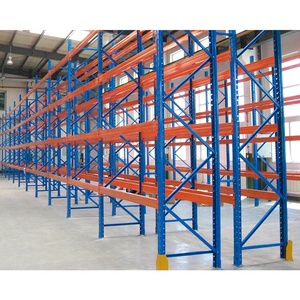
Customized Pallet Rack for Warehouse with Rack Safety
Project-specific selective racking configured around pallet overhang, beam levels, fork entry, aisle width, load signage and anchor details for tender submission.
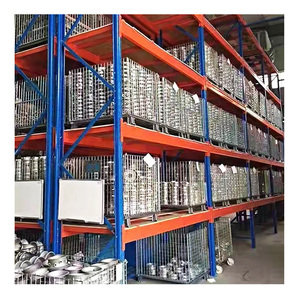
Narrow Aisle Selective Pallet Racking System
High-bay selective racking for very narrow aisle trucks, designed to raise pallet positions per square metre while preserving direct SKU access and picking flexibility.
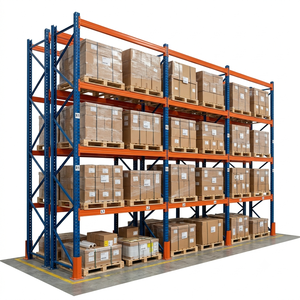
Heavy Duty Pallet Rack for Logistics Centers
For dense distribution centres and heavy pallet loads; uprights, beams, bracing and base plates are selected from load data, seismic zone and handling equipment.
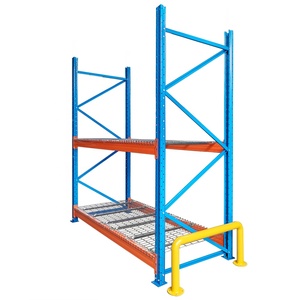
2500kg Wire Mesh Decking Pallet Shelving Rack
Wire mesh decking improves visibility, sprinkler performance, dust control and small-item retention while supporting stable loads across beam levels.
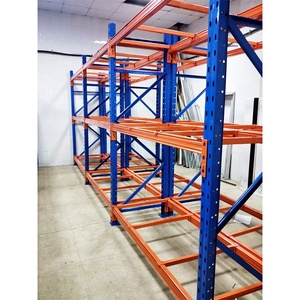
Adjustable Boltless Steel Pallet Storage Racking
Fast-assembly boltless shelving for spare parts, cartons, e-commerce buffers and mixed wholesale catalogues, with adjustable levels and simple reconfiguration.
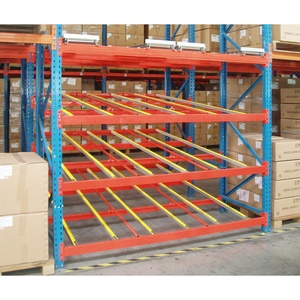
Warehouse Equipment Roller Shelves
Roller shelves support FIFO carton flow and reduce picker travel in high-SKU zones. Modular bays can integrate with shelving, mezzanine or pallet racking.
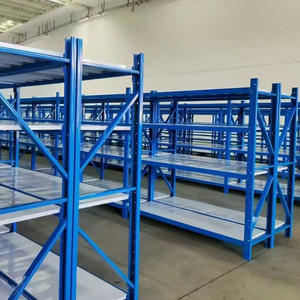
4-Layer Light-Duty Metal Warehouse Storage Racks
Four-layer steel racks for light cartons, archives, retail backrooms and garage storage; powder-coated finish and adjustable levels support resale programmes.
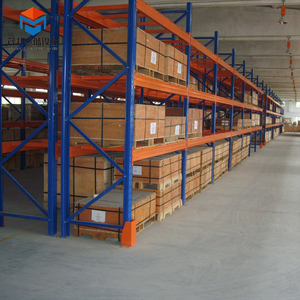
Industrial Heavy-Duty Tray Rack Pallet System
Heavy industrial tray racking for factories and distribution centres, suitable for pallets, dies, tooling and mixed loads with custom decking options.
Why Serious Buyers Shortlist a China Storage Racking Exporter & Wholesaler
Search demand for a China storage racking exporter now blends commercial intent with engineering due diligence. Buyers are not only asking who can supply steel uprights and beams; they are asking who can prove load capacity, export packing discipline, standards alignment and lifecycle support.
A credible wholesaler should behave less like a catalogue vendor and more like a document-and-logistics partner. The lowest FOB price per bay can hide oversized packaging, mixed finishes, non-standard clips, weak load signage or an installation sequence that creates re-work on site. The stronger comparison is landed cost per usable pallet position, including clear-height optimisation, aisle width, floor tolerance, seismic detailing, container fill and future reconfiguration.
That is where experience matters. A qualified export team reads pallet profiles, SKU velocity, forklift types, fire strategy, floor flatness, dock constraints and local building codes before quoting. It then aligns selective racking, narrow aisle, drive-in, push-back, shuttle, mobile racking, mezzanine and shelving under one structural logic — so expansion does not force a premature replacement cycle.

Potential storage capacity gain through high-density re-layout within the same footprint.
Freezer-ready racking options for cold-chain, food and agro-export warehouses.
Working languages for technical communication: English, Spanish and Portuguese.
Design reference for adjustable steel pallet racking, coordinated with local codes where required.
How Wholesale Buyers Will Purchase Storage Racking Next
Procurement is shifting from transactional bay pricing to evidence-based sourcing. The strongest suppliers will win by reducing technical uncertainty, not by making the loudest “cheapest racking” claim.
Data-rich RFQs replace generic enquiries
Buyers now send pallet dimensions, load per pallet, beam levels, clear height, floor tolerance, throughput, temperature range and handling equipment. Suppliers who can interpret the data quickly and return a layout with assumptions stated clearly will shorten the buying cycle.
Landed cost per pallet position
A low unit price can be expensive if upright lengths waste container space, accessories are packed separately or replacement parts are non-standard. Smart buyers compare steel weight, coating specification, container fill, installation hours, spare-parts availability and future reconfiguration potential.
Compliance evidence is part of procurement
Insurers, lenders and tender committees increasingly expect design assumptions, load signage, installation records and inspection guidance. References such as EN 15512, EN 15620, EN 15635, FEM 10.2.08, EN 16681 and local seismic codes influence supplier selection.
Automation-ready now, automated later
Few buyers automate the whole warehouse at once. Modular racking that can accept wire decking, labels, sensors, shuttle systems or future AGV/AMR interfaces lowers regret. The best time to plan that pathway is before the first upright is anchored.
What the Next Racking Cycle Will Be Built For
Racking development is being shaped by land constraints, cold-chain growth, seismic risk, labour availability and the need to service mixed pallet and carton profiles inside one building.
High-density hybrid systems
Narrow aisle, drive-in, push-back, shuttle and mobile racking are being combined with selective areas rather than used as standalone solutions. The goal is to match density to SKU velocity: fast movers stay selective, slow movers move into deep-lane or mobile storage.
Cold-chain and corrosion protection
Freezer warehouses, fruit export hubs, seafood processors and dairy distribution require finishes and details that tolerate condensation, washdown and low temperature. Galvanising, epoxy coatings, stainless options and correct drainage details can matter as much as load capacity.
Seismic-safe detailing
Base plates, anchors, bracing, beam connectors and impact protection are being specified from site-specific seismic and soil data. Documentation is becoming more important than generic “seismic-ready” wording, especially where local engineers must review final calculations.
Modular, boltless and serviceable design
Wholesalers and distributors value systems that are easy to assemble, label, inspect and repair. Boltless shelving, wire decking, standard beam pitches and clear part numbering improve resale support and reduce downtime when a beam or upright is damaged.
What a Top China Storage Racking Exporter & Wholesaler Should Prove Before You Order
Supplier strength is visible in the details that appear before manufacturing begins: assumptions, drawings, packing logic and the willingness to explain how the system will be installed and maintained.
Engineering-led layouts
Our approach starts with the warehouse, not the catalogue. Pallet profiles, load per beam, clear height, forklift type, floor tolerance and seismic zone are reviewed before a layout is proposed. Structural calculations, load signage and capacity tables are prepared as part of the project package.
Export packing and project sequencing
Steel racking is bulky, heavy and easy to damage if packed without discipline. Our export workflow considers container loading, part marking, accessory consolidation, installation sequence and documentation so the shipment arrives in the order the site team needs it.
Standards alignment and local coordination
Projects can be aligned with EN 15512 for static design, EN 15620 for floor tolerances, EN 15635 for use and inspection, and FEM 10.2.08 / EN 16681 for seismic design. For South American projects, local requirements such as ABNT NBR 15524, NCh 433, NCh 2369, E.030, NEC-SE-DS and NSR-10 can be coordinated with licensed local engineers.
Lifecycle support and multilingual contact
Technical support in English, Spanish and Portuguese helps procurement, engineering and installation teams work from the same assumptions. After handover, support can include periodic inspection guidance, damage repair, replacement parts and capacity upgrades as volumes change.
Built for Multi-Climate, Multi-Code Warehousing
From the Pacific seismic belt to tropical humidity and cold-chain agro-exports, storage racking must fit the local operating reality. This is where export experience becomes practical: the same racking concept may need different bracing, coatings, anchoring or aisle strategy from one country to another.
Brazil
High-throughput distribution centres for e-commerce, retail and automotive supply chains benefit from narrow aisle and selective layouts. Projects can be aligned with ABNT NBR 15524 for selective pallet racking and planned around port and customs realities.
Chile
Chile combines seismic risk with major fruit and salmon cold stores. Racking specification should reference NCh 433 / NCh 2369 principles where applicable, with base plates, anchors and bracing reviewed against site conditions and freezer operating temperatures.
Peru
Agro-export growth around Lima and Callao is driving demand for cold storage, high-density pallet racking and mining spare-parts storage. Seismic design can reference E.030, while heavy-item storage may need reinforced decking or pull-out solutions.
Colombia
3PL hubs, pharmaceutical distribution and flower or coffee cold chains require layouts that support traceability, cleanliness and safe access. Structural checks can be coordinated with NSR-10 requirements and local engineering review.
Argentina
Food, beverage, meat and grain-related industries around Buenos Aires, Rosario and Córdoba often gain from push-back, high-density or retrofit solutions that increase capacity without new construction.
Ecuador, Uruguay & Paraguay
Banana and shrimp export cold stores, free-zone logistics and regional distribution benefit from corrosion protection, freezer-ready finishes and scalable racking that can grow from manual picking to semi-automation.
Common Questions from Storage Racking Buyers
These are the questions that most often determine whether a quotation becomes a safe, installable and commercially sound project.
How do I choose between selective, narrow aisle, drive-in and shuttle racking?
Start with SKU count, pallet velocity, required selectivity, FIFO or LIFO flow, forklift type and clear height. Selective racking suits mixed SKUs and direct access; narrow aisle raises density; drive-in suits low-turnover homogeneous pallets; shuttle systems support high-throughput deep-lane storage. Many warehouses perform best with a hybrid layout.
What should a wholesale RFQ include?
Provide warehouse location, floor plan, clear height, pallet length, width, height and weight, overhang, load per beam, racking height, forklift or VNA truck type, throughput, temperature range, target port, local code requirements and installation scope. Complete data shortens design time and reduces variation orders.
Can racking be designed for seismic zones and cold stores?
Yes. Seismic projects can reference FEM 10.2.08 and EN 16681, then coordinate with local codes such as NCh 433, NCh 2369, E.030, NEC-SE-DS, NSR-10 or ABNT NBR 15524 where applicable. Cold-store systems can be specified for chilled or freezer environments, including finishes and details that manage condensation and low-temperature operation.
How do you control quality and export packing?
A disciplined export order includes drawing approval, steel and dimensional checks, weld and coating inspection, trial assembly where required, part marking, accessory consolidation and a container loading plan. Buyers can request inspection records and third-party verification before shipment.
What is the typical lead time and MOQ?
Timing depends on drawing approval, material availability, coating requirements and container scheduling. Custom racking typically requires a production window after signed drawings, followed by ocean freight and installation planning. Mixed containers can support trial orders, distributor stock programmes and project rollouts without forcing a single oversized commitment.
How can buyers verify lifecycle support?
Ask for load signage, inspection guidance, recommended spare-parts lists, beam and upright part numbers, installation manuals and a named technical contact. A supplier that can explain how to inspect, repair and upgrade the system after handover is better positioned to protect your investment than one that only quotes steel weight.
Request a Layout, Loading Plan and Export Quotation
Share your warehouse dimensions, pallet data, load requirements, temperature range, target port and installation scope. Our team can respond with a practical racking concept, product recommendation and export-ready next steps for your market.