Top China Warehouse Pallet Storage Racks Factories & Factory
How procurement and engineering teams identify a factory that can deliver documented safety, export-grade quality and lifecycle support—not just a low ex-works price.
Send an Inquiry8 Warehouse Pallet Storage Racks Recommended by Application
A practical shortlist for buyers comparing China warehouse pallet storage rack factories: selective, heavy-duty, galvanized outdoor, cold-chain-ready and high-capacity systems with original product links retained.
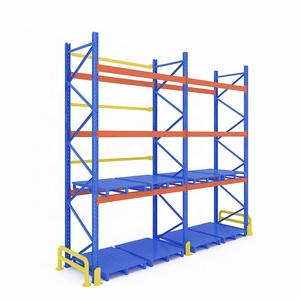
Warehouse Storage Industrial Pallet Rack with Back Stopper
A selective pallet rack with rear stoppers for high-turnover warehouses. It helps prevent pallet push-through, protects aisle safety and suits engineered layouts where pallet weights and forklift access are clearly defined.
- Back stopper protection
- Adjustable beam levels
- Export-packed steel system
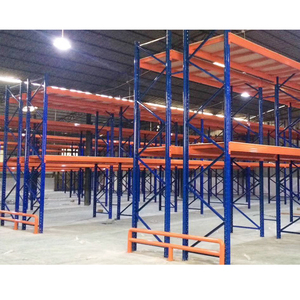
Chinese Manufacture Heavy Duty Metal Pallet Rack Shelving Wood Pallet Racks and Shelves
Heavy-duty pallet racking for distribution centres and 3PLs handling wood pallets. The open front and adjustable levels allow rapid SKU changes, while factory-controlled steel thickness supports repeatable load performance.
- Heavy-duty uprights
- Flexible beam positions
- 3PL and DC friendly
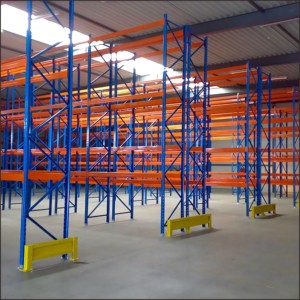
HONGYUN Heavy Duty 6 Meters High Metal Pallet Rack 5 Layer Anti-Rust Iron Shelving for Warehouse Storage for Garages
A high-bay, multi-level metal rack solution for warehouses and large garages. Anti-rust treatment and a five-layer configuration make it relevant where vertical space is available but the floor footprint is fixed.
- Up to 6 m height planning
- Five-layer storage
- Anti-rust finish
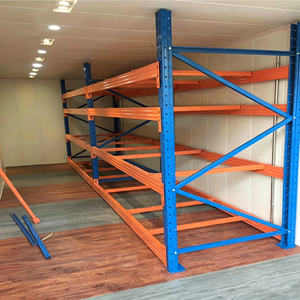
Heavy Duty Industrial Pallet Storage Racking 1000kg/2000kg/3000kg Capacity Per Layer Adjustable Steel Warehouse Rack
An adjustable steel warehouse rack engineered around 1,000 kg, 2,000 kg or 3,000 kg load tiers. It is a strong fit for buyers who need a documented load profile before comparing factory quotes.
- 1,000–3,000 kg per layer
- Adjustable levels
- Selective pallet access
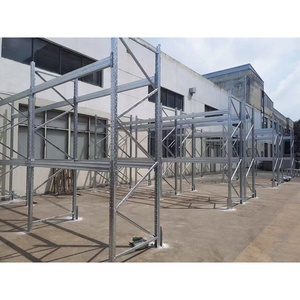
Warehouse Storage Strong Corrosion Resistance Capability Hot Dip Galvanize Pallet Rack Outdoor Storage Rack
Hot-dip galvanized pallet racking for humid, coastal or outdoor storage. This is the specification to discuss when the warehouse cannot guarantee a dry environment, or when the project requires a longer corrosion-resistant service life.
- Hot-dip galvanized steel
- Outdoor storage use
- Corrosion-resistant finish
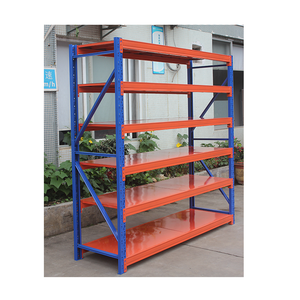
Certified Safe & Stable Industrial Steel Warehouse Pallet Rack Shelving Heavy Duty Selective Bolted Assembly Iron Material
A bolted selective rack for buyers who need safe, stable and replaceable components. The bolted assembly supports phased installation and future reconfiguration, which is valuable for warehouses that expect product mix changes.
- Bolted assembly
- Selective access
- Replaceable components
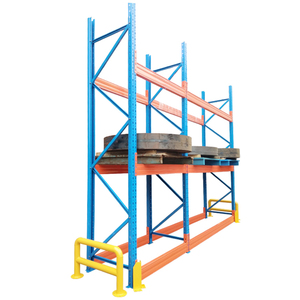
Industrial Warehouse Racks Heavy Duty Beam Rack Adjustable Selective Pallet Racking Warehouse Storage Racks Custom Pallet Racks
A customisable selective pallet racking platform for warehouses that need a balance between direct access, SKU flexibility and capital efficiency. Beam levels can be adjusted as pallet heights and inventory profiles evolve.
- Custom pallet racking
- Beam-level adjustment
- Direct pallet access
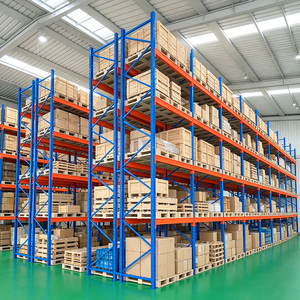
Industrial Heavy Duty Pallet Rack 1000-5000KG Load Capacity Warehouse Storage Racking System with Adjustable Shelves
A high-capacity adjustable pallet rack storage system for industrial loads from 1,000 kg to 5,000 kg. It is suited to heavy palletised goods where beam capacity, upright protection and foundation details must be reviewed together.
- 1,000–5,000 kg capacity
- Adjustable shelves
- Heavy industrial use
Every product link above retains the original URL. For configurations not shown, engineering support can translate pallet data, throughput and building constraints into a factory-ready layout.
What Makes a Top China Warehouse Pallet Storage Racks Factory?
The strongest China pallet rack factory does not compete only on steel weight or price per kilogram. It competes on engineering clarity, manufacturing consistency, documentation and the ability to support a warehouse through layout changes, inspections and expansion.
For importers, system integrators and warehouse operators, the sourcing decision usually sits between a trading company that can quote quickly and a true factory that can explain how the rack will behave under load, seismic event, forklift impact, cold-store condensation or outdoor corrosion. Real Nice Racks’ project approach starts from warehouse data: pallet footprint, load per pallet, clear height, floor tolerance, forklift type, throughput, SKU velocity and local building requirements. That data is then translated into a selective, drive-in, push-back, shuttle, mobile or outdoor galvanized storage system.
This guide is a practical due-diligence checklist. It reflects the engineering priorities applied when supporting projects across South America—from Brazil and Chile to Peru, Colombia, Argentina, Ecuador, Uruguay and Paraguay—while sourcing from China’s mature pallet rack manufacturing base. The goal is information gain for procurement teams: fewer vague claims, more verifiable questions, clearer specifications and a safer long-term investment.

Factory Advantages That Matter After the Purchase Order Is Signed
Price is visible at quotation stage. Engineering discipline becomes visible during installation, inspection and the first layout change. These are the capabilities that separate a top warehouse pallet storage rack factory from a low-cost assembler.
Structural calculations
Load tables, beam capacity, upright capacity, floor pressure and bracing should be supplied as project documents, not guessed from a catalogue page. Buyers should ask which standard the design follows and who reviewed the final layout.
Seismic-ready detailing
For Chile, Peru, Ecuador and Colombia, base plates, anchors, bracing, beam connectors and site seismicity must be coordinated with local requirements such as NCh 433, NCh 2369, E.030, NEC-SE-DS and NSR-10.
Cold-chain and corrosion
Cold stores, coastal sites and outdoor yards require more than standard powder coating. Hot-dip galvanizing, low-temperature detailing and mobile racking can reduce energy waste and extend service life.
Inspection and lifecycle records
Load signage, installation records, inspection intervals and damage-reporting procedures protect the investment. A factory that can support these after shipment is more valuable than one that only supplies steel.
How Pallet Rack Buyers Will Compare China Factories in the Next Buying Cycle
Procurement is becoming more technical. Buyers are moving from “price per set” to “verified capacity per square metre, per container and per year of safe operation.” That shift rewards factories that can provide data, not just product photos.
Total landed cost
Container loading efficiency, export packing, port charges, duties and installation supervision now sit beside the ex-works price. A slightly higher factory quote can be cheaper if it reduces damage, rework or unused container volume.
Safety documentation
Tender packages increasingly require structural calculations, load signage, anchor details and inspection guidance. In seismic markets, the factory must coordinate with licensed local engineers where regulations require it.
Cold-chain efficiency
For fruit, seafood, meat and dairy exporters, mobile racking and high-density systems reduce refrigerated air volume. That lowers energy consumption while improving pallet positions inside the same insulated envelope.
Automation-ready modularity
Selective racking that can evolve into shuttle, mobile or AGV-friendly layouts reduces future retrofit risk. The factory should explain how the P90 platform, beam connectors and bracing can be reused as operations scale.
Illustrative tender scorecard: what technical buyers weigh
The scorecard is illustrative. Buyers should adjust weighting to project risk, local code requirements and the operational cost of downtime.
Where Warehouse Pallet Storage Rack Design Is Moving
China’s pallet rack factories are increasingly competing on system architecture rather than isolated frames. The product direction favours modular platforms that can be reconfigured, documented and extended without replacing the entire installation.
High-density selective racking
Buyers want more pallet positions without losing direct access. P90-style high-density racking, drive-in, push-back and shuttle configurations are being evaluated together so that density can increase without creating an inflexible warehouse.
Hot-dip galvanizing for hard environments
Outdoor yards, humid ports, food plants and coastal distribution centres are pushing demand for galvanized pallet racking. The finish is specified early because it affects lead time, budget and long-term maintenance.
Mobile racking for cold stores
MOVO-style mobile pallet racking opens one working aisle on demand while keeping 100% of pallets accessible. In freezer warehouses, fewer aisles mean less refrigerated air volume, lower energy use and more pallet positions per square metre.
Digital inspection records
QR labels, load signs and inspection logs are becoming part of the factory deliverable. They help warehouse teams identify damaged components, verify capacity and plan repairs before small impacts become safety incidents.

More Pallet Positions Without More Building
In land-constrained industrial markets, the cheapest square metre is often the one already inside the existing warehouse. A factory should be able to model selective, mobile and high-density options side by side, then compare storage capacity, aisle width, forklift cycle time, fire strategy and future expansion.
That comparison is especially important for South American cold stores, 3PL hubs and urban distribution centres where new construction is slow or expensive. A movable-aisle or high-density layout can unlock capacity, but only when the rack design, floor tolerance, anchors and handling equipment are specified together.
Send an InquiryWhy Buyers Choose Real Nice Racks and Our Pallet Rack Factory Network
Real Nice Racks LLC designs and supplies industrial storage systems for warehouses and distribution centres across South America. The advantage is not simply access to manufacturing; it is the link between factory production, structural review and on-site project realities.
Engineering-led sales
Projects begin with pallet data, clear height, floor conditions and throughput. Structural calculations, load signage and capacity tables are treated as part of the scope, not optional extras.
Factory-controlled quality
Steel thickness, welding, hole pitch, powder coating or galvanizing and export packing can be inspected before shipment. Clear factory specifications reduce the risk of inconsistent accessories or missing components.
Export packaging and port logistics
Pallet racking is vulnerable to handling damage when uprights, beams and accessories are packed without export discipline. Project shipment planning to ports such as Santos, Callao, San Antonio, Buenos Aires, Cartagena, Guayaquil and Montevideo helps protect timelines.
Multilingual lifecycle support
Technical support is available in English, Spanish and Portuguese. After-sales services include rack inspection, damage repair, capacity upgrades and guidance when warehouse operations change.
Seismic, Cold-Chain and High-Density Expertise in One Project Team
Racking for the Pacific seismic belt is calculated with reference to FEM 10.2.08 seismic methodology and EN 16681, then coordinated with local requirements such as NCh 433 and NCh 2369 in Chile, E.030 in Peru, NEC-SE-DS in Ecuador and NSR-10 in Colombia. In Brazil, projects can align with ABNT NBR 15524 for selective pallet racking.
Cold storage pallet racking and mobile systems are specified for chilled and frozen environments down to approximately -30°C, supporting fruit, seafood, meat and dairy export hubs. High-density P90 racking can deliver up to 20% more storage capacity within the same building footprint when the layout, handling equipment and safety clearances are engineered together.

Questions Buyers Ask When Sourcing Warehouse Pallet Racks from China
Clear answers help procurement teams compare factories on the same basis. For project-specific answers, include warehouse location, floor plan, clear height, pallet dimensions, load per pallet and forklift type in the inquiry.
What should I verify before choosing a China pallet rack factory?
Verify engineering capability before price. Ask for structural calculations, load tables, steel specifications, finish options, export packing standards, inspection records and examples of projects with similar pallet loads. Confirm whether the factory can coordinate seismic design with local engineers in Chile, Peru, Ecuador or Colombia when required.
Which design standards should pallet racking follow?
Static steel racking is commonly designed in line with EN 15512, with floor tolerances per EN 15620, operation and inspection guidance per EN 15635, and seismic design reference to FEM 10.2.08 or EN 16681. Local requirements may include ABNT NBR 15524 in Brazil, NCh 433 and NCh 2369 in Chile, E.030 in Peru, NEC-SE-DS in Ecuador and NSR-10 in Colombia.
Can a China factory supply racking for cold storage and freezer warehouses?
Yes, but the specification must change. Cold storage pallet racking, mobile racking and high-density systems can be specified for chilled and frozen environments down to approximately -30°C. For freezer warehouses, mobile racking is especially effective because it reduces the volume of air that must be refrigerated and improves pallet density inside the same insulated envelope.
How do I control quality when buying pallet racks from China?
Use a documented inspection plan. Confirm upright and beam dimensions, steel grade, weld quality, hole pitch, surface finish, accessory quantities and container loading. Request pre-shipment photos or third-party inspection when the project value justifies it. For large rollouts, a sample installation or supervised first phase can reveal handling and tolerance issues early.
Can the factory support installation and inspection overseas?
Support can range from layout drawings and installation manuals to supervised installation and periodic rack inspection. For projects across South America, define the handover scope clearly: anchor specification, floor tolerance review, load signage, inspection records and training for warehouse staff. These documents matter to insurers, auditors and safety teams.
How do I request a factory-ready layout and quotation?
Send the warehouse location, floor plan, clear height, pallet dimensions, load per pallet, required number of pallet positions, forklift or AGV type, and any seismic, cold-chain or outdoor exposure requirements. A technical team can then compare selective, high-density, mobile or galvanized options and return a layout with a clearer scope.
Request a Factory-Ready Pallet Rack Layout and Quotation
Share your pallet profile, warehouse dimensions, load capacity, seismic zone, cold-store or outdoor requirements, and target port. The engineering team can translate those inputs into a practical warehouse pallet storage rack system with documented capacity and export-ready scope.
Send an Inquiry