Top Trusted Push Back Racking Exporter & Wholesaler
Engineered push back pallet racking, high-density LIFO storage, cold-rolled steel racking and warehouse storage systems for importers, wholesalers, 3PLs and project owners across South America and other growth markets.
Contact Us8 Warehouse Racking & Storage Systems for Wholesale and Project Supply
The range below reflects the product families most frequently specified by importers, distributors and warehouse contractors. Each product URL is preserved, and multiple lines can be combined into a mixed-container project bill of materials for export quotation.
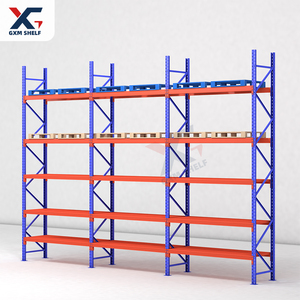
Heavy-Duty Pallet Racking Warehouse Storage System
Adjustable, project-configured pallet racking for fast-moving distribution centres, bulk storage and wholesale export programmes.
View export details →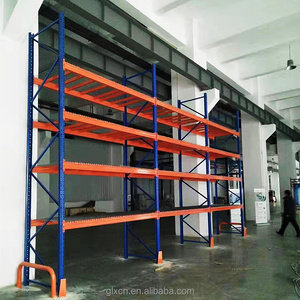
5-Layer 1,500 kg/Level Cold-Rolled Steel Pallet Racking
Multi-layer beam rack with knock-down structure for cost-efficient container loading, high-bay fit-outs and multi-level storage.
View export details →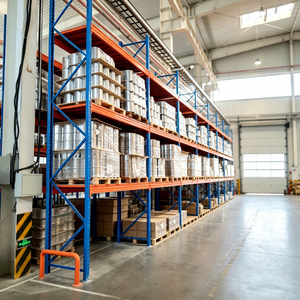
Heavy-Load Pallet Shelving for Bulk Warehouse Storage
Practical frame-and-beam storage for factories, logistics parks, raw-material yards and heavy palletised inventory.
View export details →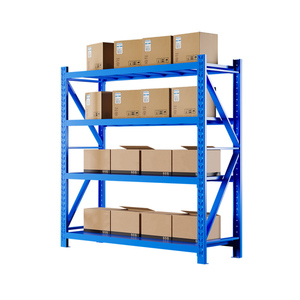
Industrial 5-Layer Pallet & Tyre Storage Racking
Slotted-angle and pallet-rack combination for tyre storage, bulk SKUs, warehouse retrofits and multi-product inventory.
View export details →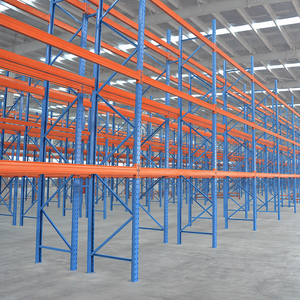
Heavy-Duty Adjustable Steel Warehouse Racking
Cold-rolled steel, powder-coated finish and strong load capacity for export projects requiring flexible beam levels.
View export details →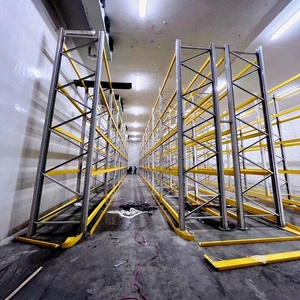
VNA Boltless Heavy-Duty Warehouse Storage Racks
Cost-controlled boltless shelving and racking for very narrow aisle layouts, high-density storage and fast installation.
View export details →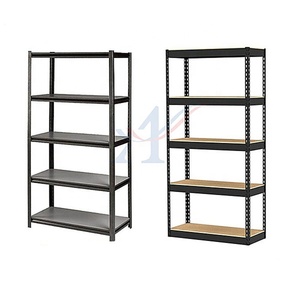
800 × 400 × 1500 mm 4-Layer Adjustable Steel Rack
Compact, adjustable rack for spare parts, e-commerce SKUs, archives and multi-tier hand-loaded storage.
View export details →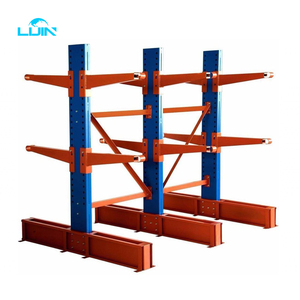
Heavy-Duty Cantilever Racking for Factory & Warehouse
Open-front storage for steel profiles, pipes, timber, building products and long goods, available indoor or outdoor.
View export details →Push Back Racking at a Glance: What a Trusted Exporter Must Prove
Push back racking is a high-density LIFO storage system that stores pallets on nested carts running on inclined rails. A forklift pushes a new pallet into the lane, moving the carts backward; when the front pallet is removed, the remaining carts roll forward. Typical systems are two to six pallets deep, depending on load, lift equipment and layout.
For a wholesaler or importer, the cheapest price per bay is not the lowest total cost. A push back installation is a dynamic system: carts, rails, stoppers, beam locking, anchors, aisle clearance, forklift reach, sprinkler demands and seismic loads all interact. A supplier that cannot provide load signs, capacity tables, replacement cart compatibility and installation guidance creates safety and compliance risk long after the container has been delivered.
Real Nice Racks LLC combines export supply with engineering support. Our project logic starts with the warehouse, not a catalogue page: pallet profile, load per pallet, clear height, forklift or AGV type, temperature, fire strategy and seismic zone. That is how high-density racking becomes a measurable business decision rather than a steel purchase. In land-constrained markets such as São Paulo, Santiago, Lima, Bogotá and Buenos Aires, fewer aisles can release significant pallet positions inside the existing building envelope. In cold stores, fewer aisles also mean less refrigerated air to move and condition.
Best-fit push back applications
- Medium-to-high volume SKUs with uniform pallet dimensions and stable loads.
- LIFO inventory flows in food, beverage, retail replenishment and cold-chain distribution.
- Warehouses where land or building expansion is expensive and every aisle must justify itself.
- Export projects that require phased delivery, spare carts and documented load limits.
Procurement checks before order
- Confirm pallet weight, beam level loads, cart capacity and required aisle width.
- Check floor tolerance, anchor design, seismic zone and local permitting requirements.
- Agree on load signage, inspection records, spare parts and installation supervision.
- Model SKU velocity and reorder cycles; push back is LIFO, not strict FIFO.
Recommended Push Back Racking Configurations for 2025–2026 Procurement
Select by flow, temperature and operational discipline, not by headline density alone. The most reliable export projects compare at least two layout options before fixing the bill of materials.
Standard LIFO Push-Back for FMCG & Retail
Three-to-five-deep lanes with nested carts, powder-coated rails and clearly marked load limits. Best for beverage, packaged food, household goods and retail replenishment where pallet quality is consistent.
- Good fit for medium SKU fragmentation.
- Requires disciplined fork placement.
- Spare carts and rail guides should be included.
Cold-Store Push-Back for Export Agriculture
For chilled and freezer warehouses handling fruit, seafood, meat and dairy. Fewer working aisles can reduce the refrigerated volume, while corrosion protection and low-temperature components protect cart movement.
- Specify freezer-compatible cart bearings and coatings.
- Coordinate seismic and refrigeration penetrations early.
- Plan inspection access around frost and condensation.
Heavy-Duty Bulk & Long-Goods Hybrid
Combine push-back pallet storage with heavy-load shelving and cantilever racking for factories, equipment yards and mixed-material warehouses. This protects fast-moving pallet flows while giving long goods safe, open-front access.
- Separate pallet and long-goods zones by handling equipment.
- Use cantilever where loading is by crane or side-loader.
- Add heavy-load shelving for slow-moving spares.
Indicative planning ranges only. Final capacity depends on bay width, aisle width, clear height, pallet overhang, lift equipment, fire strategy and structural design verification.
Purchasing Trends Shaping Push Back Racking Through 2030
Buyers are moving away from single-price comparisons and toward suppliers who can reduce technical, logistical and lifecycle risk across multi-country projects.
Total Cost & Documented Compliance
Procurement teams increasingly ask for structural calculations, load signage, inspection intervals, spare cart availability and capacity tables before purchase order approval.
Port-Centric & Nearshoring Inventory
Growth in 3PL hubs around Santos, Callao, San Antonio, Cartagena, Buenos Aires and Guayaquil rewards suppliers who can plan containers, ports and installation sequencing together.
Cold-Chain Energy Efficiency
Refrigerated warehouses need more pallet positions without adding uncontrolled air volume. Push-back and mobile systems are increasingly evaluated for freezer expansions and export agriculture.
Automation-Ready & Seismic Resilience
New layouts are expected to support AGV/AMR access, hybrid shuttle systems and local seismic codes such as NCh 433, E.030, NSR-10 and NEC-SE-DS.
How Export-Grade Push Back Racking Is Evolving
The strongest systems are becoming more modular, easier to document and easier to protect against humidity, freezer conditions and seismic events.
Modular Cart Architecture
High-strength cold-rolled steel, replaceable cart components and knock-down packing make export freight more efficient while preserving field serviceability.
Corrosion & Freezer Coatings
Powder coating, galvanic protection and low-temperature lubricants are being specified for humid ports, coastal warehouses and chilled or frozen facilities.
Seismic & Fire-Engineered Assemblies
Bracing, anchors, base plates and beam connectors are increasingly co-ordinated with local structural codes, sprinkler design and fire-service access.
Digital Load Signs & Traceability
QR-coded load signage, as-built drawings, inspection logs and batch traceability help asset owners maintain safe capacity limits over the full service life.
A Push Back Racking Exporter Built Around Engineering, Not Catalogue Copy
Real Nice Racks LLC designs and supplies industrial storage systems for warehouses and distribution centres across Brazil, Argentina, Chile, Colombia, Peru, Ecuador, Uruguay, Paraguay and Bolivia. Our project work combines export supply with the technical detail buyers need before, during and after installation.
Engineering-Led Configuration
Layouts are developed from site survey data, pallet profiles, SKU velocity, clear height, forklift type and seismic zone, so the system fits real operations.
Standards & Local Code Co-ordination
Design follows EN 15512 principles, with seismic guidance from FEM 10.2.08 / EN 16681 and co-ordination with local requirements such as NBR 15524, NCh 433, E.030, NSR-10 and NEC-SE-DS.
Export Packing & Port Delivery
Projects are packed for ocean freight and shipped to major regional ports including Santos, Callao, San Antonio, Buenos Aires, Cartagena, Guayaquil and Montevideo.
Cold-Chain & Seismic Experience
Chilled and freezer systems can be specified down to approximately -30°C, with anchors, bracing and coatings matched to the site’s seismic and climatic conditions.
Multilingual Project Support
Technical support is available in English, Spanish and Portuguese, helping procurement, engineering and installation teams align across borders.
Lifecycle Service & Upgrades
Support continues after handover with rack inspection guidance, damage repair planning, load signage updates and capacity upgrades as volumes change.
Questions Buyers Ask Before Ordering Push Back Racking
Practical answers for importers, wholesalers, 3PLs and engineering teams comparing export suppliers.
What is push back racking, and when is it the right choice?
Push back racking is a high-density LIFO system using nested carts on inclined rails. It is usually right when pallets are uniform, SKUs are medium-to-high volume, and operators can follow LIFO discipline. It is not the best choice for strict FIFO inventory, highly fragmented SKU ranges or unstable loads where front access to every pallet is essential.
What information should an importer send for a push back racking quotation?
Send the warehouse location, floor plan, clear height, pallet dimensions, pallet weight, load per beam level, forklift or AGV type, temperature range, seismic zone, target pallet count, preferred port and required delivery date. If available, include SKU velocity data and any fire-service or local building constraints. This allows the supplier to produce a risk-based bill of materials rather than a generic price list.
Can push back racking be designed for seismic zones and cold stores?
Yes. Seismic design can be co-ordinated with FEM 10.2.08 / EN 16681 principles and local codes such as NCh 433 and NCh 2369 in Chile, E.030 in Peru, NSR-10 in Colombia and NEC-SE-DS in Ecuador. Cold-store systems require compatible coatings, cart components and installation details for chilled or freezer environments, with final calculations reviewed by a locally licensed engineer where required.
How do you control quality and documentation for wholesale orders?
A professional export order should include approved drawings, structural calculations, capacity tables, load signage, packing lists, installation guidance and inspection records. Buyers should also confirm spare cart availability, recommended inspection intervals and how replacement parts will be identified after shipment. This documentation protects safety, insurance and resale value.
How are shipping, port delivery and installation handled?
Each project follows a defined lifecycle: site survey and data analysis, layout and structural design, manufacturing, export packing, shipment to the nearest port, supervised installation and handover with load signage and inspection documentation. Real Nice Racks LLC supports projects across South America and can align packing and delivery with the importer’s port and installation schedule.
What are the limits of push back racking, and when should buyers choose another system?
Push back is LIFO and requires disciplined loading. If the business needs strict FIFO rotation, very high SKU selectivity or automated pallet sequencing, other systems such as selective racking, pallet shuttle, mobile racking or semi-automated storage may be more suitable. For long goods, cantilever racking is often the better choice. A credible supplier should recommend against push back when the operating data does not support it.
Request an Export Quotation for Push Back Racking
Send us the warehouse location, floor plan, clear height, pallet dimensions, load per pallet, handling equipment and target capacity. Our team will help you compare push back racking with selective, mobile, cantilever and other storage systems before you commit the bill of materials.
Contact UsTechnical documentation and project support: [email protected]