China Best Live Storage Racking Factory & Wholesaler for Santiago
Engineered live storage and high-density warehouse racking for Santiago de Chile — supported by documented seismic design, cold-chain expertise, factory-direct wholesale pricing and port-ready export logistics.
8 Live Storage Racking & Warehouse Systems Recommended for Santiago
Santiago buyers rarely need a catalogue of isolated products. They need a storage system that matches pallet profiles, throughput, seismic zone, floor slab tolerance, freezer conditions and future growth. The eight product families below cover selective pallet racking, high-density shuttle storage, industrial shelving, multi-level pallet racking and heavy-duty reserve storage. Each URL is preserved for direct product review, while our engineering team can combine these systems into one phased layout for a Santiago warehouse.
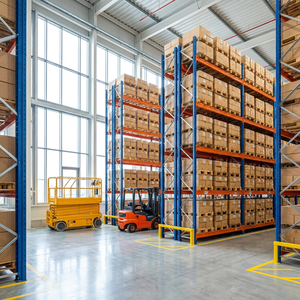
Q235B Steel Certificate Rack Size Certificate Heavy Duty Rack Multi Level Pallet Rack Warehouse Shelving
A multi-level Q235B steel rack for warehouses that need stable, dense pallet storage and a documented load profile for Chilean site approval.
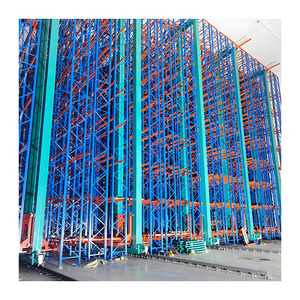
High-Density Pallet Shuttle Racking System Automatic Steel Storage Frame 3000kg Load Capacity Heavy Duty Warehouse
A high-density live storage concept for repetitive SKUs and deep lanes. The 3000 kg-class platform reduces forklift travel in cold stores and high-throughput Santiago distribution centres.
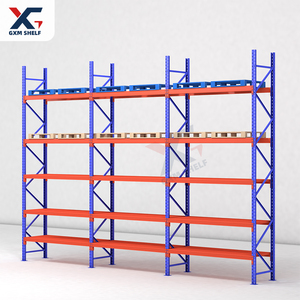
Heavy Duty Pallet Racking Warehouse Pallet System Pallet Storage Rack Heavy Duty Rack Shelf Heavy Duty Racking System
A flexible heavy-duty pallet racking system for 3PL, retail replenishment and general distribution, with beam levels that can be reconfigured as SKU profiles change.
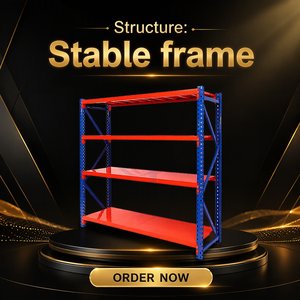
Heavy Duty Steel Selective Pallet Rack 5 Layer Load Capacity 1000kg Industrial Storage Rack
A five-layer selective pallet rack with 1000 kg load capacity per level, suited to fast-moving pallets that require direct access and simple forklift retrieval.
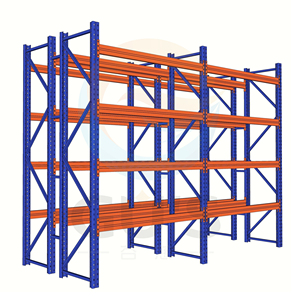
Warehouse Pallet Racking Shelves Unit Industrial Heavy Duty Metal Rack Storage Shelf Pallet Stacking Rack System
An industrial heavy-duty metal rack and pallet stacking system for demanding reserve storage, often combined with selective picking faces for fast-moving lines.
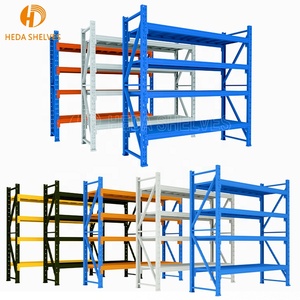
Heavy Duty Warehouse Pallet System Warehouse Racking Pallet Rack Shelving Pallet Racking for Industrial Shelves System
A combined pallet racking and shelving system for mixed storage — pallets in reserve and cartons or small parts in picking — helping Santiago operators consolidate workflows.
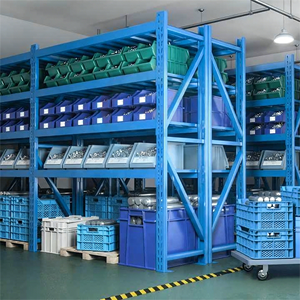
High Quality Durable Corrosion Protected Boltless Adjustable Warehouse Light Duty Industrial Metal Shelving Metal Storage Racks
A durable, corrosion-protected boltless shelving system for small parts, e-commerce SKUs and maintenance stores, useful for mezzanine pick modules and local spare-parts hubs.
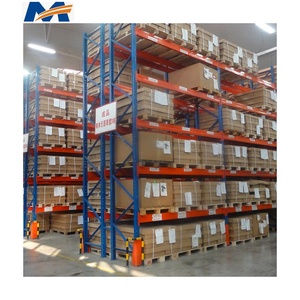
Pallet Racking System Warehouse Shelves Heavy Duty, Warehouse Picking Shelves Rack
A warehouse picking and pallet racking shelving system for order preparation, retail distribution and spare-parts logistics, bridging pallet reserve storage with accessible picking levels.
Need help comparing selective, shuttle, mobile or multi-level live storage for a Santiago site? Share your pallet size, load per pallet, clear height, floor plan and target pallet count. Our team will return a practical layout direction and export quotation path.
Santiago’s Live Storage Challenge: More Pallet Positions on Constrained, Seismic Ground
Santiago de Chile is one of South America’s most important distribution and cold-chain hubs, but it is not an easy warehouse market. Industrial land in the Región Metropolitana is expensive, available buildings often have fixed clear heights, and every project sits inside a seismic environment that demands more than a generic catalogue quotation. For live storage racking, the central question is not simply “how many pallets can fit?” It is “how many pallets can fit safely, legally and productively, with documented engineering that satisfies the project team, insurer and local reviewer?”
That is why a China factory and wholesaler should be evaluated on engineering evidence, not just price per tonne. A well-designed Santiago layout starts with pallet dimensions, load stability, SKU velocity, forklift type, floor flatness, fire strategy and the seismic parameters of the site. It then compares selective racking, pallet shuttle, push-back, drive-in, mobile racking and multi-level shelving against total cost per accessible pallet position. For fruit exporters, 3PL operators, retailers, mining suppliers and pharmaceutical distributors, this comparison often changes the right answer.
Our recommendation for Santiago is a phased approach: begin with a data-led layout, verify structural and seismic requirements, then select the simplest system that delivers the required density and access. High-density live storage can create significant capacity within an existing building, but only when the aisle strategy, handling equipment and safety documentation are designed together.
- Seismic coordination with Chilean practice, including NCh 433 and NCh 2369 references where required.
- Cold-store layouts for fruit, seafood, meat and dairy supply chains, with material specifications suited to chilled or frozen environments.
- Export packing and delivery planning for San Antonio, Valparaíso and inland Santiago distribution.
- Documentation for load signs, anchor specification, installation checks and lifecycle inspection.

Where Live Storage Racking Creates Value in Santiago and Central Chile
Storage density is only useful when it fits the operating reality of the business. These are the Santiago-area scenarios where engineered live storage and high-density pallet racking typically deliver the strongest returns.
Fruit and vegetable cold-chain exporters
Cherries, grapes, blueberries and other Central Valley exports depend on fast, controlled cold-chain movement. Pallet shuttle, drive-in and mobile racking can increase pallet positions inside the same refrigerated envelope while preserving access to high-turn lots.
E-commerce and urban 3PL fulfilment
Santiago’s e-commerce growth rewards operations that can pick faster from smaller footprints. Multi-tier shelving, mezzanine pick modules and semi-automated storage machines help 3PLs separate reserve pallets from carton and piece picking.
Retail, wholesale and FMCG distribution
Retail replenishment needs direct access and predictable replenishment. Selective pallet racking remains the backbone, while push-back, pallet shuttle or narrow-aisle configurations add density where SKU counts and truck cycles allow.
Mining MRO and spare-parts stores
Chile’s mining supply chains require heavy-duty storage for dies, tools, components and long goods. Pull-out units, cantilever racking and reinforced pallet racking improve crane access and reduce double handling in maintenance warehouses.
Wine, food and beverage logistics
Wine and food distributors need stable pallet storage, clear lot separation and protection against corrosion or condensation. Push-back and drive-in live storage can reduce aisle waste while maintaining product rotation discipline.
Pharmaceutical and temperature-controlled storage
Pharma and medical distributors need documented layouts, traceable locations and careful temperature zoning. Selective racking and shelving can be combined with cold-room systems and inspection records to support regulated operations.
Santiago Procurement Trends Shaping Live Storage Racking Decisions
These trends explain why Santiago buyers are moving away from simple price-per-pallet comparisons and toward documented, lifecycle-focused storage engineering.
Land scarcity pushes vertical storage
Warehouse rents and land values in the Región Metropolitana encourage operators to use every metre of clear height. High-bay pallet racking, multi-level shelving and mezzanine floors can add usable capacity without a new building.
Seismic documentation becomes a buying criterion
Chilean projects require engineering coordination beyond a standard European racking manual. Buyers increasingly ask for site-specific seismic calculations, anchor details, base plate design and records that can be reviewed by local professionals.
Cold-chain energy efficiency
In refrigerated warehouses, fewer aisles mean less air volume to chill. Mobile pallet racking and high-density live storage can lower energy intensity per pallet stored while improving use of the insulated envelope.
Faster e-commerce order cycles
Consumers expect faster delivery in Santiago and nearby regions. Storage layouts now need clear picking faces, batch-picking zones and reserve storage that can be replenished without blocking active order preparation.
Safety and ergonomics gain budget priority
Rack damage, floor tolerance and forklift impacts are operational risks, not minor maintenance issues. Load signage, protective barriers, inspection intervals and installer training are becoming part of the initial procurement scope.
Sustainability through better asset utilisation
Using less steel, less space and less energy per stored pallet is a practical sustainability strategy. Retrofit layouts, mobile racking and modular systems extend the useful life of existing warehouses and reduce unnecessary construction.
Storage Density Comparison: Choosing the Right Live Storage Principle
Density is not the only measure of value. The best system balances pallet positions, selectivity, handling speed, safety and capital cost. The index below is an indicative planning comparison, not a substitute for a site-specific layout.
Indicative space utilisation by racking principle
Planning note: final density depends on pallet quality, SKU count, FIFO/LIFO requirements, forklift type, fire strategy, seismic bracing and clear height. A high index is only valuable when direct access, throughput and safety meet the operating target.
Safety You Can Document: Seismic Verification, Load Signs and Chilean Project Review
Santiago is not a generic market. A racking layout that is acceptable in a low-seismic region may not be acceptable in Chile, and a quotation that omits structural assumptions can create costly delays after the purchase order. For live storage racking, the most important information gain is not a longer brochure. It is a clear engineering trail: design basis, load assumptions, seismic methodology, anchor specification, floor flatness requirements and inspection guidance.
Our project approach aligns static steel racking design with EN 15512 principles, floor tolerances with EN 15620, operation and inspection guidance with EN 15635, and seismic design references with FEM 10.2.08 / EN 16681. For Chile, these references are coordinated with local requirements such as NCh 433 and NCh 2369 where the project requires it, and final calculations can be reviewed with a locally licensed structural engineer. This is how a China factory quotation becomes a bankable Santiago storage project.
For cold stores, the engineering scope also includes material behaviour, condensation risk, freezer-safe components and installation sequencing that avoids disrupting an operating temperature-controlled warehouse. For high-density systems, the shuttle or mobile controls must be integrated with the rack layout, aisle strategy and maintenance access from the beginning.

Santiago Procurement Checklist: Evidence That Separates a Factory Quotation From a Bankable Layout
When comparing a China factory and wholesaler for Santiago, request the same documentation from every supplier. A low unit price can become expensive if the layout cannot be approved, if the floor slab needs unexpected repair, or if replacement parts take months to arrive. The checklist below helps procurement and engineering teams compare offers on total project risk.
- Site-specific seismic calculation statement, including base plate, anchor and bracing assumptions.
- Floor slab survey or tolerance requirement, with a clear procedure for levelling or shimming if needed.
- Pallet load signs in Spanish, capacity tables and a safe working load summary for each rack type.
- Installation method statement, torque requirements and inspection checklist for handover.
- Cold-store material specification, condensation protection and compatibility with freezer operations.
- Fire strategy coordination, including aisle widths, sprinkler clearance and smoke ventilation assumptions.
- Spare parts list, replacement lead times and recommended periodic inspection intervals.
- Commercial clarity on Incoterms, export packing, port of discharge and who supervises installation.

Why Santiago Buyers Choose Our China Factory & Wholesale Model
Real Nice Racks LLC designs and supplies industrial storage systems — pallet racking, mobile racking, shelving, cantilever, mezzanines and semi-automated storage machines — for warehouses across South America. For Santiago projects, we combine export-focused China manufacturing and wholesale coordination with engineering support that understands the local realities of seismic design, cold-chain operations and port logistics.
Factory-direct wholesale economics
Direct manufacturing coordination reduces intermediary layers, improves control over export packing and allows mixed-product consolidation for a smoother container plan. This is especially useful when a Santiago project combines pallet racking, shelving and mezzanine components.
Engineering depth, not just product supply
We support site surveys, load assumptions, layout options, structural calculations, load signage and installation guidance. The goal is a system that can be reviewed, installed and maintained with a clear technical record.
Seismic and cold-chain specialisation
Chilean projects often need both seismic coordination and cold-store durability. Our product scope includes high-density pallet shuttle, mobile racking such as MOVO, selective pallet racking and P90 high-density platforms for chilled and frozen environments.
Full-scope storage product breadth
Pallet racking, industrial shelving, cantilever racking, pull-out units, mezzanine floors and semi-automated storage machines can be designed as one integrated storage plan rather than disconnected purchases.
Lifecycle service and retrofit capability
We support warehouse retrofits, capacity upgrades, inspection planning, damage repair and phased expansion. High-density layouts can often unlock up to 20% more storage capacity inside the same building footprint, avoiding new construction delays.
South America communication and logistics
Technical and commercial support is available in English, Spanish and Portuguese. We plan export packing and shipment to ports such as San Antonio and Valparaíso, and we align documentation with the project’s customs and installation sequence.
From Santiago Site Survey to Long-Term Racking Support
A structured five-stage process keeps budgets predictable and reduces the risk of costly rework when a layout moves from concept to installation.
Analyse
Review floor plan, clear height, pallet profiles, loads, forklift type, seismic zone and operating targets.
Design
Compare selective, shuttle, mobile, drive-in and shelving options with capacity and access metrics.
Manufacture
Coordinate steel production, quality checks, export packing and component lists for shipment.
Deliver & install
Plan delivery through Chilean ports, then support supervised installation and handover documentation.
Support
Provide inspection guidance, repair advice, spare parts planning and capacity upgrades as the warehouse grows.
Common Procurement Questions from Santiago Buyers
These are the questions engineering, procurement and operations teams most often ask when comparing a China live storage racking factory and wholesaler for a Santiago project.
Can live storage racking be designed for Chile’s seismic conditions?
Yes. Racking for Santiago and other Chilean sites should be designed with seismic methodology and local coordination from the start. We reference FEM 10.2.08 / EN 16681 principles and coordinate with Chilean requirements such as NCh 433 and NCh 2369 where required. Base plates, anchors, bracing and beam connectors must be specified for the site’s seismic zone and soil conditions, and final calculations can be reviewed by a locally licensed structural engineer.
What documentation should a Santiago buyer request before approving a layout?
Ask for the design basis, load assumptions, seismic calculation statement, anchor specification, floor tolerance requirement, load signs, installation method statement and inspection checklist. For cold stores, request material specifications and condensation protection details. A credible supplier should be comfortable providing these documents before purchase, not after delivery.
Do you supply racking for cold storage and freezer warehouses in Chile?
Yes. Cold storage pallet racking, mobile racking and high-density systems can be specified for chilled and frozen environments down to approximately -30 °C. This suits fruit, seafood, meat and dairy export hubs in Chile. Mobile racking such as MOVO is especially effective because it reduces the volume of air that must be refrigerated and can improve energy efficiency per pallet stored.
How are products shipped from China to Santiago or Chilean ports?
Most projects are export-packed and shipped by sea to ports such as San Antonio or Valparaíso, with onward transport to Santiago or other regions. The commercial plan should clarify Incoterms, packing method, container loading, documents and who supervises installation. Early coordination with the project schedule avoids storage delays at the port or site.
Can you upgrade an existing Santiago warehouse instead of building new?
Yes. Retrofit projects often combine re-layouts, higher-density systems such as P90 drive-in, push-back, pallet shuttle or mobile racking, mezzanine floors and narrow-aisle configurations. High-density pallet racking can deliver up to 20% more storage capacity within the same building footprint, avoiding the cost and delay of new construction.
What is the difference between selective racking and live storage racking?
Selective racking gives direct access to every pallet, which is ideal for high SKU counts and fast-moving inventory. Live storage and high-density systems — such as pallet shuttle, drive-in, push-back and mobile racking — reduce aisle space and increase pallet positions, but they require careful SKU analysis and handling discipline. The right choice depends on load count, rotation, selectivity and handling equipment.
How do you protect product quality during export and installation?
Export packing should protect painted steel, small components and connection hardware from moisture and handling damage. We provide packing lists, component identification and installation sequencing. For cold-store or coastal projects, corrosion protection and material specifications are reviewed early so that the system performs in the actual operating environment.
How can Santiago buyers request a wholesale quotation?
Send the warehouse location, floor plan, clear height, pallet dimensions, load per pallet, forklift type, target pallet count and any cold-store or seismic requirements. Our team can then compare live storage options, outline a layout direction and prepare a factory-direct wholesale quotation path. Email [email protected] or use the inquiry button below.
Request a Santiago-Specific Live Storage Layout and Wholesale Quotation
Whether you are planning a new cold store near San Antonio, expanding a 3PL warehouse in Santiago, or retrofitting a retail distribution centre, the fastest route to a reliable quotation is a clear data pack. Share your floor plan, clear height, pallet size, load per pallet, handling equipment and target capacity. We will help you compare selective racking, pallet shuttle, mobile racking and shelving against the real operating requirement.
Email: [email protected]