Eight Commercial Racking and Shelving Systems for Port of Spain Buyers
These systems are suited to warehouse storage, logistics staging, retail backrooms, industrial spare-parts stores and e-commerce operations across Trinidad & Tobago. Product pages can be reviewed directly, and specification support is available before you commit to a layout.
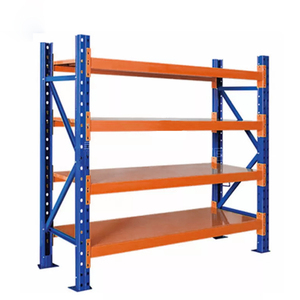
Gravity Flow Adjustable Steel 5-Layer Blue Warehouse Storage Racks with Easy Assembly Beam Shelving for Pallet Goods
Gravity flow racking for organised pallet and carton movement, with adjustable steel levels and easy-assembly beam shelving for high-turnover warehouse storage.
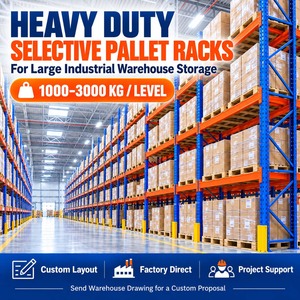
Heavy Duty Selective Pallet Racks for Large Industrial Warehouse Storage
Direct-access selective pallet racking for large industrial warehouses, designed around forklift operations, changing SKU profiles and high bay utilisation.
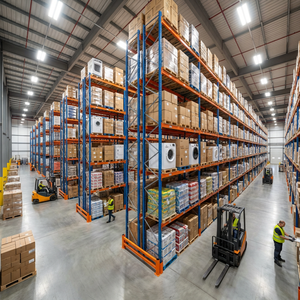
Custom Multi Level Heavy Duty Steel Warehouse Industrial Pallet Storage Shelf Rack
Custom multi-level steel racking for high-cube storage, mezzanine-style access and space-constrained Port of Spain distribution facilities.
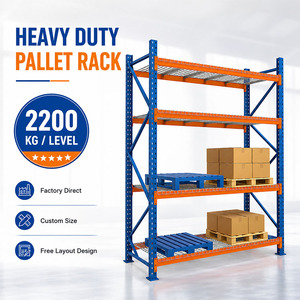
Selective Pallet Racking Heavy Duty Steel Warehouse Rack System for Industrial Storage and Logistics Use
Selective pallet racking for industrial storage and logistics use, balancing rapid pallet access, beam adjustability and straightforward installation.
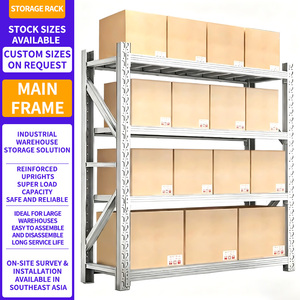
Factory Customized 500kg Per Layer Adjustable Warehouse Pallet Storage Racking for Logistics Warehouse Storage Shelving
Factory-customised adjustable racking with 500 kg per layer options for order staging, spare-parts storage and organised logistics warehouse shelving.
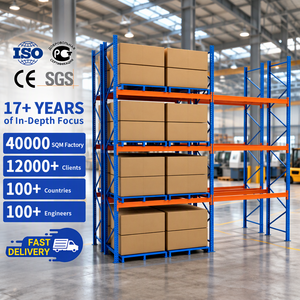
Heavy Duty Industrial Pallet Rack High Loading Multi-Level Metal Shelves Units Warehouse Steel Selective Pallet Racking System
Heavy-duty multi-level pallet racking for high loading and high-bay selective storage in demanding warehouse and industrial environments.
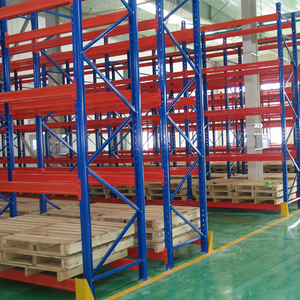
High Quality Industrial Vertical Warehouse Storage Racks Heavy Duty Steel Pallet Racking System for Logistics Center
Vertical heavy-duty steel pallet racking for logistics centres, designed to make better use of clear height and building cube in Trinidad warehouses.
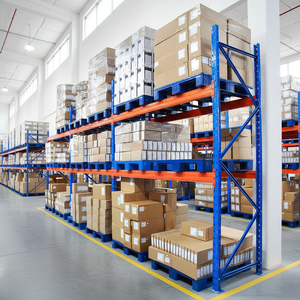
Heavy Duty Adjustable Corrosion Pallet Racking System Industrial Warehouse Storage Racks for Logistics E-commerce
Adjustable corrosion-focused pallet racking for humid, coastal and e-commerce logistics environments where finish durability and flexibility matter.
Port of Spain Storage Decisions Should Be Measured in Pallets, Uptime and Safety
Commercial racking is not a commodity purchase when the building is constrained, the climate is humid and the operation must keep serving customers. The right specification connects pallet load, aisle width, floor slab, seismic anchoring, finish, installation and inspection into one system.
Indicative Storage Density Comparison
Actual capacity depends on pallet size, load, clear height, forklift type, aisle requirements and fire strategy. This visual shows why a warehouse in Port of Spain should compare layouts, not only rack unit prices.
Information Gain for Port of Spain Buyers
A low unit price can hide the highest total cost. Before ordering racking or shelving, check the floor slab, anchor design, pallet weight per level, humidity exposure, fire egress, forklift aisle, container unloading plan and load signage.
- Verify clear height and slab capacity, not just building length and width.
- Specify corrosion-ready finishes where salt air or washing-down is present.
- Ask for structural calculations, load tables and inspection documents.
- Plan phased delivery if the warehouse must remain operational during installation.
Why Port of Spain Warehouses Need Purpose-Built Racking and Shelving
Port of Spain is not a generic warehouse market. It combines a dense commercial core with a working port, tropical humidity, salt-laden air from coastal approaches, costly industrial land and seismic considerations that should not be ignored. Racking that is adequate for a dry inland store may be wrong for a Port of Spain distribution centre handling imported goods, grocery inventory, building supplies or energy-sector spares.
The most useful specification is not simply “heavy duty.” It is a defined load per beam level, a verified floor slab and anchor design, a finish suitable for the environment, clear operating aisles for the forklift, safe access for staff and a documented inspection regime. For commercial racking and shelving in Port of Spain, the goal is to protect inventory, people and business continuity while making every cubic metre productive.
A practical project starts with real unit-load data: pallet footprint, goods height, weight per pallet, load type, turnover, order-picking method and whether operators need direct access to every pallet. Where space is tight, multi-level or high-density options may be more valuable than a simple selective layout. Where speed and selectivity dominate, selective pallet racking often remains the most efficient foundation.
Imported storage systems also need early logistics coordination. Export packing, container dimensions, unloading sequence, installation phasing, English-language drawings and load signage should be resolved before purchase. This is where a manufacturer and supplier that understands port-linked delivery adds value beyond the steel itself.
Design for Humidity, Heat and Coastal Air
Trinidad’s tropical marine climate can accelerate corrosion where steel is poorly protected. Powder-coated or specially finished racking, good drainage, ventilation and periodic inspection help protect long-term asset value.
For warehouse shelving in Port of Spain, the finish is not cosmetic. It affects service life, maintenance cost and the safety of the structure. Buyers should ask how the finish will perform in a humid environment and how easily damaged uprights or beams can be inspected and replaced.
- Coastal or humid-store finish options
- Replaceable upright protectors and beam locks
- Clear load signage at each bay level
- Documented periodic rack inspection
Localised Racking and Shelving Scenarios Across Trinidad & Tobago
Different Port of Spain operations need different storage behaviour. A grocery distributor, a port-linked 3PL, an energy-sector MRO store and an e-commerce fulfilment centre may all use steel racking, but their aisle strategy, finish, load profile and growth plan should not be identical.
Port-Linked Distribution and 3PL Staging
Facilities around Port of Spain and Point Lisas need fast container unloading, temporary staging and organised dispatch. Selective pallet racking and heavy-duty multi-level systems help separate inbound, reserve and outbound stock without losing access.
Retail, Grocery and E-commerce Fulfilment
Retail backrooms and e-commerce pick areas benefit from adjustable shelving and pallet racking that can be reconfigured as SKU counts change. The 500 kg per layer adjustable system is useful for order staging, carton storage and spare-parts shelving.
Food, Beverage and Cold-Chain Stores
Humidity-controlled, chilled and freezer environments require careful finish selection, safe access and layouts that reduce wasted chilled air. Racking and shelving should be coordinated with hygiene routines, drainage and inspection access.
Energy, Industrial Maintenance and MRO
Trinidad’s energy and industrial supply chains depend on organised spare-parts storage. Heavy-duty pallet racking, custom multi-level racking and wider company solutions for long goods help protect valuable components and improve technician access.
Building Materials and Bulky Inventory
Construction suppliers, hardware distributors and project stores often handle heavy, awkward loads. Vertical heavy-duty racking and customised multi-level layouts can make better use of height while keeping fast-moving items accessible.
Pharmaceutical and High-Value Inventory
Clean, well-labelled storage supports inventory control and auditability. Selective racking and systematic shelving help separate batch numbers, expiry dates and high-value stock while maintaining safe pedestrian and forklift movement.
Port of Spain Storage Trends Affecting 2025–2030 Procurement
Warehouse users in and around Port of Spain are being asked to support more SKUs, faster order cycles and stricter safety expectations, often without expanding the building. These pressures are changing how commercial racking and shelving is specified.
Land Scarcity Drives Vertical Capacity
Industrial and commercial space near Port of Spain is too valuable for single-level storage alone. Multi-level steel racking, mezzanine concepts and higher clear-height layouts are increasingly evaluated as alternatives to moving to larger premises. The practical question is not only “How many pallets fit today?” but “How many pallets can fit after the next growth phase?”
Corrosion and Lifecycle Cost Become Board-Level Issues
Humidity, coastal air, wash-down areas and long asset life make finish quality important. Buyers increasingly compare total cost of ownership, including inspection, repair and replacement, rather than the lowest initial quotation. Corrosion-ready pallet racking is becoming a practical specification for suitable sites.
Digital Inventory Rewards Flexible Racking
As retailers, distributors and 3PLs adopt better inventory visibility, layouts need to adapt faster. Adjustable beam levels, clearly labelled bays and reconfigurable shelving make it easier to respond to changing product sizes and order profiles without replacing the entire system.
Documented Safety, Sensible Standards and Port of Spain Due Diligence
Procurement teams and insurers increasingly require evidence, not verbal assurances. Every serious racking project should be supported by structural calculations, load signs, installation records and an inspection plan. For Trinidad & Tobago projects, the final anchorage and building-interface details should be coordinated with appropriately licensed local professionals where required.
What a Credible Racking Supplier Should Provide
A Port of Spain buyer should expect a layout that matches the actual building and handling equipment, not a catalogue page pasted into a quotation. Before approval, request pallet load calculations, beam-level capacity tables, anchor and base-plate details, installation drawings, load signage and a handover checklist.
Safety also depends on operation. Forklift impact protection, aisle discipline, damaged-upright reporting and periodic inspections are part of the storage system, not optional extras. A racking supplier who understands lifecycle management will help you plan for repair and future expansion rather than disappear after delivery.
Port of Spain Document Checklist
- Pallet dimensions, weight and load type
- Building clear height, floor slab and column grid
- Forklift or reach-truck type and aisle requirements
- Seismic and anchor design review
- Finish specification for humidity and salt exposure
- Load signage and inspection records
Port of Spain Racking and Shelving Questions Buyers Ask Before Ordering
These are the practical questions that arise when local buyers compare commercial racking manufacturers, warehouse shelving suppliers and import-based project quotations.
Are you a manufacturer or a supplier for Port of Spain projects?
Real Nice Racks LLC combines factory-based manufacturing with project engineering and supply support. For Port of Spain, the process typically includes product selection, layout review, load and structural requirements, export packing, shipment coordination and installation guidance. The product links above let buyers review exact systems before requesting a quotation.
What information is needed for an accurate racking quotation?
Provide the warehouse location, floor plan, clear height, pallet length, width and height, maximum load per pallet, number of pallets to store, forklift type, aisle constraints, floor slab information and any humidity or corrosion exposure. If the project is a retrofit, include photographs, column locations, existing racking dimensions and the operational disruption limits.
Which racking is best for a space-constrained warehouse near Port of Spain?
Selective pallet racking is usually the most flexible starting point because every pallet is directly accessible. If land or rent is very high and SKU selection is less critical, multi-level or high-density layouts may increase pallet positions. The right choice depends on turnover, SKU count, forklift fleet, fire strategy and future growth, not on one product alone.
Can racking be adapted for Trinidad’s humidity and coastal conditions?
Yes. Finish specification should be reviewed for the actual environment. Where humidity, salt air or wash-down is present, corrosion-ready finishes and a practical inspection routine should be discussed. The Heavy Duty Adjustable Corrosion Pallet Racking System listed above is an example of a product suited to humid and logistics e-commerce environments.
Do you supply shelving for retail, spare parts and e-commerce operations?
Yes. The product range includes adjustable warehouse pallet storage racking, multi-level industrial shelving units and gravity-flow systems. These can be used for retail backrooms, spare-parts stores, maintenance stores, distribution staging and e-commerce order preparation, subject to a proper load and layout review.
How should shipping and installation to Port of Spain be planned?
Racking should be export-packed and container-loaded to suit the shipping plan. Before arrival, confirm port clearance, unloading equipment, storage of components, installation sequence, safety supervision and the handover documents required by the site. If the warehouse remains operational, phased delivery and night or weekend installation windows can reduce disruption.
Can you support a project from layout design through to inspection?
Yes. The recommended process is site survey and data collection, layout and structural design, manufacturing and export packing, supervised installation or installation guidance, and handover with load signage. After handover, periodic rack inspection, damage repair and capacity upgrades help protect the investment over time.
Why Real Nice Racks LLC Is a Practical Racking and Shelving Partner for Port of Spain
Real Nice Racks LLC designs and supplies industrial storage and shelving that helps businesses increase capacity, productivity and operational safety. The company supports multinational brands and growing regional companies from the first site survey through installation, inspection and ongoing service.
Engineering-Led, Not Catalogue-Led
Every layout starts with real data: pallet profiles, SKU velocity, forklift types, clear height and seismic zone. The aim is a system that fits how the warehouse actually works, not a generic template that only looks good on paper.
One Partner Across Storage Types
Pallet racking, industrial shelving, mezzanines, semi-automated storage and specialist systems can be evaluated together. That reduces coordination risk when a Port of Spain warehouse needs more than one storage solution in the same building.
Documentation and Long-Term Support
Structural calculations, capacity tables, load signage and inspection records are part of the project discipline. Lifecycle support includes rack inspection, damage repair and capacity upgrades, which matters for commercial assets expected to last for years.
International Supply, English Communication
Port of Spain buyers can communicate in English and work through an export-oriented supply process. Product documentation, packing lists and technical descriptions can be prepared clearly for procurement, freight forwarding and installation teams.
From First Survey to Long-Term Rack Support
A clear project rhythm reduces surprises for Port of Spain warehouse, retail and industrial projects.
Survey and Analyse
Review location, floor plan, pallet data, throughput, clear height, humidity exposure and handling equipment.
Design and Specify
Compare layout options, capacity, aisle strategy, finish and project phasing before confirming the system.
Manufacture and Ship
Produce and export-pack the racking or shelving, then coordinate container loading and delivery planning.
Install and Support
Supervise installation, hand over load signage and drawings, then support inspection, repair and future upgrades.
Planning a Warehouse, Retail Store or Industrial Store in Port of Spain?
Send the building location, clear height, pallet dimensions, load per pallet, forklift type and target pallet count. Our team can help compare racking and shelving options, identify corrosion or seismic considerations and prepare the next step for quotation.
Technical questions can also be directed to [email protected]