8 Pallet Storage Unit Options for Cochabamba Warehouses
These storage families can be specified for the Cochabamba market by load per layer, upright height, beam length, finish, accessories, load signage and OEM branding. Product URLs are retained exactly so engineering and procurement teams can review the base configuration before a custom quotation.
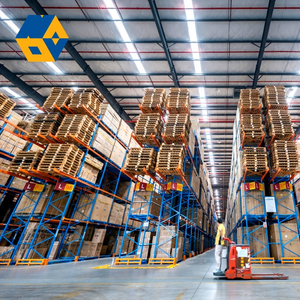
Heavy Duty 2,000 kg Per-Layer Large Capacity Pallet Racking System
For dense palletized inventories, bulk cartons, beverages and packaged food. A high-load beam-and-upright structure with OEM bay widths, beam levels, load signage and finish options for Cochabamba distributors and processors.
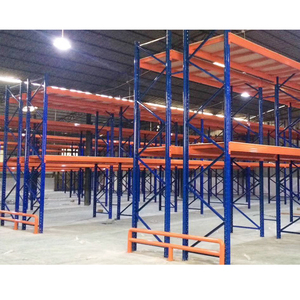
Heavy-Duty Metal and Wood Pallet Rack Shelving
A practical mix of pallet racking and shelf-based storage for wholesalers handling cartons, timber, tools and mixed pallets. Suitable for reserve storage behind a pick face, with adjustable levels and customized decking.
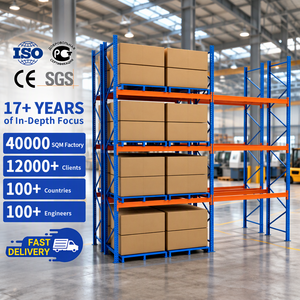
Heavy-Duty Industrial Selective Pallet Racking System
Direct access to every pallet, making it a strong baseline for importers, retailers and 3PLs with high SKU variety. Multi-level steel shelving units can be configured for forklift handling and future expansion.
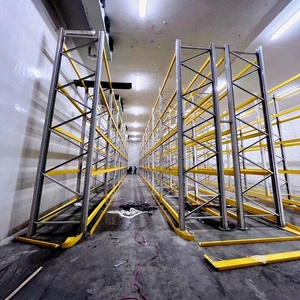
Low-Price Heavy-Duty VNA Boltless Warehouse Storage Racks
A space-efficient option for narrow aisle and boltless racking projects. Useful where land costs, rent or building constraints push Cochabamba operators toward higher utilization of existing clear height.
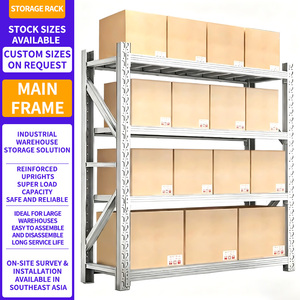
Factory-Customized 500 kg Per-Layer Adjustable Pallet Storage Racking
For light-to-medium pallet loads, cartons and logistics storage where flexibility matters. OEM control over dimensions, shelf levels, colors, labels and packaging makes it suitable for private-label or phased projects.
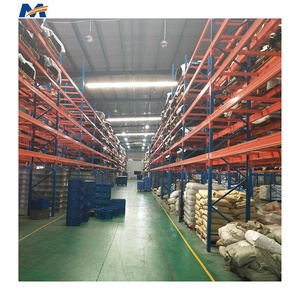
China Estantes Metalicos Heavy-Duty Pallet Rack Beams and Steel Shelving
A robust steel storage option for warehouses needing strong beams and shelf support. Can serve spare parts, hardware, building materials and mixed inventory where durable surfaces and clear load labelling are important.
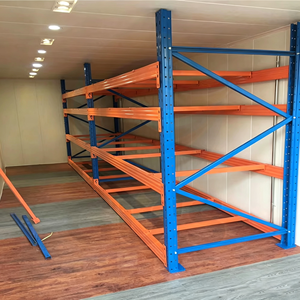
Massive Storage Selective Pallet Racking with Q235B Steel
Engineered for bulk storage and industrial pallet handling. Selective access, multi-level beams and heavy-duty warehouse racking can be adapted for local clear heights, forklift types and seismic review requirements.
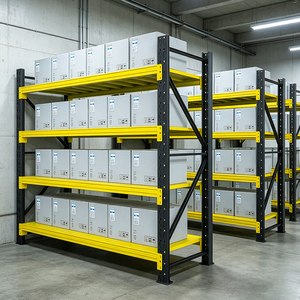
Warehouse Pallet Racking, Small Parts Shelves and Tire Racks
Combine pallet reserve, small-parts shelving and tire stacking in one warehouse plan. Ideal for automotive, hardware and service businesses that need orderly storage without separating every inventory type into a different building.
Custom OEM Pallet Storage Built Around Cochabamba Operations
Real Nice Racks LLC designs and supplies industrial storage and shelving that helps South American businesses increase capacity, productivity and operational safety. Our support follows the project from the first site survey through installation, inspection and ongoing service.
OEM Engineering, Not Catalogue-Only Selling
We adapt upright heights, bay widths, beam levels, accessories, finishes and private-label documentation. For Cochabamba buyers, this means storage that fits local pallet profiles and building constraints instead of forcing the building to fit a generic rack.
Structural and Seismic Documentation
Racking can be designed in line with EN 15512, with seismic methodology referenced to FEM 10.2.08 and EN 16681. Where Bolivian project requirements call for it, final calculations and anchoring can be coordinated with a locally licensed structural engineer.
Cold-Chain and Building-Reality Checks
Chilled and freezer systems can be specified down to approximately -30°C for fruit, meat, dairy and seafood operations. We also review floor tolerance, condensation risk, coatings, dust, forklift behavior and fire strategy early, because those details protect the investment.
Lifecycle Support in Spanish, English and Portuguese
Our South America support model covers survey, layout, manufacturing, export packing, shipment, supervised installation, handover documentation and after-sales inspection. Load signage, capacity tables and inspection records are treated as part of the system, not an optional extra.
Where Custom Pallet Storage Pays Back in Cochabamba
Cochabamba is a central-valley commercial and distribution market serving food, retail, construction, automotive, healthcare and e-commerce. The right layout depends on SKU velocity, pallet quality, inbound container flow, clear height, floor slab and handling equipment.
Agro-Food Processing and Cold Chain
Produce, dairy, beverages and packaged staples need orderly pallet positions and reliable date rotation. Selective racking supports high SKU selectivity; FIFO lanes help date-sensitive stock; and freezer-ready finishes are appropriate for chilled rooms. Clear load signs help seasonal staff and third-party inspectors verify safe beam levels.
Wholesale and Retail Replenishment
Wholesalers serving traditional retail, neighborhood stores and regional distributors need fast replenishment and mixed-pallet access. A combination of selective racking, small-parts shelving, tire racks and pick faces can connect import reception, reserve storage and dispatch without repeated double handling.
Construction Materials and Hardware
Building-materials businesses handle steel profiles, sanitaryware, cement products, tools and long goods. Cantilever racking and heavy-duty beam racking protect long or bulky items, while reinforced uprights and clearly marked aisles reduce forklift impact. OEM bay widths can be matched to truck and container modules.
Automotive, Tires and Spare Parts
Workshops, tire dealers and parts distributors need clean, labeled storage that keeps fast movers accessible. Use tire racks, small-parts shelves and medium-duty pallet racking for oil, filters and bulky components. Adjustable beams allow the layout to change as vehicle parc and import cycles evolve.
Pharmaceutical, Cosmetics and Medical Supply
High-value or temperature-sensitive inventory benefits from organized pallet positions, clear batch identification and controlled access. Racking can be configured with shelf panels, labels, dividers and mezzanine picking zones. Final designs should be reviewed with the user’s GDP, fire strategy and quality consultants.
E-commerce, Courier and 3PL Operations
Courier and 3PL operations serving Cochabamba need scalable pick, pack and dispatch zones. Combine pallet racking, multi-tier shelving and mezzanine floors to add usable square metres inside the existing building. Start with manual picking and reserve clear space for future semi-automated storage.
Cochabamba Trends Shaping Pallet Storage Decisions
Warehouse decisions in the Cochabamba market are being shaped by land costs, food and agricultural investment, modern retail expectations, import logistics and stronger safety documentation requirements.
Land and Rent Pressure in the Central Valley
As suitable warehouse land and rental space become more competitive, businesses are looking upward and inward: higher racking, narrower aisles, mezzanine platforms and mobile racking. The objective is more usable pallet positions without the cost and delay of a new building.
Agro-Industrial and Cold-Chain Investment
Food producers and distributors are investing in chilled and freezer storage to protect quality and reduce spoilage. Mobile racking such as MOVO can reduce the volume of refrigerated air that must be cooled, while keeping direct access to pallets and supporting energy-efficient cold-store operations.
Modern Retail and E-commerce Growth
Smaller order cycles, mixed pallets and faster replenishment are putting pressure on traditional storage layouts. Pallet racking must now work alongside carton picking, small-parts shelving, staging areas and dispatch buffers so that one bottleneck does not simply replace another.
Import Logistics and Container-Driven Layouts
Bolivian importers often plan around long lead times and port-to-warehouse movement via Pacific corridors. Custom OEM storage helps standardize bay modules, spare parts and future expansion so that a shipment to Cochabamba does not create a one-off racking island that cannot grow.
Safety, Insurance and Traceability
Insurers, safety teams and multinational customers increasingly ask for documentation. Load signage, capacity tables, anchor details, inspection records and change-control practices are becoming part of procurement, not just an engineering formality.
OEM Differentiation and Local Branding
Distributors and system integrators want storage that reflects their own brand and specification. OEM colors, printed labels, Spanish manuals, customized packaging and private-label documentation can turn racking from a commodity into a recognizable, supportable product platform.
What Custom OEM Pallet Storage Means in Practice
Custom OEM does not mean simply painting standard beams. For a Cochabamba project, it means aligning the storage unit with the real load profile, building envelope, handling equipment and future growth plan. That is how information gain becomes practical value: better decisions before steel is produced.
- Load and pallet profile engineering: pallet dimensions, overhang, load per layer, beam levels and decking are confirmed before layout freeze.
- Building and equipment fit: clear height, floor slab, forklift type, aisle width, column grid and turning radius are checked together.
- Climate and finish selection: powder coating, corrosion protection and cold-store detailing are matched to the environment.
- OEM identity and documentation: RAL colors, labels, Spanish manuals, load signage and private-label packaging can be specified.
- Packaging and phased delivery: export packing and shipment planning are coordinated for the importer’s customs broker and inland route to Cochabamba.
- Expansion path: layouts can be planned for future VNA, mobile racking, mezzanine or semi-automated storage without starting over.

Engineered storage systems are planned around load data, building geometry, handling equipment and lifecycle documentation.
From Cochabamba Site Survey to Long-Term Support
A clear delivery path keeps budgets predictable and timelines realistic, even when a project involves imported materials, phased handover or multi-site distribution.
Analyse
Site survey, SKU and throughput data, pallet profile, floor condition, clear height, handling equipment and seismic considerations are reviewed before layout work begins.
Design
Layout options, structural calculations, capacity comparison and accessory selection are prepared. The goal is to compare practical alternatives, not just quote one racking type.
Manufacture
Quality-controlled steel production, finish checks and export packing are aligned with the approved drawing set and project schedule.
Export and Deliver
Shipment is coordinated around the importer’s port choice, customs broker and inland route to Cochabamba. Packing lists and documentation support efficient clearance.
Install and Handover
Supervised installation, load signage, capacity tables and inspection records help the operating team take over with clear responsibilities and documented safety information.
Support and Upgrade
Periodic rack inspection, damage repair, training and capacity upgrades extend the life of the system as inventory, handling equipment and order profiles change.
A Single Engineering Partner for Storage and Growth
Real Nice Racks LLC supports multinational brands and fast-growing regional companies from first survey to installation, inspection and ongoing service. Every layout starts with real data — pallet profiles, SKU velocity, forklift types, clear height and seismic zone — so the system fits how the warehouse actually works.
Complete Storage Range
Pallet racking, industrial shelving, mobile racking, cantilever, mezzanines, pull-out units and semi-automated storage can be considered together, reducing coordination risk between suppliers.
Engineering-Led Cost Control
Comparing selective, high-density and mobile options early can avoid overbuilding or buying the wrong rack. The cheapest beam price is not always the lowest total cost per accessible pallet.
Standards and Audit Trail
Designs can reference EN 15512, EN 15620, EN 15635 and FEM 10.2.08 / EN 16681, with documentation aligned to the project’s local review requirements for Bolivia.
South America Logistics Experience
Export packing, port coordination, customs documentation and inland delivery planning are part of the project conversation, not an afterthought once production is finished.
Multilingual Technical Support
Support is available in English, Spanish and Portuguese, helping procurement, warehouse and engineering teams review drawings, load signs, inspection points and future modifications.
Long-Term Service Mindset
After-sales services include periodic rack inspection, damage repair, training and capacity upgrades. This matters in fast-changing markets where inventory profiles can shift within a few seasons.
Cochabamba Buyer Questions About Custom Pallet Storage Units
Practical answers for warehouse owners, procurement teams, importers, 3PLs and engineering consultants evaluating a custom OEM pallet storage project in Cochabamba, Bolivia.
Can you customize an OEM pallet storage unit for a Cochabamba business and private-label it?
Yes. Customization can cover upright height, bay width, beam levels, load capacity, decking, accessories, RAL color, labels, packaging and private-label documentation. For a Cochabamba warehouse, the useful first step is to share the pallet footprint, load per pallet, clear height, forklift type and any future expansion plan. The final design still needs a site survey and structural review before manufacturing.
What information should we send for an accurate quotation?
Send the warehouse location, floor plan or sketch, clear height, column grid, floor slab information, pallet dimensions, load per pallet, racking height preference, forklift or reach-truck type, number of pallet positions required and any cold-store or seismic requirements. If drawings are not available, photos and approximate dimensions are still useful. Email [email protected] with these details so the first layout discussion is grounded in real data.
How are custom pallet storage units shipped and delivered to Cochabamba, Bolivia?
Projects are normally planned with export packing, shipment to a port selected by the importer or freight forwarder, customs clearance and inland delivery to Cochabamba. The exact routing depends on Incoterms, cargo volume, customs requirements and the importer’s broker. Early coordination helps align production, container loading, port arrival and site readiness so that racking does not arrive before the floor is prepared or the installation team is available.
How do you address seismic risk, high altitude, dust and humidity?
Racking design can reference EN 15512 for static steel racking and FEM 10.2.08 / EN 16681 for seismic methodology, with local licensed engineering review where required. Base plates, anchors, bracing and beam connectors are specified for the site’s seismic zone and floor condition. High altitude itself does not change steel section capacity in the same way it affects some forklift engines, so the practical focus is on accurate floor survey, anchoring, corrosion protection, condensation control and safe operation.
Can you supply cold storage and freezer racking for food and agro-industrial users?
Yes. Cold storage pallet racking, mobile racking and high-density systems can be specified for chilled and frozen environments down to approximately -30°C, which suits fruit, seafood, meat and dairy operations. Mobile racking such as MOVO can be especially effective because fewer open aisles reduce the volume of air that must be refrigerated, supporting more efficient use of the cold-store envelope.
Which standards and documents come with the system?
Static steel racking can be designed in line with EN 15512, with floor tolerances per EN 15620, operation and inspection guidance per EN 15635, and seismic design per FEM 10.2.08 / EN 16681 where applicable. Load signage, capacity tables, layout drawings and inspection records can be supplied with the project. In Brazil, projects may also align with ABNT NBR 15524 for selective pallet racking; for Bolivia, final project requirements should be confirmed with the local engineering and permitting team.
Can you retrofit an existing Cochabamba warehouse instead of building new?
Yes. Retrofit projects often combine re-layouts, higher-density systems such as VNA, drive-in, push-back, shuttle or mobile racking, mezzanine floors and narrow-aisle configurations. High-density pallet racking can deliver up to 20% more storage capacity within the same building footprint in suitable projects, avoiding the cost and delay of new construction. Every retrofit still needs a structural review of the existing floor, building and fire strategy.
What after-sales support is available, and how do we request a quote?
After-sales support can include periodic rack inspection, damage repair, replacement parts, operator awareness training and capacity upgrades as inventory changes. To request a quotation, send your warehouse location, floor plan, clear height, pallet dimensions, load per pallet, handling equipment and any local requirements to [email protected]. You can also start the conversation with the button below.
Request a Cochabamba-Specific Pallet Storage Design
Whether you are planning a new distribution warehouse, expanding an existing storage area, or replacing damaged racking, the most useful next step is a data-led layout review. Send your location, floor plan, clear height, pallet size, load per pallet, forklift type and target pallet count. Our team will help compare selective, high-density, mobile and shelving options against your real operating flow.