8 Industrial Storage Shelving & Racking Products for Georgetown Buyers
Below are eight product families that address the most common Georgetown storage problems: salt-air corrosion, long pipe and lumber, high-volume pallet flow, fast-moving spare parts and limited warehouse floor area. Each product can be quoted for a Georgetown delivery, with corrosion options and load documentation confirmed against your site.
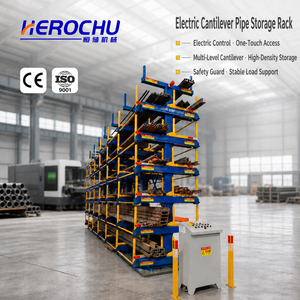
Electric Cantilever Rack Automated Retrieval System Foldable Q235B Carbon Steel Pipe Storage for Industrial Long Materials
Recommended for offshore energy yards, pipe yards and steel service centres storing long, heavy materials. The powered and foldable cantilever concept improves retrieval speed and reduces aisle congestion where high-value pipe and profiles must be protected from damage.
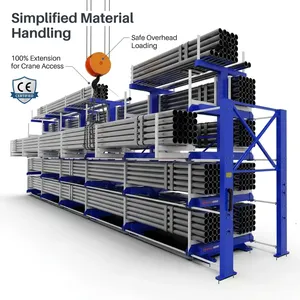
Double Sided Telescopic Cantilever Rack Manual Crank 100% Extension Steel Tube Pipe Storage Crane Access CE Certified
Designed for long tube and pipe storage where crane access and full extension matter. The double-sided telescopic cantilever with manual crank is practical where power reliability varies and suits maintenance stores needing 100% extension for lifting.
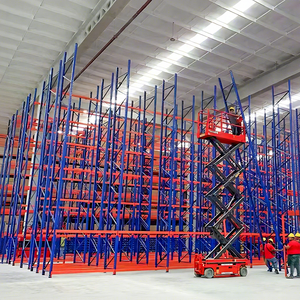
Pallet Rack Heavy Duty Industrial Warehouse High Quality Warehouse Heavy Duty Rack Industrial Racks for Storage
A heavy-duty pallet racking workhorse for import, retail, 3PL and industrial stores in Georgetown. It supports fast-moving palletised stock, accepts accessory labels and guards, and can be expanded with additional beam levels as volumes grow.
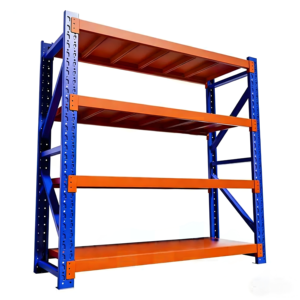
Customized 4-Tier Metal Storage Racks Steel Shelving Units with Corrosion Protection for Warehouse Home Office or Garage
Useful for spare parts, electrical components, retail backrooms and workshop stores exposed to humid coastal air. The customised four-tier steel shelving with corrosion protection helps protect packaged goods while keeping inventory visible and accessible.
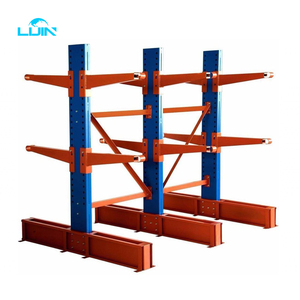
Heavy Duty Cantilever Racking System for Factory and Warehouse
For fabrication shops, factory warehouses and contractors storing profiles, moulds, frames or heavy long components. Heavy-duty cantilever racking provides open-front access and high load capacity without front columns blocking forklift or crane handling.
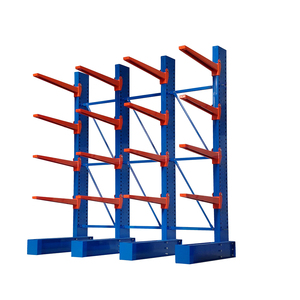
Industry Warehouse Steel Structural Pipe Rack Cantilever Rack for Pipe / Lumber Storage
Intended for pipe, lumber and structural steel yards requiring straightforward forklift or crane access. The steel pipe and lumber cantilever format is a strong first consideration for construction suppliers and marine fabrication support in Georgetown.
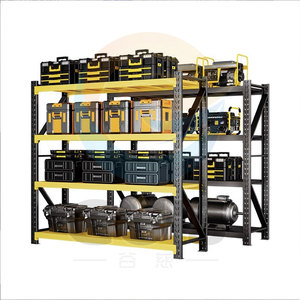
Heavy-Duty Boltless Shelving Racking System for Industrial & Home Use 5 Layer Steel Warehouse Storage Rack Shelf Original Black
Best for small-parts storage where speed of installation and flexible reconfiguration matter. Five-layer boltless steel shelving can be adjusted as SKU ranges change, making it useful for contractors, retail stockrooms, workshops and maintenance departments.
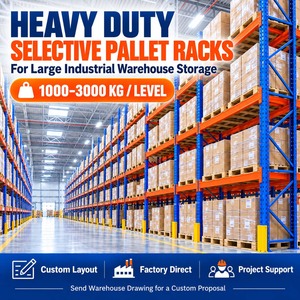
Heavy Duty Selective Pallet Racks for Large Industrial Warehouse Storage
Recommended when direct access to every pallet matters more than maximum density. Heavy-duty selective pallet racks support mixed SKUs, high service levels and distribution centres serving Georgetown’s port, retail and e-commerce flows.
Why Georgetown Warehouses Need a Localised Storage Shelving Strategy
Georgetown is Guyana’s commercial capital and Atlantic gateway. It connects port imports with a fast-changing project economy: offshore energy, construction materials, rice and sugar, food distribution, retail, e-commerce, government stores and marine fabrication.
That mix creates a difficult storage brief. One warehouse may hold long pipe, palletised imports, cartons, bagged goods and small maintenance parts. A generic catalogue page cannot tell you which shelf, beam or coating will survive that combination. The correct system must fit load, handling equipment, floor slab, clear height, humidity exposure, spares strategy and future growth.
Coastal humidity, salt-laden air, heavy rain and occasional flood risk make finish specification as important as static load. A rack may be mechanically adequate but still fail inspection early if the coating, fasteners, footplates and ventilation are wrong. Port lead times also matter: missing beams and unlabelled components can leave a project waiting after the container arrives.
- Climate-ready specification: powder coat, galvanized steel or cleanable finishes selected for your exposure.
- Import-proof planning: export packing, labelled components, container loading and spare beams or uprights.
- Documented safety: capacity tables, load signage, anchor details and installation handover.
- Scalable design: manual shelving today, high-density or semi-automated storage tomorrow.

Storage planning should connect product selection, structural calculation, export packing and lifecycle support.
Where Industrial Storage Shelving Is Used in Georgetown
Georgetown buyers rarely need one product in isolation. The most effective projects mix pallet racking, cantilever, shelving and heavy-duty storage to match how goods arrive, move and leave the building.
Offshore Energy, Marine & Pipe Yards
Use open-front cantilever storage for casing, line pipe, flanges, valves and oversized maintenance spares. Crane or forklift access is faster where columns do not obstruct the lift. In salt-air environments, specify galvanized or high-build coating, protected anchors and a spare-parts plan.
Recommended: Electric Cantilever Rack; Telescopic Cantilever Rack; Heavy Duty Cantilever Racking.
Port, Import & 3PL Distribution
Selective pallet racking supports customs release, cross-docking and same-day order fulfilment. Keep every pallet accessible, label beam levels and protect uprights against forklift impact. Aisle width should follow the forklift fleet, not a catalogue default.
Recommended: Heavy Duty Pallet Rack; Selective Pallet Racks.
Rice, Sugar, Food & Agricultural Supply
Bagged goods and food ingredients need cleanable storage, moisture control and clear access for pest management. Corrosion-protected shelving and pallet racking should be matched with floor drainage checks and suitable roof maintenance.
Recommended: 4-Tier Corrosion-Protected Shelving; Selective Pallet Racks.
Retail, E-commerce & Spare Parts
Broader SKU ranges and smaller order profiles reward boltless shelving, multi-level steel shelves and clear picking labels. Plan carton sizes, shelf spacing and replenishment routes before adding more floor area.
Recommended: Boltless 5-Layer Shelving; Customized 4-Tier Shelving.
Construction, Lumber & Steel Fabrication
Store reinforcement bar, profiles, timber and fabricated frames on cantilever systems that leave the front clear for lifting. Double-sided layouts can separate goods received from goods ready for dispatch.
Recommended: Structural Pipe Rack; Telescopic Cantilever Rack; Heavy Duty Cantilever Racking.
Food Processing, Cold Chain & Pharmaceuticals
Low-temperature stores need condensation control, cleanable surfaces and inspection access. For high-turn chilled SKUs, selective racking protects selectivity; for dense cold storage, mobile racking can reduce refrigerated air volume and energy waste.
Recommended: Selective Pallet Racking and engineered cold-store options from the wider Real Nice Racks range.
Georgetown Market Trends Reshaping Industrial Storage Procurement
Local demand is changing faster than many static catalogues suggest. The following planning priorities reflect typical Georgetown warehouse constraints and procurement patterns.
Offshore Energy Supply-Chain Maturation
Oil and gas activity is turning ordinary warehouses into technical supply bases. Buyers increasingly ask for long-material storage, traceable load documentation, corrosion packages and spare parts before purchase.
Warehouse Space & Rental Pressure
Limited industrial land around Georgetown and the East Bank corridor makes vertical capacity and higher-density layouts more attractive than renting another unit. Selective, mobile and mezzanine options should be compared before expansion.
Import Lead-Time Planning
Container-based purchasing rewards modular design, labelled components, planned spare beams or uprights and a realistic shipping-to-installation schedule. A delayed beam can stop a whole bay.
Climate-Resilient Specifications
Humidity, salt-laden air, heavy rain and flood exposure push buyers toward galvanized steel, improved powder coating, raised base details and inspection-friendly designs.
Retail & E-commerce SKU Growth
More SKUs and smaller order profiles increase the need for accurate labels, boltless flexibility, selective pallet access and clear pick paths inside the same building footprint.
Compliance & Traceability
Insurers, auditors and safety teams increasingly expect capacity tables, anchor details, load signage, inspection records and documented handover—not just a delivery note.
The bars show relative planning weight used in this buyer guide. They are not published market statistics.
How to Compare Factories & Suppliers in the Georgetown Market
The lowest quote is rarely the lowest lifetime cost. Use this six-point scorecard before approving a factory-direct shelving supplier for a Georgetown project.
Engineering Evidence
Ask for load capacity tables, beam and upright specifications, anchor assumptions, load signage and installation guidance. For projects outside Guyana, confirm design references such as EN 15512, FEM 10.2.08 or EN 16681 where relevant.
Climate & Corrosion Package
Confirm indoor or outdoor exposure, roof leakage, distance from the coast, washdown and food-safety requirements. Standard paint is rarely enough for open yards; galvanized or high-build systems may be more suitable.
Port-to-Site Readiness
Check export packing, container loading, component labelling and the spare-parts list. Factory-direct suppliers should help you plan arrival at the Port of Georgetown and final delivery to site.
Installation & Inspection
Good product supply includes floor checks, safe installation, pre-handover inspection and documented capacity signs. A supplier that disappears after shipment leaves the safety risk with you.
Spares & Future Expansion
Choose a modular system with compatible uprights, beams and accessories. It should accept guards, labels, additional levels and future high-density upgrades without replacing everything.
Total Cost, Not Lowest Price
Compare freight, installation, inspection, maintenance and downtime, not just steel price. A slightly higher quote with usable documentation and spare parts can be cheaper over the asset’s life.
Real Nice Racks LLC: A Factory-Direct Engineering Partner for Georgetown Storage Projects
Real Nice Racks LLC designs and supplies industrial storage and shelving that help businesses increase capacity, productivity and operational safety. We support multinational brands and fast-growing regional companies from the first site survey through installation, inspection and ongoing service. For Georgetown buyers, that means one partner can connect product selection, structural calculation, export packing and lifecycle support instead of leaving you to coordinate several disconnected traders.
Every layout starts with real project data: pallet profiles, SKU velocity, forklift types, clear height, floor condition and environmental exposure. In Georgetown, we also translate coastal humidity, flood checks, import lead times and future growth into the specification. The result is a storage system that fits how the warehouse actually works, not a generic template.
- Structural calculations, capacity tables and load signage delivered with every project.
- Technical support in English, Spanish and Portuguese, with clear documentation for site teams.
- Scalable systems: selective, high-density, mobile, cantilever, shelving and semi-automated storage.
- Lifecycle support: site survey, supervised installation, rack inspection, repair and capacity upgrades.
- Design references including EN 15512, EN 15620, EN 15635, FEM 10.2.08 / EN 16681 and ABNT NBR 15524 where applicable.

Supervised installation, load signage and documented handover help protect Georgetown warehouse operations.
Data-Led Layouts
We begin with pallet dimensions, clear height, forklift type, floor slab and throughput data.
Documented Safety
Load signage, capacity tables and installation records help procurement, safety and insurance reviews.
Climate-Ready Protection
Corrosion choices, fasteners and ventilation are considered before the finish is approved.
Growth Without Rebuild
Modular products can move from manual picking to higher density or semi-automation over time.
From Georgetown Inquiry to Installed Storage System
A clear four-stage process keeps budgets more predictable and timelines more realistic, especially when equipment must be manufactured, export packed and shipped before installation.
Share Site & Load Data
Send the warehouse location, floor plan, clear height, pallet size and weight, product types, handling equipment, target port and timeline.
Compare Layouts
Evaluate selective, cantilever, boltless, four-tier or heavy-duty storage. Agree corrosion protection, anchors, aisle widths and safety accessories.
Manufacture & Export Pack
Quality control, component labels, container plan, spare parts and shipping documentation are prepared for delivery to the Port of Georgetown.
Install, Inspect & Handover
Installation, load signs, inspection records, training and a future upgrade plan help protect the system after handover.
Georgetown Industrial Storage Shelving FAQ
Common purchasing, specification and logistics questions from Georgetown buyers comparing industrial shelving factories and suppliers.
What is the best storage shelving for Georgetown’s humid coastal climate?
There is no single finish for every warehouse. Indoor spare-parts stores may use powder-coated steel with edge protection; open pipe yards exposed to salt air may justify hot-dip galvanized or high-build coating; food and pharmaceutical areas may require cleanable or stainless options. The specification should consider roof condition, distance from the coast, washdown, ventilation and inspection access—not only steel price.
Can I combine pallet racking, cantilever and shelving in one project?
Yes. A common Georgetown layout uses selective pallet racking for imported pallets, cantilever for pipe, lumber or profiles, and boltless or four-tier shelving for spares and small parts. Mixed systems need one coordinated aisle and safety plan so forklifts, cranes and pickers do not conflict.
What should I include in an inquiry for a Georgetown storage project?
Send the warehouse location, floor plan or dimensions, clear height, floor slab condition, pallet dimensions and weight, product types, handling equipment, target port, project timeline and any corrosion or cold-store requirement. Photos of the building and loading area are useful. If data is missing, the engineering team can start with assumptions for review.
How does shipping to Georgetown work for factory-direct shelving?
Factory-direct systems are export packed for container shipping and can be coordinated to the Port of Georgetown under the agreed freight terms. Good packing plans label bays and components to reduce installation delays. Lead time depends on production, shipping schedule and customs clearance, so it is confirmed at quotation rather than estimated from a generic catalogue.
Do you provide freezer and cold storage shelving?
Yes. Cold storage racking, mobile racking and high-density systems can be specified for chilled and freezer environments down to approximately -30°C. Material and coating choices should consider condensation, cleaning, frost and inspection access. Mobile racking such as MOVO can reduce the volume of refrigerated air that must be cooled.
Can racking be designed for seismic areas or other special codes?
For projects in seismic markets, design can follow FEM 10.2.08 / EN 16681 and be coordinated with local requirements such as NCh 433, E.030, NEC-SE-DS or NSR-10. For Georgetown, earthquake risk is not usually the dominant issue, but floor strength, anchors, wind-driven rain, flooding and maintenance access still need review.
Can you upgrade an existing Georgetown warehouse instead of building new?
Yes. Retrofit projects often combine a re-layout, higher-density pallet racking, narrow-aisle planning, mezzanines or mobile racking. High-density systems can deliver up to 20% more storage capacity within the same building footprint, which avoids the cost and delay of new construction.
What after-sales documentation and support are available?
Projects can include capacity tables, load signage, installation records, inspection guidance and spare-parts advice. Technical support is available in English, Spanish and Portuguese. Periodic inspection, damage repair and capacity upgrades help protect the system over its service life.
Request a Georgetown-Specific Storage Layout
Share your warehouse dimensions, pallet details and target timeline. We will recommend a practical product mix from pallet racking, cantilever, shelving or heavy-duty storage and confirm the documentation needed for your project.
Helpful to include: location, floor plan, clear height, pallet load, forklift type, port arrival target and timeline.
Prefer email? [email protected]