8 Mobile Shelving, Pallet Racking & High-Density Systems for Curitiba Buyers
The shortlist below covers powered mobile racking, shuttle storage, selective pallet racking, multi-level racking, cantilever racking and heavy-duty adjustable systems. Each product can be reviewed by clear height, pallet profile, temperature zone, throughput and future automation plan before a layout is released.
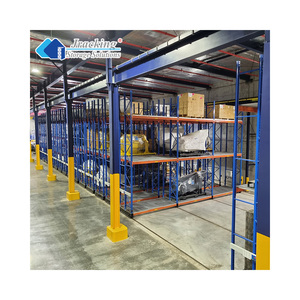
Jracking Flexible Electric Mobile Rack System Automated Pallet Warehouse
Best-fit intent: high-density mobile storage where every pallet must remain accessible and future automation is part of the Curitiba growth plan.
View product details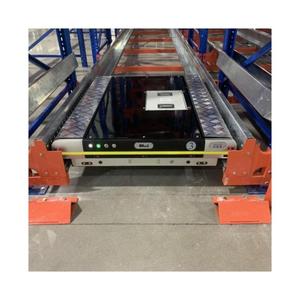
Custom Warehouse Steel Rack Large Capacity Material Shelves Automatic Storage Shuttle Pallet Racking With CE
Best-fit intent: deep-lane, high-throughput storage for 3PL, food, distribution and fast-moving palletised inventory.
View product details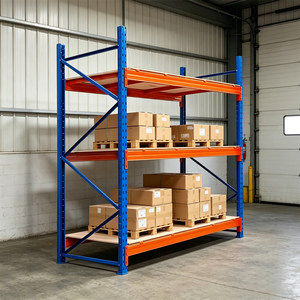
Powder Coated Heavy Duty Rack Industrial Warehouse Storage Pallet Racking Adjustable Industrial Shelves
Best-fit intent: general warehouse storage where selective access, powder-coated finish and adjustable levels matter.
View product details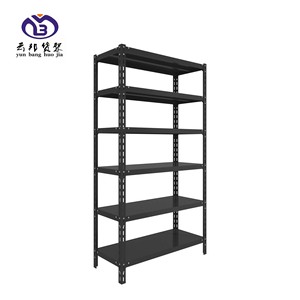
Heavy Duty Industrial Steel Garage Shelving Unit Pallet Racking for Workshop and Warehouse Use Metal Storage Rack
Best-fit intent: maintenance stores, spare parts, workshop storage and industrial shelving where load capacity and durability are critical.
View product details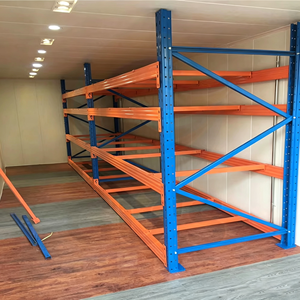
Massive Storage Industrial Pallet Rack Selective Racking System Q235B Steel Heavy Duty Warehouse Rack for Bulk Storage
Best-fit intent: high-volume bulk storage with direct access to every pallet, suitable for distributors and industrial warehouses.
View product details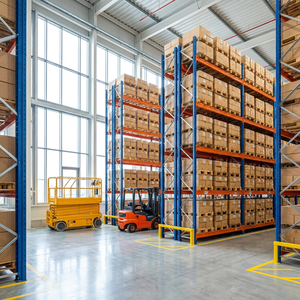
Q235B Steel Certificate Rack Size Certificate Heavy Duty Rack Multi Level Pallet Rack Warehouse Shelving
Best-fit intent: utilising vertical height for multi-level storage, picking faces and high-density warehouse shelving.
View product details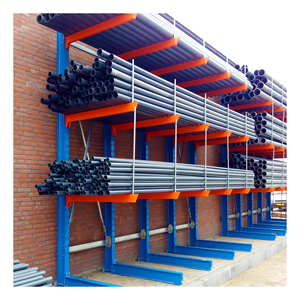
China Wholesale Industrial Warehouse Heavy Duty Single Side Cantilever Rack
Best-fit intent: steel profiles, pipes, timber, aluminium and building materials that cannot be stored efficiently on standard pallet beams.
View product details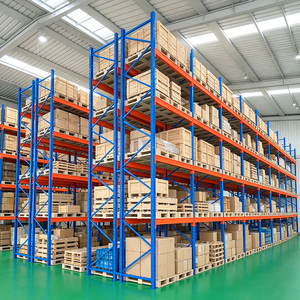
Industrial Heavy Duty Pallet Rack 1000-5000KG Load Capacity Warehouse Storage Racking System with Adjustable Shelves
Best-fit intent: flexible pallet racking from 1,000 kg to 5,000 kg per level, ideal for mixed-load warehouses and phased expansions.
View product detailsNot sure whether mobile shelving, mobile pallet racking or shuttle storage fits your Curitiba building? Start with your pallet profile, clear height and temperature zone.
Inquire NowWhy the Curitiba Market Is Moving Toward Mobile Shelving Systems
Curitiba is more than a city on a supplier’s map. The metropolitan region combines the CIC industrial district, Araucária’s refining and logistics cluster, São José do Pinhais’ automotive supply chain and fast-growing e-commerce fulfilment networks serving Paraná and southern Brazil. For warehouse teams, the pressure is familiar: suitable industrial land close to the city is scarce, clear heights are fixed, labour is not free and SKU counts keep rising.
That is why the buying question has shifted from “How many bays can we buy?” to “How much usable capacity can we release from the building we already occupy?” Mobile shelving and mobile pallet racking answer that question by replacing multiple fixed aisles with one movable working aisle. The system opens where a forklift, AGV, order picker or operator needs access, then closes to create dense storage elsewhere.
In a Curitiba cold store, this can reduce the refrigerated air volume that must be cooled. In an automotive parts warehouse, it protects high-value SKUs while increasing positions per square metre. In an e-commerce or 3PL operation, it creates room for buffer stock without signing a new lease. The real value is not the rack itself — it is the usable pallet position gained without expanding the building envelope.

Mobile racking opens one working aisle on demand, allowing dense storage and direct pallet access in Curitiba warehouses where floor space is constrained.
Mobile Shelving vs Mobile Pallet Racking: Define the Load Before You Compare Suppliers
“Mobile shelving” is often used as a broad search term, but Curitiba buyers should specify whether the load is hand-loaded cartons, archives, spare parts or palletised stock. The engineering, safety documentation and maintenance requirements differ.
Hand-loaded mobile shelving
Best for cartons, spare parts, files, e-commerce SKUs and small components. Look for shelf loading limits, divider systems, aisle safety controls and a layout that supports picking productivity, not only storage density.
Mobile pallet racking
Best for palletised goods in cold stores, distribution centres and 3PL warehouses. The system moves racking runs on rails or bases, opening one aisle for forklift or AGV access while keeping 100% of pallets addressable.
Automation-ready high-density storage
For projects with rising throughput, product 1 and product 2 should be reviewed alongside shuttle and automated pallet warehouse options. Plan the data, safety controls and maintenance access early so a manual phase can evolve into automation without a complete rebuild.
Where Mobile Shelving and High-Density Racking Fit in Curitiba
Curitiba’s strongest storage demand comes from industrial supply chains, cold-chain food distribution, e-commerce, healthcare and regional 3PL operations. The right system depends on the load, the building and the service promise to the end customer.
Automotive & metalworking
In São José dos Pinhais, CIC and surrounding industrial zones, suppliers store tooling, stampings, spare parts and long profiles. Use heavy-duty selective racking, cantilever racking for long goods and pull-out or robust shelving for high-value tooling.
Cold chain, food & beverage
Cold stores around CIC, Araucária and Fazenda Rio Grande benefit from mobile pallet racking, shuttle systems and freezer-ready finishes. Fewer aisles can mean less refrigerated air volume to cool, lower energy demand and more pallet positions inside the same envelope.
E-commerce & 3PL fulfilment
For fast-moving SKUs, multi-level racking, adjustable selective racking and shelving with clear picking faces support replenishment and order picking. Reserve the densest systems for slow-movers and buffer stock, not every SKU.
Pharmaceutical & healthcare
Powder-coated racking, documented load signage and controlled access matter in healthcare logistics. Curitiba distributors should require capacity tables, inspection records and a clean, maintainable finish suitable for controlled storage areas.
Furniture, timber & building materials
Paraná’s wood, furniture and construction supply chains need cantilever racking for boards, profiles, pipes and packaged long goods. Single-side cantilever is useful against walls; double-side configurations improve aisle utilisation in larger buildings.
MRO, spare parts & workshops
Maintenance departments frequently waste prime floor area on slow-moving parts. Heavy-duty industrial shelving, adjustable pallet racking and labelled bin locations can improve both space use and technician response time.
Four Localised Trends Shaping Storage Decisions in Paraná
Dense retrofits before new leases
Warehouse operators are under pressure to add capacity without committing to new buildings or higher rents. Mobile racking, shuttle systems and mezzanine-supported picking are being reviewed as retrofit options rather than last-resort ideas.
Cold-chain energy discipline
Freezer and chilled warehouses are scrutinising energy consumption per pallet. Mobile racking that reduces aisle volume can support that goal, provided condensation control, drainage, rail tolerances and maintenance access are designed correctly.
Automation phasing
Curitiba buyers increasingly ask for a manual or semi-automated first phase that can later connect to shuttle, AGV or automated pallet warehouse infrastructure. The critical decision is the base system and control architecture, not only today’s bay count.
Documentation and lifecycle value
Procurement teams are asking for load signage, capacity tables, inspection routines and spare-parts availability. A lower-priced rack that cannot be inspected, repaired or expanded safely is not a lower total cost of ownership.
How to Compare Mobile Shelving Suppliers in Curitiba
Shortlisting mobile shelving suppliers in Curitiba is easier when every supplier answers the same scorecard. Use the criteria below as a starting point, then adjust the weighting to match your project risk and operating model.
1. Structural documentation
Ask for structural calculations, load tables, anchor assumptions, load signage and inspection guidance. For Brazil, confirm alignment with ABNT NBR 15524 where selective pallet racking applies.
2. Real application engineering
The supplier should translate your pallet profile, SKU velocity, clear height, forklift type, temperature zone and fire egress requirements into a layout — not send a catalogue page with a price.
3. Floor, rail and anchor review
Mobile systems depend on floor tolerance and rail alignment. Demand a floor survey, tolerance statement and base-plate or anchor review before manufacture.
4. Installation supervision
Curitiba projects may involve imported components, Brazilian subcontractors and site access constraints. Clarify who supervises installation, who signs off tolerances and who issues the handover pack.
5. Inspection and spare parts
Ask how often inspection should occur, what damage criteria apply, how replacement beams or uprights are supplied and whether upgrade capacity can be added after year one.
6. Cost per usable position
Compare cost per usable pallet position after aisle loss, safety clearance and maintenance access. A denser system can be more economical even when the initial invoice is higher.
Example decision weighting for a Curitiba project
Weighting is illustrative only. Each Curitiba procurement team should set its own risk profile.
E-E-A-T in Practice: Engineering Evidence Curitiba Buyers Can Verify
Real Nice Racks LLC approaches storage projects with a documented engineering mindset. For static steel pallet racking, the reference framework is EN 15512; floor tolerances are reviewed against EN 15620; operation and inspection guidance follows EN 15635. In Brazil, projects can be aligned with ABNT NBR 15524 for selective pallet racking. For mobile systems, rail flatness, base tolerances, anchor design, condensation control and maintenance access are reviewed alongside the rack structure.
Final anchor and local structural checks can be coordinated with a locally licensed structural engineer where required. This matters in Curitiba because imported racking must fit the real building, the real floor and the real unloading sequence — not only a catalogue load chart. The deliverable is a system your facilities team, insurer and maintenance contractor can inspect and maintain.

Supervised installation, documented handover and inspection routines are part of the lifecycle approach, not optional add-ons.
Supplier Advantages for Curitiba and Paraná Warehouse Projects
Real Nice Racks LLC designs, supplies and supports industrial storage systems across South America, including Brazil, Chile, Peru, Colombia, Argentina, Ecuador, Uruguay, Paraguay and Bolivia. The product range covers pallet racking, mobile racking, shelving, cantilever, mezzanines and semi-automated storage machines.
South America-focused support
Project support across nine South American markets, with English, Spanish and Portuguese communication for technical and commercial teams.
One team across storage systems
Racking, shelving, mezzanines, cantilever and semi-automation can be reviewed in one layout, reducing interface risk between suppliers.
Structural discipline
Seismic-ready design where the project location requires it, with the same structural verification mindset applied to Curitiba buildings. Calculations, load signage and inspection records support handover.
Cold-chain capability
Chilled and freezer systems can be specified for environments down to approximately -30°C, suited to fruit, seafood, meat and dairy export hubs across Brazil and South America.
P90 and MOVO platforms
High-density P90 racking and MOVO-style mobile racking can help release capacity on the same footprint and provide a phased path toward automation.
Lifecycle services
Site survey, layout and structural design, manufacturing, export packing, shipment to the nearest port, supervised installation, handover, inspection, damage repair and capacity upgrades.
What Curitiba Buyers Ask Before Buying Mobile Shelving
These are the practical procurement questions that arise when a warehouse in Curitiba, Paraná or southern Brazil compares mobile shelving suppliers and high-density storage options.
What is the difference between mobile shelving and mobile pallet racking?
Mobile shelving usually refers to hand-loaded compact shelving for cartons, spare parts, files or small components. Mobile pallet racking carries pallets and is moved by rail-guided bases or powered mobile carriages. Curitiba buyers should specify load type, weight per shelf or pallet, aisle access and handling equipment before comparing prices.
Can mobile racking be installed in an existing Curitiba building?
Yes, but the building must be reviewed first. Floor flatness, slab capacity, rail alignment, drainage, fire egress, column positions and clear height all affect feasibility. A retrofit can be highly effective when the floor survey and anchor design are completed before manufacture.
How should I compare mobile shelving suppliers in Curitiba?
Compare structural documentation, engineering assumptions, floor and rail tolerances, installation supervision, inspection records, spare-parts support and cost per usable pallet position. Do not compare only the price per bay, because aisle loss and maintenance access can change the real capacity delivered.
Do the systems align with Brazilian standards?
For selective pallet racking in Brazil, projects can be aligned with ABNT NBR 15524. International design references include EN 15512 for static steel pallet racking, EN 15620 for floor tolerances and EN 15635 for use and inspection. Final local structural and anchor checks can be coordinated with a licensed Brazilian engineer where required.
What lead time should a Curitiba buyer expect?
Lead time depends on layout approval, structural verification, manufacturing slots, export packing, ocean freight and customs clearance. Delivery commonly routes through Paranaguá or Santos, followed by inland transport to Curitiba. Supervised installation dates should be planned only after site readiness, access and unloading conditions are confirmed.
Can mobile racking be used in cold storage near Curitiba?
Yes. Cold-chain systems can be specified for chilled and freezer environments, with finishes, lubricants and components selected for the temperature zone. Mobile racking is especially relevant when reducing aisle volume can lower refrigeration demand, but condensation, rail maintenance and safety controls must be designed for the operating temperature.
What information is needed for an accurate quote?
Provide the warehouse location, floor plan, clear height, pallet dimensions, load per pallet, temperature range, SKU velocity, forklift or AGV type, required throughput, fire egress constraints and any planned expansion. Photos and a floor survey help identify slab, column and access issues early.
Can the system be expanded or inspected after installation?
Yes. A properly designed system should include load signage, capacity tables, inspection recommendations and replacement-part identification at handover. Periodic inspection, damage repair and capacity upgrades help protect the investment over the life of the warehouse.
Get a Curitiba-specific mobile shelving layout review
Send your building location, floor plan, clear height, pallet size, load per pallet, temperature range and handling equipment. The engineering team can review mobile shelving, mobile pallet racking, shuttle storage and heavy-duty racking options against your real operating data. Email: [email protected].