8 OEM/ODM Warehouse Racking Systems for Push-Back and High-Density Projects in Paraguay
Each system below can be supplied as selective, push-back, drive-in, shuttle or hybrid racking depending on pallet profile, SKU velocity, clear height and land constraints. For Paraguay buyers, the strongest results usually come from combining push-back density with selective access for fast movers.
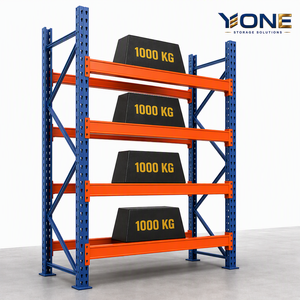
Durable Steel Storage Rack Heavy Duty Pallet Racking for Industrial Warehouse Storage with Safety Accessories
A robust starting point for heavy-duty industrial storage. OEM/ODM scope can include push-back carts, beam levels, column guards, anti-collision protection and branded load signage.
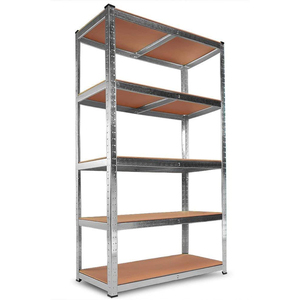
5 Tier Warehouse Racks Heavy Duty Storage Shelf Metal Racks Shelves for Warehouse
Useful for multi-level carton picking and hand-loaded storage alongside pallet racking. This is often paired with selective bays for slow-moving SKUs and spare parts.
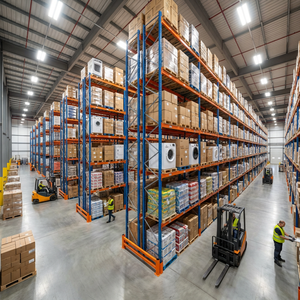
Custom Multi Level Heavy Duty Steel Warehouse Industrial Pallet Storage Shelf Rack
Built around project drawings rather than a fixed catalogue. Specify push-back depth, load per level, bay width, finish and shipping mark requirements for Paraguay import clearance.
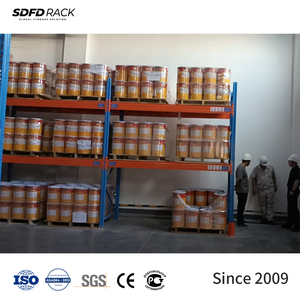
SDFD Industrial Heavy Duty Steel Pallet Rack Warehouse Shelving System for Storage Goods
A flexible base for industrial storage layouts. It can serve as a selective platform or support hybrid push-back rows where reserve stock needs higher density.
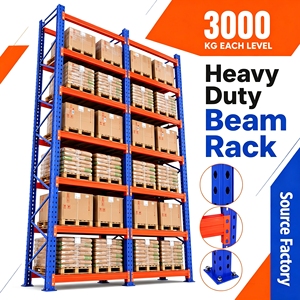
Factory Direct 3000kg High Load Metal Pallet Racking Industrial Steel Pallet Rack System for Warehouse Storage Heavy Goods
A 3,000 kg-class option for heavier pallets. Final capacity must always be confirmed against beam span, column profile, pallet condition and floor slab data.
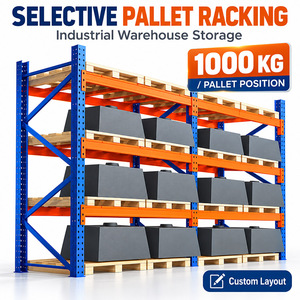
Factory Direct Heavy Duty Selective Pallet Racking System 2000kg Per Level 3-Level Adjustable Warehouse Storage Rack
Best where 100% pallet selectivity and FIFO control are required. Many Paraguay projects combine selective racking for fast movers with push-back racking for stable reserve stock.
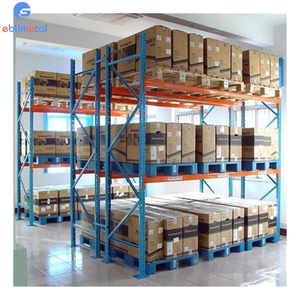
Heavy Duty Steel Warehouse Stacking Pallet Racking System Industrial Pallet Rack Shelf
A heavy-duty steel racking platform for high-load industrial storage. It can be engineered for dense reserve storage or as the structural base for a mixed selective and push-back layout.
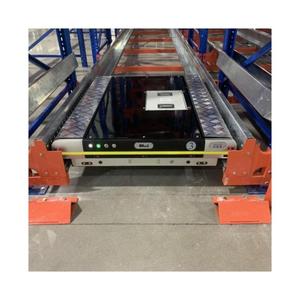
Custom Warehouse Steel Rack Large Capacity Material Shelves Automatic Storage Shuttle Pallet Racking With CE
For high-throughput, semi-automated projects where push-back density is not enough. Shuttle systems are worth evaluating when labour availability, safety or future automation are board-level concerns.
Every product page above preserves the original product URL. For a Paraguay-specific push-back layout, send your pallet dimensions, clear height, load per pallet and target pallet count through the inquiry button.
Why Push-Back Racking Is Moving Up the Agenda for Paraguayan Warehouses
Paraguay’s warehouse economics are changing. Import-led retail, agribusiness, cold chain and 3PL operators are being asked to handle more pallets without taking on new land, new buildings or higher refrigeration volumes.
For many buyers in Asunción, Ciudad del Este, Encarnación and Villeta, the immediate challenge is not whether to expand, but how to extract more usable pallet positions from an existing building. Push-back racking is often the practical middle ground: it removes most working aisles, stores pallets two to four deep on nested carts, and keeps more SKUs directly accessible than drive-in or block stacking.
The trade-off is deliberate. Push-back is a LIFO system, so it performs best with stable, non-date-sensitive SKUs and medium-to-high pallet volumes. For fast-moving FMCG, imported household goods, construction materials, spare parts and seasonal agribusiness inventories, that can be a strong fit when selective racking no longer meets density targets. Strict FIFO, high-SKU picking and batch-controlled goods usually remain better served by selective, mobile or shuttle systems.
Paraguay also adds its own design brief: a landlocked logistics chain, a hot and humid subtropical climate, seasonal stormwater and river-level risk, and growing pressure on cold-chain capacity for beef, dairy and other perishables. An OEM/ODM approach matters because the racking must be engineered around those realities rather than selected from a catalogue. The most useful information gain for buyers is not a single load figure; it is a documented comparison of density, selectivity, LIFO/FIFO flow, finish, shipping route and lifecycle cost.
Where Push-Back Racking Fits in Paraguay’s Warehouse Landscape
Push-back is not a universal replacement for selective racking. It is a density tool. These six local scenarios show where it usually earns its place — and where a hybrid layout is more defensible.
Four Forces Shaping Warehouse Racking Demand in Paraguay
Paraguay’s storage decisions are being shaped by trade routes, modern retail, cold-chain investment and the cost of land. Each trend changes the racking specification, not just the pallet count.
What a Paraguay-Specific Push-Back Racking Specification Should Include
Push-back racking is not simply selective racking with carts added. It is a system. The rails, carts, brakes, end stops, beam levels, column guards, forklift interface and floor anchors must be designed together. For Paraguay, we recommend a factory-approved drawing set, load plate for every bay and a clear LIFO/FIFO decision before prices are compared.
- Pallet footprint, load per level, overhang, load distribution and pallet condition — not just a nominal tonne figure.
- Clear height, beam spacing, first-level height, forklift mast height and aisle width.
- Push-back depth: two, three or four pallets deep, with cart brakes, nested carts and end stops.
- Flow logic: push-back for stable LIFO stock; selective for 100% selectivity; drive-in or shuttle for other high-density flows.
- Floor flatness, slab capacity, anchor design, base plates and wind or flood exposure where relevant.
- Climate finish: hot-dip galvanizing or high-build powder coating for humid, river-adjacent or washdown environments.
- Safety documentation: load signage, anti-collision guards, inspection schedule and installer handover records.
- Export documentation: packing list, container loading plan, certificate of origin and Spanish-language installation manual where required.
OEM/ODM scope can include custom column colours, buyer-branded load signs, private-label packaging, spare-part kits and factory pre-shipment inspection. Buyers who need stronger assurance can request a factory audit and third-party inspection before shipment.

Push-Back vs Selective, Drive-In and Shuttle Racking in Paraguay
Use these planning indicators to frame an engineering discussion. Actual density and throughput depend on pallet size, aisle width, clear height, truck type, SKU profile and building layout. Percentages are illustrative planning ranges, not guarantees.
Selective Racking
Best when every pallet must be accessible and FIFO is mandatory. Usually the simplest approval path for mixed SKUs and fast movers.
Push-Back Racking
Best when two to four pallets per SKU can be stored LIFO and aisle space is the bottleneck. A strong middle ground for stable reserve stock.
Drive-In Racking
Best for low-SKU, high-volume blocks. Access is constrained and it is not suitable for high-SKU picking. Confirm FIFO or LIFO variant early.
Shuttle Racking
Best for high-throughput, semi-automated warehouses with planned capital investment. Evaluate when labour, safety or future automation are board-level concerns.
OEM/ODM Manufacturing Support, Engineering Discipline and Lifecycle Service
Paraguay buyers need more than a price per bay. They need a supplier who can connect layout engineering, factory production, export packing, installation support and long-term inspection into one defensible project.
OEM/ODM engineering, not catalogue-only selling
We work from pallet data, clear height, truck type and SKU velocity to compare selective, push-back, drive-in, shuttle and hybrid options. Custom drawings, load capacities, branded signage and packaging can be included.
Factory-direct quality control & export packing
Drawing approval, steel profiling, coating, pre-shipment inspection and container loading plans are managed as part of the project. Export packing is specified for the chosen route to Asunción, Villeta, Ciudad del Este or Encarnación.
Climate, cold-chain and safety specifications
Hot-dip galvanizing, high-build powder coating, low-temperature lubricants, anti-collision guards and load signage can be specified for humid, river-adjacent or freezer environments down to approximately −30°C.
South America lifecycle support
Technical support is available in English, Spanish and Portuguese. Services cover site survey, layout design, installation supervision, rack inspection, damage repair and capacity upgrades across the life of the system.
How to Buy OEM/ODM Push-Back Racking for Paraguay
A disciplined four-stage process keeps budgets comparable and reduces the risk of buying racking that fits the container but not the warehouse.
Share your data
Send pallet length, width and height, load per pallet, clear height, forklift or AGV type, floor plan, target pallet count, warehouse location and preferred Incoterm.
Engineer the layout
Compare two or three options: selective, push-back, drive-in, shuttle or hybrid. Confirm LIFO/FIFO, push-back depth, beam levels, structural calculations and load signage.
OEM/ODM production
Approve drawings, agree coating and branding, complete pre-shipment inspection and pack for export. The loading plan should match the chosen port and inland route.
Ship, clear and install
Quotations can be structured around EXW, FOB, CIF or DAP subject to commercial review. Coordinate customs brokerage, inland transport, supervised installation and handover.
Common Procurement and Technical Questions
These are the questions we hear most often from importers, 3PL operators, contractors and factory owners comparing push-back racking for Paraguay.
Are you an OEM/ODM push-back warehouse racking manufacturer for Paraguay?
We support OEM/ODM programs through our storage engineering and manufacturing network. That includes custom drawings, load capacities, colours, branded load signs, Spanish manuals, private-label packaging and factory-direct supply. Final manufacturing origin, inspection terms and commercial scope are confirmed in the quotation.
What is the typical lead time and shipping route to Paraguay?
Production typically begins after drawing approval and usually takes several weeks depending on project size, finish and component availability. Paraguay is landlocked, so shipments commonly move via Montevideo, Buenos Aires, Santos or Paranaguá, then by truck or river barge to Asunción and Villeta, or by road to Ciudad del Este and Encarnación. Confirm current transit times with your freight forwarder.
Can push-back racking handle 1,000–3,000 kg pallets?
Selected systems are engineered for up to 3,000 kg per level, with higher capacities possible after structural review. Final capacity depends on beam span, column profile, pallet condition, load distribution, floor slab and anchor design. Never rely on a nominal tonne figure without a project drawing and load plate.
Is push-back suitable for cold storage in Paraguay?
Yes, with the right specification. Freezer-ready options can support chilled and frozen environments down to approximately −30°C. Use suitable coating, low-temperature lubricants, anti-corrosion protection and condensation control. Push-back is LIFO, so it suits stable frozen SKUs; strict FIFO cold-chain programs may need selective, mobile or shuttle solutions.
What standards and documents are provided?
Engineering references include EN 15512, FEM 10.2.08 / EN 16681, EN 15620 and EN 15635, coordinated with local requirements and a licensed local engineer where needed. Typical documentation includes layout drawings, structural calculation package, load capacity plates, installation manual, packing list and certificate of origin.
What information do I need to request a Paraguay quote?
Send pallet dimensions, load per pallet, required pallet positions, clear height, floor plan, forklift type, SKU velocity, FIFO/LIFO requirement, warehouse location, target port and preferred Incoterm. Photos of the building and slab details help. Our team will return a layout and budget range.
Request an OEM/ODM Push-Back Racking Layout for Your Paraguay Warehouse
Send your pallet data and floor plan. We will review push-back depth, selective access, cold-store finish and shipping route, then propose a practical layout with load signage and documentation.
Inquire Now