Push Back Racking System Manufacturer & Factory in the Machala Market
High-density LIFO storage engineered for banana, shrimp, cocoa, coffee and cold-chain warehouses around Machala and Puerto Bolívar — with structural documentation, corrosion-aware detailing and lifecycle support.
Get a QuoteEight Racking & Storage Systems for Machala Warehouses
Machala buyers rarely need a single racking type. Export packhouses, shrimp processors, 3PLs and distributors usually combine push back racking for dense LIFO pallets with selective racking, cantilever storage and boltless shelving for mixed inventory. The eight systems below are commercially available through the factory product family and can be configured around pallet dimensions, load weight, cold-room temperature, humidity and NEC-SE-DS seismic requirements.
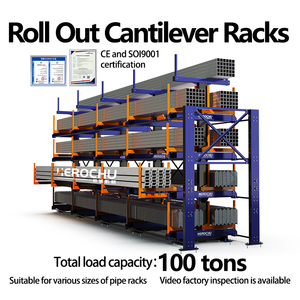
Telescopic Adjustable Double-Sided Heavy Duty Cantilever Racks 8T/Layer Capacity CE Certified Carbon Steel Square Tube Tubular
For steel profiles, timber, pipes and long export materials in Machala yards. Double-sided cantilever access, 8T/layer planning capacity and coastal-humidity finish options.
View product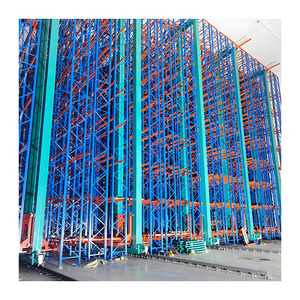
High-Density Pallet Shuttle Racking System Automatic Steel Storage Frame 3000kg Load Capacity Heavy Duty Warehouse
Recommended for repeated pallet batches in cold or ambient stores. The shuttle platform improves cube use and reduces forklift travel where banana, shrimp or cocoa pallets share dimensions.
View product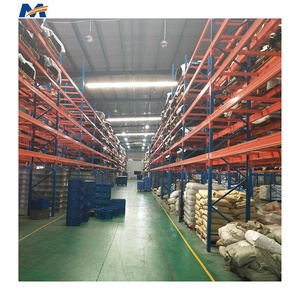
China Estantes Metalicos Heavy Duty Pallet Rack Beams Store Steel Shelving for Warehouse
A practical selective pallet rack for Machala distributors that need direct access to every SKU. Use it at the picking face and pair it with push back or shuttle storage behind.
View product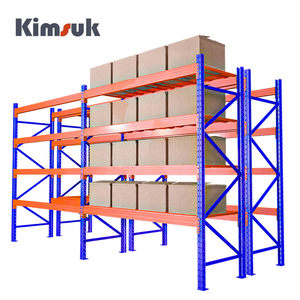
Industrial Shelving Heavy Duty Storage Rack System Warehouse Pallet Storage Solutions Racking for Warehouse Shelf
A flexible pallet storage solution for 3PLs, agro-exporters and importers whose SKU profile changes by season. Configure beam levels, accessories and safety components to suit the site.
View product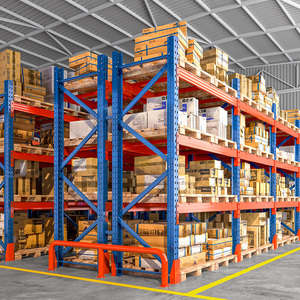
Heavy Duty Industrial Steel Storage Shelves 5 Layer Adjustable Rack System with Galvanized Surface for Warehouse Pallet Racking
Designed for humid coastal stores, workshops and fruit-packing sites. The 5-layer adjustable structure and galvanized surface help address corrosion exposure near Machala.
View product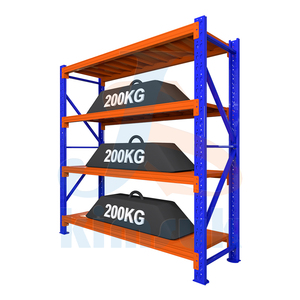
Boltless Adjustable Industrial Garage Heavy Duty Racking System Warehouse Metal Rack Storage Racks Shelving Units Steel Shelf
For spare parts, agro-inputs, packaging film, tools and MRO stock in Machala service warehouses. Fast assembly and adjustable levels make it useful for changing local inventory.
View product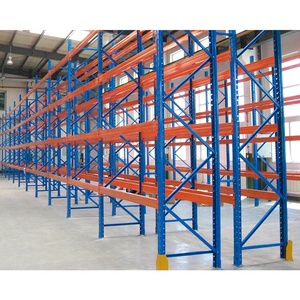
Customized Pallet Rack for Warehouse with Rack Safety
A specification-led option for exporters and 3PLs that need anchors, guardrails, load signage and seismic bracing documented. Recommended where insurers or export audits request proof.
View product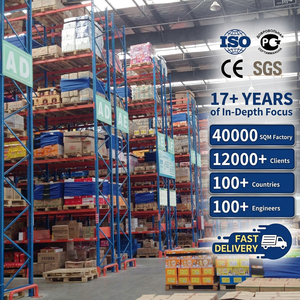
SDFD Heavy Duty Pallet Racking System Steel Durable Adjustable Box Beam Multi-layer Selective Pallet Rack for Warehouse Storage
A robust selective solution when fast access, simple forklift movement and multi-layer pallet storage matter more than maximum density. A sound base platform for mixed Machala inventories.
View productPush Back Racking for Machala: A High-Density LIFO System Built for Export Pressure
Push back racking is a high-density pallet storage system that places pallets on nested carts running on inclined rails inside a lane. A forklift loads at the face, pushing earlier carts deeper into the lane; retrieval returns the front pallet in last-in, first-out (LIFO) sequence.
For Machala operations handling repeated pallet profiles — banana cartons, shrimp cartons, cocoa sacks, coffee bags or packaging materials — push back removes the need for a dedicated aisle behind every pallet and can raise usable positions within the same building envelope. In retrofit studies, planning gains often fall in the range of 20–30% versus conventional selective racking, but the real number depends on lane depth, forklift type, sprinkler clearance, floor condition and the percentage of fast-moving pallets. We verify those variables in a site survey rather than promise a catalogue percentage.
Machala’s climate and market shape the specification. Humid coastal air, salt exposure near Puerto Bolívar, temperature swings in fruit and seafood cold rooms, and the seismic requirements of NEC-SE-DS all affect coating, anchors, bracing and beam-to-upright connections. A push back system that is adequate in a dry inland warehouse is not automatically adequate in El Oro. Our engineering approach is to fix the layout first, then confirm steel section, finish and anchorage against the actual floor, seismic zone and operating temperature.
Because push back is LIFO, it is not the right answer for every SKU. It performs best where demand is relatively stable, pallets share dimensions, and the cost of floor space or refrigerated volume is more important than immediate access to every pallet. For Machala importers, exporters and 3PLs, the practical pattern is usually hybrid: push back for high-volume, low-variation pallets; selective racking for SKUs that need direct access; cantilever for long goods; and boltless shelving for small parts, tools and samples. This mixed model protects service levels while capturing density where it matters.
Machala buyer snapshot
- Climate: humid coastal air, salt exposure near Puerto Bolívar and temperature-controlled rooms.
- Seismic: El Oro projects should be coordinated with NEC-SE-DS requirements and local structural review.
- Export gateway: Puerto Bolívar drives buffer inventory, staging and cold-chain planning.
- Typical loads: banana cartons, shrimp, cocoa, coffee, packaging, agro-inputs and spare parts.
- Space pressure: constrained urban plots and retrofit buildings reward high-density layouts.
- Operating reality: forklift-driven handling needs simple training, clear signage and robust safety accessories.
Where Push Back and High-Density Racking Fit in Machala and El Oro
Machala is not a generic warehouse market. The city sits at the centre of banana, shrimp, cocoa, coffee and tropical-fruit supply chains, and the surrounding province mixes export packhouses, cold stores, transport yards and regional distribution. These are the most practical storage scenarios we review with local buyers.
Banana and fruit cold chain
Export cartons often share similar pallet dimensions, making them a strong fit for push back or pallet shuttle storage inside chilled rooms. The aisle and airflow plan must be coordinated with refrigeration design, carton ventilation and loading-dock peaks. For Machala packhouses, specify corrosion-aware touchpoints and clear load signage.
Shrimp and seafood processing
Frozen blocks and cartons need freezer-ready detailing down to approximately -30°C. Avoid moisture traps, plan protective barriers and use LIFO lanes so older production batches move first. Push back serves consistent batch profiles; selective racking remains useful for high-variation SKUs and spare packaging.
Cocoa, coffee and dry goods
Bagged or boxed cocoa, coffee and agricultural inputs need protection from humidity. Galvanized shelving, ventilated layouts and raised bases help. Selective racking supports lot traceability, while push back and shuttle storage handle repetitive export pallets and packaging materials with steadier demand.
3PL, retail and e-commerce
Machala distribution centres serve local retail, regional distributors and growing e-commerce. A mixed layout with selective racking at the picking face and push back or pallet shuttle behind can balance immediate access with density. Boltless shelving handles small parts, returns and promotional stock.
Agro-inputs, spare parts and MRO
Fertilizer, packaging film, irrigation components, workshop spares and forklift parts fit boltless shelving and selective racks. Keep heavy items low, use pull-out units where crane access is required, and separate corrosive or liquid products from cold-chain storage and food-contact areas.
Port-adjacent buffer storage
Near Puerto Bolívar, timing matters. Use staging lanes, cantilever storage for long materials and high-density racking for steady export pallets. Document the layout for customs, insurer and safety audits, and plan clear separation between food-grade, packaging and non-food inventory.
Which Racking System Should a Machala Buyer Choose?
The chart below is a planning illustration, not a guaranteed density claim. Actual storage capacity depends on pallet size, load, aisle width, ceiling and sprinkler clear height, floor flatness, forklift type and local code review.
Illustrative relative storage density
Selective racking delivers the highest direct selectivity. Push back improves density while retaining front-face access. Pallet shuttle suits deep, repeatable pallet flows, especially in cold stores where aisle reduction lowers refrigerated volume.
Choose push back if…
You have 2–6 pallets of similar SKUs per lane, LIFO is acceptable, and floor space or cold-room volume is more valuable than 100% immediate access.
Choose pallet shuttle if…
You need deep, high-density storage in freezer or ambient conditions, have stable pallet quality, and can invest in a semi-automated handling routine.
Choose selective if…
Your SKU mix changes quickly, each pallet must be accessible, or you are building the picking face for a 3PL, retail or e-commerce operation.
Choose cantilever or shelving if…
Long goods, pipes, timber, tools, spare parts and small components do not fit standard pallet lanes and need dedicated storage design.
Local Trends Shaping Warehouse Storage in Machala
Procurement teams in El Oro are asking more technical questions than they did a few years ago. Price per pallet position still matters, but buyers also want proof of seismic design, corrosion protection, cold-chain suitability and future expansion capability.
Cold-chain and export quality
Banana, mango, shrimp and seafood supply chains are placing tighter demands on temperature control, hygiene and loading accuracy. Racking details must align with washdown routines, cold-room airflow and audit documentation — not simply maximise pallet count.
Port-driven and nearshoring growth
Puerto Bolívar and road links toward Guayaquil continue to anchor export logistics. As volumes fluctuate, warehouses want systems that can be reconfigured from selective to push back or shuttle without replacing every upright and beam.
Space, humidity and corrosion control
Land near Machala is not unlimited. Owners are more willing to invest in high-density layouts when they can see footprint payback. At the same time, galvanized and coated components are moving from optional to expected in coastal stores exposed to humid, salty air.
Seismic proof and automation readiness
NEC-SE-DS requirements and insurer reviews push buyers toward calculation-backed designs. Projects are also being planned with future automation in mind: good floor quality, clear heights, layout discipline and data-ready pallet profiles.
Why Machala Buyers Work with Real Nice Racks LLC
Real Nice Racks LLC designs, supplies and supports industrial storage systems — pallet racking, mobile racking, shelving, cantilever, mezzanines and semi-automated storage machines — for warehouses and distribution centres across South America. For the Machala market, our role is not simply to quote beams and uprights; it is to translate export patterns, climate and seismic exposure into a storage layout that can be installed, inspected and expanded.
Engineering-first factory support
Every layout starts with a site survey and real data: pallet profiles, SKU velocity, forklift types, clear height and seismic zone. We provide layout options, capacity comparisons, structural calculations and load signage as part of the project package.
Standards and local code coordination
Static steel racking is designed in line with EN 15512, with floor tolerances per EN 15620, use and inspection guidance per EN 15635, and seismic design reference to FEM 10.2.08 / EN 16681. For Ecuador, we coordinate with NEC-SE-DS requirements and licensed local review where needed.
Cold-chain and coastal durability
Chilled and freezer systems can be specified for environments down to approximately -30°C. For Machala’s coastal humidity, we review galvanized finishes, powder coating, drainage, ventilation and touch-up procedures to reduce corrosion risk.
One partner across product families
Pallet racking, industrial shelving, cantilever, pull-out units, mezzanines, mobile racking and semi-automated storage can be combined. That matters when a Machala project needs push back density at the back and selective access at the picking face.
Lifecycle service and retrofit
After handover, we support inspection, damage repair, training and capacity upgrades. High-density pallet racking can deliver up to 20% more storage capacity within the same building footprint, avoiding the cost and delay of new construction.
Export coordination and multilingual support
South American projects are supported in English, Spanish and Portuguese. We coordinate export packing, shipment to the nearest port, supervised installation and handover documentation, with ongoing support by email at [email protected].

Supervised installation with documented handover, load signage and inspection records.
What a Machala Racking Quotation Should Include
Every Machala quotation should be judged on what is included, not only the price per position. A safe push back racking system needs more than uprights, beams and carts: it needs a layout that matches the forklift, floor and clear height; anchors and bracing suited to the seismic zone; corrosion protection appropriate to the environment; and load signage that operators can understand.
We request warehouse location, floor plan, clear height, pallet dimensions, load per pallet, forklift type, temperature range and seismic zone. We then produce layout options, capacity comparisons and a structural package for review. For projects requiring local approval, final calculations are coordinated with a licensed Ecuadorian structural engineer. This protects the owner, insurer and operator.
Information gain: for Machala cold stores, we compare density gains against refrigerated volume, aisle airflow and defrost management — not just pallet count. For coastal ambient stores, we assess finish and maintenance exposure before recommending a coating system.
Get a QuoteFrom Machala Site Survey to Long-Term Support
A clear five-stage process keeps budgets predictable and timelines realistic — even when the project involves export packing, port shipment and installation in Ecuador.
Analyse
Site survey, SKU and throughput data, floor and seismic assessment for the Machala location.
Design
Layout options, structural calculations, capacity comparison and safety accessories.
Manufacture
Quality-controlled steel production, finish selection and export packing.
Deliver & Install
Shipment to Puerto Bolívar or Guayaquil, followed by supervised installation and handover.
Support
Inspection, damage repair, operator training and capacity upgrades for the life of the system.
Frequently Asked Questions from Machala Buyers
These are the technical and procurement questions we most often receive from exporters, 3PLs, importers and cold-store operators in El Oro.
What is push back racking, and is it suitable for Machala exporters?
Push back racking stores pallets on nested carts on inclined rails, so a forklift pushes a new pallet in at the face and retrieves the front pallet in LIFO order. It is suitable for Machala exporters when pallet sizes are consistent and the same SKUs move steadily — for example, banana cartons, shrimp cartons or packaging materials. It is less suitable for high-variation inventory where every pallet must be accessible immediately.
How much capacity can push back racking add in an existing Machala warehouse?
In planning studies, high-density systems often unlock capacity gains in the range of 20–30% versus conventional selective racking, but the figure depends on lane depth, aisle width, floor condition, sprinkler clearance, pallet weight and forklift type. We calculate the actual figure from your building and inventory data rather than rely on a generic percentage.
Can the system work in banana, shrimp or frozen storage at -30°C?
Yes. Cold-store racking can be specified for chilled and frozen environments down to approximately -30°C. For banana and fruit rooms, airflow and hygiene matter; for shrimp and seafood freezers, moisture control and durable finishes matter. We review temperature range, defrost cycles, cleaning routines and pallet quality before selecting steel sections and finishes.
How is racking designed for seismic conditions in El Oro?
Seismic design is coordinated with NEC-SE-DS requirements and reference standards such as FEM 10.2.08 / EN 16681. Base plates, anchors, bracing and beam-to-upright connections are specified for the site’s seismic zone and floor conditions. Where local approval is required, final calculations should be reviewed with a licensed Ecuadorian structural engineer.
What corrosion protection is recommended near Puerto Bolívar?
Coastal humidity and salt exposure call for a finish review, not a default paint choice. Depending on the room, washdown routine and budget, we may recommend galvanized components, powder coating, protective touch-up systems and regular inspection. For cold rooms, drainage and ventilation should also be checked because standing moisture can accelerate corrosion.
What lead time and shipping options are available for Machala?
Each project follows a defined sequence: site survey and data collection, layout and structural design, manufacturing, export packing and shipment to the nearest port, followed by supervised installation and handover. For Machala, typical port routing may use Puerto Bolívar or Guayaquil depending on vessel schedules, cargo size and project logistics. Lead time is confirmed after drawings are approved.
Can you upgrade an existing warehouse instead of building new?
Yes. Retrofit projects often combine re-layouts, higher-density systems such as push back, pallet shuttle and drive-in racking, mezzanine floors and narrow-aisle configurations. A retrofit can avoid new construction cost and delay, but it depends on floor condition, clear height, fire strategy and structural capacity. We assess those constraints before recommending an upgrade path.
What information should a Machala buyer send for a quotation?
Send the warehouse location, floor plan, clear height, pallet dimensions, load per pallet, forklift type, operating temperature, SKU profile and target pallet count. If available, include photos of the floor, columns and existing racking, plus any seismic or insurance requirements. Email [email protected] or use the quote button to start the technical review.
Request a Push Back Racking Layout for Your Machala Warehouse
Send us your floor plan, clear height, pallet size, load per pallet, temperature range and target capacity. Our engineering team will review the Machala location and recommend a practical mix of push back, selective, shuttle, cantilever or shelving systems — with safety, standards and expansion in mind.