Teardrop Warehouse Shelving Manufacturers & Supplier in Paramaribo
Engineered teardrop pallet racking, boltless shelving, cantilever racks, mezzanines and cold-chain storage for importers, distributors, processors and 3PL operators across Paramaribo and wider Suriname.
Warehouse Shelving & Racking Products for Paramaribo Buyers
Shortlist by load type, access pattern, climate exposure and building constraints. Each system below links to its original product page and includes a practical Paramaribo application note.
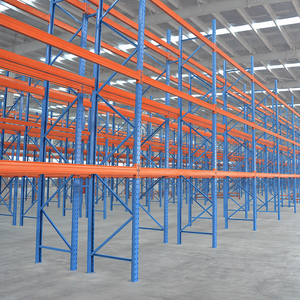
Heavy-Duty Adjustable Steel Warehouse Racking System
A selective racking workhorse for imported retail, grocery and wholesale pallets. Adjustable beams adapt as SKU heights change, while powder-coated steel helps manage humid coastal air.
View product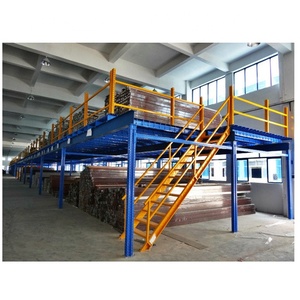
Mezzanine Shelf Storage Heavy Duty Rack System
Use vertical cube when land or rent is tight in greater Paramaribo. A mezzanine can add picking, packing or small-parts storage without new construction; slab capacity and anchoring must be checked.
View product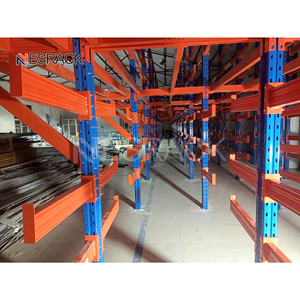
Customized Heavy-Duty Cantilever Racking System
For timber, steel profiles, pipes and building materials common in Suriname's construction supply chain. Open-front arms allow forklift access to long loads; used options should be inspected and documented.
View product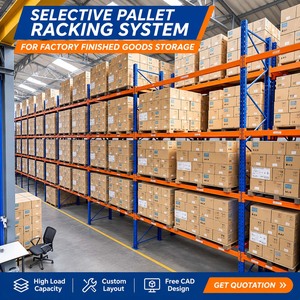
Selective Pallet Racking for Finished Goods Storage
An efficient first system for FMCG, food-grade and finished-goods storage where direct access to every pallet matters. Supports FIFO control and simple forklift movement in import-led warehouses.
View product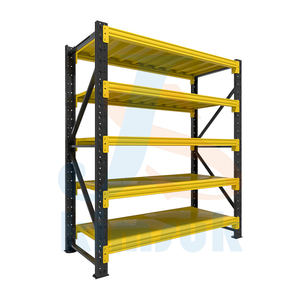
Garage & Warehouse Adjustable Steel Storage Rack
For small warehouses, workshops, spare-parts rooms and retail backrooms in Paramaribo. Reconfigurable shelf levels support changing cartons and hand-loaded inventory without specialist handling equipment.
View product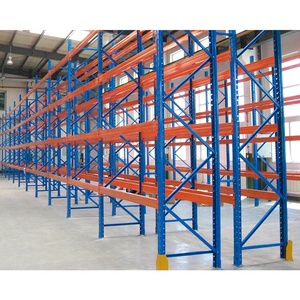
Customized Pallet Rack with Warehouse Rack Safety
For buyers who need guard rails, end-frame protection, load signs and site-specific capacity. Safety accessories protect racking from forklift impact in tighter aisles and support insurer documentation.
View product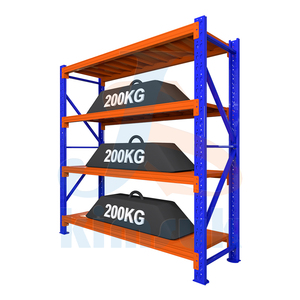
Boltless Adjustable Heavy-Duty Warehouse Racking System
A practical rack for industrial supplies, garage storage and workshop inventory where fast assembly and adjustable levels matter. Confirm beam and upright capacity before loading mixed pallets.
View product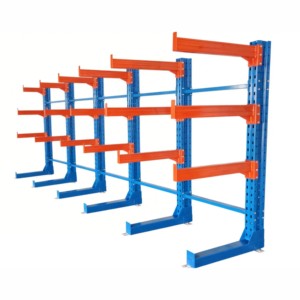
CE-Certified Heavy-Duty Steel Cantilever Rack
For long goods exposed to humid or coastal air, anti-corrosion protection matters. Adjustable arms suit timber, pipe and profile storage; specify finish according to wash-down and salt exposure.
View productWhat “Teardrop” Warehouse Shelving Really Means
Teardrop racking is named for the teardrop-shaped slots punched into the upright frames. Beam end connectors engage in these slots and are secured with safety pins, creating an adjustable, bolt-free beam-to-upright connection. It is not a single product category; it is a connection geometry used across selective pallet racking and related systems.
For Paramaribo buyers, the practical value is adaptability. Imported inventory rarely stays stable for long: carton heights change, pallet profiles vary, and product lines expand with new retail or e-commerce ranges. Adjustable beam levels let a warehouse evolve without replacing the entire frame structure.
The engineering question is not only “What is the beam capacity?” It is also “What is the floor condition, pallet load, handling equipment, anchor requirement, aisle width, corrosion exposure and inspection regime?” A documented system answers those questions together.
Local information gain: Paramaribo's humid tropical climate and coastal air make corrosion protection, floor moisture and ventilation part of the racking specification — not an afterthought.

Storage planning starts with real data: pallet profiles, clear height, slab capacity, forklift type and throughput.
Adjustable connection
Teardrop slots allow beam levels to move as carton heights, pallet types and SKU families change. This is especially useful for importers whose inventory mix shifts with shipping cycles.
Selective access
Every pallet can remain directly accessible, which supports FIFO stock rotation, faster picking and simpler forklift routes. It is often the safest first step before higher-density systems.
Documented capacity
Capacity tables, load signage and inspection records make the installation easier to insure, audit and maintain. Safety is a design output, not a warning sticker added later.
Where Teardrop Racking & Warehouse Shelving Fit in Paramaribo
Suriname's import-dependent economy, port-linked distribution and humid climate create specific storage requirements. These are the applications buyers most often ask us to solve.
Port-linked import distribution
Selective teardrop racking supports palletised imports moving from the Nieuwe Haven port corridor into wholesale and retail distribution. Adjustable beams handle mixed container loads and changing product ranges.
Cold chain & frozen food
Racking for chilled and frozen storage must be specified for low temperatures and moisture. Cold-store layouts can benefit from mobile or high-density systems because they reduce refrigerated air volume and energy demand.
Retail, grocery & e-commerce
Boltless shelving, mezzanines and pick-facing storage help retailers turn backroom space into organised inventory. As online orders grow, picking density and carton-level access matter more than pallet volume alone.
Construction & hardware
Cantilever racking stores timber, pipes, profiles and building products safely. Because long goods are often stored in open or semi-open buildings, finish selection and drainage are important to limit corrosion.
Automotive & industrial spares
Shelving, pull-out units and heavy-duty racks organise spare parts, tools and maintenance inventories. Clear labelling and load signage reduce picking errors and improve workshop safety.
Agro-processing & export
Palletised produce, feed, ingredients and packaging need stable, clean storage. Where products are washed or moved between ambient and chilled zones, rack finishes and floor drainage should be considered together.
Paramaribo Warehouse Trends Shaping the Next Procurement Cycle
These are not curiosity trends. They directly change racking specification, lead-time planning and total cost of ownership for Suriname buyers.
Import-led SKU volatility
Shipping cycles and currency planning can create large, uneven inbound pallets. Adjustable selective racking reduces the risk of buying a layout that is obsolete after one season.
Land & rent pressure
As usable land in the greater Paramaribo area competes with other uses, mezzanines, narrow-aisle layouts and higher-density racking become alternatives to relocation.
Cold-chain investment
Seafood, poultry, produce and frozen imports require reliable low-temperature storage. Racking should support airflow, inspection and safe forklift movement in insulated envelopes.
Humidity & corrosion engineering
Coastal humidity and tropical rainfall make powder coating, galvanising and ventilation choices important. The correct finish depends on exposure, wash-down and proximity to the sea.
Safety documentation
Local buyers increasingly request load signs, capacity tables, installation records and inspection guidance. This is especially important for insurance, internal audits and international customers.
Digital & WMS readiness
Barcode locations, system-guided picking and clearer aisle logic become easier when the racking layout is planned around product data rather than guesswork.
Indicative design priorities for Paramaribo storage projects
Planning indicators, not statistical survey results. Final priorities should be confirmed through a site survey and load analysis.
How a Teardrop Racking System Is Engineered for Local Conditions
A safe rack layout begins with measurement. The site survey should record clear height, slab condition, floor flatness, column spacing, fire services, forklift type, pallet dimensions, load per pallet and throughput. For Paramaribo, climate exposure, drainage and cleaning routines should also be reviewed.
Racking design follows recognised European methods and is coordinated with local engineer requirements where needed. The goal is a documented load path: uprights, beams, base plates, anchors, bracing and beam connectors working together under the actual applied loads.

Supervised installation, correct beam locking and documented handover reduce long-term risk.
Match the System to the Load, Not the Brochure
Most Paramaribo projects combine more than one storage type. A practical layout may use teardrop pallet racking for bulk goods, shelving for small parts and cantilever for long materials.
Selective teardrop racking
Best when: you need direct access to most pallets, FIFO rotation and flexibility for changing SKUs. Typical use: imported FMCG, grocery, retail distribution and finished goods. Watch: aisle width, forklift reach and floor flatness.
Boltless & hand-loaded shelving
Best when: goods are cartonised, hand-picked or stored in backrooms and workshops. Typical use: spare parts, hardware, e-commerce SKUs and garage storage. Watch: shelf load limits and safe access height.
Cantilever for long goods
Best when: loads are long, awkward or stored outdoors under cover. Typical use: timber, pipes, steel profiles and construction materials. Watch: arm capacity, load overhang, corrosion finish and safe lifting access.
Why Paramaribo Buyers Work With Real Nice Racks LLC
Real Nice Racks LLC designs and supplies industrial storage systems across South America, including pallet racking, shelving, cantilever, mezzanines and semi-automated storage. The company supports multinational brands and regional businesses from site survey through installation, inspection and capacity upgrades.
The advantage is not simply a product list. It is a structured process that connects layout design, structural documentation, manufacturing, export packing, delivery and lifecycle support.

High-density and mobile systems can reduce aisle space and improve refrigerated storage efficiency.
South America project knowledge
Regional experience across South American markets helps anticipate import, port, climate and installation realities that affect storage projects.
P90 platform flexibility
High-density concepts on the P90 platform can support up to 20% more storage capacity within the same building footprint when the layout and load profile suit it.
Cold-chain capable
Chilled and freezer systems can be specified for cold stores used by fruit, seafood, meat, poultry and dairy supply chains, with finish and layout adapted to low temperatures.
Lifecycle support
Survey, layout, design, manufacturing, export packing, installation support, inspection and upgrades are treated as one connected lifecycle.
From First Measurement to Handover: A Five-Stage Path
A clear process keeps budgets predictable and reduces surprises when racking is imported into Suriname.
Analyse
Site survey, pallet data, clear height, slab and throughput review.
Design
Layout options, capacity comparison and structural documentation.
Manufacture
Steel production, quality control and export-ready packing.
Deliver
Shipment to Paramaribo and coordination with local unloading teams.
Support
Installation supervision, handover, inspection and future upgrades.
What Paramaribo Buyers Ask Before Ordering Teardrop Warehouse Shelving
Practical answers for procurement teams, warehouse managers, contractors and business owners comparing suppliers.
Is teardrop warehouse shelving suitable for Paramaribo's humid climate?
Yes, provided the finish and maintenance plan suit the exposure. Humid tropical air can accelerate corrosion if steel is poorly coated or stored in a damp, poorly ventilated building. Powder coating, galvanising or other protective finishes should be selected according to indoor/outdoor exposure, wash-down routine and distance from the sea.
What does “teardrop” mean, and can it mix with other racking brands?
Teardrop refers to the shape of the slot in the upright frame that receives the beam connector. Dimensions and steel gauges can vary between manufacturers, so components from different suppliers should not be mixed unless an engineer confirms compatibility, capacity and safe beam locking.
How is racking delivered and imported into Paramaribo?
Projects are usually export-packed for shipment and coordinated with the buyer's freight forwarder or import team. The quotation should clarify packing, loading port, shipping terms, document requirements, unloading responsibility and whether installation supervision is included. Local port and customs handling must be planned before shipment.
What information do I need for an accurate quotation?
Provide warehouse location, clear height, floor plan or column grid, slab information if available, pallet dimensions, load per pallet, required pallet positions, forklift type, aisle constraints and any cold-store or corrosion requirements. Photos of the building and existing racking are also useful for retrofit projects.
Can the racking be designed for cold storage and freezer rooms?
Cold-store racking can be specified for chilled and frozen environments, including low-temperature applications. The layout should support airflow, safe forklift movement and inspection access. In freezer rooms, reducing aisle volume with mobile or high-density systems can lower refrigeration energy demand, but the design must remain practical for maintenance and emergency access.
How is load capacity documented for safety and insurance?
A proper package should include capacity tables, load signage, beam and upright identification, installation checks and inspection guidance. For anchor design and local structural review, the project engineer should confirm slab capacity and fixing requirements. Documentation is part of the system, not an optional extra.
Can you upgrade an existing warehouse instead of building new?
Often yes. Retrofit options can include re-layouts, higher-density systems, mezzanines, narrow-aisle configurations and additional beam levels. The first step is a survey to confirm the existing floor, height, access and safety conditions. In suitable projects, high-density racking can unlock significant extra capacity without new construction.
What lead time should Paramaribo buyers plan for?
Lead time depends on design approval, material availability, production slots, export packing and shipping schedules. A realistic plan should separate drawing approval, manufacturing, ocean transit and local installation. Early site data and a clear decision timeline help avoid delays later in the project.
Get a Paramaribo-Ready Storage Layout Review
Send your warehouse location, clear height, pallet dimensions, load per pallet, floor plan and handling equipment. Our team will help you compare selective teardrop racking, boltless shelving, mezzanines, cantilever and high-density options for your site.