Top 10 Industrial Racking Solutions Factory & Suppliers serving Trinidad and Tobago
A procurement-ready engineering guide to factory-direct pallet racking, cantilever storage, cold-store racking, and industrial shelving for Port of Spain, Point Lisas, San Fernando, Chaguaramas, Arima, and Tobago.
Get CatalogEight racking platforms that anchor a top-10 supplier shortlist in Trinidad and Tobago
Fit comes before brand. These eight platforms cover hand-loaded warehouse shelving, factory-direct selective pallet racking, long-material cantilever storage, CE-certified cold-store and pipe racking, automotive tyre storage, corrosion-protected distribution racking, and high-capacity pallet systems for imported stock, MRO spares, and port-linked logistics.
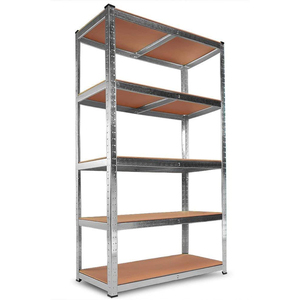
5 Tier Warehouse Racks Heavy Duty Storage Shelf Metal Racks Shelves for Warehouse
Local fit: practical for spare parts, retail overflow, small hardware, and hand-loaded stock in Port of Spain and San Fernando warehouses where pallet-only systems are too coarse.
View product specifications →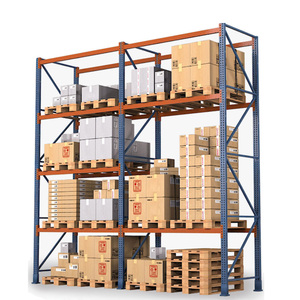
Heavy-Duty Selective Pallet Racking System for Warehouse Storage, Custom Size, Factory Direct
Local fit: a strong default for 3PLs, importers, food distributors, and retail DCs around Point Lisas and Couva that need direct access to every pallet and room to reconfigure bays later.
View product specifications →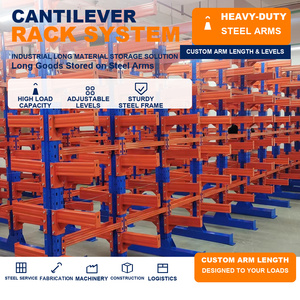
Cantilever Rack Heavy Duty Multi Level Storage Racking System Adjustable Arm Shelving Unit for Long Material Warehouse Use
Local fit: suited to steel merchants, pipe yards, fabrication workshops, construction suppliers, and marine service stores handling lengths that cannot be safely stored on standard pallet beams.
View product specifications →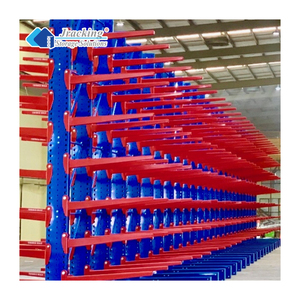
CE-Certified Industrial Warehouse Storage Shelves Heavy-Duty Cantilever Racking System for Cold Storage Pipe Storage
Local fit: useful where pipe, tubing, and long metal stock must be kept under cover in cooler, humid, or coastal conditions; finishes and load assumptions should be verified against the actual site environment.
View product specifications →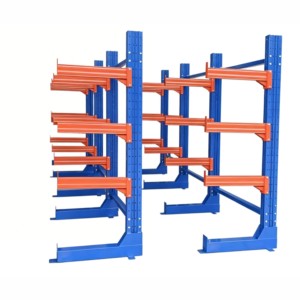
Stock Cold-Rolled Steel Cantilever Shelf Warehouse Storage Double-Sided Bracket Arm Cantilever Rack
Local fit: a useful option for steel service centres, building materials yards, and equipment fabricators that need aisle access from both sides and fast visual inventory control.
View product specifications →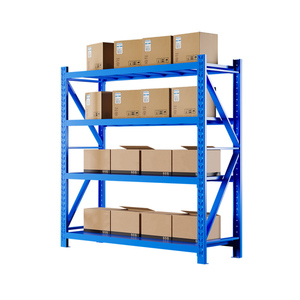
Industrial Warehouse Storage 5-Layer Pallet Racking System with Tire Rack Slotted Angle Rack Stacking Racks & Shelves
Local fit: relevant to tyre wholesalers, automotive workshops, fleet operators, and equipment dealers that need layered storage without sacrificing access to heavy or awkward stock.
View product specifications →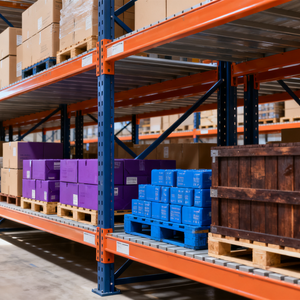
High-Capacity 5-Layer Durable Iron Steel Heavy Duty Corrosion Protection Pallet Rack for Warehouse Distribution Center Pallet
Local fit: designed for humid, coastal, and industrial environments where finish quality, drainage, inspection routines, and touch-up planning matter as much as raw load capacity.
View product specifications →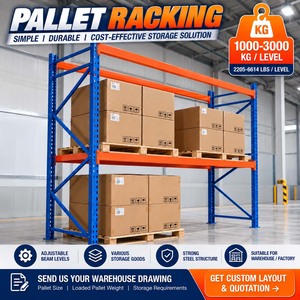
Wholesale Heavy Duty Pallet Racking System up to 3000 kg Per Level for Industrial Warehouse Storage
Local fit: suited to importers, building-material distributors, beverage and food wholesalers, and factory stores requiring documented capacity planning for dense pallet loads.
View product specifications →How to judge the top 10 industrial racking suppliers serving Trinidad and Tobago
Trinidad and Tobago buyers are not comparing racking in a vacuum. Port of Spain distribution centres, Point Lisas industrial estates, Chaguaramas marine yards, San Fernando fabrication stores, and Tobago hospitality, retail, and cold-chain operations each face different constraints: high humidity, salt-laden air, limited industrial land, imported spare parts, forklift fleet productivity, and the need for documented safety.
A top-10 ranking must reflect engineering evidence, not just price per bay
A credible shortlist for industrial racking Trinidad and Tobago procurement should separate product catalogs from real project capability. The questions that matter are practical: Can the factory produce a layout from your actual pallet sizes? Will the supplier provide load capacity tables and load signage? Are base plates, anchors, and bracing specified for the site? Is the finish appropriate for coastal humidity or food-grade environments? Can installation be supervised and can spare parts be sourced after handover?
For factories, 3PLs, retailers, contractors, and energy-sector supply stores in Trinidad and Tobago, the strongest supplier is usually the one that can combine factory-direct flexibility, documented structural assumptions, export packing, installation guidance, and lifecycle support. That is why this guide treats the eight product platforms above as the technical base of a top-10 review, then evaluates suppliers against local fit, documentation, delivery route, and after-sales capability.
Beware of proposals that quote only upright frames, beams, and shelf levels. A warehouse racking system also depends on floor tolerance assumptions, aisle width, forklift type, sprinkler clearance, column protection, pallet condition, load distribution, and inspection routines. These details influence safety and return on investment far more than a headline price per pallet position.
Application fit at a glance: density versus direct access
Where industrial racking delivers measurable ROI in Trinidad and Tobago
The right racking system should be described by the operational problem it solves: faster picking, safer long-material storage, better cold-chain utilisation, less floor congestion, or more usable capacity inside an existing building.
Port of Spain, Arima and east-west retail distribution
Retail chains, wholesalers, and e-commerce fulfilment operations need fast-moving SKU access, clear pick faces, and room to expand without moving buildings. Selective pallet racking, multi-tier shelving, and mezzanine concepts can improve slotting while preserving forklift and picker efficiency.
Point Lisas, Couva and industrial MRO stores
Energy, petrochemical, fabrication, and maintenance stores often handle mixed loads: boxed spare parts, heavy components, pipe, tools, and consumables. A combination of heavy-duty pallet racking, corrosion-protected finishes, and cantilever storage can reduce floor clutter and improve maintenance response time.
San Fernando, La Brea and long-material yards
Steel, pipe, timber, building products, and marine fabrication materials are difficult to store safely on ordinary shelves. Cantilever racking with adjustable arms gives clean front access, supports crane or forklift handling, and allows better visual inventory control for long and bulky goods.
Chaguaramas, Tobago and cold-chain operations
Marine yards, hospitality suppliers, food distributors, and freezer stores need racking that performs in humid or chilled conditions. Cold-store pallet racking, mobile-ready layouts, and corrosion-conscious finishes can improve energy use, storage density, and food safety discipline.
Trinidad and Tobago storage trends shaping 2025–2026 racking decisions
Search demand is shifting from generic “warehouse shelves” queries to specification-led searches around corrosion, cold storage, high-density layouts, retrofit, load capacity, and supplier documentation.
Retrofit before new build
Industrial land and construction lead times continue to push buyers toward re-layouts, higher-density pallet racking, multi-tier shelving, and selective use of mobile or narrow-aisle concepts inside existing buildings.
Energy and MRO supply-chain resilience
Maintenance stores are being rationalised to reduce downtime. Suppliers that can support heavy components, long goods, spare-parts shelving, and future expansion are more valuable than single-product vendors.
Cold-chain efficiency and food safety
Chilled and frozen storage investments are evaluated on energy use as well as capacity. Fewer aisles, taller usable height, and engineered mobile-racking concepts can reduce refrigerated volume per pallet.
Automation-ready and modular systems
Buyers are asking whether a racking layout can grow toward shuttle, AGV, or semi-automated storage. Modular pallet racking and clear documentation make later upgrades more practical and reduce stranded capital.
What separates a serious factory-direct racking supplier from a catalog reseller
For high-intent searches such as “industrial racking supplier Trinidad”, “heavy duty pallet racking Trinidad and Tobago”, and “cantilever rack factory direct”, buyers need commercial confidence and technical proof.
Layout and load data
Ask for a layout based on pallet dimensions, load weight, clear height, forklift type, aisle strategy, and growth assumptions—not a generic density claim.
Documented safety
Load capacity tables, load signage, anchor details, bracing assumptions, installation method statements, and handover records should be standard deliverables.
Local environmental fit
Humidity, salt air, drainage, washdown, cold-room temperature, and coastal exposure should influence finish selection and maintenance planning.
Delivery and installation
Export packing, shipping to Port of Spain, Point Lisas, or Tobago, unloading coordination, phased installation, and site supervision can affect project risk more than ex-works pricing.
Spare parts and repair capability
Forklift impacts happen. A supplier should be able to identify uprights, beams, safety clips, guards, and replacement parts quickly to avoid long operational downtime.
Scalability and lifecycle support
The best system can be inspected, repaired, expanded, and eventually upgraded toward higher density or automation without rebuilding the entire warehouse.
Enterprise advantages that strengthen a Trinidad and Tobago warehouse project
Based on the capabilities described for Real Nice Racks LLC, a serious storage partner should combine product breadth with in-house engineering, export logistics, installation supervision, and lifecycle service.
In-house layout and engineering discipline
Projects are planned from real data: pallet profiles, SKU velocity, clear height, floor conditions, forklift types, aisle requirements, and future throughput. This reduces expensive rework after installation.
Broad factory-direct product range
Selective pallet racking, cantilever systems, industrial shelving, tyre storage, high-capacity pallet racking, mezzanine concepts, and semi-automated storage can be coordinated under one project plan.
Structural and seismic coordination
For seismically active or high-wind regions, base plates, anchors, bracing, and connections should be specified with engineering calculations and reviewed with a licensed local professional where required.
Cold-chain and tropical corrosion options
Chilled and freezer environments, coastal humidity, and industrial atmospheres require different finishes and maintenance assumptions. Product selection should consider steel protection, drainage, and inspection access.
Export packing and supervised installation
Factory packing, shipment to the nearest port, phased delivery, and installation supervision help buyers manage import logistics, site readiness, and handover documentation.
Lifecycle service and scalable planning
Inspection, damage repair, load signage updates, re-layouts, and future automation readiness extend the useful life of the investment and protect operating budgets.
Documentation, standards, and safety you can verify
Procurement teams, insurers, and operations managers increasingly require evidence. Static steel racking is commonly designed with reference to EN 15512, with floor tolerance assumptions under EN 15620, use and inspection guidance under EN 15635, and seismic design principles from FEM 10.2.08 / EN 16681. Regional references can include ABNT NBR 15524, NCh 433 / NCh 2369, E.030, NEC-SE-DS, and NSR-10, depending on project origin and local engineering requirements.
For Trinidad and Tobago, ask the supplier to coordinate final anchorage and building-interface assumptions with a locally licensed structural engineer when required. A strong handover file should include load capacity tables, bay load signage, installation records, inspection guidance, and clear instructions for reporting damage.
From RFQ to handover: a practical five-stage process for Trinidad and Tobago buyers
A controlled process reduces misunderstandings around load ratings, finishes, shipping, installation, and inspection.
Analyse
Share warehouse location, floor plan, clear height, pallet sizes, load weights, forklift type, and environmental conditions.
Design
Compare layout options, storage density, aisle strategy, finish requirements, and safety details before confirming the scope.
Manufacture
Factory production, quality control, product identification, and export packing aligned with project staging.
Deliver and install
Shipment to the agreed port, unloading coordination, installation supervision, and site safety management.
Support
Handover documentation, load signage, inspection guidance, repairs, spare parts, and future capacity upgrades.
Industrial racking procurement FAQ for Trinidad and Tobago
These are the questions most often raised by warehouse owners, operations managers, contractors, and procurement teams comparing factory-direct racking suppliers.
Can industrial racking be shipped to Port of Spain, Point Lisas, San Fernando, or Tobago?
Yes. Export-oriented racking suppliers can arrange factory packing and shipment to the port or logistics hub agreed with the buyer, followed by inland delivery and installation supervision. The practical planning points are container loading, unloading equipment, site access, phased delivery, and whether installation labour is supplied locally or by a supervised crew. Tobago projects should account for inter-island freight, handling, and weather-sensitive delivery windows.
What should a Trinidad and Tobago buyer include in a racking RFQ?
Include the warehouse location, floor plan, clear height, pallet dimensions, maximum pallet weight, load type, forklift or reach truck model, aisle constraints, required number of pallet positions, temperature range, humidity or coastal exposure, and any fire-sprinkler or building restrictions. Also state whether the project is new-build, retrofit, or phased expansion. The more accurate the input data, the more reliable the engineering layout and quotation.
Is seismic design relevant for racking in Trinidad and Tobago?
Trinidad and Tobago sits in a seismically active region, so seismic design should be considered for racking and anchorage. Ask the supplier to specify base plates, anchors, bracing, and connection details for the actual site, and to coordinate final anchorage assumptions with a licensed local structural engineer when required. A racking quotation that ignores seismic anchoring or floor interface assumptions may create safety, insurance, and compliance risk later.
How do you reduce corrosion risk in humid or coastal warehouses?
Start with the environment: open coastal yards, chilled rooms, food processing areas, and industrial zones have different corrosion drivers. Discuss finish options such as powder coating, galvanised components, zinc-rich coatings, or stainless details where justified. Also plan for drainage, cleaning routines, forklift impact protection, and periodic inspection with touch-up procedures. Avoid relying on a single generic finish claim without confirming the site conditions and maintenance plan.
Do you supply racking for cold storage, freezers, and food distribution?
Yes. Cold-store pallet racking and high-density systems can be specified for chilled and frozen environments down to approximately -30°C, subject to product selection and safety requirements. These systems suit fruit, seafood, meat, dairy, food service, hospitality supply, and pharmaceutical distribution. For freezer warehouses, mobile or high-density layouts can reduce the refrigerated volume per pallet and lower energy demand when the building and handling operation are suitable.
How long does a racking project usually take?
Project duration depends on survey data, design iterations, approvals, manufacturing schedule, finish requirements, shipping route, customs clearance, and installation sequencing. A small retrofit may move faster than a multi-phase distribution centre. Request a schedule that separates design, production, export packing, ocean transit, site readiness, installation, and handover. This makes it easier to coordinate building work, forklift procurement, and stock migration.
Can an existing Trinidad and Tobago warehouse be upgraded instead of rebuilt?
Yes. Many projects begin with a re-layout, higher-density pallet racking, narrow-aisle planning, mezzanine concepts, or replacement of inefficient shelving. A well-engineered retrofit can unlock up to 20% more storage capacity on the same footprint in suitable cases, avoiding the cost and delay of new construction. The first step is a measured survey of clear height, floor condition, column grid, sprinkler clearance, and handling equipment.
How can buyers request a catalog and engineered proposal?
Prepare the warehouse location, floor plan, clear height, pallet size and weight, load per pallet, forklift type, temperature range, and target pallet positions. Then request the catalog and a project-specific layout review. Get Catalog to begin the technical discussion and compare product options for your Trinidad and Tobago site.
Get a Trinidad and Tobago-ready racking catalog and layout review
Compare pallet racking, cantilever systems, cold-store options, tyre storage, corrosion-protected racking, and high-capacity distribution solutions using your actual pallet, floor, and handling data. A well-documented design brief is the fastest route to a safer, more productive warehouse.
Get CatalogNo extra click effect, tracking script, or redirect has been added to this catalog button. It remains available for your existing third-party live-chat integration.