8 Industrial Racking Systems for Colombian Warehouses
Compare eight core product families used across Colombia for 3PL distribution, cold-chain storage, retail replenishment, pharma, agro-export and heavy-duty industrial storage. Product URLs are preserved from the manufacturer catalogue so procurement teams can review specifications directly.
Why a “Top 10” Shortlist Must Be More Than a Price Comparison
Colombia’s warehousing decisions sit at the intersection of seismic safety, humid coastal climates, cold-chain export pressure and fast-growing urban logistics. A useful shortlist therefore compares engineering evidence, not only steel weight or price per bay.
Procurement teams searching for the top industrial racking manufacturers serving Colombia are usually not looking for a generic catalogue. They need to understand which racking system fits a specific building, pallet profile, forklift fleet, fire strategy, floor slab and local code environment. The lowest installed cost can become the most expensive decision when bracing, anchors, beam connectors, floor tolerance and load signage are not properly documented.
Information gain: this guide uses the selection logic of an engineering-led manufacturer — Real Nice Racks LLC — to show what Colombian buyers should verify before awarding a racking contract. Real Nice Racks designs and supplies industrial storage and shelving that help South American businesses increase capacity, productivity and operational safety, supporting projects from the first site survey through installation, inspection and ongoing service.
The same product platform can behave very differently in Bogotá’s high-altitude distribution parks, Cartagena’s humid Caribbean air, or a freezer warehouse near an agro-export corridor. That is why the best shortlist asks for calculations, installation supervision, spare-part availability and lifecycle support — not just a pallet-position count.

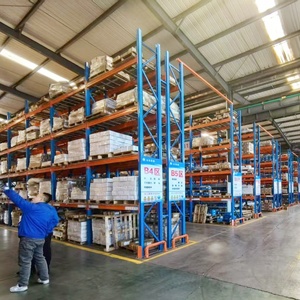
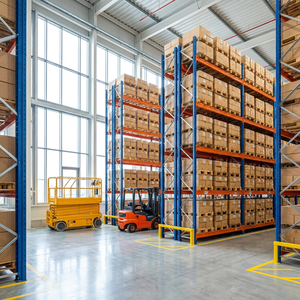
Industrial racking selection should begin with load data, clear height, forklift type, seismic zone and the real operating rhythm of the warehouse.
How to Compare the Top 10 Industrial Racking Manufacturers Serving Colombia
Use these six criteria as a practical scorecard during RFQ review. They reflect what makes a manufacturer credible for Colombia rather than merely active in the broader Latin American market.
1. Engineering documentation
Ask for structural calculations, load tables, anchor specifications, beam-to-upright connection details, floor tolerance assumptions and a clear installation method statement. A manufacturer serving Colombia should be able to explain how EN 15512 design logic, EN 15620 floor tolerances and EN 15635 operational guidance are translated into the delivered system.
2. Seismic competence
Colombia’s NSR-10 framework and site-specific soil conditions require racking layouts that consider base plates, anchors, bracing, beam connectors and the local structural engineer’s review. Seismic documentation should be part of the quotation package, not an afterthought after shipment.
3. Climate and cold-chain readiness
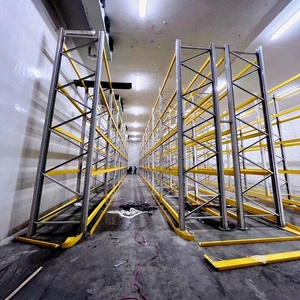
Humidity, cleaning regimes and freezer temperatures influence coating choice, fastener specification and maintenance intervals. For chilled and frozen facilities, mobile racking and high-density systems can reduce refrigerated air volume while preserving direct access to pallets.
4. Layout selectivity and growth path
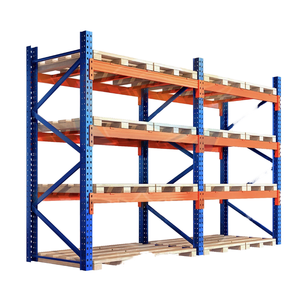
Selective pallet racking, drive-in, push-back, shuttle, narrow aisle and mobile racking solve different problems. A credible manufacturer should compare density, selectivity, forklift productivity and future automation readiness instead of recommending one familiar system for every project.
5. Lifecycle service
Racking is a long-life asset. Check whether the supplier offers inspection, damage assessment, repair, load signage, operator training, spare parts and capacity upgrades after handover. In Colombia, responsive technical support in Spanish can materially reduce downtime.
6. Commercial transparency
Clarify scope: design, steel supply, accessories, export packing, freight, port handling, customs support, installation supervision, local permits and commissioning. A transparent manufacturer separates what is included from what must be coordinated locally in Colombia.
Where Industrial Racking Systems Deliver Value in Colombia
Colombia is not a single warehouse market. Logistics patterns differ sharply between the Andean interior, the Caribbean coast, the Pacific port corridor and the country’s agro-industrial regions.
Urban 3PL, retail and e-commerce
High land values and constrained clear height make selective pallet racking with picking levels, mezzanine floors and narrow-aisle layouts attractive. The goal is to increase pallet positions and order-picking density without moving to a more expensive logistics park.
Pharmaceutical and healthcare distribution
Cleanable finishes, stable beam locking, clear load signage and auditable documentation support pharmaceutical warehouses. Racking should be planned alongside temperature zones, batch-handling rules and inspection routines rather than installed as an isolated steel purchase.
Humid Caribbean coastal storage
Corrosion protection matters in coastal environments. Powder coating, galvanizing or zinc-rich systems may be appropriate depending on humidity, salt exposure, cleaning chemicals and whether the racking sits in ambient, chilled or freezer conditions.
Cold chain for fruit, coffee and food
Chilled and freezer warehouses serving exporters need racking designs that resist low temperatures and reduce refrigerated volume. Mobile pallet racking is especially relevant because it can open one working aisle on demand while keeping 100% direct access to every pallet.
Automotive, mining and spare-parts stores
Heavy-duty selective pallet racking, stacking racks and pull-out units help manage dies, tooling, machine parts and high-value spares. The layout must suit crane access, forklift handling and safe retrieval of heavy loads.
Long goods and building materials
Cantilever racking and outdoor-rated systems support steel profiles, pipes, timber and construction products. These systems need careful consideration of load deflection, weather exposure and forklift or crane access.
Local Trends That Change Racking Design in Colombia
Racking decisions are increasingly shaped by capacity pressure, export quality requirements and the need to document safety for insurers, auditors and internal engineering teams.
Land pressure in major cities
As logistics land near Bogotá, Medellín and Cali becomes more expensive, warehouses look upward and inward: mezzanine floors, narrow aisle layouts, higher bays and high-density pallet racking all help extract more usable capacity from the same building footprint.
Cold-chain investment
Fruit, coffee, meat, dairy, seafood and floriculture supply chains depend on reliable temperature control. Cold-store racking must be specified for low temperatures, condensation, cleaning and maintenance access, while mobile racking can lower the refrigerated air volume that must be cooled.
E-commerce and 3PL growth
Third-party logistics providers need flexible layouts that can adapt to changing clients and SKU profiles. Selective pallet racking remains the default for direct access, while shelving, pick modules and mezzanines support faster order assembly.
Seismic and audit documentation
Procurement and insurance reviews increasingly expect traceable engineering: load capacities, anchor details, bracing, installation records and inspection schedules. A racking proposal that cannot explain these points creates risk for the whole project.
Retrofit before relocation
Instead of moving to a new facility, many Colombian companies are re-laying out existing warehouses. Replacing inefficient aisles with high-density systems or adding mezzanines can unlock capacity faster than construction and reduces disruption to operations.
Scalability toward automation
Racking should not block future automation. A platform approach allows a project to begin with manual selective racking and later add shuttle, mobile or semi-automated storage as volumes and labour costs change.
P90 and MOVO: More Pallet Positions Without New Construction
The fastest route to capacity is often inside the building you already operate.
High-density pallet racking is not a single product; it is a planning decision. A selective layout gives excellent selectivity but consumes aisle space. Drive-in, push-back, shuttle and mobile systems trade some selectivity for density. The right answer depends on SKU velocity, pallet turns, forklift type, honeycombing risk, fire strategy and the cost of land or refrigerated volume.
For Colombian warehouses facing rising rents and constrained land, a P90 platform approach allows the project to grow without changing suppliers. In suitable projects, high-density racking concepts can unlock up to 20% more storage capacity on the same footprint compared with conventional layouts. The final number must be validated by layout and structural design — but the principle is compelling: avoid building new before optimising the cube you already have.
MOVO mobile pallet racking goes further in cold-chain environments. Because racking runs move laterally to open one working aisle on demand, the facility can maintain 100% direct access to pallets while reducing the volume of air that must be refrigerated. For Colombian fruit, seafood, meat, dairy and floriculture exporters, that can translate into lower energy consumption and better utilisation of every insulated square metre.
Illustrative only. Actual capacity depends on pallet size, load, clear height, forklift type, aisle standards, fire strategy and final engineering.

MOVO mobile pallet racking reduces aisle waste and can be especially valuable where refrigerated volume and industrial land are expensive.
Why Real Nice Racks Is a Colombia-Ready Manufacturing Partner
The company’s advantage is not simply supplying steel. It is combining product breadth, structural discipline and lifecycle support for the realities of South American warehousing.
Engineering-led custom design
Layouts start with real data: pallet profiles, SKU velocity, forklift types, clear height, floor tolerance and seismic zone. Structural calculations and load signage are delivered with the project, not treated as optional extras.
Seismic and local code coordination
For the Pacific seismic belt and Colombia’s NSR-10 environment, bracing, anchors, base plates and beam connectors must be specified for the site. Final calculations can be coordinated with a locally licensed structural engineer where required.
Cold-chain and high-density systems
From chilled fruit warehouses to freezer distribution, Real Nice Racks supports cold storage racking, mobile racking and high-density systems — including options suitable for approximately -30°C environments.
Multilingual technical support
Project teams can communicate in English, Spanish and Portuguese. That matters for RFQ clarification, drawing reviews, installation coordination and after-sales technical support across Colombia and wider South America.
Lifecycle service
Support extends from site survey and layout design to export packing, supervised installation, handover documentation, periodic inspection, damage repair and capacity upgrades.
Scalable platform
Selective, drive-in, push-back, shuttle, narrow aisle, mobile and semi-automated solutions can be planned on a common platform, allowing a warehouse to grow from manual operations toward higher density or automation.
From Site Survey to Long-Term Support in Colombia
A clear five-stage project path keeps budgets, documentation and installation responsibilities visible from the start.
1. Analyse
Site survey, SKU and throughput review, floor assessment, seismic zone review and operating constraints.
2. Design
Layout options, access aisle planning, capacity comparison, structural calculations and documentation.
3. Manufacture
Quality-controlled steel production, export packing and preparation for shipment to Colombia.
4. Deliver & install
Shipment to Cartagena, Buenaventura, Barranquilla or Santa Marta, followed by supervised installation.
5. Support
Inspection, repair, training, load signage, spare parts and capacity upgrades throughout the asset life.
Questions Colombian Buyers Ask Before Ordering Racking
These are the practical questions that usually determine whether a racking project moves smoothly from budget approval to safe operation.
What is the best way to shortlist top 10 industrial racking manufacturers for a Colombian warehouse?
Start with the application, not the brand list. Define pallet size, load per pallet, SKU velocity, clear height, forklift type, floor slab, seismic zone, fire strategy and target capacity. Then ask each candidate to provide engineering calculations, load tables, anchor details, installation supervision scope, documentation and lifecycle support. A useful top-10 comparison should score technical evidence, local code coordination, cold-chain experience, Spanish-language support and after-sales capability — not just price per pallet position.
Can your pallet racking be designed for Colombia’s seismic conditions under NSR-10?
Yes. Racking for Colombia should be evaluated with seismic design references such as FEM 10.2.08 / EN 16681 and coordinated with local requirements, including NSR-10 principles and site-specific conditions. Base plates, anchors, bracing and beam connectors are specified for the site’s seismic zone and soil type. Where required, final calculations should be reviewed with a locally licensed structural engineer before installation.
Do you supply racking for cold storage and freezer warehouses in Colombia?
Yes. Cold storage pallet racking, mobile racking and high-density systems can be specified for chilled and frozen environments down to approximately -30°C. This suits fruit, seafood, meat, dairy, floriculture and other cold-chain operations across Colombia. Mobile racking such as MOVO is especially effective because it reduces the volume of air that must be refrigerated while preserving direct pallet access when the aisle is opened.
What information should we send for a fast, accurate racking quotation?
Send the warehouse location, floor plan or CAD file, clear height, pallet dimensions, load per pallet, required number of levels, forklift or AGV type, floor slab information, seismic zone, target capacity, preferred port and project timeline. If you are retrofitting, include photos of the existing racking and a damage report if available. The more accurate the input data, the faster the design team can compare selective, high-density, mobile or shelving options.
How are projects delivered and installed across Colombia?
Each project typically follows a defined lifecycle: site survey and data analysis, layout and structural design, manufacturing, export packing, shipment to the nearest port, supervised installation and handover with load signage and inspection documentation. Colombian ports commonly used include Cartagena, Buenaventura, Barranquilla and Santa Marta. Freight timing, customs formalities and installation schedules are quoted per project because they depend on shipping line, port congestion, cargo volume and site readiness.
Can you upgrade an existing Colombian warehouse instead of building a new one?
Yes. Retrofit projects often combine re-layouts, higher-density systems such as drive-in, push-back, shuttle or mobile racking, mezzanine floors and narrow-aisle configurations. High-density pallet racking can deliver up to 20% more storage capacity within the same building footprint when the layout and loads are properly engineered, helping avoid the cost and delay of new construction.
Which design standards and documentation are normally supplied?
Static steel racking is designed in line with EN 15512, with floor tolerances per EN 15620, operation and inspection guidance per EN 15635, and seismic design references per FEM 10.2.08 / EN 16681. In Colombia, these are coordinated with local building-code requirements and NSR-10 seismic principles. Load signage, capacity tables and inspection records should be supplied with every installation. In Brazil, projects may also align with ABNT NBR 15524 for selective pallet racking.
How do you handle corrosion and humidity on Colombia’s Caribbean coast?
Coastal humidity and cleaning regimes require careful attention to coating systems, fastener specification and maintenance planning. Depending on exposure, powder coating, galvanized finishes, zinc-rich coatings or other protective options may be appropriate. The specification should consider whether the racking is indoors or outdoors, ambient or cold-chain, and what cleaning chemicals are used. Regular inspection remains essential to catch coating damage before corrosion affects structural performance.
Request a Colombia-Ready Racking Concept
Share your warehouse location, clear height, pallet dimensions, load per pallet, forklift type, floor plan, seismic zone and target capacity. Our engineering team can compare selective, high-density, mobile, shelving and mezzanine options for your Colombian project.
Useful details: site city, building drawing, slab information, preferred port, project stage and required completion date.