8 Engineered Industrial Storage Shelving Systems for Buenos Aires Buyers
Industrial storage in Buenos Aires is rarely a catalogue purchase. A 3PL in Pilar may change clients every quarter, a food plant in San Martín may need washdown-friendly surfaces, and an importer near Dock Sud may need to recover capacity as soon as a container clears customs. These eight system families reflect the product categories most often shortlisted for the Buenos Aires metropolitan market. Original product URLs are retained so buyers and engineers can inspect details and request drawings.
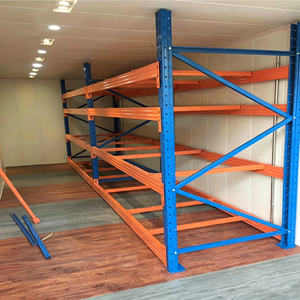
Heavy Duty Industrial Pallet Storage Racking 1000kg/2000kg/3000kg Capacity Per Layer Adjustable Steel Warehouse Rack
For AMBA distribution centres that need 1000 kg, 2000 kg or 3000 kg per layer with adjustable levels and direct access to every pallet. Useful where SKU profiles change and conventional wide-aisle forklifts are already in place.
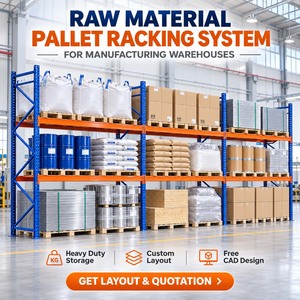
Pallet Racking System for Manufacturing Raw Material Warehouses
Engineered for metal, plastics, packaging and automotive component inventories in San Martín, La Matanza and Pilar. The layout can separate slow-moving raw materials from fast-moving production lines while keeping inspection aisles clear.
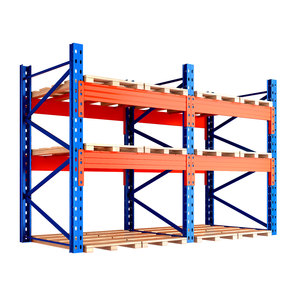
Heavy Duty Industrial Storage Shelves system Metal Rack Stacking Units Warehouse Steel Industrial Pallet Racking
A robust option for high-turnover logistics and wholesale stock where pallet weights are mixed. Stacking units and steel racking help consolidate imported containers without dedicating a new building.
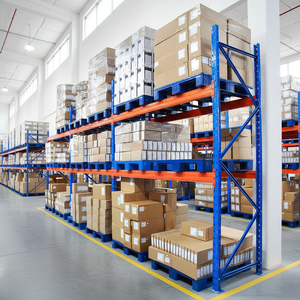
Heavy Duty Adjustable Corrosion Pallet Racking System Industrial Warehouse Storage Racks for Logistics E-commerce
Adjustable configurations for 3PL and e-commerce operations in the Buenos Aires Metropolitan Area. Corrosion protection is relevant in humid riverside warehouses and food-processing areas where washdown can accelerate coating wear.
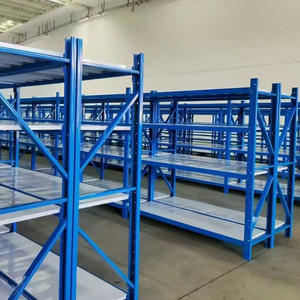
Manufacture Factory 4 Layers Metal Materials Light Duty Racks Warehouse Storage Racks
Four-level shelving for spare parts, retail replenishment, small cartons and maintenance stores. Ideal for back-of-house storage in Palermo, Once, Avellaneda or industrial service centres where hand-picking dominates.
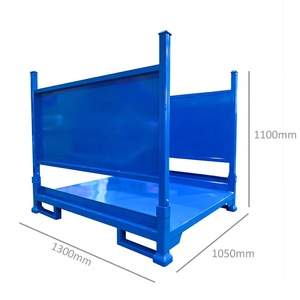
Storage Warehouse Equipment Stackable Collapsible Fabric Roll Storage Rack
Stackable, collapsible racking for fabric rolls, carpets, films and packaged materials. For Buenos Aires textile wholesalers and fashion importers, collapsible units reduce return freight and allow seasonal reconfiguration.
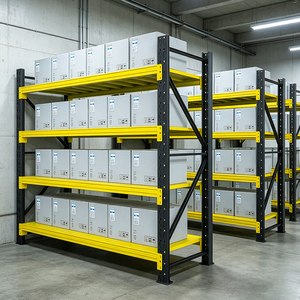
Warehouse Racking Pallet Rack warehouse Small Parts Shelves Tires Stacking Racks Shelves
A mixed solution for tyre bays, automotive distributors and hardware wholesalers. Small-parts shelves can sit alongside tyre stacking racks, reducing picking travel and keeping heavy goods at safe heights.
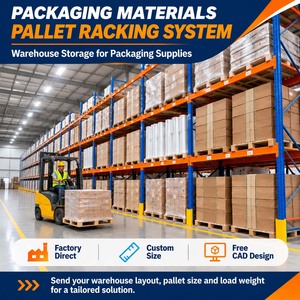
Warehouse Pallet Racking System for Packaging Materials Storage
Designed for cartons, films, labels and bottling packaging in food, beverage and consumer-goods plants. Separate packaging storage from finished goods to protect quality and simplify replenishment.
Product links are retained exactly as supplied. For projects where a standard product does not fit the building, slab, fire strategy or handling equipment, the specification should begin with a warehouse layout review rather than a catalogue number.
What “Top 10” Should Mean to a Buenos Aires Procurement Team
“Top 10” is useful only when it is treated as a due-diligence framework, not a paid ranking. The most important question is not which supplier has the largest catalogue, but which manufacturer or wholesaler can prove that the proposed system fits the warehouse’s real pallet profile, floor slab, fire strategy, labour process and Argentine import timeline.
A credible quote for the Buenos Aires market should show load calculations, beam capacity tables, anchor specifications, fire-clearance assumptions and installation method statements. Without those documents, a low price per upright can become an expensive operational risk after customs clearance, during installation or at the first rack inspection.
Buenos Aires Warehousing Trends That Change Shelving and Racking Selection
The Buenos Aires metropolitan area combines dense urban delivery, river-port humidity, food and beverage production, import-dependent supply chains and a growing 3PL sector. These conditions reward storage systems that are adaptable, documented and easy to inspect.
E-commerce and 3PL densification
Fulfilment operations around Pilar, Tigre, San Martín and La Matanza need fast replenishment, small-parts picking and clear aisle discipline. Adjustable pallet racking plus light-duty shelving often outperforms a single-purpose layout.
Cold-chain quality from port to plant
Meat, dairy, frozen food, beverage and agri-food supply chains need hygienic, corrosion-aware storage. Mobile racking can reduce refrigerated aisle volume, but it must be matched with reliable doors, floor rails and maintenance routines.
Retrofit before new construction
Land and construction costs encourage buyers to reuse existing buildings. Mezzanine floors, narrow-aisle layouts, push-back racking and high-density pallet systems can add capacity without waiting for a new industrial warehouse.
Import lead time and container economics
Wholesalers compare container fill, export packing, port handling and installation downtime. Modular racking that ships efficiently and can be expanded in phases is often more resilient than a complex one-off system.
Why Buenos Aires Buyers Need More Than a Product Price
A racking quote that ignores the route from factory to the Port of Buenos Aires, Dock Sud or an inland industrial park is incomplete. Uprights, beams, bracing, footplates and safety accessories must be packed for export, labelled by bay, and sequenced for installation so that unloading at the site does not become the bottleneck.
For Argentine buyers, the strongest wholesale partner is usually the one that can connect engineering, production, export packing, shipping documentation and supervised installation. That is where information gain matters: the supplier should explain which assumptions drive capacity, which parts are locally available and how future expansions can be added without replacing the entire system.
- Bay-by-bay packing lists and installation sequence
- Load signage and capacity tables prepared before handover
- Expansion strategy for future pallet growth or automation

High-bay and high-density layouts should be designed around real pallet data, forklift clearances and building constraints.
Where Industrial Storage Shelving Systems Deliver Value in Buenos Aires
Different industries in AMBA do not need the same racking. The selection should follow the goods, picking method, replenishment cycle, hygiene requirement and building envelope.
E-commerce and 3PL fulfilment
Combine selective pallet racking for reserve stock with light-duty shelving for fast-moving SKUs. In dense AMBA operations, aisle clarity and pick-face replenishment often matter more than raw pallet count alone.
Food, beverage and cold chain
Freezer rooms, chilled docks and food plants need corrosion-aware finishes, cleanable surfaces and layouts that keep packaging away from raw materials. MOVO mobile racking can be attractive where every square metre of refrigerated space is expensive.
Manufacturing and raw materials
Factories in San Martín, La Matanza and nearby industrial corridors need raw-material storage that supports production rhythms. Racking for coils, cartons, plastics and components should keep inspection lanes open and load signs visible.
Textile and fashion wholesale
Fabric rolls, garments and seasonal collections need flexible storage that can be reconfigured between buying cycles. Collapsible roll racks and multi-level shelving are useful for importers serving Once, Avellaneda and broader retail networks.
Automotive, tyres and spare parts
Automotive distributors need safe tyre stacking, small-parts shelves and heavy-item access. Separating fast-moving filters and batteries from bulky tyres reduces pick travel and makes stock counts easier during peak service periods.
Packaging and FMCG production
Cartons, labels, films and bottling materials consume significant floor space. Dedicated packaging racking improves replenishment discipline and protects packaging from dust, moisture and accidental forklift contact.
Choose Density Only When the Operating Model Supports It
High-density pallet racking can unlock up to 20% more storage capacity on the same footprint compared with conventional layouts, but density is not a free upgrade. Drive-in, push-back and shuttle systems change selectivity, forklift behaviour, maintenance needs and product rotation. A food exporter with strict FIFO may need a different solution from a building-materials wholesaler that can operate LIFO.
Mobile pallet racking such as MOVO is especially relevant where land is constrained or refrigeration is expensive. Racking runs move on rails to open one working aisle on demand, preserving direct access to every pallet while reducing the number of permanently open aisles. For cold stores in Buenos Aires and national distribution networks, fewer aisles can mean less refrigerated air volume and more pallet positions inside the same envelope.

Mobile racking should be planned with rail tolerances, floor flatness, door performance and operator training in mind.
E-E-A-T in Practice: Design Standards, Load Signage and Local Review
For a Buenos Aires procurement team, experience and authority should be visible in the documents, not just the sales presentation. Static steel racking is commonly designed with reference to EN 15512, with floor tolerances informed by EN 15620, operational and inspection guidance from EN 15635, and seismic methodology from FEM 10.2.08 / EN 16681 where relevant. For Brazil, projects may also be aligned with ABNT NBR 15524; for Argentina, final projects should be coordinated with locally registered engineers and applicable municipal, fire and structural requirements.
Buenos Aires is not the highest seismic zone in Argentina, but many companies distribute nationally. A warehouse in AMBA may still form part of a network that includes Mendoza, San Juan or the north. Practical AMBA checks include slab capacity, anchor condition, sprinkler clearance, fire egress, forklift aisle width, humidity and washdown corrosion, and the way imported components are received and stored before installation.
Trust is built when the supplier states assumptions clearly. A responsible proposal should identify the pallet weight used for calculations, the number of beam levels, the aisle width assumed, the floor condition expected, and the accessories required for safe operation.

Supervised installation, documented handover and inspection records protect both the investment and the people working around the racking.
A 10-Point Checklist for Comparing Manufacturers and Wholesalers in Buenos Aires
Use this checklist to compare suppliers on engineering substance, not only price per bay. It also helps internal procurement teams align warehouse, maintenance, safety and finance stakeholders before the purchase order is issued.
Pallet profile and load verification
Confirm pallet dimensions, overhang, damaged-pallet policy, load per pallet and load per beam level.
Structural design reference
Request design calculations with recognised racking standards and clear assumptions.
Floor slab and anchor assessment
Check slab thickness, flatness, condition, anchor type and pull-out assumptions before installation.
Fire, egress and municipal review
Coordinate racking layout with sprinkler clearance, egress routes and local fire requirements.
Corrosion and humidity strategy
Specify finishes for riverside humidity, food washdown, freezer rooms and other demanding environments.
Adjustability and future expansion
Check beam pitch, upright capacity, accessory availability and whether later phases can reuse the same platform.
Density versus selectivity
Compare aisle width, storage positions, pick access, forklift travel and product rotation before choosing high density.
Export packing and site sequencing
Confirm labelling, packing lists, container loading plan, port handling and installation sequence.
Documented handover
Require load signage, capacity tables, inspection records, installation sign-off and spare-parts information.
Lifecycle support
Check inspection frequency, damage repair, replacement parts, operator training and capacity upgrades.
Why Real Nice Racks Is a Fit for Buenos Aires Manufacturers, Wholesalers and 3PLs
Real Nice Racks LLC designs, supplies and supports industrial storage systems for warehouses and distribution centres across South America. The company’s value is not a generic product list; it is the ability to connect warehouse data, layout design, structural documentation, export packing and lifecycle support.
Engineering-led layouts
Every layout starts with pallet profiles, SKU velocity, clear height, forklift type, floor condition and growth assumptions rather than a template.
Factory-controlled production and export packing
Quality-controlled steel production, export packing and shipment planning help reduce installation delays after arrival in Argentina.
South America project support
Technical support in English, Spanish and Portuguese helps Argentine buyers coordinate layouts, drawings, shipping questions and site preparation.
Lifecycle service
Site survey, installation supervision, rack inspection, damage repair, training and capacity upgrades support the system beyond handover.
Built to Improve Capacity, Productivity and Safety
The company supports multinational brands and fast-growing regional companies from the first site survey through installation, inspection and ongoing service. Systems can scale from manual picking to semi-automated storage, and from selective pallet racking to mobile racking, mezzanines, cantilever and high-density layouts.
For Buenos Aires buyers, that range matters because warehouse needs change. A wholesaler may begin with adjustable pallet racking, then add a mezzanine for small-parts picking. A cold store may begin with conventional racking and later evaluate mobile racking to reduce refrigerated aisle volume. A manufacturer may separate raw-material storage from finished-goods dispatch to reduce congestion at the loading dock.
- Structural calculations and load signage delivered with each project
- Systems designed to grow without unnecessary replacement
- Support for cold-chain, logistics, manufacturing and e-commerce operations

A complete storage scope can combine pallet racking, shelving, mezzanines and high-density systems under one engineering plan.
From Buenos Aires Site Survey to Long-Term Racking Support
A clear five-stage lifecycle keeps budgets predictable and gives procurement, operations and maintenance teams a common reference point.
Analyse
Survey the site, pallet data, SKU flow, floor condition, clear height and handling equipment.
Design
Compare layouts, structural calculations, aisle strategy, capacity and future expansion options.
Manufacture
Control production quality, accessories, labelling and export packing for the Argentine route.
Deliver & install
Ship to the agreed port, coordinate site delivery and supervise installation with handover documents.
Support
Inspection, damage repair, operator training, spare parts and future capacity upgrades.
Common Questions About Industrial Storage Shelving and Pallet Racking
These are the questions procurement teams most often ask when comparing manufacturers, wholesalers and installation partners for the Buenos Aires market.
What makes a storage shelving system suitable for Buenos Aires humidity and riverside locations?
For warehouses near Dock Sud, Avellaneda, the port area or other humid environments, specify the coating system, touch-up procedure and inspection routine. Food plants that use washdown cleaning need corrosion-aware finishes and careful detailing. The goal is not only to protect the steel; it is to keep load signage readable, beam connectors reliable and inspection findings easy to track over time.
Can racking be delivered and installed in Buenos Aires and other Argentine provinces?
Yes, projects can be planned from factory production through export packing, ocean freight, port clearance coordination and supervised installation. The practical plan should identify the destination port, inland transport route, site access constraints, unloading equipment and installation sequence. For national networks, it is useful to standardise components so that spare parts and future expansion remain compatible across multiple warehouses.
How do I compare manufacturers and wholesalers without visiting a local showroom?
Ask for drawings, load calculations, bill of materials, beam capacity tables, anchor specifications, installation method statements and inspection documentation. A serious supplier will answer technical questions about pallet weight, beam deflection, floor flatness, aisle width and fire clearance. Compare total landed cost, not only the ex-works price, and check whether spare parts and future expansions are available.
What documentation should come with a pallet racking project?
A complete handover normally includes layout drawings, bay-by-bay load signage, structural assumptions, capacity tables, installation records and inspection guidance. If local permits or fire strategy require engineering review, coordinate with a locally registered professional. The documentation should remain useful after handover because warehouse layouts, products and operators change over time.
Can an existing Buenos Aires warehouse be upgraded instead of rebuilt?
Often, yes. Retrofit projects can combine re-layouts, high-density racking, mezzanines, narrow-aisle configurations, mobile racking or small-parts shelving. High-density pallet racking can deliver up to 20% more storage capacity within the same building footprint, but the final choice depends on product rotation, forklift fleet, floor slab and fire egress. A retrofit survey should verify these constraints before purchase.
What information should I send with a quote request?
Send the warehouse location, floor plan if available, clear height, pallet dimensions, load per pallet, load per beam level, forklift or reach-truck type, product rotation requirements, temperature range and any known floor or fire constraints. Photos of the existing warehouse and loading dock are also useful. With that data, the supplier can propose a layout that matches the Buenos Aires site rather than a generic catalogue configuration.
Request a Buenos Aires Warehouse Storage Review
Send your building data, pallet profile and growth plan to [email protected]. The review can compare selective racking, high-density systems, mobile racking, mezzanines and light-duty shelving against your operating model — and clarify what documentation is needed before a purchase order is issued.
Get a Quote- Floor plan, clear height and pallet dimensions
- Load per pallet, beam level and forklift type
- Temperature, corrosion, fire and expansion requirements