8 Metal Warehouse Shelving & Pallet Racking Systems for Arima and Trinidad & Tobago
Below are eight engineered product routes commonly evaluated by importers, third-party logistics operators, retailers, hardware distributors and manufacturers in Arima. Each card preserves the original product link, shows the product image at full proportion, and lets your team request a specification, load calculation or delivered-to-port quotation.
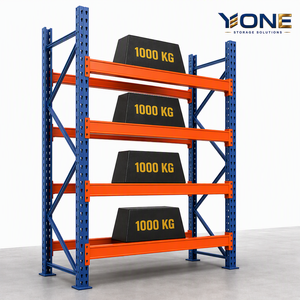
Durable Steel Storage Rack Heavy Duty Pallet Racking for Industrial Warehouse Storage with Safety Accessories
A strong first specification for Arima warehouses that need safe pallet access, protective accessories and a layout that can expand as SKU volumes rise.
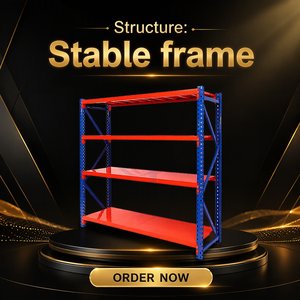
Heavy Duty Steel Selective Pallet Rack 5 Layer Load Capacity 1000kg Industrial Storage Rack
A five-layer selective system for fast-moving stock where direct access to every pallet matters more than maximum storage density.
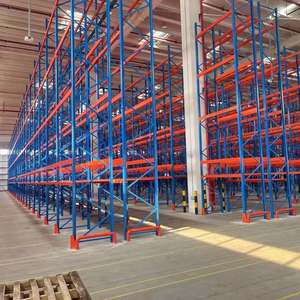
Zhejiang Custom Steel Pallet Racking System Heavy Duty Rack Industrial Warehouse Rack Storage Shelves Heavy Duty Racks Systems
For Arima projects with non-standard clear heights, pallet dimensions or phased growth, this route supports layout-specific engineering.
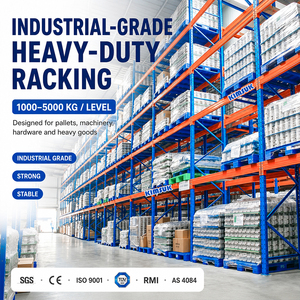
Heavy Duty Warehouse Racking Steel Pallet Storage Shelving, Adjustable Rack System with Easy Assembly for Factory
A practical choice for factories, workshops and hardware stores that need adjustable beam levels and straightforward assembly.
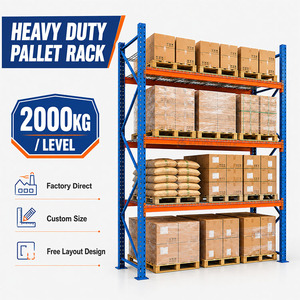
Heavy Duty Steel Beam Pallet Racking System with High Load Capacity for Industrial Warehouse Storage
Designed for heavier pallet loads, bulk reserve storage and warehouse layouts where beam capacity and safety margins are critical.
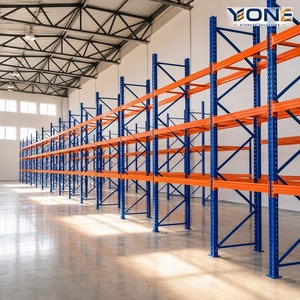
Steel Storage Rack Heavy Duty Pallet Racking Q235B Steel Selective Racking for Racks Industriales Warehouse Storage
A selective pallet racking option for warehouses that need a balance of accessibility, steel strength and adaptable bay configurations.
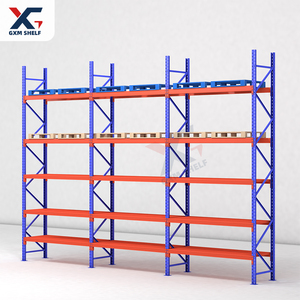
Heavy Duty Pallet Racking Warehouse Pallet System Pallet Storage Rack Heavy Duty Rack Shelf Heavy Duty Racking System
A full pallet storage system for new warehouse fit-outs, expansion projects and distribution centres serving Arima and the East-West Corridor.
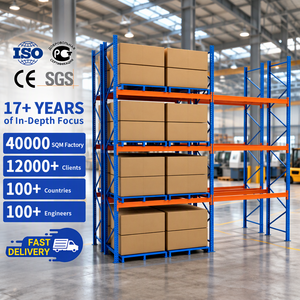
Heavy Duty Industrial Pallet Rack High Loading Multi-Level Metal Shelves Units Warehouse Steel Selective Pallet Racking System
A high-throughput multi-level steel shelving and pallet racking route for importers planning dense but accessible warehouse storage.
China manufacturing depth
Access to steel fabrication, powder coating, export packing and container loading plans for Trinidad-bound projects.
Arima delivery planning
Quotations can be structured around Port of Spain, Point Lisas or project-site delivery, with export documentation support.
Safety documentation
Load signage, capacity tables, installation guidance and inspection points are essential for insurers and facility teams.
Lifecycle support
From site survey and layout design to spare parts, repairs, inspection and future capacity upgrades.
Searching for a Manufacturer in Arima? Start With the Buying Intent, Not the Price List
When buyers type “top China metal warehouse shelving manufacturers” or “manufacturer in Arima”, they usually have different problems hidden inside the same search. One buyer may need a 40-container export programme, while another needs a 200-square-metre hardware store shelving upgrade in Arima with delivery next month.
The strongest supplier is not always the one with the lowest ex-works price. For Arima buyers, the real comparison is total landed cost, load safety, corrosion protection, installation feasibility and after-sales responsiveness. A racking system that arrives late, lacks load signage or cannot be supported locally creates far more cost than a modest steel-price difference.
This guide is written for procurement managers, operations directors, warehouse engineers and business owners evaluating China metal warehouse shelving manufacturers for projects in Arima and Trinidad & Tobago. It explains what to question, how to compare product families, which local applications create the fastest return and which technical documents should be requested before any deposit is paid.
Arima sits within a commercial corridor that connects Port of Spain, Piarco International Airport and the wider East-West logistics network. That makes it suitable for distribution centres, retail replenishment hubs, spare-parts stores and light manufacturing warehouses. The right shelving strategy should support those flows — not simply copy a warehouse layout from another country.

What Top China Metal Warehouse Shelving Manufacturers Must Prove Before You Import to Arima
Trinidad & Tobago buyers need more than a catalogue. The supplier should demonstrate engineering competence, export experience and an understanding of Caribbean humidity, port handling and site installation realities.
1. Structural data, Not just dimensions
Ask for upright, beam and connector capacities; load combinations; floor tolerance assumptions; and bracing details. A supplier that cannot explain how the racking was calculated should not be treated as a manufacturer.
2. Standards and proof
Static racking should be designed in line with recognised methods such as EN 15512, with seismic guidance such as FEM 10.2.08 or EN 16681 where relevant. For export projects, clearly stated standards are a sign of engineering maturity.
3. Export packing and container logic
Long uprights, beams, bracing and accessories must be packed for ocean freight and local trucking. Good manufacturers plan container loading, protect powder-coated surfaces and label cartons by installation zone.
4. Arima-specific delivery awareness
A professional partner should ask about shipping terms, whether the goods arrive through Port of Spain or Point Lisas, who handles clearance, whether the site has forklift access and whether installation supervision is required.
5. Humidity and coating strategy
Caribbean humidity demands attention to surface preparation, powder coating quality and, where necessary, galvanised or alternative finishes. Coastal or open-sided stores need a more protective specification than air-conditioned interiors.
6. Lifecycle support
Racking is a long-term asset. Ask how damage can be inspected, how replacement beams and uprights are ordered, and whether future extensions can use the same beam pitch, upright profile and accessory system.
Where Metal Warehouse Shelving Pays Back Fastest in Arima and Trinidad & Tobago
The same pallet racking product can perform very differently depending on climate, labour, inventory velocity and building height. These are the practical application scenarios most relevant to Arima and nearby commercial zones.
Distribution and retail replenishment
Selective pallet racking gives direct access to every pallet, which suits importers and distributors that replenish supermarkets, hardware stores and retail chains across Arima and Port of Spain.
Food, beverage and cold-chain stores
Chilled and freezer storage requires racking that fits insulated panels, cold-room doors and forklift movements. Mobile or high-density options can reduce refrigerated air volume and improve energy efficiency.
Automotive and spare-parts storage
Heavy-duty shelving, pull-out units and pallet racking help workshops and parts distributors organise tyres, tools, engine components and bulky MRO stock without wasting floor space.
Hardware, construction and building supplies
Cantilever racking and heavy-duty shelving suit pipes, timber, profiles and construction materials where open-front access and safe loading are more important than small-parts selectivity.
Energy services and industrial MRO
Energy-sector suppliers and maintenance teams often need high-load shelves for valves, flanges, motors and spare parts. Clear labelling, load signage and durable finishes reduce operational risk.
E-commerce and 3PL fulfilment
Fast SKU growth rewards layouts that combine carton shelving, mezzanine picking and scalable pallet storage. This avoids re-racking the entire warehouse when online order volumes increase.
Warehouse Storage Trends Shaping Arima Projects in 2025–2026
Buyers in Trinidad & Tobago are balancing imported goods, limited industrial land, high humidity and rising customer expectations. These trends should influence the racking specification before the purchase order is issued.
Humidity-resistant finishes
Powder coating, pre-treatment and, where needed, galvanised finishes are becoming a priority for open warehouses and coastal logistics environments.
High-density retrofit over new build
Rising land and construction costs make capacity recovery inside existing buildings more attractive. Options such as P90 high-density racking can unlock up to 20% more storage on the same footprint.
Port-driven import planning
Suppliers must quote around container loads, Port of Spain or Point Lisas logistics, customs clearance and site access rather than simply selling loose racking components.
More SKUs, smaller order profiles
Retail and e-commerce growth creates more cartons, spare parts and mixed pallets. Shelving, mezzanines and multi-level picking areas are increasingly specified alongside pallet racking.
Inspection and safety culture
Insurers, facility managers and operations teams increasingly ask for load signs, rack protection, damage reports and periodic inspection records.
Modular, future-ready systems
Arima warehouse operators prefer racking that can be extended, reconfigured or upgraded to semi-automation later without replacing every upright and beam.
Why Real Nice Racks Is Built for Serious Arima Warehouse Projects
Real Nice Racks LLC combines storage engineering, product sourcing and lifecycle support for warehouse projects across South America and the Caribbean. For Arima buyers comparing China metal warehouse shelving manufacturers, the value lies in documented design, export-ready product supply and a clear handover process.

We do not treat racking as loose steel. Every project starts with the warehouse itself: clear height, floor condition, pallet dimensions, load per pallet, SKU velocity, forklift type, aisle width and future expansion plan.
- Product range covering selective pallet racking, high-density systems, industrial shelving, mezzanines, cantilever racking and pull-out units.
- Engineering support for load calculations, layout comparison, bay optimisation and export packing schedules.
- Safety-focused handover with load signage, capacity tables and installation guidance suitable for facility teams and insurers.
- Lifecycle service mindset: inspection, damage repair, spare parts and future capacity upgrades instead of one-off selling.
More Pallets, Less Wasted Space, Better Climate Control
For Arima businesses facing limited land, rising rentals or cold-store energy costs, the most valuable improvement is often not a larger building — it is a smarter storage layout.
P90 high-density pallet racking
High-density layouts can increase usable pallet positions inside the same warehouse footprint. In suitable projects, space-efficient racking may unlock up to 20% more storage capacity compared with conventional layouts, while preserving safe forklift operation and future scalability.
This is especially relevant in Trinidad & Tobago, where expanding a warehouse can mean construction delays, planning approvals and lost trading time. A retrofit should begin with a measured layout study: pallet footprint, beam levels, aisle count, sprinkler clearance and product velocity all need to be checked together.
Send an Inquiry
MOVO mobile pallet racking
Mobile racking places pallet racking on rail-guided bases. Runs move laterally to open one working aisle exactly where the forklift or reach truck needs it. Every pallet remains directly accessible, but the warehouse no longer needs to keep every aisle open at all times.
For chilled and frozen storage, this can reduce refrigerated air volume, support energy efficiency and increase pallet positions within the same insulated envelope. In hot Caribbean climates, that combination matters for food importers, distributors and cold-chain operators.
Send an Inquiry
From Arima Site Survey to Long-Term Racking Support
A disciplined five-stage process keeps the project measurable, reduces rework and gives procurement teams a clear chain of approvals.
Analyse
Site survey, pallet data, SKU flow, clear height, floor condition and handling equipment review.
Design
Layout options, beam and upright selection, capacity comparison and export packing plan.
Manufacture
Steel fabrication, coating, quality checks and container loading preparation.
Deliver & Install
Shipment toward Trinidad ports, site delivery coordination and supervised installation where required.
Support
Load signage, inspection guidance, damage repair, spare parts and future capacity upgrades.
Arima & Trinidad Buyers Often Ask These Questions
These answers reflect the questions that matter when importing metal warehouse shelving and pallet racking for Arima projects.
Are you a China metal warehouse shelving manufacturer or a trading company?
The correct model to evaluate is engineering capability plus manufacturing control. Ask whether the supplier can provide structural calculations, load capacity tables, coating specifications, QC records and export packing plans. Real Nice Racks works as an engineering-led supplier with manufacturing partners and product documentation suitable for warehouse projects. For buyers, the priority is not the label “manufacturer” alone, but whether the delivered system is safe, documented and supported.
How do we ship metal shelving and pallet racking to Arima?
Most projects ship by sea container and clear through a Trinidad port such as Port of Spain or Point Lisas, depending on the freight forwarder and project location. The supplier should provide export packing, carton labels, packing lists, container loading plans and material descriptions to support customs clearance. For urgent spare parts or samples, air freight through Piarco International Airport may be considered, but full racking systems are normally shipped by sea.
What load capacity can you design for?
Capacity depends on the upright profile, beam section, span, shelf levels, pallet type and load pattern. Current product options include heavy-duty selective racking with 1000kg-class load references, while engineered projects can be configured around heavier or lighter requirements. Never accept a capacity figure without the corresponding beam span and level-load assumptions.
Which standards should be referenced for a Trinidad warehouse project?
For static racking, recognised design references include EN 15512, with operational and inspection guidance from EN 15635 and floor tolerance guidance from EN 15620. Where seismic or structural review is requested, FEM 10.2.08 or EN 16681 may be referenced. Local project engineers, insurers and applicable Trinidad & Tobago review requirements should be included in the final documentation package.
How do you protect racking against humidity and coastal conditions?
Surface preparation and coating quality are critical. Powder coating is common for indoor warehouses, while more demanding environments may require thicker coating, galvanised components or alternative finishes. The specification should match the actual environment: enclosed and air-conditioned, open-sided, coastal or cold-store. Roof leaks, forklift damage and standing water are also major causes of corrosion, so inspection and housekeeping matter.
Can you customise dimensions for an existing Arima warehouse?
Yes. Customisation normally covers clear height, bay width, beam levels, pallet overhang, aisle width, sprinkler clearance, column positions, floor flatness and future expansion. Share a floor plan, photos and clear heights. A proper layout should also account for forklift turning radius, loading doors and staging areas.
Can you upgrade an existing warehouse instead of building a new one?
Yes. Many projects can gain capacity through re-layouts, higher-density racking, mezzanines, narrow-aisle configurations or mobile racking. A retrofit study typically compares the cost of optimising the existing footprint against moving or building. In suitable cases, high-density pallet racking can deliver up to 20% more storage capacity within the same building footprint.
What information should we send with an inquiry?
Send the warehouse location in or near Arima, a floor plan if available, clear height, pallet dimensions, load per pallet, number of pallet positions required, handling equipment, floor condition, and whether the site is open, humid, chilled or frozen. This allows the supplier to propose a realistic layout and avoid quoting a system that does not fit the building or operating flow.
Can you supply a phased rollout for a growing business?
Yes. Phased delivery can be planned around initial warehouse zones, product categories or growth milestones. To keep future phases compatible, the first order should fix the upright profile, beam pitch, accessories and coating specification. This reduces the risk of mismatched components when the business expands.
What after-sales support is available?
Support can include replacement uprights and beams, safety accessories, rack protection, inspection checklists, damage assessment guidance and capacity upgrade advice. For high-risk or damaged racking, a site inspection should be conducted before loads are returned to service.
Request a Metal Warehouse Shelving Layout, Load Calculation and Delivered-to-Port Quotation
Share your location, floor plan, clear height, pallet size, load per pallet and forklift type. Our team can help compare selective racking, high-density systems, industrial shelving, mezzanines and mobile racking for your Arima project — with the safety, export and lifecycle details serious buyers need.
