Top China Structural Racking Factories & Exporters for the Brasília Market
A technical sourcing guide for warehouse owners, 3PLs, cold-chain operators and distributors who need safe, high-density pallet racking delivered from China to the Federal District and Entorno.
Why Brasília Buyers Need More Than a Product Catalogue When Sourcing Structural Racking
Structural racking is a long-life capital asset, not a commodity. The right China factory-exporter partner should reduce total landed cost, protect operational safety and leave room for future growth.
Brasília is an inland consumption and distribution market, not a port market. That single fact changes how structural racking should be sourced. The cheapest ex-works quote can become the most expensive project once container fill, export packing, customs clearance, inland freight, floor preparation and installation supervision are added. The best China structural racking factories and exporters for the Brasília market are therefore not simply the suppliers with the lowest price per bay; they are the suppliers who can translate a Federal District warehouse brief into a stable structural design, document the load capacity, pack efficiently for export and support installation in Brazil.
Local demand is diverse. Warehouses in Guará, Taguatinga, Ceilândia, Santa Maria, Sobradinho and the Entorno — including Luziânia, Valparaíso de Goiás and Águas Lindas — serve e-commerce, government suppliers, pharmaceutical distributors, food service, building materials and automotive parts. In all these operations, the racking system must match pallet profile, SKU velocity, forklift fleet, clear height, floor flatness and fire-safety planning. A selective pallet racking layout may be right for a 3PL with high SKU variety; drive-in, push-back or shuttle racking may be better for low-SKU, high-volume inventory; cantilever racking is usually the practical choice for pipes, profiles and timber; mobile racking can be the difference between profit and loss in a cold store or a high-rent urban warehouse.
Eight Structural Racking & Storage Product Families for Brasília Warehouses
From light and middle storage to electric cantilever, heavy-duty selective racking and electric mobile racking, these product families cover the most common warehouse briefs in the Federal District and Central-West Brazil.
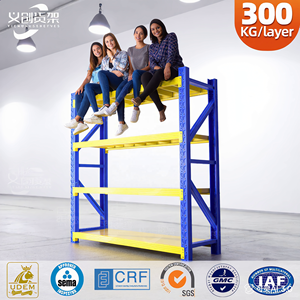
Manufacturer Directly Warehouse Light Middle Storage Industrial Racks for Warehouse Racking Plate Shelving Shelves Unit
A practical solution for spare parts, e-commerce cartons, archives and maintenance stores where hand-loaded access and flexible shelf levels matter.
View product details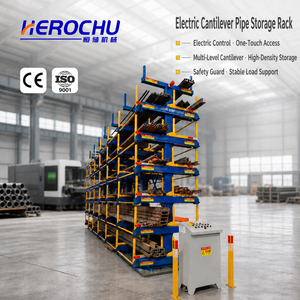
Electric Cantilever Rack Automated Retrieval System Foldable Q235B Carbon Steel Pipe Storage for Industrial Long Materials
Designed for pipes, profiles, steel bars and long building products, with motorised handling potential for construction suppliers and industrial maintenance operators.
View product details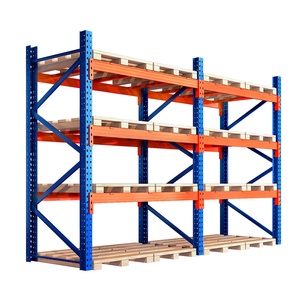
Industrial Heavy Duty Storage Shelves system Stacking Units Metal Rack Warehouse Steel Pallet Racking
A robust pallet racking family for distributors and 3PLs that need reliable beam levels, clear load signage and efficient forklift access.
View product details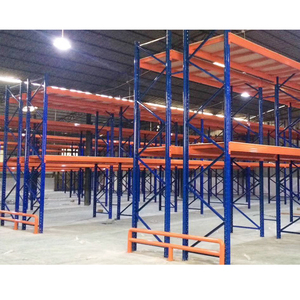
Chinese Manufacture Heavy Duty Metal Pallet Rack Shelving Wood Pallet Racks and Shelves
Suitable for mixed pallet operations where wood pallets, cartons and medium-to-heavy loads require a cost-controlled, expandable storage structure.
View product details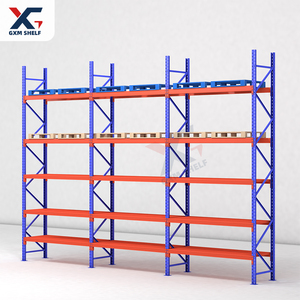
Heavy Duty Pallet Racking Warehouse Pallet System Pallet Storage Rack Heavy Duty Rack Shelf Heavy Duty Racking System
A flexible pallet storage system for Brasília warehouses that need to balance selectivity, density, installation speed and future reconfiguration.
View product details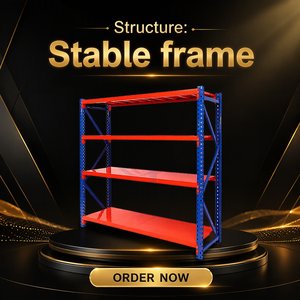
Heavy Duty Steel Selective Pallet Rack 5 Layer Load Capacity 1000kg Industrial Storage Rack
A high-selectivity option for SKU-intensive operations, with five-layer configuration potential and load capacity suited to many industrial storage tasks.
View product details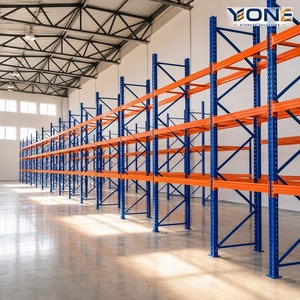
Steel Storage Rack Heavy Duty Pallet Racking Q235B Steel Selective Racking for Racks Industriales Warehouse Storage
Engineered around Q235B steel and selective racking logic, suitable for importers who want documented material specifications and export packing.
View product details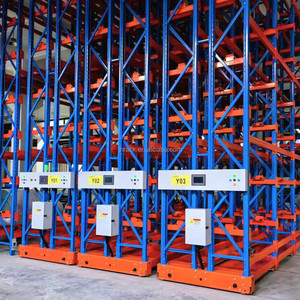
Industrial Heavy Duty High Efficiency Warehouse Electric Mobile Storage Shelf Automatic Mobile Racking System Pallet Rack
High-density mobile racking for warehouses where floor area is expensive, refrigerated space is costly or every square metre must store more pallets.
View product detailsNeed product data sheets, load tables and export packing information for an initial Brasília comparison?
Get CatalogWhere Structural Racking Creates Value in the Brasília Market
Brasília combines a large public-sector consumption base with a fast-growing distribution role for the Federal District and the surrounding states. The storage solution should reflect the type of goods, the handling fleet and the building envelope.
E-commerce and 3PL fulfilment in the Federal District and Entorno
Multi-client 3PLs and e-commerce operations need high selectivity, clear labelling and fast reconfiguration. Selective pallet racking with defined load signage and protected uprights is often the backbone, supported by shelving for small parts and mezzanine space for packing.
Cold-chain and food distribution
Chilled and frozen stores serving meat, dairy, fruit, food service and retail can use cold storage pallet racking or mobile racking to reduce refrigerated air volume. Coating, condensation control and inspection access are as important as load capacity.
Pharmaceutical and health supply
Pharma distributors and public-health suppliers need documented layouts, traceable load capacities and clean, inspectable storage. Clear aisle planning, damage protection and regular rack inspection are essential parts of the specification.
Building materials, pipes and long goods
Construction suppliers and industrial service companies in the Entorno often store pipes, profiles, timber and heavy maintenance items. Cantilever racking and heavy-duty pull-out units can improve access without blocking the yard or the workshop.
Automotive and spare parts distribution
Automotive distributors need fast access to high-turnover parts and secure storage for heavier components. Selective racking with shelving levels, divider accessories and clear bay identification supports picking accuracy and inventory control.
Government suppliers and maintenance stores
Suppliers to public bodies and large institutions often manage maintenance parts, furniture, IT assets and archive materials. A combination of industrial shelving, selective racking and mezzanine storage can create a cleaner, more auditable store.
Brasília Market Trends That Should Shape Your Racking Specification
Warehouse demand in the Federal District is being reshaped by e-commerce, 3PL growth, cold-chain investment, land constraints and stronger safety expectations. The racking specification should anticipate these changes.
1. E-commerce and quick commerce are raising pick density
Consumers in Brasília expect fast delivery across a wide assortment. Warehouses are therefore combining pallet racking with small-parts shelving, packing benches and mezzanine areas. The layout needs clear pick faces, short travel distances and room for seasonal SKU changes.
2. 3PLs need reconfigurable, multi-client storage
A 3PL cannot lock itself into a layout that only fits one client. Selective pallet racking remains attractive because beams can be adjusted, bays can be re-labelled and capacity can grow in phases. Exporters should supply spare parts and reconfiguration drawings.
3. Cold-chain and quality assurance are becoming more formal
Food, dairy, meat and pharmaceutical distribution require documented temperatures, hygiene and inspection routines. Mobile racking can reduce refrigerated cubic volume, while cold-store racking should be specified for condensation, corrosion protection and safe forklift movement.
4. Land and clear height are pushing storage upward
As industrial land in the Federal District and Entorno becomes more expensive, warehouses must use height more intelligently. High-bay selective racking, mezzanines and narrow-aisle configurations can add capacity without a new building — but only after floor flatness, fire access and forklift reach are checked.
5. ESG and energy efficiency are influencing layout choices
Less steel, less wasted space and less refrigerated air per pallet are practical sustainability gains. Mobile racking and high-density systems can improve space utilisation, while recyclable steel, durable coatings and long-life components support a lower whole-life carbon footprint.
6. Safety and inspection are no longer informal
Forklift impact, damaged uprights, missing beam locks and overloading are common causes of rack failure. Buyers should require load signage, a damage-reporting routine, spare parts availability and periodic inspection. Safety is a specification item, not an after-sales extra.
Structural Racking Selection Matrix for Brasília Procurement Teams
Use this comparison as an early-stage filter. The final choice should be confirmed by a site-specific layout and structural review.
| System | Best for | Selectivity | Density | Brasília-specific notes |
|---|---|---|---|---|
| Selective pallet racking | High SKU variety, 3PLs, e-commerce, spare parts, mixed pallets | 100% direct access | Medium | Often the easiest system to align with ABNT NBR 15524 and to reconfigure as product ranges change. |
| Drive-in / drive-through | Low-SKU, high-volume pallets, seasonal inventory | LIFO or FIFO depending on design | High | Requires disciplined forklift operation and clear training; not ideal for fast-moving, mixed-SKU stores. |
| Push-back racking | Medium-to-high volume with multiple pallets per SKU | Good but not 100% | Medium-high | Useful where building depth is limited and throughput is moderate, but cart condition and maintenance must be planned. |
| Pallet shuttle racking | High-volume, low-SKU warehouses and cold stores | Semi-automated lane access | Very high | Can reduce labour and improve safety in deep lanes, but needs operator training and spare shuttle support. |
| Mobile racking | High land cost, cold-chain, urban warehouses, limited footprint | 100% pallet access when an aisle opens | Very high | Excellent for reducing refrigerated air volume and for sites where expansion is expensive or impossible. |
| Cantilever racking | Pipes, profiles, timber, long building products | High access to long goods | Low to medium | Useful for construction suppliers and industrial stores; outdoor versions need corrosion protection and drainage planning. |
| Shelving and mezzanine | Small parts, archives, service parts, packing and light picking | High for hand-loaded items | Low to medium | Good way to use vertical space in Federal District buildings without expanding the footprint. |
Why Real Nice Racks Is a Credible China-Linked Export Partner for Brasília Projects
An engineering-led exporter should demonstrate experience, technical expertise, authority and trustworthiness through documentation, product depth and lifecycle support — not only through price.
Real Nice Racks LLC positions itself as an engineering-led storage partner rather than a catalogue trader. Its product range covers selective pallet racking, high-density P90 systems, MOVO mobile pallet racking, industrial shelving, cantilever racking, pull-out units, mezzanines and semi-automated storage machines. For the Brasília market, the most relevant advantages are the ability to translate site data into a documented layout, specify the right system for the goods profile and support the project beyond the factory gate.
Compare the catalogue against your Brasília warehouse data before you issue an RFQ.
Get Catalog
From Inquiry to Handover: A Practical Export Route to Brasília
A disciplined project sequence reduces surprises between a Chinese factory, a Brazilian importer and a warehouse team in the Federal District.
Technical brief and site data
Share warehouse location, floor plan, clear height, floor slab details, pallet dimensions, load per pallet, SKU count, throughput, forklift type, aisle width and target pallet count. For cold stores, include temperature range and door layout.
Layout and structural design
The exporter should propose layout options, beam levels, upright capacities, bracing, anchors and access aisles. The design should be reviewed by a Brazilian licensed professional where required and coordinated with fire access and local building conditions.
Factory production and quality control
Confirm steel grade, section thickness, welding quality, coating system, colour, load labels and spare parts. Pre-shipment inspection should check dimensions, packing quantity, container loading plan and documentation.
Export, delivery and installation support
Agree Incoterms, port of loading, destination port, customs broker and inland freight. For inland Brazil, the route may use Santos, Itajaí or Paranaguá and road corridors such as BR-040, BR-050, BR-060 or BR-070, with bonded warehouse options in the Central-West where suitable.
Common Questions from Local Buyers Comparing China Factories and Exporters
These are the questions procurement, engineering and operations teams in the Federal District ask most often when comparing structural racking suppliers.
How do I compare a China structural racking factory with a trading company?
Ask both to provide the same evidence: structural calculations, steel grade certificates, coating specification, load signage, installation drawings, packing plan, warranty terms, spare-parts list and after-sales process. A factory may offer stronger cost control and technical traceability; a trading company may offer broader product sourcing. What matters is transparency. A credible exporter should be willing to show how the design was calculated, which standards were used and how the goods will be packed for a long sea voyage and inland transport to Brasília.
What information should I prepare before requesting a Brasília warehouse quote?
Prepare the warehouse address and clear height, floor slab bearing capacity and flatness, pallet dimensions and weight, load per pallet, SKU count, turnover profile, forklift or reach-truck type, required aisle width, target pallet positions, fire-safety requirements and temperature range if applicable. Also state the preferred port of entry, Incoterms and whether you need installation supervision. The more precise the brief, the more comparable the offers will be.
How is structural racking shipped from China to Brasília?
Most shipments move by sea from a Chinese port to a Brazilian port such as Santos, Itajaí or Paranaguá, followed by customs clearance and road transport to the Federal District or Entorno. The inland route typically uses corridors such as BR-040, BR-050, BR-060 or BR-070. Depending on the supplier, product mix and project schedule, bonded warehouse or dry-port options in the Central-West may also be considered. Transit time, customs inspection and inland trucking should all be built into the project plan; a fixed date should only be confirmed after the shipping schedule is booked.
Does racking need to meet ABNT NBR 15524 and Brazilian fire rules?
Selective pallet racking projects in Brazil should generally be aligned with ABNT NBR 15524 and reviewed by a qualified local professional where required. Fire-safety requirements depend on the building, occupancy, storage height and local authority; the project should be coordinated with the Corpo de Bombeiros do Distrito Federal and the site’s fire plan. Material-handling safety, including forklift impact protection and load signage, should also be part of the specification. A responsible exporter should supply documentation that helps the local team obtain approvals rather than simply deliver steel.
Can racking handle Brasília’s heat, dust and rainy season?
Yes, with the correct specification. Indoor racking typically uses a powder-coating system, while outdoor cantilever storage or humid cold-store areas may need hot-dip galvanising or a more protective coating. Design should avoid water traps, support drainage and ventilation, and protect packaging during inland transport in the rainy season. Dust should be managed through housekeeping and inspection; damaged paint or corrosion should be repaired early to protect the steel. For high-UV external storage, colour fastness and coating thickness should be confirmed.
Can you supply cold storage, pharmaceutical or high-density systems for the Federal District?
Yes. The product range includes cold-store pallet racking, high-density P90 systems and MOVO mobile racking, which are relevant for food, dairy, meat, pharmaceutical and high-value distribution. For cold stores, the layout should account for temperature range, frost, condensation, door openings and forklift performance. For pharma and public-health suppliers, the design should support inspection, clean access and documented load capacity. The final configuration should always be based on the site data and the local compliance review.
What about installation, inspection and spare parts after delivery?
Agree the installation scope before the order. Some projects use a local installation team supervised by the exporter; others require a full installation service. After handover, keep spare uprights, beams, beam locks, safety pins and protection guards on site. Establish a periodic inspection routine, record damage and repair it promptly. A racking system is safe only when it is correctly assembled, properly loaded and maintained throughout its service life.
Request a Brasília-Specific Racking Layout and Export Catalogue
Send your floor plan, pallet weights, clear height, forklift details and target pallet count. The team can review the data and propose a suitable structural racking configuration for the Federal District and Entorno market — including selective racking, high-density systems, cantilever or mobile racking where relevant.
Get CatalogTechnical support available in English, Spanish and Portuguese. Email: [email protected]