China is home to many manufacturers of warehouse storage equipment, but choosing a supplier takes more than comparing prices. The right Pallet Rack Systems must suit your inventory, building layout, handling equipment, and expected storage demands. A rack that looks sturdy in a product photo may not fit your forklift aisle or daily picking routine. Small details matter.
This guide introduces ten Chinese manufacturers and offers practical points for comparing their products and services. The selection considers factors such as product range, customization, manufacturing experience, quality processes, and the clarity of technical support. These factors can help narrow a shortlist, though they cannot replace independent checks. Ask for drawings, load information, material specifications, and installation guidance before making a decision. See it in context.
Manufacturer claims are worth reviewing carefully. Buyers should verify relevant certificates, inspect samples or completed projects where practical, and confirm how after-sales issues are handled. A supplier’s suitability depends on the project, not just its position in a list. No ranking fits everyone. Even experienced buyers may discover that a promising option needs closer scrutiny once site measurements and operating needs are clear. Use this overview as a starting point, then compare quotations and documentation against your actual warehouse requirements.
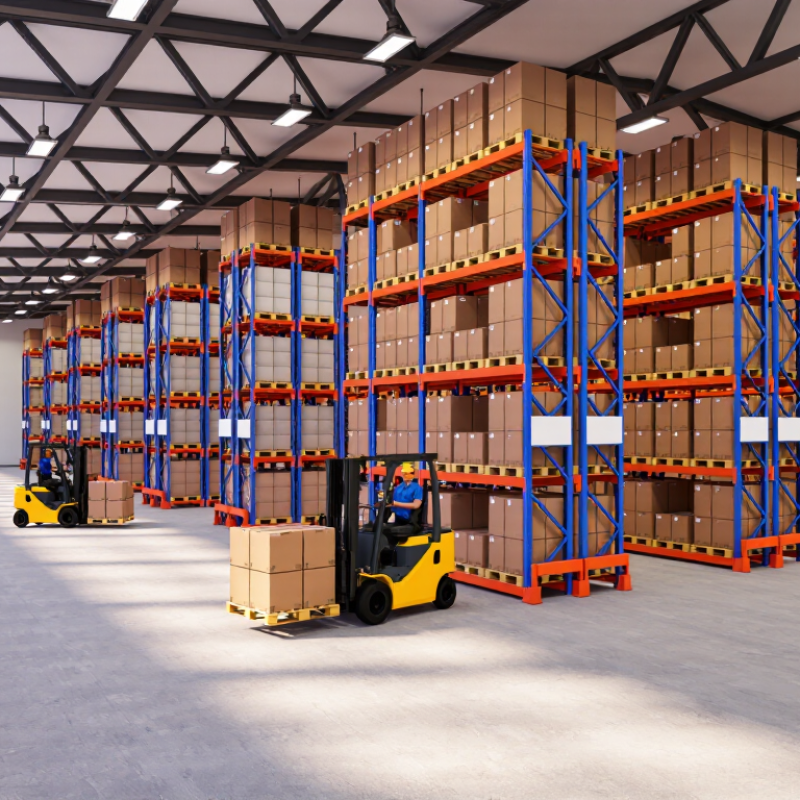
What Pallet Rack Systems Are and How They Support Warehouse Storage
Pallet rack systems are steel frames that create vertical storage levels for palletized goods. Upright frames support horizontal beams, leaving clear spaces for forklifts to place and retrieve loads. In a selective layout, each pallet position is directly accessible. This suits warehouses with many product types and frequent picking. Other layouts use deeper rows to store more pallets, but access can be less direct.
Good rack planning starts with the actual goods, not just the available floor space. Measure pallet dimensions and loaded height, then consider beam capacity, aisle width, forklift turning room, and sprinkler clearance. A beam set too high may leave unused space above cartons. A narrow aisle can slow handling and increase contact with uprights. Small details matter. Capacity labels should match the installed configuration, and damaged parts need prompt assessment by qualified personnel.
Racks also shape daily warehouse routines. Clear location labels help workers return pallets to the right bay, while keeping fast-moving stock near packing areas can reduce travel. However, layouts change as inventory shifts. That part is easy to overlook. A system that worked for one product mix may create awkward reaches or blocked routes after seasonal goods arrive, so periodic review is practical.
China Top 10 Pallet Rack Systems Manufacturers? - What Pallet Rack Systems Are and How They Support Warehouse Storage
This reference compares ten widely used pallet-racking configurations, not manufacturers or brands. The best choice depends on the inventory, handling equipment, building layout, and required pallet selectivity.
| Pallet Rack System | Pallet Access | Storage Density | Typical Handling Equipment | How It Supports Warehouse Storage | Key Consideration |
|---|---|---|---|---|---|
| Selective pallet racking | Direct access to each pallet from an aisle | Low to moderate | Counterbalance or reach trucks | Supports flexible storage where many product lines need frequent, independent access. | Requires an aisle in front of each rack row, so it uses more floor area than most compact systems. |
| Very narrow aisle (VNA) racking | Direct access to each pallet in narrow aisles | Moderate to high | Turret trucks or guided narrow-aisle trucks | Increases storage capacity by reducing aisle width while preserving access to individual pallet locations. | Requires suitable trucks, aisle guidance, and careful floor and layout planning. |
| Double-deep racking | Access to two pallet positions deep from each aisle | Moderate to high | Reach trucks with a double-deep attachment or suitable telescopic forks | Stores pallets in a second position behind the front pallet, reducing the number of aisles needed. | Some pallets are less directly accessible; stock rotation and load selection need planning. |
| Drive-in racking | Forklifts enter the rack lanes; typically operated from one end | High | Counterbalance or reach trucks designed for the lane layout | Uses deep lanes to store larger quantities of similar products with fewer aisles. | Often suited to high-volume, low-SKU storage; the last pallet loaded is generally the first pallet retrieved. |
| Drive-through racking | Forklifts can enter and exit lanes from opposite ends | High | Counterbalance or reach trucks designed for the lane layout | Supports flow-through operation, with loading and retrieval possible at opposite ends of a lane. | Needs access at both ends and coordinated stock rotation procedures. |
| Push-back racking | Front-facing access to pallets stored several positions deep | High | Counterbalance or reach trucks | Uses inclined carts or rails so pallets move back as new pallets are loaded into the lane. | Provides last-in, first-out access within each lane; pallet and lane compatibility are important. |
| Pallet flow racking | Loading and retrieval take place at opposite ends of a lane | High | Forklifts for loading and retrieval | Uses gravity rollers or wheels to move pallets through a lane, supporting first-in, first-out rotation. | Requires compatible pallets and suitable controls to manage pallet movement and lane operation. |
| Pallet shuttle racking | Shuttle moves pallets within deep storage lanes; forklifts serve the lane entrance | High | Forklifts and a rail-guided pallet shuttle | Reduces forklift travel into deep lanes while allowing compact storage of multiple pallets per lane. | Requires shuttle equipment, compatible loads, and procedures for charging and operating the shuttle. |
| Mobile racking | Direct access through an aisle opened between movable rack rows | High | Forklifts or reach trucks, depending on the layout | Reduces the number of permanently open aisles by moving rack rows when access is required. | Needs a suitable floor and safety controls; access is typically to one opened aisle at a time. |
| Pallet AS/RS racking | Automated storage and retrieval equipment accesses assigned locations | High | Stacker cranes or other system-specific automated equipment | Combines high-bay storage with automated pallet handling to support controlled, system-directed inventory movement. | Requires integration with controls and warehouse software, as well as detailed building and operations planning. |
FAQS
It uses steel frames and horizontal beams to create storage levels for palletized goods. Forklifts place and retrieve loads from open bays.
Selective racking gives direct access to each pallet. It supports frequent picking, though wider aisles may reduce storage density.
Drive-in racks suit larger batches of uniform goods. Pallet flow or shuttle systems can also serve high-volume lanes, but need careful operating checks.
Measure pallet size, loaded height, and weight. Check ceiling height, aisle width, forklift turning room, floor capacity, and sprinkler clearance.
Clear location labels help workers return pallets to the correct bay. Keeping fast-moving stock near packing areas can also reduce travel.
Request load tables, layout drawings, material specifications, and relevant test records. Confirm that stated capacities match the actual pallet loads.
Inspect beams, frame connections, and visible damage regularly. Damaged parts need prompt assessment by qualified personnel. Small details matter.
Seasonal goods or changing inventory can block routes and create awkward reaches. I may be overemphasizing aisle space here; stock changes matter too.
Conclusion
This article explains how Pallet Rack Systems help warehouses make better use of vertical space, organize inventory, and support efficient storage and retrieval. It introduces common systems used in China, including selective pallet racks, drive-in and drive-through racks, double-deep racks, and gravity-flow options, noting that each suits different storage and access needs.
The guide also outlines how to evaluate Chinese manufacturers by examining product range, material quality, engineering and safety standards, customization capabilities, production capacity, and after-sales service. A comparison of the country’s top ten manufacturers is intended to help readers understand differences in products, standards, and support, so they can identify suppliers whose capabilities match their warehouse requirements and project priorities.