8 Warehouse Racking Solutions Shortlisted by Global Buyers
These product families cover the core search intentions behind “China warehouse racking manufacturers and suppliers”: selective pallet racking, heavy-duty storage, boltless shelving, push-back density, adjustable beam systems and custom Q235 steel racking. Each solution should be finalised only after a site survey, pallet profile review, load calculation and local compliance check.
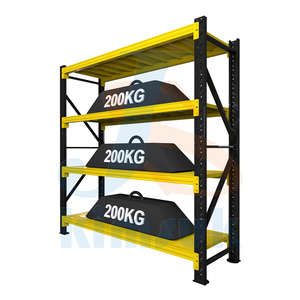
Factory Warehouse Heavy-Duty Pallet Rack Storage System
A rugged pallet rack and shelf combination for factory warehouses, mixed pallet loads and storage rooms where adjustable beam levels and simple expansion matter.
View product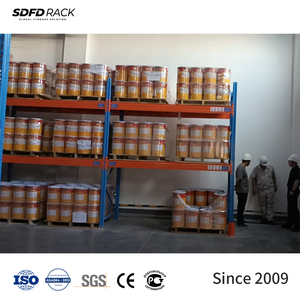
SDFD Industrial Heavy-Duty Steel Pallet Rack Shelving System
Designed for storage goods, industrial components and distribution centres that need high load capacity, disciplined beam adjustment and export-ready structure.
View product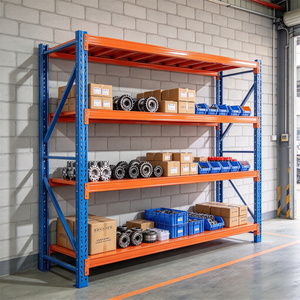
Steel Boltless Rivet Shelving with Corrosion Protection
Powder-coated rivet shelving with card-slot assembly for cartons, spare parts and fast-moving SKUs. A practical low-maintenance option for hand-loaded storage.
View product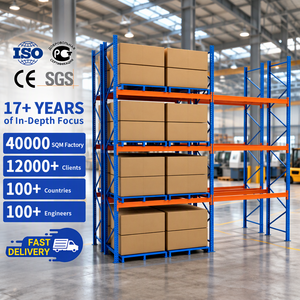
Heavy-Duty Selective Pallet Racking System
Multi-level metal shelving units with direct access to every pallet. Suitable for high-SKU warehouses, 3PL operations and fast-moving distribution environments.
View product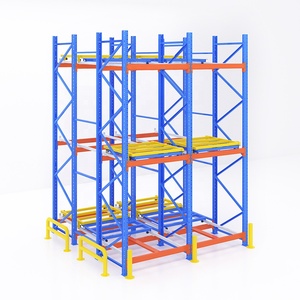
Pallet Live Rack / Push-Back Pallet Rack
A higher-density solution for LIFO storage, finished goods and seasonal inventory. It helps reduce aisle space while preserving pallet access and forklift efficiency.
View product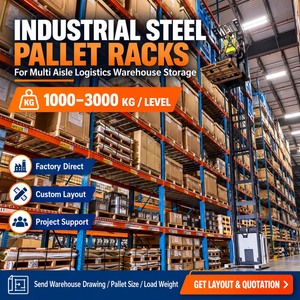
Selective Pallet Racking with Adjustable Beam Levels
Configured for changing pallet heights and mixed-load profiles. Adjustable beam levels help future-proof storage layouts without replacing the entire system.
View product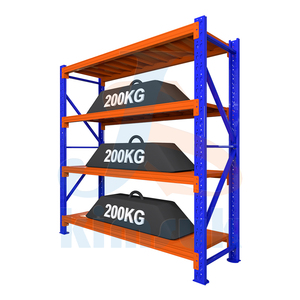
Boltless Adjustable Heavy-Duty Warehouse Racking System
A flexible warehouse rack and shelving unit for garages, workshops and industrial stores. Boltless assembly supports faster installation and low-cost expansion.
View product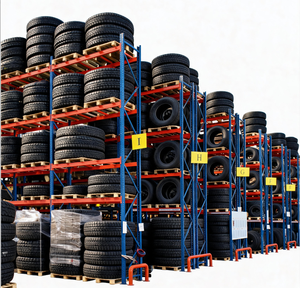
Custom Q235 Steel Pallet Racking & Shelving
Custom load capacity, beam type, powder coating and Q235 steel configuration for project-specific racking. Best specified with pallet drawings and structural requirements.
View productWhy China’s Top Warehouse Racking Manufacturers Are Trusted for Export Projects
China’s warehouse racking supply base has matured from low-cost steel fabrication into full-scope storage engineering: structural calculation, powder coating, export packing, installation documentation and lifecycle support.
For procurement teams, the real advantage is not simply price. It is the ability to combine Q235 steel roll-forming, adjustable beam systems, powder-coated corrosion protection and custom racking engineering in one supply chain. That matters when a project spans selective pallet racking, boltless shelving, push-back racking, mezzanine storage and cold-store layouts.
Real Nice Racks supports this export model with engineering-led product selection and documented project handover. Typical project inputs include clear height, floor tolerance, pallet weight, SKU velocity, forklift type, seismic zone, humidity, temperature and container loading limits. These are the details that separate a reliable racking manufacturer from a catalogue-only trading supplier.
- Layout and load data reviewed before quotation, not after deposit.
- Racking design coordinated with EN 15512, FEM and local seismic codes where required.
- Export packing and port delivery planned around South American and global logistics.

High-bay pallet racking projects require beam calculations, floor tolerance review and installation planning before shipment.
Warehouse Racking Procurement Trends Buyers Should Plan For
Search intent for “China warehouse racking solutions manufacturers and suppliers” is increasingly commercial and technical. Buyers are not only comparing price per pallet; they are evaluating compliance, adaptive capacity, energy efficiency and lifecycle support.
Compliance-first procurement
RFQs increasingly request structural calculations, load signage, installation records and alignment with EN 15512, EN 15635, FEM 10.2.08 or local codes.
Automation-ready modularity
Racking is being specified for future AMR, shuttle and AS/RS interfaces. Modular beams, uprights and connectors reduce the cost of phased upgrades.
Cold-chain and energy efficiency
Mobile racking and high-density storage reduce refrigerated air volume. That is especially relevant for fruit, seafood, meat and dairy export warehouses.
Total cost of ownership
Buyers are moving from lowest unit price to installed cost, maintenance cost, spare-parts availability, expansion cost and downtime risk.
Port and delivery strategy
Suppliers are being compared on container loading, export packing, port access and installation supervision, not solely factory capacity.
Digital documentation
Capacity tables, load signs, inspection checklists and spare-parts schedules are becoming part of supplier due diligence and insurer requirements.
How Pallet Racking and Industrial Shelving Are Evolving
The strongest warehouse racking suppliers are developing systems that solve density, safety and labour challenges together. Product development is moving toward flexible steel structures that can be re-purposed as operations change.
High density without losing access
Push-back, pallet live and mobile racking help maximise storage within an existing building envelope. The best choice depends on SKU velocity, FIFO/LIFO rules and forklift access.
Mobile and semi-automated storage
Rail-mounted mobile racking and vertical storage machines reduce aisle demand and support goods-to-person workflows. They are especially valuable where land and labour costs are rising.
Seismic and cold-store engineering
Base plates, anchors, bracing and beam connectors are increasingly specified by seismic zone and soil type. Freezer projects also require low-temperature steel and coating review.
Corrosion protection and steel optimisation
Powder coating, Q235 steel selection and profile optimisation improve durability while controlling weight and freight cost. Buyers should request coating specifications, not only colour.
Boltless and adjustable modularity
Boltless rivet shelving and adjustable beam racking allow rapid assembly, reconfiguration and expansion. These features reduce downtime during warehouse re-layouts.
WMS, AMR and AS/RS interfaces
Racking is no longer a stand-alone asset. It must align with picking software, automated guided vehicles and future high-bay automation, so dimensions and tolerances matter earlier.

Mobile pallet racking is particularly effective in cold stores because it reduces the volume of refrigerated air and the number of permanent aisles.
More Pallets per Building, Less Wasted Aisle Space
Many buyers begin with selective pallet racking because it offers direct access and flexibility. As SKU profiles mature, they add push-back, drive-in, shuttle or mobile systems to raise density. The most economical project is often a phased layout that avoids new construction while preserving safety and future automation options.
For South American warehouses in Brazil, Chile, Peru, Colombia and Argentina, high-density racking can help offset high land costs, temperature-control costs and long construction timelines. The technical case should be proved with pallet data and throughput analysis, not marketing claims.
How to Compare China Warehouse Racking Suppliers: A Practical RFQ Scorecard
A low quotation can hide costly assumptions. Use a weighted scorecard so commercial, engineering and service factors are compared on the same basis.
The weighting below is a recommended starting point for buyers sourcing pallet racking and shelving from China. Adjust it for cold storage, seismic zones, high-bay automation or urgent retrofit projects.
- Ask for beam and upright calculations based on actual pallet load and deflection limits.
- Confirm whether installation supervision, anchors and load signage are included.
- Review spare-parts availability, repair support and future beam-level changes.
Which Warehouse Racking Solution Should You Specify?
Use this matrix to match common storage challenges with the right starting point. Final selection should always be validated by an engineer using pallet dimensions, weight, handling equipment and building data.
High-SKU e-commerce and 3PL
Start with selective pallet racking and boltless shelving for carton picking. Preserve direct access and leave clear upgrade paths for AMR or picking software.
Cold-chain export warehouses
Evaluate mobile racking, high-density pallet racking and freezer-grade coatings. Reducing aisles can lower refrigerated air volume and energy use.
Manufacturing and heavy components
Specify heavy-duty selective racking or custom Q235 steel systems. Confirm load signs, beam deflection limits and forklift or crane access requirements.
High-density LIFO inventory
Push-back or pallet live racking can reduce aisle space for finished goods, seasonal stock and fast-moving palletised products.
Spare parts, workshops and garages
Boltless rivet shelving and adjustable heavy-duty racking deliver fast installation, modular expansion and practical corrosion protection.
Seismic zones and regulated markets
Request site-specific seismic design, anchor specification and local engineer review. Documentation should be supplied with the racking, not promised after delivery.
Why Real Nice Racks Is a Reliable Warehouse Racking Supplier
Real Nice Racks LLC combines product breadth with engineering support for warehouses and distribution centres across South America — from Brazil and Chile to Peru, Colombia, Argentina, Ecuador, Uruguay and Paraguay.
Full-scope storage engineering
Pallet racking, industrial shelving, cantilever, mezzanines, storage machines, mobile racking and retrofit solutions can be coordinated through one supplier relationship.
Seismic-ready project support
Racking can be designed with reference to FEM 10.2.08 and EN 16681 and coordinated with local requirements such as NCh 433, E.030, NEC-SE-DS and NSR-10 where applicable.
Cold-chain and freezer capability
Systems can be specified for chilled and frozen environments down to approximately -30°C, including mobile racking that reduces refrigerated air volume.
Documented safety and standards
Projects can include load signage, capacity tables, installation records and design alignment with EN 15512, EN 15620, EN 15635 and ABNT NBR 15524 for Brazilian projects.
Lifecycle service, not one-off supply
Support includes site survey, layout design, manufacturing, export packing, port shipment, supervised installation, inspection and future capacity upgrades.
Multilingual regional coordination
Technical and commercial communication can be supported in English, Spanish and Portuguese for South American procurement and engineering teams.
What to Verify Before Shortlisting Any China Racking Manufacturer
For high-value racking projects, supplier due diligence should be evidence-based. Ask for drawings, calculations, coating specifications, packing plans and installation methodology. A top-ranking website is not a substitute for technical documents.
- Actual steel grade, section thickness and powder-coating process.
- Reference projects with similar clear height, load and seismic conditions.
- Inspection and repair guidance for the operational life of the racking.
- Container loading plan and protection for long uprights and beams.
- Who signs off load capacities, anchors and final installation.

Supervised installation and documented handover reduce safety risk and protect the value of your racking investment.
EN 15512
Adjustable steel pallet racking design review.
FEM / EN 16681
Seismic design basis for static racking.
EN 15620 / 15635
Floor tolerance, use and inspection guidance.
Local codes
NBR 15524, NCh 433, E.030, NSR-10 and project requirements.
Common Questions When Buying Warehouse Racking from China
How do I choose the best china warehouse racking manufacturer or supplier?
Compare suppliers on engineering evidence rather than price alone. Request a site-specific layout, load calculation, steel and coating specification, export packing plan, installation methodology, spare-parts list and sample load signage. For export projects, confirm experience with your intended port, documentation requirements and, for seismic regions, local structural review.
Can selective pallet racking be designed for heavy-duty and high-bay warehouse projects?
Yes. Selective pallet racking can be engineered for high loads and high clear heights, subject to upright capacity, beam deflection, floor tolerance, sprinkler and building constraints. The final design must use actual pallet weight, pallet dimensions, handling equipment and seismic zone — not a generic catalogue capacity.
What is the difference between boltless shelving and pallet racking?
Boltless rivet shelving is generally for hand-loaded cartons, spare parts and lighter industrial storage. Pallet racking is designed for forklift-loaded pallets and higher point loads. Some hybrid projects use heavy-duty shelving for small parts and selective pallet racking for palletised stock in the same warehouse.
Can you supply racking for cold storage and freezer warehouses?
Cold storage and freezer racking can be specified for chilled and frozen environments down to approximately -30°C, subject to project review. Mobile racking such as MOVO can be effective in cold stores because it reduces the number of permanent aisles and the volume of refrigerated air that must be maintained.
How are racking projects shipped and installed across South America?
Typical projects follow a five-stage process: survey and data analysis, layout and structural design, manufacturing and quality control, export packing and shipment to a port such as Santos, Callao, San Antonio, Buenos Aires, Cartagena, Guayaquil or Montevideo, then supervised installation and handover with load signage and inspection documentation.
Can an existing warehouse be upgraded instead of building a new facility?
Yes. Retrofit projects often combine re-layouts, narrow-aisle racking, push-back, pallet live, mobile racking, mezzanine floors and adjustable beam levels. High-density racking can deliver up to 20% more storage capacity within the same building footprint when the layout and load profile support it.
Which standards should be referenced in a racking RFQ?
Common references include EN 15512 for pallet racking design, EN 15620 for floor tolerances, EN 15635 for use and inspection, and FEM 10.2.08 or EN 16681 for seismic design. Local codes such as ABNT NBR 15524, NCh 433, E.030, NEC-SE-DS and NSR-10 may also apply depending on the project location.
What information should I send to request a quotation?
Send the warehouse location, floor plan, clear height, pallet dimensions, load per pallet, SKU profile, handling equipment type, seismic zone, temperature environment and target timeline. For cold stores, include operating temperature and insulation details. For retrofit projects, include photos and any existing racking drawings.
Send Your Pallet Data, Floor Plan and Clear Height
Get a practical racking recommendation, capacity comparison and export quotation from a supplier focused on engineered warehouse storage. Share your layout and load requirements to start the technical review.
Contact Us