8 Industrial Pallet Storage Rack Configurations Buyers Request Most
These eight systems represent the practical core of our top-tier factory and exporter range: selective racking, high-bay racking, push-back live racking, mezzanine platforms, heavy-duty storage and boltless shelving. Each product URL is preserved so procurement teams can move directly from evaluation to technical review.
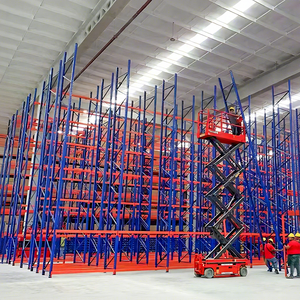
Pallet Rack Heavy Duty Industrial Warehouse High Quality Warehouse Heavy Duty Rack Industrial Racks for Storage
Recommended for high-turnover distribution centres that need adjustable beam levels, direct pallet access and a robust powder-coated steel frame.
Best for: FMCG, building materials, manufacturing stores.
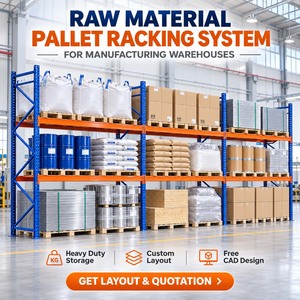
Pallet Racking System for Manufacturing Raw Material Warehouses
Layout-led system for coils, components, packaging and inbound materials, with layouts coordinated around forklift routes, inspection aisles and staged production flow.
Best for: Automotive, machinery, industrial assembly plants.
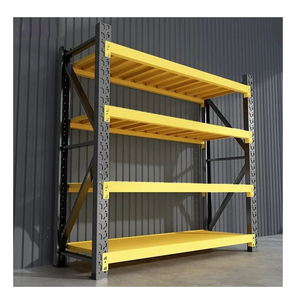
Light Duty 4-Tier Steel Metal Storage Rack Shelves Corrosion Protected Home and Garage Racking for Warehouse Use
Space-efficient multi-tier shelving for cartons, spare parts, tools and retail backroom stock, with a corrosion-protected finish for humid or coastal environments.
Best for: Spare parts rooms, e-commerce back offices, garages.
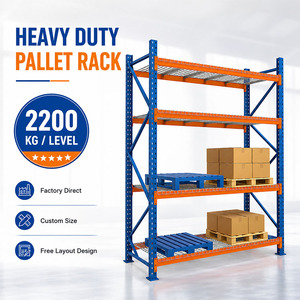
Selective Pallet Racking Heavy Duty Steel Warehouse Rack System for Industrial Storage and Logistics Use
The default choice where every SKU must remain directly accessible. Ideal for mixed pallet sizes, fast-moving logistics and warehouses that expect product profiles to change.
Best for: 3PL, pharma, food distribution, mixed-SKU warehouses.
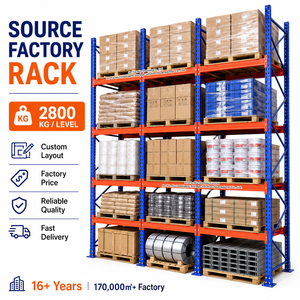
2800KG 5 Levels High Bay Industrial Pallet Racking Heavy Duty Warehouse Rack System
High-clear-height storage engineered for 2,800 kg load requirements and five working levels, with beam locks, bracing and base plate detailing suited to rigorous safety review.
Best for: High-bay DCs, cold stores, large-volume logistics hubs.
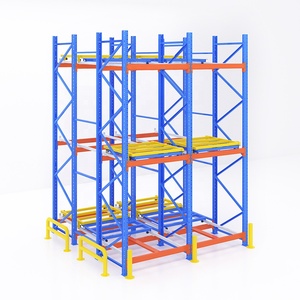
Pallet Live Rack Push Back Pallet Rack
Nested cart push-back racking increases pallet positions per aisle while retaining LIFO access. A strong option when SKU counts are moderate but storage density matters.
Best for: Beverage, seasonal stock, food production, fast-moving bulk SKUs.
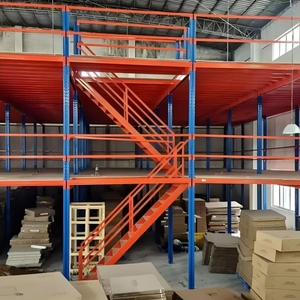
Heavy Duty Mezzanine Floor Racking Warehouse Storage Racks Shelf Units Pallet Rack System Equipment Platform Shelves Attic Rack
Adds usable floor area inside the existing building for picking, packing, spare parts or office support. Structural design can integrate with pallet racking and stair or lift access.
Best for: E-commerce, multi-tier picking, warehouse retrofits.
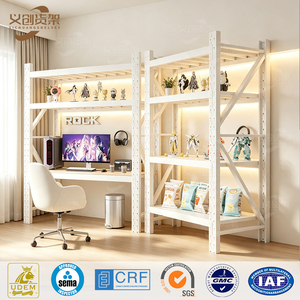
Low Price Racking Adjustable Metal Boltless Shelf and Racks Warehouse Storage Medium Duty Metal Rack Shelf
Fast-install medium-duty shelving for cartons and hand-loaded inventory. Boltless assembly reduces commissioning time and supports flexible reconfiguration.
Best for: Retail stockrooms, archives, small warehouses, workshops.
What Separates a Genuine Factory & Exporter from a Catalogue Reseller
Industrial pallet storage racks are structural systems, not commodity furniture. The difference becomes visible in load calculations, anchor specifications, freight packing, installation supervision and the documentation package handed to the buyer.
For procurement teams, the strongest supplier is rarely the one with the lowest initial price per bay. It is the supplier that can translate pallet dimensions, load per pallet, handling equipment, clear height, floor tolerance, seismic zone, humidity and fire strategy into a layout that remains safe after the fifth reconfiguration. This is where a factory and exporter with in-house engineering creates measurable information gain: the proposal can be reviewed against standards, not just photographs.
A professional industrial pallet storage rack specification should connect the commercial offer to the technical evidence behind it. The buyer should see beam capacity tables, upright load charts, bracing details, base plate and anchor requirements, aisle widths, fork clearance envelopes, and the inspection regime that will protect the investment after handover. In export projects, the specification must also survive sea freight, port handling and site installation by a supervised crew or approved installer.
This guide is written for warehouse owners, 3PL operators, project engineers and purchasing managers who need to compare suppliers on total cost of ownership rather than brochure size. It examines the product configurations most often requested in international tenders, the procurement trends likely to influence 2025–2030 budgets, the direction of rack design, and the practical questions buyers ask before releasing a purchase order.
Experience and expertise note: Real Nice Racks LLC supports warehouse storage projects across Brazil, Chile, Peru, Colombia, Argentina, Ecuador, Uruguay and Paraguay, with engineering references aligned to EN 15512, FEM 10.2.08 / EN 16681, EN 15620, EN 15635, ABNT NBR 15524, NCh 433 / NCh 2369, E.030, NEC-SE-DS and NSR-10 where applicable. Technical support is available in English, Spanish and Portuguese.
Top 10 Industrial Pallet Storage Rack Procurement Scorecard
Use this scorecard to compare factory quotations consistently. It converts vague “quality” claims into reviewable evidence and keeps the decision focused on safety, throughput and lifecycle cost.
Why Real Nice Racks Reduces Procurement Risk
Our value is not limited to steel. It is the ability to connect application data, structural design, export supply and lifecycle support in one accountable project flow.
Application-Led Engineering
Layouts begin with pallet profiles, SKU velocity, clear height, floor condition, forklift type, growth forecast and seismic zone. The result is a system designed around actual warehouse behaviour rather than a generic template.
Seismic and Standards Readiness
Projects can be calculated with reference to FEM 10.2.08 and EN 16681, then coordinated with local requirements such as NCh 433, E.030, NEC-SE-DS, NSR-10 and ABNT NBR 15524. Final calculations can be reviewed with locally licensed engineers when required.
Export and Port Logistics
Manufacturing, export packing and shipment are planned around destinations such as Santos, Callao, San Antonio, Buenos Aires, Cartagena, Guayaquil and Montevideo. Supervised installation and documented handover keep site execution aligned with the approved design.
Lifecycle Support
Rack inspection, repairs, capacity upgrades, load signage and spare-part planning extend the service life of the installation. This lifecycle view matters for insurers, safety auditors and operations teams planning multi-year expansion.

Mobile pallet racking reduces aisle volume and can lower refrigeration load in cold stores while preserving direct access to every pallet.

High-density P90 layouts can unlock up to 20% more storage capacity inside the existing building envelope, avoiding new construction delay.
2025–2030 Pallet Rack Buying Trends That Will Affect Tenders
Procurement is moving from unit-price comparison toward evidence-based supplier selection. The following trends are already visible in warehousing projects across Latin America and export-driven supply chains.
Total Cost of Ownership
Buyers increasingly compare racking by cost per safe pallet position over ten years, including inspection, repair, energy use in cold stores and reconfiguration potential, not simply the lowest landed steel price.
Procurement signal: lifecycle cost model requiredDigital RFQ and Layout Simulation
Warehouse teams now expect suppliers to work from floor plans, SKU data and throughput assumptions. A layout that demonstrates aisle logic, staging space and future expansion is becoming part of the tender response.
Procurement signal: data-driven proposalSeismic, Safety and ESG Evidence
Insurers, auditors and EHS teams want traceable structural calculations, anchor details, load signage and inspection records. Sustainability questions are also entering the RFQ through steel efficiency and retrofit options.
Procurement signal: documented complianceRetrofit Before New Build
Land and construction costs are pushing buyers toward mezzanines, narrow aisles, push-back, shuttle and mobile racking. A factory that can re-engineer an existing warehouse often creates faster payback than a new facility.
Procurement signal: capacity inside current footprintWhere Industrial Pallet Storage Rack Technology Is Heading
Rack design is converging around density, safety documentation, cold-chain performance and automation readiness. These four directions are shaping the next generation of industrial storage systems.
Modular High-Density Platforms
Selective, drive-in, push-back and shuttle systems are increasingly designed on shared platforms so a warehouse can change storage mode without abandoning the original investment.
Mobile Racking and Energy Efficiency
MOVO-style mobile racking is attractive in cold storage because fewer aisles reduce refrigerated air volume. The product trend is toward remote control, safer aisle activation and integration with freezer operations.
Automation-Ready Interfaces
Racking is being specified with future AGV, shuttle and goods-to-person integration in mind. Straightness, floor tolerance, beam level consistency and safety sensor access become design requirements earlier.
Corrosion Protection and Circular Steel
Coastal, humid and cold-chain sites require finish specifications that resist corrosion. At the same time, buyers are asking about steel efficiency, repairability and the ability to reuse frames when layouts evolve.
Industrial Pallet Storage Rack Procurement FAQ
These are the questions most often raised by importers, project engineers and warehouse operators before they request a quotation.
What information should I provide to receive an accurate pallet rack quotation?
Provide the warehouse location, floor plan or dimensions, clear height, pallet length, width and height, load per pallet, number of pallet positions required, forklift or reach truck type, aisle constraints and any seismic or cold-store requirements. If you have SKU velocity data or a phased growth plan, include it. This allows the factory to propose selective, high-bay, push-back, mezzanine or mobile racking on the correct technical basis rather than a rough price per bay.
How do I choose between selective racking, push-back racking and high-bay racking?
Selective racking is best when every pallet must be directly accessible and SKU variety is high. Push-back racking is stronger when density matters and LIFO is acceptable for moderate SKU counts. High-bay racking suits warehouses with significant clear height and stable pallet profiles. A reliable supplier should compare all three using the same pallet data, showing pallet positions, aisle width, handling cycle time and expansion potential before recommending one system.
Can the racking be designed for seismic zones and local building codes?
Yes. Seismic design can reference FEM 10.2.08 and EN 16681, with coordination to local requirements such as NCh 433 and NCh 2369 in Chile, E.030 in Peru, NEC-SE-DS in Ecuador and NSR-10 in Colombia. Base plates, anchors, bracing and beam connectors must be specified for the site’s seismic zone and soil condition. For projects requiring local sign-off, final calculations should be reviewed by a locally licensed structural engineer.
Do you supply racking for cold storage and freezer warehouses?
Yes. Cold storage pallet racking, mobile racking and high-density systems can be specified for chilled and frozen environments down to approximately −30°C. The finish, steel specification, floor interaction and safety details must be adapted to freezer conditions. Mobile racking is particularly valuable in cold stores because it reduces the air volume that must be refrigerated, improving energy efficiency while maintaining direct pallet access.
What documentation is provided for tenders, audits and insurance reviews?
A professional project package should include layout drawings, beam and upright load capacity tables, structural calculations where applicable, anchor and base plate details, load signage, installation guidance and inspection records. Standards references may include EN 15512 for design, EN 15620 for floor tolerances, EN 15635 for use and inspection, and FEM 10.2.08 / EN 16681 for seismic design. In Brazil, selective pallet racking projects can be aligned with ABNT NBR 15524.
How can I request a layout, technical review or export quotation?
Use the Get a Quote button on this page and include your warehouse location, floor plan, clear height, pallet dimensions, load per pallet and handling equipment. The project team can then review product options, export packing, port logistics and installation supervision. Quotes should be compared on technical scope, documented capacity, safety compliance, lead time and lifecycle support, not only the price per pallet position.
Send Your Pallet Data. Get a Reviewable Storage Layout.
Share your warehouse dimensions, pallet loads and growth target. Our team will help match the right industrial pallet storage rack configuration, identify export requirements and prepare the next step for your procurement process.