8 Pallet Storage Systems Selected for the La Plata Market
The right pallet storage system is not the one with the lowest steel price per bay. It is the system that matches your SKU profile, pallet quality, clear height, cold-chain conditions, forklift fleet, and future growth plan. The eight systems below cover the most common La Plata procurement scenarios, from selective picking and heavy-duty industrial storage to push-back, drive-in, and pallet shuttle high-density storage.
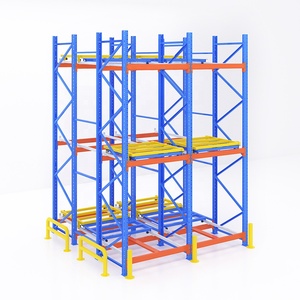
Pallet Live Rack Push Back Pallet Rack
Useful for medium-SKU, high-density storage where LIFO is acceptable and aisle space is expensive. It reduces the number of working aisles while keeping pallets accessible from the front face.
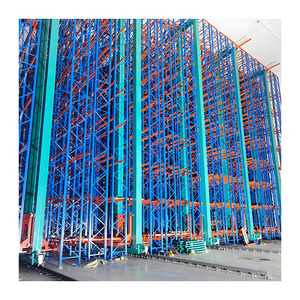
High-Density Pallet Shuttle Racking System Automatic Steel Storage Frame 3000kg Load Capacity Heavy Duty Warehouse
Built for fast-moving and seasonal pallet flows that need high-density storage with reduced labour. The 3000 kg load capacity suits heavy beverage, building-material, and export consolidation loads.
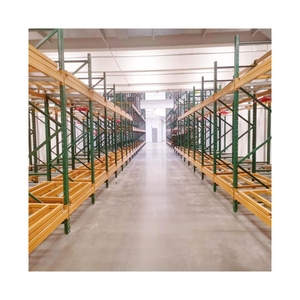
Custom Storage System Stacking Racks Shelves Warehouse Rack Push Back Pallet Racking with Guide Rail
Guide rails help stabilise pallet movement and reduce jamming risk, which is valuable in 3PL and distribution centres where pallet quality varies between suppliers and import cycles.
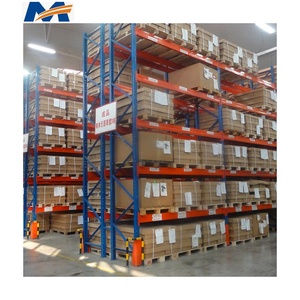
Pallet Racking System Warehouse Shelves Heavy Duty, Warehouse Picking Shelves Rack
A flexible selective system for mixed picking, spare parts, and distribution. Best where every SKU and pallet must remain directly accessible for fast order fulfilment.
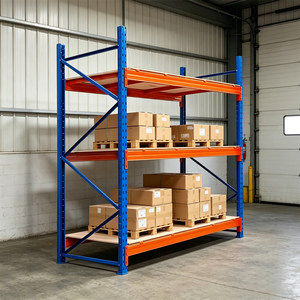
Powder Coated Heavy Duty Rack Industrial Warehouse Storage Pallet Racking Adjustable Industrial Shelves
Corrosion-resistant finish for humid coastal air, cold rooms, and facilities that require a clean, durable appearance. Adjustable levels suit changing product profiles.
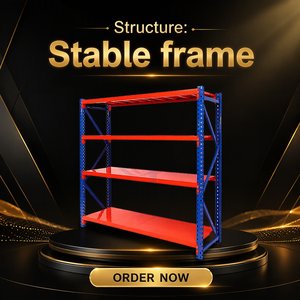
Heavy Duty Steel Selective Pallet Rack 5 Layer Load Capacity 1000kg Industrial Storage Rack
Good for fast-moving SKUs and order-picking environments where direct access to every pallet matters. Straightforward inspection and clear load signage support day-to-day safety.
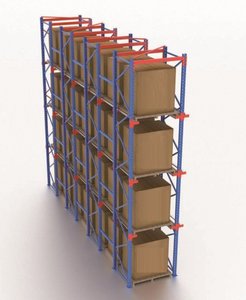
High Density Commercial Shelves Storage Warehouse Racking Systems Drive-In Pallet Rack for Industrial Factory Racks
High-density LIFO storage for homogeneous loads and seasonal peaks. Ideal for cold stores, agro-export buffers, and industrial factories where aisle space is a costly constraint.
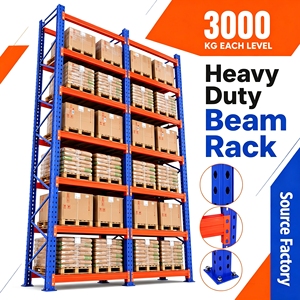
Factory Direct 3000kg High Load Metal Pallet Racking Industrial Steel Pallet Rack System for Warehouse Storage Heavy Goods
A heavy-duty option for industrial goods, dense pallets, and high-load storage. Factory-direct supply can shorten procurement when layouts are standardised and repeatable.
Where Pallet Storage Systems Deliver Value in La Plata
La Plata sits within a logistics corridor that connects Buenos Aires Province, the Port of La Plata, the Greater Buenos Aires consumer market, and the wider Río de la Plata trade route with Uruguay. That mix creates very different warehouse requirements: cold-chain export consolidation, urban e-commerce fulfilment, industrial spare-parts storage, and high-density import distribution.
Cold-chain and export consolidation
Fruit, meat, seafood, dairy, and frozen food operations near La Plata and Buenos Aires need racking that performs in chilled or freezer rooms. Mobile racking and high-density systems can reduce refrigerated air volume and improve energy efficiency.
Urban e-commerce and 3PL
High SKU counts, fast order cycles, and changing seasonal volumes reward selective racking, shelving, and mezzanine combinations. Direct access to every pallet helps 3PLs protect service levels for multiple clients.
Agro-industrial and spare parts
Heavy pallets, machinery components, packaging materials, and maintenance stores require stable heavy-duty racking, documented load capacities, and layouts that can accommodate forklifts and reach trucks safely.
Import and port-driven distribution
Seasonal import peaks, container unloading, and export cut-off dates reward high-density push-back, drive-in, or shuttle systems that absorb volume without adding permanent aisle space.
Trends Reshaping Pallet Storage Procurement in La Plata
Procurement teams in the La Plata market are not only buying steel. They are buying capacity, compliance evidence, energy efficiency, and the ability to adapt when tariffs, shipping schedules, crop seasons, or consumer demand change.
More storage inside the same building
Industrial rents and land values around Buenos Aires Province continue to pressure warehouse users. Buyers increasingly compare selective racking against push-back, drive-in, shuttle, and mobile systems to determine whether an existing building can hold more pallets before a new lease is signed.
Cold-chain energy and temperature control
Refrigerated and frozen warehouses are focusing on usable cubic capacity, not only floor area. Mobile racking reduces the number of open aisles, which can lower the volume of air that must be cooled. For La Plata exporters, that can support both capacity and operating-cost goals.
Documented safety and supplier due diligence
Insurers, landlords, and corporate procurement teams increasingly ask for load tables, installation records, inspection guidance, and evidence that the supplier can coordinate with local structural requirements. A low-cost racking quotation without documentation is rarely the lowest-risk choice.
Comparing Density and Selectivity Before You Commit
The table below uses indicative planning ranges, not final engineering values. Use it to frame the commercial trade-off between pallet density and selectivity, then validate the selected system against your pallet dimensions, handling equipment, fire strategy, and clear height.
Selective pallet racking
Direct access to every pallet; strongest choice for mixed SKUs and high service levels.
Push-back racking
Good balance for medium SKU counts where LIFO is acceptable and aisles are limited.
Drive-in racking
High-density storage for homogeneous loads; best when each SKU occupies many pallets.
Pallet shuttle racking
Very high density with reduced forklift travel; suited to fast-moving or seasonal pallet flows.
Why Real Nice Racks Supports Safer La Plata Procurement
A pallet storage factory or supplier serving the La Plata market should demonstrate engineering method, documentation discipline, installation support, and a clear after-sales process. Real Nice Racks LLC combines factory-direct product access with storage engineering and lifecycle support for warehouses across South America.
Standards-led design
Static steel racking is designed with reference to EN 15512, floor tolerances per EN 15620, and operation and inspection guidance per EN 15635. Seismic design follows FEM 10.2.08 / EN 16681 methodologies where required, with local coordination by licensed engineers.
Local structural coordination
For Argentine projects, final anchor and structural checks can be coordinated with local engineering requirements and CIRSOC references where applicable. We specify base plates, anchors, bracing, and beam connectors for the site conditions and pallet loads.
Documented handover
Load signage, capacity tables, installation records, and inspection guidance support internal safety teams, landlords, insurers, and auditors. This documentation is part of the procurement value, not an optional extra.
Cold-chain experience
Chilled and freezer systems can be specified for temperatures down to approximately -30°C, including powder-coated or corrosion-conscious finishes for humid and cold environments. MOVO mobile racking is available where refrigerated air volume must be reduced.
Factory-direct product range
Selective, push-back, drive-in, pallet shuttle, heavy-duty 3000 kg, and adjustable racking options can be combined with shelving, mezzanines, and mobile systems. Export packing is planned for port shipment to Buenos Aires, La Plata, Montevideo, or the nearest regional port.
Lifecycle support
From site survey and layout design to manufacturing, supervised installation, inspection, repair, and capacity upgrades, the project can be supported through its operating life. Commercial and technical support is available in English, Spanish, and Portuguese.
What La Plata Buyers Should Verify Before Choosing a Supplier
A credible pallet storage supplier should help you compare more than price per bay. Use the checklist below to protect project timelines, operator safety, and the long-term value of the installation.
Data before drawings
Provide pallet dimensions, loaded weight, SKU velocity, clear height, floor condition, forklift type, and operating temperature. A supplier that skips these inputs cannot responsibly confirm capacity or aisle performance.
Capacity and safety documents
Ask for structural calculations, load signage, anchor details, installation records, and inspection guidance. For cold stores and high-density systems, confirm how condensation, pallet condition, and maintenance access are addressed.
Local delivery and after-sales
Confirm export packing, port coordination, inland transport assumptions, installation supervision, and the process for replacement parts or repairs. The lowest initial quote can become expensive if support stops at the port.
From La Plata Inquiry to Documented Handover
A controlled five-stage process keeps the project comparable at every decision point, especially when multiple suppliers submit different layouts for the same warehouse.
Survey
Warehouse location, floor plan, clear height, pallet data, forklift type, temperature, and throughput profile.
Design
Layout options, capacity comparison, aisle strategy, structural calculations, and commercial scope.
Manufacture
Steel production, finish selection, quality control, and export packing for shipment to the nearest port.
Install
Delivery coordination, supervised installation, anchor checks, load signage, and handover documentation.
Support
Inspection, damage repair, spare parts, operator guidance, and future capacity upgrades.
Pallet Storage Procurement Questions from La Plata
These are the questions procurement, operations, and engineering teams most often ask when comparing pallet storage factories and suppliers for the La Plata market.
What is the typical lead time for pallet racking delivered to La Plata or Buenos Aires?
Lead time usually depends on drawing approval, steel profiles, finish, production slot, and shipping schedule. A realistic planning range is often several weeks for production plus international transit, customs, and inland delivery. For La Plata and Buenos Aires, we coordinate export packing and port delivery with your freight agent, then align installation based on site readiness and unloading capacity.
Can your racking be designed for Argentine project requirements?
Yes. Racking is designed with reference to EN 15512, EN 15620, and EN 15635, and seismic methodology such as FEM 10.2.08 / EN 16681 where required. For Argentine warehouses, final structural checks and anchor details can be coordinated with local engineering requirements and CIRSOC references where applicable. We provide load signage and documentation for review by local engineers, insurers, and safety teams.
What information should I send with a quotation request?
Send the warehouse location, floor plan or rough dimensions, clear height, pallet length, width and height, loaded pallet weight, number of SKUs, temperature range, forklift or reach-truck type, and desired capacity. Photos of the building and any existing racking are also useful. If you have a target pallet count and a growth forecast, include both so the layout can be designed for phased expansion.
Do you supply racking for cold storage and freezer warehouses in La Plata?
Yes. Cold storage pallet racking, high-density systems, and mobile racking can be specified for chilled and frozen environments down to approximately -30°C. This suits fruit, meat, seafood, dairy, and frozen-food operations connected to La Plata, Buenos Aires, and the Río de la Plata export corridor. For freezer rooms, finish, condensation management, and maintenance access should be reviewed during design.
Can you upgrade an existing warehouse instead of building a new one?
Yes. Retrofit projects often combine re-layouts, push-back or drive-in racking, pallet shuttle systems, mezzanine floors, and narrow-aisle configurations. High-density pallet racking can deliver up to 20% more storage capacity within the same building footprint, helping buyers avoid the cost and delay of new construction. A site survey is essential to confirm floor capacity, clear height, fire strategy, and forklift access.
How can I verify a pallet storage system factory or supplier is suitable for the La Plata market?
Ask for technical calculations, load capacity documentation, installation supervision details, inspection guidance, and examples of cold-chain or high-density projects. Confirm who is responsible for anchor design, drawings, delivery, and after-sales support. Real Nice Racks LLC can provide product information, layout support, and technical documentation; contact [email protected] with your project data before comparing final quotations.
Request a Pallet Storage Layout for the La Plata Market
Share your warehouse location, clear height, pallet dimensions, loaded weight, SKU profile, temperature range, and target capacity. Real Nice Racks LLC will help you compare selective, push-back, drive-in, pallet shuttle, mobile, and heavy-duty options with a clear view of capacity, safety, and project scope.
Get a QuotePrefer email? Send project data to [email protected]. Technical support is available in English, Spanish, and Portuguese.